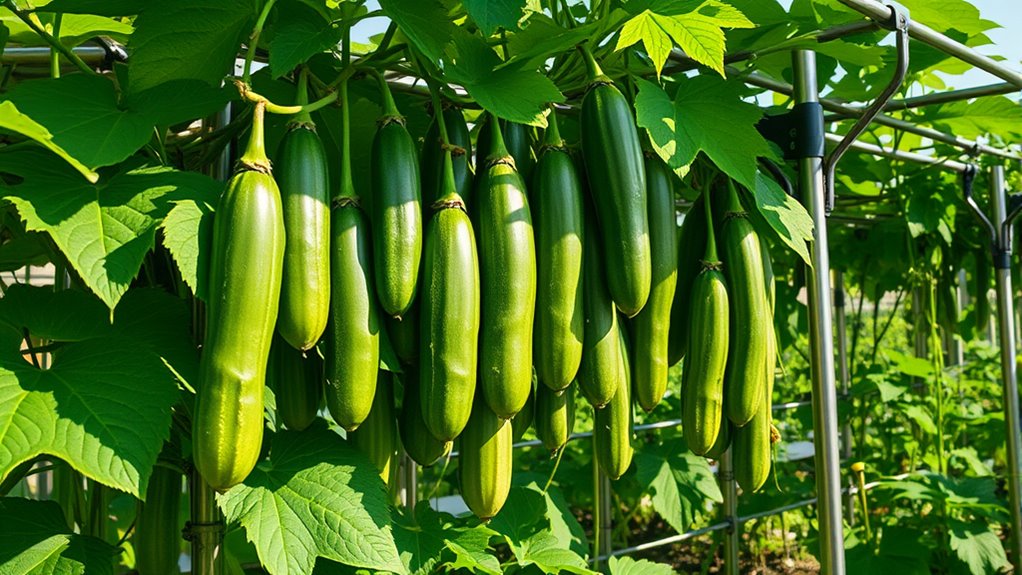

Training cucumbers with the umbrella trellis system involves guiding your plants upward early in the season, using soft ties or clips to attach the main stems to a sturdy frame. This method keeps your plants off the ground, improves airflow, and makes pest inspection easier. Regular pruning and careful guidance help maximize space and promote healthy growth. To learn more about optimizing this system for bountiful yields, keep exploring as you go.
Key Takeaways
- Start support installation early in the season to ensure stability for growing cucumber plants.
- Gently guide main stems onto the trellis as vines develop, using soft ties or clips.
- Regularly prune excess shoots and remove damaged leaves to promote healthy growth.
- Keep vines off the ground to improve airflow and reduce pest and disease risks.
- Continuously monitor for pests and diseases, inspecting leaf undersides and stems for early detection.
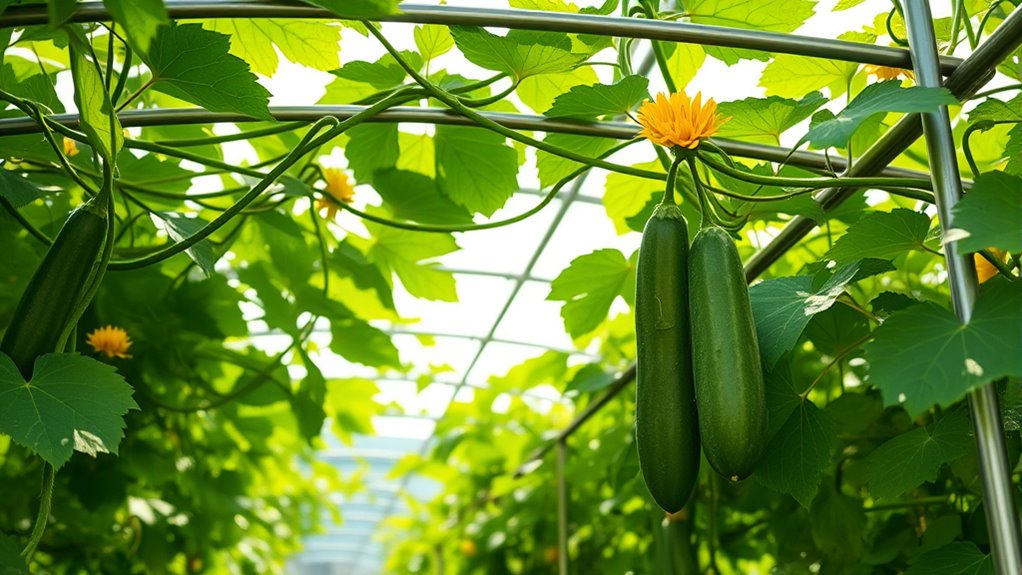
Training cucumbers is an essential step to guarantee healthy growth and maximize your harvest. When you adopt the umbrella trellis system, you’re giving your plants a sturdy structure to climb, promoting vertical growing. This method not only saves space but also improves airflow around the plants, reducing the risk of diseases. As you train your cucumbers to grow upward, you make it easier to spot and manage pests early, which is vital for pest management. Keeping the plants off the ground minimizes contact with soil-borne pests and reduces the chances of rot and fungal infections.
Implementing vertical growing with an umbrella trellis system begins with selecting a strong, durable support structure. You want a framework that can hold the weight of mature cucumber plants and their fruit. Install the trellis early in the growing season, ensuring it’s anchored securely into the ground. As your cucumbers sprout, gently guide the main stems towards the trellis, attaching them with soft ties or plant clips. This encourages upward growth and prevents the vines from sprawling across the ground, which can make it easier for pests to hide and attack.
Start early with a sturdy support and gently guide your cucumbers upward for healthy growth.
Training your cucumbers along the umbrella trellis also simplifies pest management. When plants are vertically oriented, you can more easily inspect for pests like aphids, cucumber beetles, or spider mites. Regularly checking the undersides of leaves and stems allows you to catch infestations early, reducing the need for chemical interventions. Plus, keeping the foliage off the soil diminishes the chance of soil-dwelling pests, like root maggots, affecting your crop. The open structure of the trellis also promotes better air circulation, helping your plants dry quickly after rain or watering, which further deters fungal diseases and pests that thrive in damp environments.
Training cucumbers with the umbrella trellis system requires consistent attention, but it’s well worth the effort. As you guide new growth upward, prune excess shoots and remove any damaged or diseased leaves. This not only keeps your plants healthy but also ensures the pest management process remains straightforward. With vertical growing, you can use physical barriers or sticky traps more effectively, preventing pest populations from spiraling out of control. Additionally, understanding sound vibrations and their influence on plant health can help optimize your garden environment and further support pest deterrence. Overall, this training technique enhances plant health, optimizes space, and provides a manageable way to protect your cucumbers from pests, leading to a more bountiful and healthy harvest.
Frequently Asked Questions
How Often Should I Water Cucumbers Using the Umbrella Trellis System?
You should water your cucumbers every 1 to 2 days, depending on your watering schedule and soil moisture levels. Check the soil regularly; it should stay consistently moist but not soggy. During hot weather, you might need to water more often. Using the umbrella trellis system helps keep fruit off the ground, but maintaining proper soil moisture through regular watering is essential for healthy growth.
What Pests Are Most Common With Cucumbers Trained on This System?
Pests can be relentless, like a swarm of locusts, when you’re training cucumbers on the umbrella trellis. Common culprits include cucumber beetles, aphids, and spider mites. To keep them at bay, practice pest prevention and disease management consistently. Regularly inspect your plants, remove affected foliage, and use organic insecticides if needed. Staying vigilant assists in safeguarding your crop and ensures healthy, bountiful harvests.
Can This Training Method Be Used for Other Creeping Vegetables?
Yes, you can use this training method for other creeping vegetables. Vertical gardening with trellises or trellis alternatives helps maximize space and improve airflow, which reduces disease risk. Vegetables like pole beans, peas, and even certain squash varieties adapt well to this system. By training them vertically, you promote healthier growth, easier harvesting, and better pest management, making it a versatile approach for various creeping crops.
How Long Does It Take for Cucumbers to Start Fruiting After Training?
After training your cucumbers with the umbrella trellis system, fruiting typically begins within 50 to 70 days. You should watch for fruiting indicators like small cucumbers forming at the nodes and increased flowering. The training timeline helps promote early production, but environmental factors and cucumber variety may slightly influence this. Keep an eye on the plants, and you’ll see the first fruits appear as the plants mature.
What Are Signs of Overtraining or Stress in Cucumbers on the Trellis?
Did you know that over 80% of cucumber plants show stress signs within two weeks of overtraining? You’ll notice wilting, yellowing leaves, or stunted growth, which are key signs of stress. Overtraining symptoms include broken or damaged vines, reduced flowering, and fewer cucumbers. If you see these, it’s time to ease off, give your plants proper support, and make sure they’re not overwhelmed, so they can thrive.
Conclusion
Think of your cucumber plants as dancers under a grand umbrella, gracefully guided along their trellis stage. With each careful tie and gentle nudge, you’re choreographing a performance that yields lush, bountiful harvests. As the umbrella shelters and supports them, your efforts turn your garden into a vibrant ballet of growth and abundance. Keep nurturing this delicate dance, and you’ll be rewarded with a flourishing symphony of fresh, crisp cucumbers all season long.