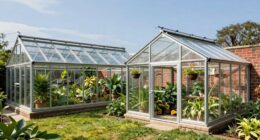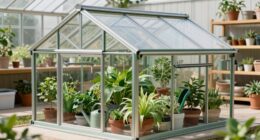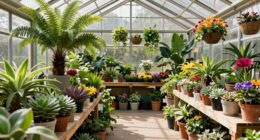
To care for fruit trees in large greenhouses, you should focus on regular pruning to remove dead or crossing branches, helping improve air circulation and overall tree health. Keep a close eye on pests like aphids and spider mites, using integrated pest management strategies with beneficial insects and proper sanitation. Maintain ideal temperature and humidity levels to promote growth. Continuing to explore expert tips will help you develop the best practices for healthy, productive trees in your greenhouse.
Key Takeaways
- Regularly inspect trees for pests and diseases to enable early intervention.
- Maintain optimal temperature and humidity levels to promote healthy growth and fruit development.
- Prune trees properly during dormancy and seasonally to improve structure and air circulation.
- Use integrated pest management strategies, including biological controls, to minimize chemical use.
- Keep tools sterilized and maintain hygiene to prevent disease spread and ensure tree health.

Growing fruit trees in large greenhouses offers a controlled environment that can extend growing seasons and improve yields. To make the most of this setup, you need to pay close attention to pest management and pruning techniques. These are essential for maintaining healthy trees and ensuring a bountiful harvest.
Effective pest management begins with regular inspection. You should keep a watchful eye for common greenhouse pests like aphids, scale insects, and spider mites. Early detection is key to preventing infestations from escalating. Use integrated pest management (IPM) strategies, combining biological controls, such as introducing beneficial insects, with physical barriers like sticky traps or row covers. Chemical interventions should be a last resort and used carefully to avoid harming your plants or disrupting the greenhouse environment.
Regular inspections and integrated pest management protect your greenhouse fruit trees effectively.
Pruning is another critical aspect of caring for your fruit trees. Proper pruning techniques encourage strong growth, improve air circulation, and allow sunlight to reach all parts of the tree. When you prune, focus on removing dead, diseased, or crossing branches. This not only enhances the tree’s structure but also reduces the risk of pest infestations and fungal diseases. Make clean cuts just outside the branch collar to promote quick healing and minimize stress on the tree.
You should also consider the timing of your pruning. For most fruit trees, dormant pruning during late winter or early spring is ideal. This helps shape the tree and prepares it for vigorous growth during the upcoming season. Throughout the growing season, light maintenance pruning can be done to manage the size and shape of the tree, making harvesting easier and ensuring better fruit production.
Both pest management and pruning require your consistent attention. In a greenhouse, the environment can amplify issues if not carefully managed. Regularly monitor your trees for signs of pests or disease, and adjust your pruning schedule as needed to maintain prime health. Use sterilized tools to prevent spreading infections, and sanitize your equipment after each session.
Frequently Asked Questions
How Do I Prevent Pests in Large Greenhouse Fruit Trees?
To prevent pests in your greenhouse fruit trees, start by choosing pest-resistant varieties and introducing biological controls like beneficial insects. Keep your greenhouse clean and remove any fallen leaves or fruit to eliminate pest habitats. Regularly inspect your trees for early signs of infestation, and use natural predators or organic sprays if needed. Combining pest-resistant plants with biological controls creates a healthy, pest-free environment for your trees to thrive.
What’s the Best Way to Prune Mature Greenhouse Fruit Trees?
You should use proper pruning techniques like thinning, heading, and shaping to maintain your mature greenhouse fruit trees. Start by removing dead, diseased, or crossing branches to improve air circulation and light penetration. Make clean cuts just outside the branch collar to promote healthy healing. Regular pruning enhances tree health, encourages vigorous growth, and boosts fruit production. Always prune gradually to avoid stressing the tree, and use sharp tools for precision.
How Can I Optimize Humidity Levels for Fruit Trees?
To optimize humidity levels for your fruit trees, focus on humidity control by maintaining a consistent range, typically between 50-70%. Use misting systems to add moisture during dry periods, especially in the heat of summer. Regularly monitor humidity levels with a hygrometer, and adjust misting frequency accordingly. Proper humidity helps prevent stress and diseases, ensuring healthier growth and better fruit production in your greenhouse.
What Are the Signs of Nutrient Deficiencies in Greenhouse Fruit Trees?
You’ll notice nutrient deficiencies in your greenhouse fruit trees through leaf discoloration, such as yellowing or browning, and stunted growth. To confirm, perform soil testing to identify nutrient imbalances. If deficiencies are present, modify fertilization accordingly. Keep an eye on new and old leaves, as symptoms can vary, and timely intervention ensures healthy growth and bountiful fruit production.
How Do I Manage Cross-Pollination Between Different Fruit Tree Varieties?
A stitch in time saves nine, so start by understanding pollination techniques and cultivar compatibility. To manage cross-pollination, use physical barriers like bags or screens around flowers of different varieties. Guarantee bloom times overlap for natural pollination, or manually transfer pollen between compatible cultivars using soft brushes. Regularly monitor flowering periods, and keep different varieties separated to prevent unwanted cross-breeding, ensuring your fruit trees produce true-to-type fruit.
Conclusion
Now that you know the essentials, caring for your fruit trees in a large greenhouse becomes a rewarding task. Remember to monitor humidity, provide proper pruning, and keep pests at bay—just like a seasoned gardener tending his Victorian garden. With patience and attention, your trees will flourish, offering fresh fruit all year round. Think of it as your own private Eden, where every day feels like a step back in time to simpler, greener days.