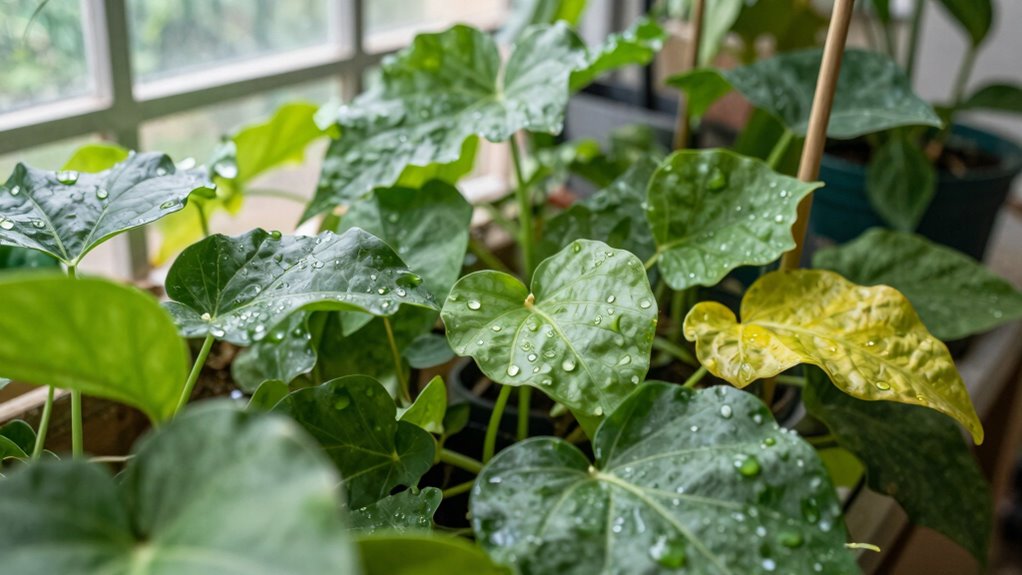

If your greenhouse plants show persistent yellowing leaves and poor growth despite regular watering, it’s a clear sign your routine needs adjusting. This usually indicates nutrient deficiencies or soil health issues that haven’t been addressed. Soil nutrients become depleted over time, making plants more vulnerable and stressed. By testing your soil and refining your care practices, you can boost plant health and resilience. Keep going, and you’ll discover how to optimize your plant routine effectively.

Get garden gear delivered free with Prime
- Fast, free delivery on millions of items
- Prime Video, Amazon Music and more included
- Member-only deals all year
Key Takeaways
- Persistent yellowing or stunted growth indicates soil nutrient deficiencies needing routine adjustments.
- Increased pest activity despite cleanliness suggests underlying soil or environmental issues.
- Poor flowering and fruiting signal imbalanced or depleted soil nutrients.
- Plants showing stress signs despite proper watering often reflect soil health problems.
- Frequent pest outbreaks and plant declines point to the need for soil testing and routine re-evaluation.

If you want your greenhouse plants to thrive, it’s imperative to change their routine regularly. One clear sign they need a shift is when you notice persistent issues with soil nutrition. Healthy plants rely on well-balanced soil, rich in essential nutrients, but over time, those nutrients can become depleted or imbalanced. If your plants are showing stunted growth, yellowing leaves, or poor flowering despite consistent watering, it’s a sign that their soil nutrition needs attention. Instead of sticking to the same fertilization routine, consider testing your soil to identify deficiencies and adjust your feeding schedule accordingly. Rotating the types of fertilizers you use or supplementing with organic matter can restore soil vitality. When soil nutrition isn’t critical, plants become more vulnerable to pests and diseases, which can further weaken their health. Regularly testing soil and adjusting your routine based on the results ensures your plants receive the proper nutrients they need to thrive. Additionally, understanding the specific nutrient requirements of your plants can help you tailor your routine more effectively. Incorporating soil amendments into your routine can also improve overall soil health and plant resilience. Moreover, staying informed about soil health management practices can help prevent future issues before they become severe. A balanced approach to soil management helps maintain the long-term vitality of your greenhouse environment.
Another major indicator that your routine needs adjustments is a spike in pest activity. If you find yourself constantly battling pests, despite your efforts to keep the greenhouse clean, it’s time to rethink your pest management approach. Relying solely on pesticides or ignoring early signs of infestation can lead to larger problems later. Instead, implement integrated pest management strategies that include biological controls, manual removal, and preventive measures like introducing beneficial insects. Regularly inspecting your plants for early signs of pests allows you to act quickly before the infestation spreads. Pests thrive when plants are stressed, often due to poor soil nutrition or environmental conditions, so addressing these root causes helps keep pest problems in check. Recognizing these early warning signs and taking preventative measures can save you time and resources in the long run.
soil test kit for greenhouse plants
As an affiliate, we earn on qualifying purchases.
As an affiliate, we earn on qualifying purchases.
Frequently Asked Questions
How Often Should I Change My Greenhouse Plant Routine?
You should change your greenhouse plant routine every few weeks or when you notice signs of slowed plant growth or pest issues. Regular adjustments help optimize plant growth and pest management. Pay attention to how your plants respond; if growth stalls or pests appear, it’s time to modify watering, lighting, or pest control methods. Staying flexible ensures healthy, thriving plants and minimizes pest problems effectively.
What Signs Indicate Overwatering or Underwatering Plants?
Suddenly, your plants look distressed—what’s wrong? If their leaves turn yellow or wilt, you’re likely facing watering issues. Overwatering causes root rot, leading to drooping, soft stems, while underwatering makes leaves crispy and brown. Both signs threaten your plant’s health, so pay close attention. Recognizing these signals early helps you adjust your watering routine, ensuring your plants thrive instead of suffer.
Can Routine Changes Prevent Plant Diseases Effectively?
Routine changes can effectively prevent plant diseases by maintaining ideal pest control and soil nutrition. When you adjust watering schedules and monitor humidity, you reduce conditions that favor pests and fungi. Regularly updating your routine guarantees plants stay healthy, making them less susceptible to diseases. Incorporate soil tests and pest inspections into your schedule, so you catch issues early and keep your greenhouse plants thriving and disease-free.
Are There Specific Routines for Different Plant Species?
Like a Shakespearean actor tailoring their performance, you should adapt routines for different plant species. You’ll find that adjusting watering schedules based on each plant’s needs helps them thrive. Some plants prefer consistently moist soil, while others like to dry out between waterings. By observing your plants and understanding their specific requirements, you create a personalized routine that promotes healthier growth and minimizes disease risks.
How Does Seasonal Change Affect Greenhouse Plant Routines?
Seasonal changes greatly impact your greenhouse plant routines by influencing their growth cycles and soil nutrient needs. As seasons shift, you should adjust watering schedules, lighting, and temperature to match plant growth stages. Additionally, soil nutrient management becomes essential—adding fertilizers or organic amendments helps support healthy growth during active periods and prevents deficiencies. Staying attentive to these seasonal cues guarantees your plants thrive year-round, avoiding stress and promoting ideal development.
Conclusion
If your greenhouse plants start showing signs of stress or slowed growth, it’s time to reassess your routine. Notably, studies show that inconsistent watering can reduce plant productivity by up to 30%. By adjusting your watering schedule, lighting, or ventilation, you can boost plant health and yields. Remember, plants thrive on consistency, but they also need flexibility. Stay attentive to their needs, and don’t hesitate to tweak your routine for healthier, happier greenhouse plants.
Halloween Picks
halloween
As an affiliate, we earn on qualifying purchases.