
To turn a good tomato harvest into a great one, focus on proper pruning—specifically, removing suckers early before they grow too large. This helps improve airflow, reduce disease risk, and direct energy into developing larger, tastier fruit. Timing and technique matter: prune regularly, use sharp tools, and avoid over-pruning leaves. Mastering these pruning rules boosts your yields and fruit quality. Keep going, and you’ll discover even more ways to maximize your tomato success.

Get garden gear delivered free with Prime
- Fast, free delivery on millions of items
- Prime Video, Amazon Music and more included
- Member-only deals all year
Key Takeaways
- Regularly remove suckers to promote airflow, reduce disease risk, and direct energy toward fruit development.
- Prune early and consistently during active growth to optimize plant health and fruit yield.
- Use clean, sharp tools to ensure clean cuts that heal quickly and prevent infections.
- Timing pruning during favorable weather avoids stress and damage to the plant.
- Proper pruning enhances sunlight exposure and air circulation, resulting in larger, tastier tomatoes.
As an affiliate, we earn on qualifying purchases.
The Essential Tomato Pruning Rule You Should Use
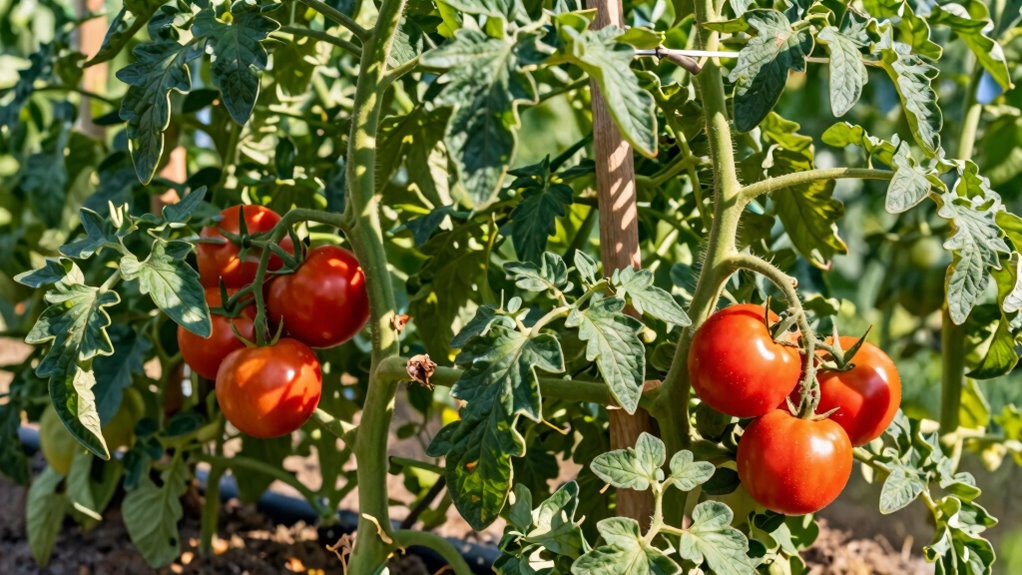
To guarantee healthy and productive tomato plants, you need to follow a simple yet essential pruning rule: remove the suckers. This practice helps prevent overcrowding, which can lead to increased risk of tomato disease by improving airflow and reducing humidity around the plants. When you remove suckers, you also make pest management easier because pests have fewer hiding spots and breeding grounds. Keeping your tomato plants tidy allows for better monitoring, so you can spot signs of pests or disease early. Consistent pruning minimizes stress on the plant, promotes stronger growth, and directs energy into fruit production. By sticking to this rule, you’ll boost your harvest’s quality and quantity while maintaining healthier plants overall. Additionally, understanding internet safety can help protect your gardening resources and information online. Proper cabling solutions are also crucial for efficient garden setup and management, especially when using electronic tools or irrigation systems. Regularly researching regulatory changes related to gardening practices can help you stay compliant and avoid potential issues. Being aware of home soundproofing options can also help create a quiet environment for relaxation or focused gardening activities. Moreover, using effective lighting control can enhance your gardening workspace and help monitor plant health more effectively.
How to Spot and Remove Tomato Suckers for Better Growth
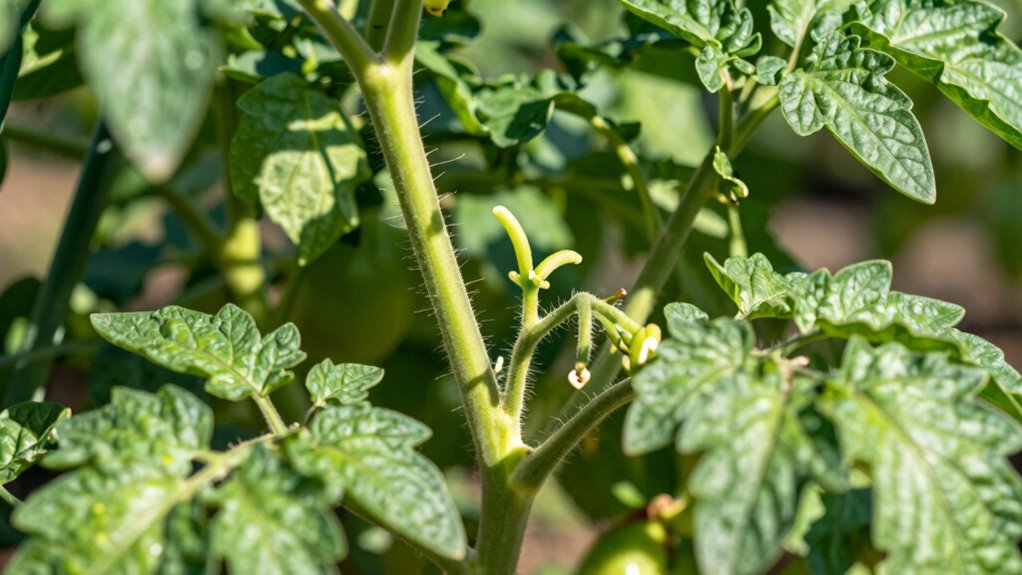
To improve your tomato plants’ growth, learn to spot suckers—small shoots that grow in the joint between the main stem and branches. Use clean, sharp pruning tools to remove these suckers carefully, ensuring you don’t damage the plant. Properly removing suckers allows energy to go into fruit production instead of unnecessary foliage. Additionally, understanding the importance of security systems and reviews can help you appreciate the natural variations in plant growth patterns. Incorporating eco-friendly gardening practices can also support healthier plant development and sustainability. Being aware of plant health monitoring techniques can further enhance your ability to maintain vigorous, productive tomato plants, much like how electric dirt bikes offer reliable performance for off-road adventures.
Identifying Sucker Growth Points
Recognizing tomato suckers is essential for maintaining healthy and productive plants. Sucker growth appears in the joint where a leaf meets the main stem or branch. Look for small, shoot-like growths that emerge between the main stem and a leaf stem. These are the suckers you want to identify early before they become too large. Using effective pruning techniques, you can remove these growth points to promote better airflow and focus the plant’s energy on fruit production. Pay close attention to the shape and position of the new growth—suckers are usually soft, green, and grow outward from the joint. Accurate identification allows you to manage sucker growth efficiently, ensuring your tomato plants develop strong, healthy branches that yield a better harvest. Incorporating outdoor gardening practices and proper plant maintenance can further enhance your tomato cultivation and overall backyard transformation. Understanding plant physiology can help you better anticipate how your plants respond to pruning and care.
Proper Sucker Removal Techniques
Proper sucker removal begins with carefully inspecting your tomato plants to identify the small, green growths that emerge between the main stem and leaf stems. Once spotted, you can use pruning tools or your fingers for organic methods. To effectively remove suckers:
- Pinch or snip suckers at their base, close to the main stem
- Use clean, sharp pruning tools to minimize plant stress
- Avoid leaving stubs that can invite disease
- Focus on removing suckers early before they grow larger and compete for nutrients
- Regularly gear inspection helps ensure your tools remain effective and your plants stay healthy
- Keeping your tools clean and proper maintenance reduces the risk of transmitting diseases to your plants
- Consistent pruning practices are essential for maintaining healthy and productive tomato plants.
- Monitoring plant health closely allows for timely sucker removal and overall better plant management.
These techniques promote better airflow, sunlight exposure, and overall plant health. Organic methods emphasize hand removal or pruning shears, ensuring no chemicals are involved. Consistently removing suckers helps your tomato plant direct energy into fruit production, leading to a more abundant harvest.
Step-by-Step Guide to Proper Tomato Pruning
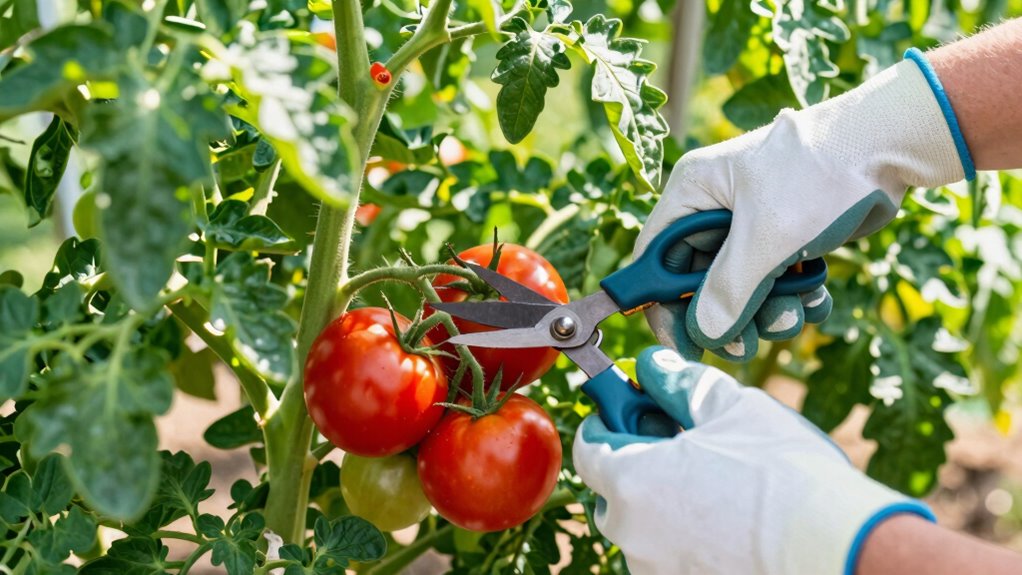
Pruning tomato plants correctly can substantially boost your harvest and keep your plants healthy. Start by removing any suckers that grow between the main stem and branches, using clean, sharp scissors or your fingers. Next, prune away any lower leaves that touch the soil to improve air circulation and prevent disease. Consistently monitor your plants for pests and remove affected foliage promptly—good pest management is key. Proper fertilizer timing is also essential; avoid overfeeding, which can lead to excessive foliage at the expense of fruit. As the plant grows, keep pruning to maintain an open structure, encouraging sunlight penetration. Regularly check your plants and adjust pruning as needed to promote vigorous growth and maximize your harvest. Additionally, understanding the importance of garden decorations can enhance your overall gardening environment and deter pests naturally. Incorporating solar system safety measures, such as ensuring your pruning tools are clean and properly stored, can help prevent accidents during your gardening routine. Maintaining awareness of plant health can also guide your pruning decisions to foster stronger, more productive plants. Being mindful of growth patterns can further optimize your pruning strategy for healthier plants. A focus on environmental sustainability in your gardening practices can also contribute to a more eco-friendly approach.
Common Pruning Mistakes That Hurt Your Tomato Plants
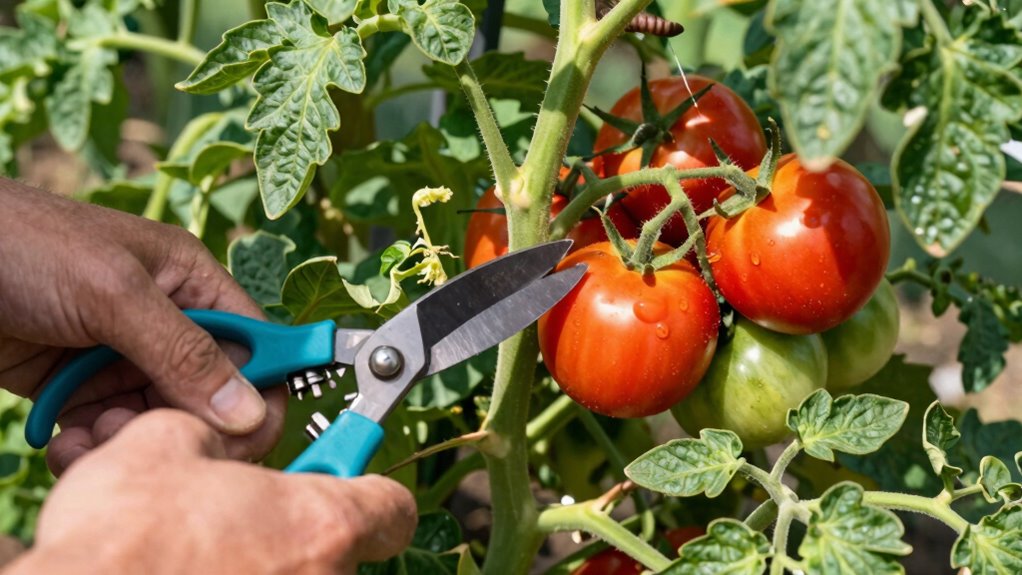
Avoid over-pruning your tomato plants, as removing too many leaves can weaken them and reduce their ability to produce energy. Ignoring suckers prevents your plants from growing fully and limits fruit yield. Pruning at the wrong times, like too early or too late, can also harm your plants’ health and productivity. Using proper pruning techniques ensures healthier growth and better harvests. Additionally, understanding the importance of community-driven gardening knowledge can help you refine your pruning skills and improve your yields over time. Being aware of seasonal considerations can also make a significant difference in the success of your pruning efforts.
Over-pruning Leaves Plants Weak
When you remove too many leaves from your tomato plants, they become weak and vulnerable. Over-pruning strips essential foliage that protects against plant disease and helps with photosynthesis. This stress can lead to poor fruit development and diminished yields. Plus, with fewer leaves, your plants struggle to absorb sunlight efficiently, weakening their overall vigor. It also hampers soil nutrition uptake, making it harder for plants to access crucial nutrients. You might notice:
- Increased susceptibility to disease due to exposed stems
- Reduced plant strength, making them prone to damage
- Slower growth and fewer fruits
- Greater difficulty in maintaining healthy soil nutrition balance
Avoid over-pruning to keep your plants resilient and productive. Proper leaf management ensures they stay strong enough to fend off disease and absorb necessary nutrients.
Ignoring Suckers Limits Growth
Have you been ignoring those small shoots—called suckers—that grow between the main stem and branches? By neglecting them, you limit your plant’s growth potential. Suckers develop into new branches that can support more fruit, speeding up fruit ripening and increasing your harvest. When you prune these suckers, you direct the plant’s energy toward the main stem and fruit development, rather than unnecessary foliage. This improves soil nutrition efficiency because the plant isn’t spreading resources over excess leaves. As a result, your tomatoes ripen faster and more evenly. Ignoring suckers also risks overcrowding, which can reduce airflow and promote disease. Properly managing suckers guarantees your plant remains healthy and productive, leading to a more abundant and timely harvest.
Pruning at Wrong Times
Timing is everything when it comes to pruning tomatoes, and doing it at the wrong moment can do more harm than good. Pruning at the wrong times, like during peak heat or cold snaps, can stress your plants and reduce yields. Seasonal pruning is best done when plants are healthy and actively growing, not during dormancy or extreme weather. Using the right pruning tools ensures clean cuts that heal faster. Avoid removing suckers or major stems when your plant is stressed or fruiting heavily, as this weakens the plant. Also, don’t prune after heavy rain or frost, which can promote disease. Proper timing keeps your tomato plants strong and productive, while improper timing hampers growth and harvest. Always prune at the appropriate time for healthier, more abundant tomatoes.
When and How Often to Prune Tomato Plants
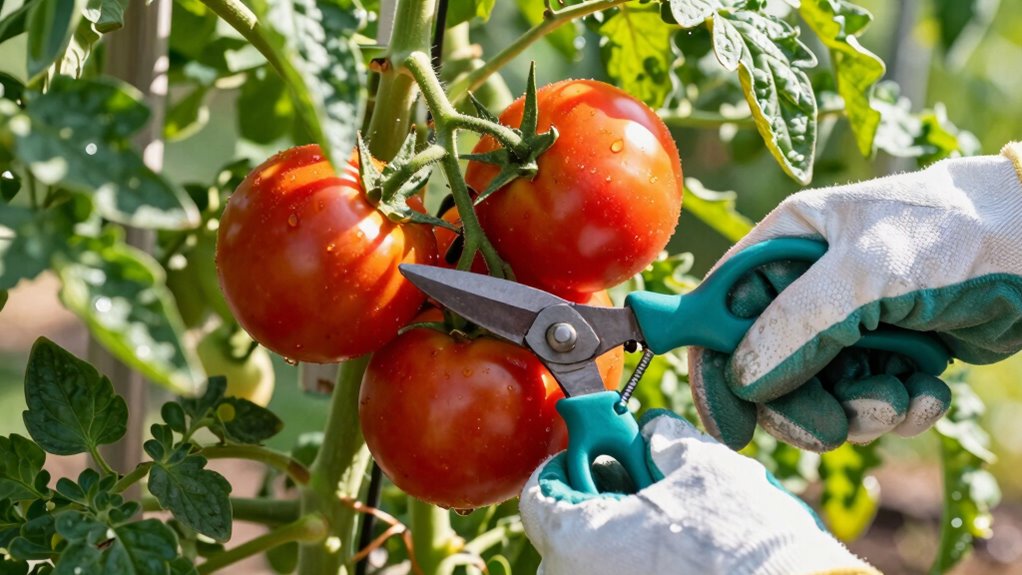
Pruning your tomato plants at the right intervals is essential for a healthy and productive harvest. You should prune regularly throughout the growing season, typically every 1-2 weeks, depending on growth rate. This maintains airflow, reduces disease risk, and supports better fruit development. In greenhouse management, consistent pruning helps control pest populations and keeps plants manageable.
| Timing | Activity | Benefits |
|---|---|---|
| Early stage | Remove suckers when small | Encourages strong main stems |
| Mid-season | Prune excess foliage and weak branches | Improves airflow, pest control |
| When fruiting begins | Thin out crowded clusters | Boosts fruit size |
| End of season | Final light pruning for cleanup | Prepares plants for next year |
How Proper Pruning Boosts Tomato Size, Flavor, and Yield
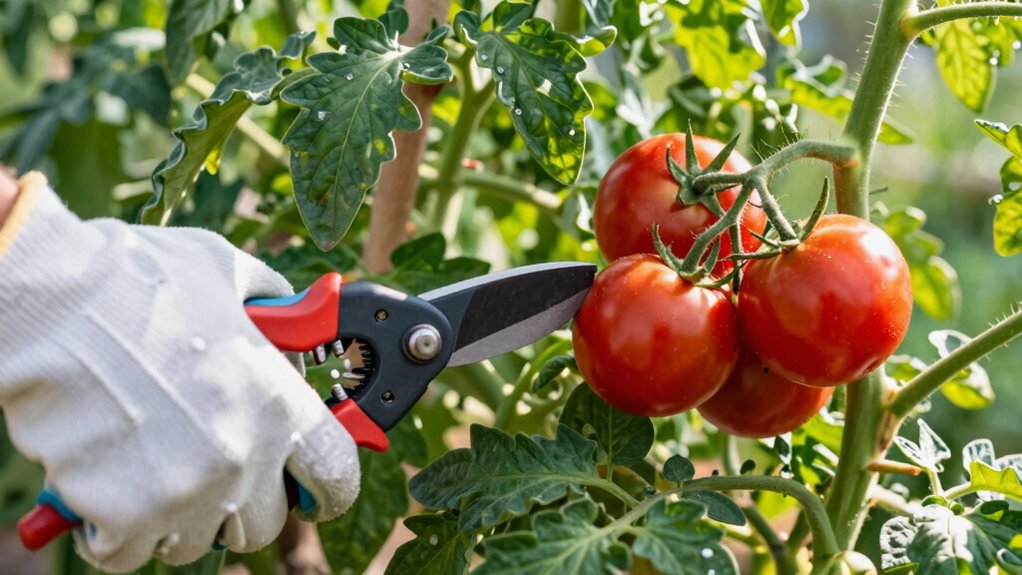
Proper pruning directly influences the size, flavor, and overall yield of your tomato harvest. When done correctly, it encourages healthier growth and better fruit development. For example, pruning can:
- Increase sunlight exposure, boosting flavor and ripening
- Improve air circulation, reducing pest problems
- Focus plant energy on fewer, larger fruits
- Support specific tomato varieties for ideal results
This targeted approach enhances both the quality and quantity of your harvest. Proper pruning helps manage pests by reducing hiding spots and disease spread. It also allows you to tailor your care to your tomato variety, whether indeterminate or determinate, ensuring each plant reaches its full potential. Ultimately, consistent pruning leads to bigger, tastier tomatoes and a more fruitful season.
Troubleshooting Pruning Problems and Fixes
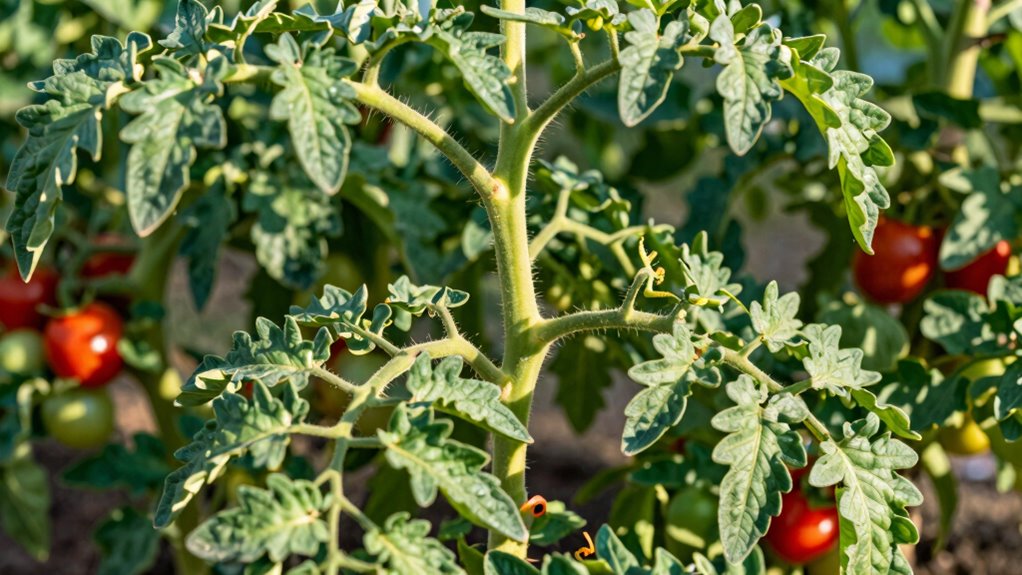
Even experienced gardeners encounter problems when pruning tomatoes, but identifying and fixing these issues quickly can save your plants from setbacks. Over-pruning can expose stems, increasing vulnerability to disease, while under-pruning may lead to overcrowding, promoting pests and fungal problems. If you notice wilting or spotting, it could be a sign of disease; remove affected leaves promptly to prevent spread. Proper pruning also supports pest management by improving air circulation and reducing hiding spots for pests. Be cautious not to damage healthy stems or remove too many leaves at once, which can stress the plant. Regularly inspect your plants, and if pests or diseases appear, address them immediately to maintain healthy growth and prevent further issues.
Additional Tips to Maximize Your Tomato Harvest
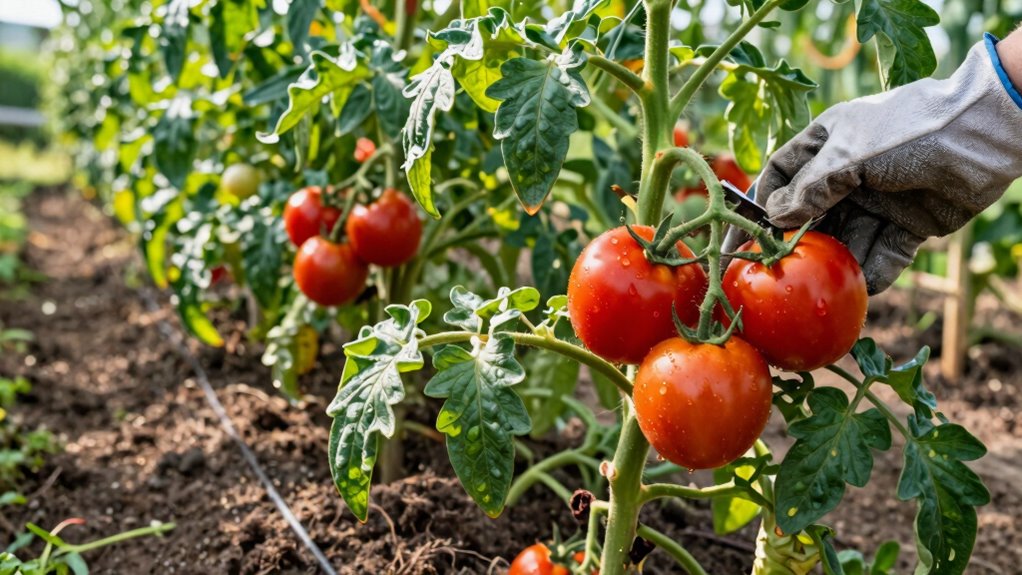
To maximize your tomato harvest, focus on consistent watering and mulching to maintain even soil moisture and prevent stress on the plants. Proper soil enrichment boosts plant health, leading to better fruit production. Incorporate companion planting to deter pests naturally and improve growth conditions. Additionally, enriching your soil with compost adds essential nutrients, supporting vigorous plants. Consider these tips:
Consistent watering, mulching, and soil enrichment boost tomato health and yield naturally.
- Plant basil or marigolds nearby to repel pests and improve flavor.
- Use organic mulch to conserve moisture and suppress weeds.
- Rotate crops yearly to prevent soil depletion and disease buildup.
- Regularly test soil pH and nutrients for ideal balance.
Frequently Asked Questions
Can I Prune Tomatoes if They Are Already Flowering?
Yes, you can prune tomatoes even if they’re flowering, but timing matters. During flowering, focus on light pruning to improve airflow and access to sunlight, which enhances flowering and fruiting. Use pruning techniques like removing suckers and lower leaves carefully so you don’t disturb the flowering timing. Proper pruning encourages better fruit development and higher yields without stressing the plant during this vital stage.
Does Pruning Affect Tomato Plant Disease Resistance?
Pruning can improve your tomato plant’s disease prevention and boost its resilience. When you remove excess foliage and suckers, you increase airflow, reducing humidity that fosters diseases like blight and mold. This healthier environment helps your plant fend off infections more effectively. Regular pruning also makes it easier to spot early signs of disease, allowing you to address problems quickly and keep your tomato plants strong and productive throughout the season.
What Tools Are Best for Pruning Tomatoes?
You should use sharp, clean pruning shears or scissors for tomato pruning to guarantee clean cuts and prevent disease spread. Bypass pruners are ideal because they make precise cuts, reducing plant stress. Always maintain your tools by cleaning and disinfecting them after each use, especially when pruning multiple plants. Proper pruning techniques combined with well-maintained tools help promote healthy growth and a bountiful harvest.
Should I Prune Tomatoes in Hot or Cold Weather?
You should prune tomatoes during moderate weather, ideally in cooler temperatures or early morning, to avoid heat stress and promote healthy growth. Climate adaptation is key—avoid pruning during extreme heat or cold, as it can stress plants. Timing matters: prune when plants are not overly stressed and have stable temperatures, ensuring your pruning efforts support robust fruit production and a successful harvest.
How Does Pruning Differ for Determinate Versus Indeterminate Tomato Varieties?
Think of pruning as the conductor guiding your tomato symphony. For determinate varieties, you keep plant height in check by minimal pruning, since they grow to a set size, producing uniformly-sized fruit. Indeterminate plants, like perpetual performers, benefit from regular pruning to control height, encouraging larger fruit and better airflow. By tailoring your pruning method, you optimize fruit size and plant health, turning your garden into a thriving encore.
Conclusion
So, you’ve mastered the art of pruning and turned your tomato plants into lush, productive marvels. Ironically, all that effort might just make you wish you’d kept things simple and let nature do its thing. But hey, if you want a harvest worth bragging about, a little extra work now means juicy, flavorful tomatoes later. Don’t forget—sometimes, the biggest rewards come from the tiniest snips!
Halloween Picks
halloween
As an affiliate, we earn on qualifying purchases.