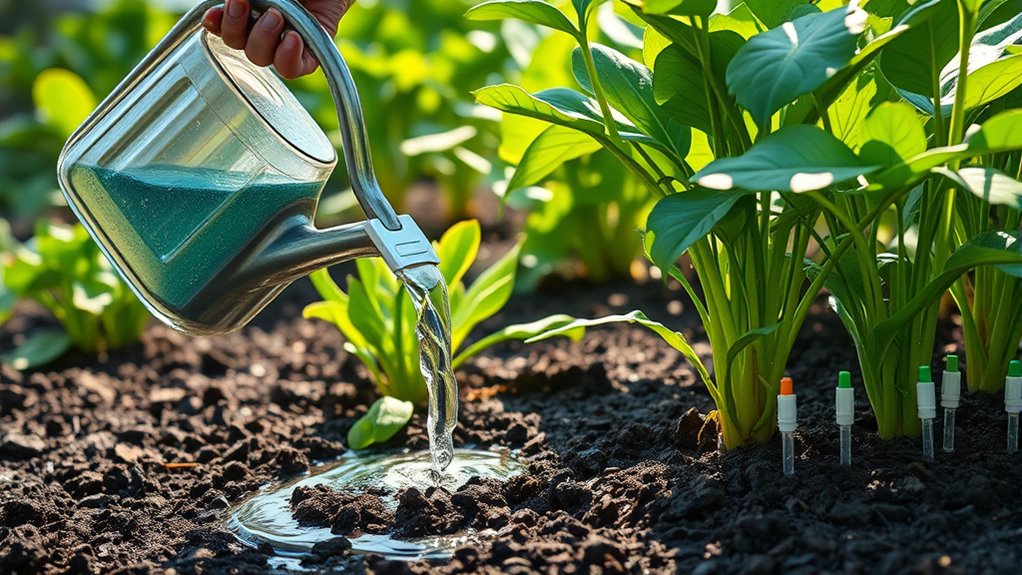

To effectively water your plants, you can use the pour-through and 1:2 methods. With the pour-through, water your plant thoroughly until runoff appears, then measure the excess to gauge moisture levels—low runoff indicates dry soil, while high suggests overwatering. The 1:2 technique involves soaking the soil deeply and waiting for it to begin drying before watering again, promoting deep roots. Keep exploring these techniques to optimize your plant care and stay ahead.
Key Takeaways
- The pour-through method involves watering until excess drains and measuring runoff to assess soil moisture levels.
- The 1:2 method entails thoroughly soaking soil and waiting for it to dry slightly before watering again.
- Pour-through is ideal for container plants to prevent over or underwatering and develop watering awareness.
- The 1:2 technique promotes deep root growth and maintains consistent moisture, suitable for outdoor beds and large containers.
- Both methods help optimize watering frequency based on soil moisture, plant needs, and environmental conditions.
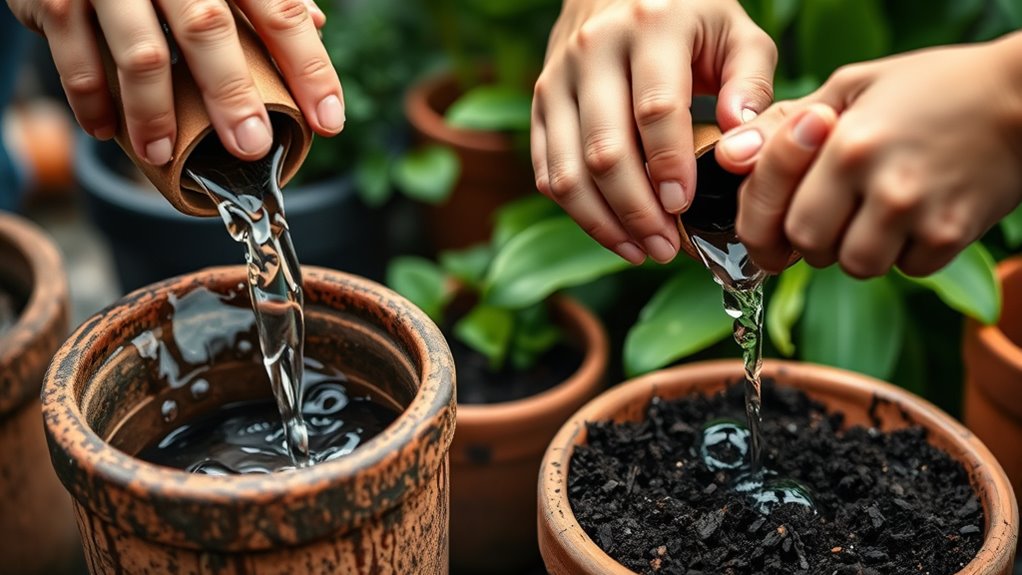
Proper watering is essential for maintaining healthy plants, but knowing the right techniques can make all the difference. When you focus on soil moisture, you ensure your plants receive the right amount of water without overdoing it. Too much water can drown roots, while too little can cause stress and hinder growth. The key is to find a balance that maintains consistent soil moisture, which directly influences how often you should water. Watering frequency depends on various factors like plant type, container size, weather conditions, and soil composition. With the right approach, you can avoid common issues like root rot or drought stress, leading to healthier, more vigorous plants.
One effective technique is the pour-through method, which provides a simple way to check your soil moisture levels. To do this, you water your plant thoroughly until excess water drips out of the drainage holes. Then, collect the runoff in a saucer or tray and measure the amount. If the volume is low, your soil might be dry and needs more water. If it’s high, the soil is already saturated. This method helps you gauge whether your watering frequency is appropriate. It’s especially useful for container plants, where soil tends to dry out faster. By regularly performing pour-through tests, you’ll develop a better sense of how much water your plants need and how often to water them, based on soil moisture levels. It’s a straightforward way to prevent overwatering and underwatering, both of which can stress your plants.
The 1:2 watering method offers a more deliberate approach. Here, you first soak the soil thoroughly, ensuring the water penetrates deeply to reach the roots. After watering, you wait until the soil begins to dry out, which typically takes longer with this method. The idea is to water deeply but infrequently, encouraging roots to grow downward and become stronger. This approach helps maintain consistent soil moisture over time and usually reduces watering frequency. It’s particularly effective for outdoor beds or larger containers, where soil retains moisture more consistently. By sticking to the 1:2 method, you avoid the pitfalls of frequent shallow watering, which can lead to weak root systems and increased susceptibility to drought stress.
Frequently Asked Questions
How Often Should I Water Different Types of Houseplants?
You should water your houseplants based on their specific watering schedule and hydration needs. Generally, most plants need watering once a week, but some, like succulents, require less frequent watering, while tropical plants may need more. Check the soil moisture regularly by touching the top inch. Adjust your watering schedule accordingly to keep your plants properly hydrated, ensuring they stay healthy and vibrant.
Can Overwatering Damage My Plant’s Roots?
Overwatering can definitely damage your plant’s roots, causing root rot and watering stress. When you pour too much water, it drowns the roots, depriving them of oxygen and encouraging decay. This destruction diminishes your plant’s health, making it vulnerable and weak. To avoid this, water wisely, ensuring proper drainage and letting the soil dry out between watering sessions. Your plant will thank you for your attentive, careful care!
What Are Signs of Underwatered Plants?
If your plant is underwatered, you’ll notice dry soil moisture and signs of plant stress like wilting, yellowing leaves, or browning edges. You might also see slowed growth or leaves dropping prematurely. These symptoms indicate the plant isn’t getting enough water to support its functions. To fix this, water thoroughly and regularly, ensuring the soil stays moist but not soaked, to help your plant recover and thrive.
How Does Soil Type Affect Watering Frequency?
Imagine sandy soil draining quickly like a desert, requiring frequent watering, while clay soil holds moisture like a sponge, needing less often. Soil type directly affects watering frequency because of differences in soil absorption and watering retention. Sandy soils don’t retain water well, so you’ll need to water more often, whereas clay soils keep moisture longer, meaning less frequent watering. Adjust your schedule based on your soil’s ability to absorb and hold water effectively.
Are There Eco-Friendly Watering Options Available?
Yes, eco-friendly techniques for sustainable watering exist. You can use drip irrigation or soaker hoses to reduce water waste, and collect rainwater for your plants. Mulching helps retain moisture, decreasing watering needs. Opt for native plants that require less water, and avoid chemical fertilizers that harm the environment. These practices promote sustainable watering, conserve resources, and support a healthier ecosystem, making your garden more eco-friendly.
Conclusion
Remember, choosing the right watering technique makes all the difference. The pour-through method saves you about 20% of water compared to traditional watering, making it eco-friendly and efficient. The 1:2 method ensures deep roots, promoting healthier plants. By mastering these techniques, you’ll see stronger growth and less waste. Don’t forget, consistent watering habits can increase plant survival rates by up to 30%. So, pick the method that fits your plants’ needs and water prudently!