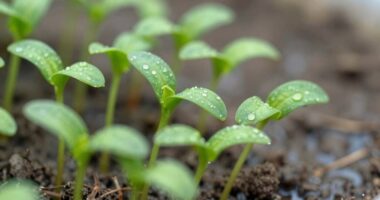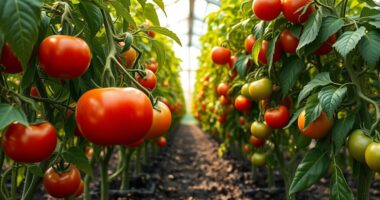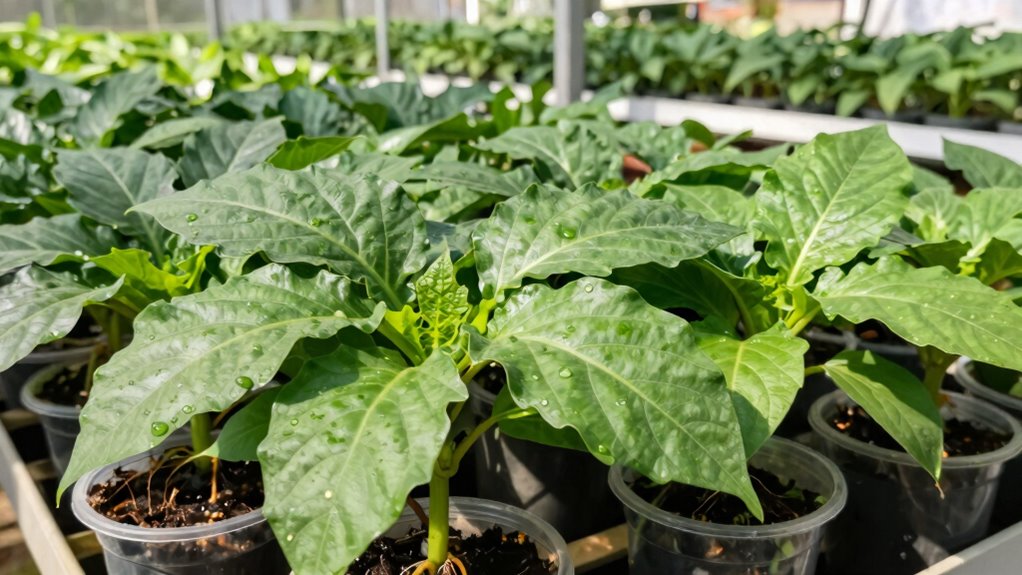

To accurately judge your greenhouse plant vigor, regularly inspect key indicators like leaf color, growth rate, and overall foliage health. Look for signs of nutrient deficiencies, such as yellowing leaves or stunted growth, and check for pests or damage. Conduct soil tests to guarantee ideal nutrient levels and adjust fertilization as needed. By monitoring these specific details, you can assess plant health confidently—stay with us to discover even more ways to keep your plants thriving.

Get garden gear delivered free with Prime
- Fast, free delivery on millions of items
- Prime Video, Amazon Music and more included
- Member-only deals all year
Key Takeaways
- Regularly assess plant growth metrics such as height, leaf size, and overall canopy development.
- Observe leaf color and texture for signs of nutrient balance and health.
- Monitor for pest presence or damage as indicators of plant stress.
- Conduct periodic soil testing to ensure optimal nutrient levels and soil health.
- Evaluate plant resilience by noting recovery from stress and adaptability over time.
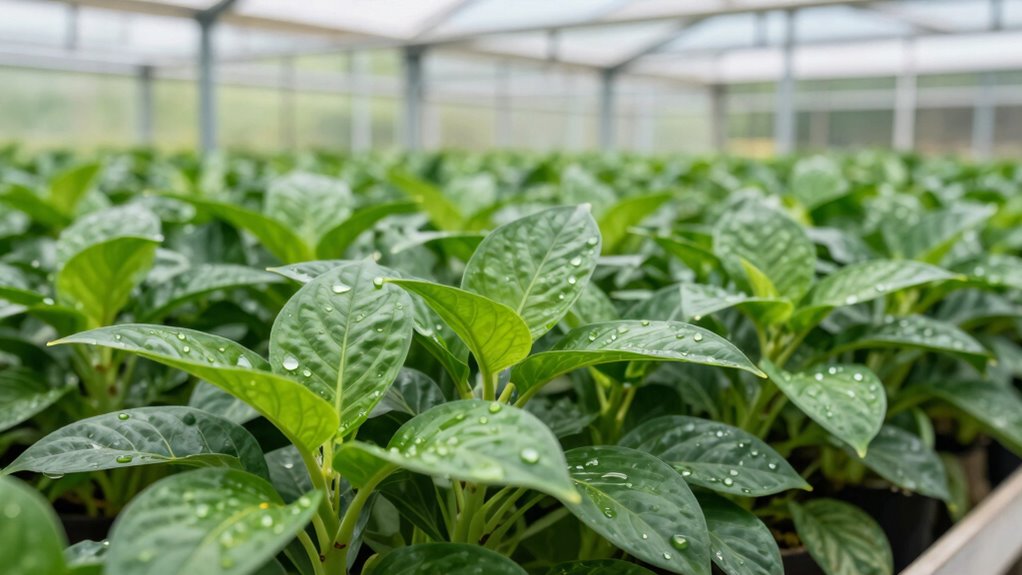
Ever wondered how to accurately assess the health and importance of your greenhouse plants? The key lies in observing specific signs that reveal their overall vigor. One of the first things you should check is the soil nutrient levels. Healthy plants rely on balanced nutrients, so if you notice yellowing leaves, stunted growth, or poor flowering, it might mean the soil lacks essential elements like nitrogen, phosphorus, or potassium. Testing your soil regularly can help you identify deficiencies before they severely impact your plants. Remember, soil that’s overly rich in certain nutrients can also cause problems, so aim for a balanced mix tailored to your plant types. Proper fertilization based on soil tests guarantees your plants get what they need to thrive, leading to healthier, more vigorous growth.
Next, pay close attention to pest infestation signs. Pests like aphids, spider mites, or whiteflies can quickly weaken your plants, making them look dull or deformed. When you notice tiny insects on leaves, sticky residues, or webbing, it’s a clear indicator that pests are attacking. These infestations not only damage foliage but can also transmit diseases that further compromise plant health. Regular inspection of leaves, stems, and the undersides of foliage is vital—don’t wait until the damage becomes severe. Addressing pests early with integrated pest management techniques will keep your plants vigorous and prevent setbacks. Healthy plants are more resistant to pests, so maintaining ideal growing conditions reduces their susceptibility. Additionally, monitoring plant vigor regularly helps you catch early signs of stress and maintain overall health. Being aware of soil nutrient levels and how they influence plant vitality can help you make informed decisions to support robust growth.
soil nutrient test kit for plants
As an affiliate, we earn on qualifying purchases.
As an affiliate, we earn on qualifying purchases.
Frequently Asked Questions
What Are Common Signs of Poor Plant Vigor?
You’ll notice poor plant vigor through dull or yellowing leaf color and weak stems that bend or break easily. If leaves look faded or discolored, it indicates nutrient deficiencies or stress. Weak stems suggest the plant isn’t developing strong structural support. Check for these signs regularly to catch issues early, ensuring you can take corrective actions like adjusting watering, light, or nutrients to boost overall plant health.
How Often Should I Assess Plant Vigor?
You should assess plant vigor weekly to catch issues early. While plant growth seems steady, leaf color might reveal hidden stress. Regular checks help you notice subtle changes in vigor, ensuring healthy development. Don’t wait for obvious signs of decline—by monitoring frequently, you maintain ideal conditions, fostering strong growth. Consistent evaluations enable you to make timely adjustments, keeping your plants vibrant and vigorous, even when they appear outwardly fine.
Does Plant Size Always Indicate Health?
Plant size doesn’t always indicate health, as myths suggest bigger plants are healthier. Vigor vs. growth means a plant might grow large with poor health or small but be vigorous and resilient. Instead of relying solely on size, check leaf color, stem strength, and overall appearance. Healthy plants display vibrant leaves, sturdy stems, and consistent growth patterns, regardless of their size. Focus on these signs to accurately assess plant health.
Can Soil Quality Affect Plant Vigor Assessment?
Think of soil quality as the foundation of a sturdy house; it directly impacts plant vigor. Yes, soil nutrients and pH balance can greatly affect your assessment. Healthy plants thrive when the soil provides essential nutrients and maintains proper pH. If the soil is lacking or unbalanced, even vigorous-looking plants might struggle later. Regularly check these factors to guarantee your plants’ true health and vigor shine through.
What Tools Assist in Evaluating Plant Vigor Accurately?
You can use tools like remote sensing and chlorophyll meters to evaluate plant vigor accurately. Remote sensing captures detailed images and data from above, revealing plant health patterns quickly across large areas. Chlorophyll meters measure the chlorophyll content directly in leaves, indicating nutrient status and overall vigor. Both tools provide precise, objective insights, helping you assess plant health more reliably than visual guesses alone.
Conclusion
Now that you know the signs of healthy plant vigor, you can read your greenhouse like a seasoned gardener reading a good book. Think of your plants as vibrant dancers, their movements revealing their strength and importance. With a keen eye, you’ll spot the subtle cues of growth and health, turning guesswork into a confident art. Soon, you’ll nurture a lush, thriving oasis where each plant tells its own lively story of vitality and care.
Fall yard work Picks
leaf blowers
As an affiliate, we earn on qualifying purchases.