
To maintain ideal light levels for different crops, measure light intensity regularly using a light meter and adjust your setup accordingly. Some plants need direct sunlight, while others thrive in diffused or partial light. Supplement natural light with LED grow lights when needed. Tailoring light conditions to each crop’s specific requirements promotes healthy, uniform growth and boosts pest resistance. Keep exploring to discover how fine-tuning your lighting can maximize your crop’s potential.
Key Takeaways
- Use light meters to measure and monitor light intensity regularly for precise control.
- Adjust natural and supplemental lighting based on specific crop light requirements.
- Provide direct or diffused light conditions tailored to each crop’s needs for optimal growth.
- Supplement natural light with LED grow lights when natural light is insufficient or inconsistent.
- Maintain even light distribution to promote uniform development and strengthen plant pest resistance.
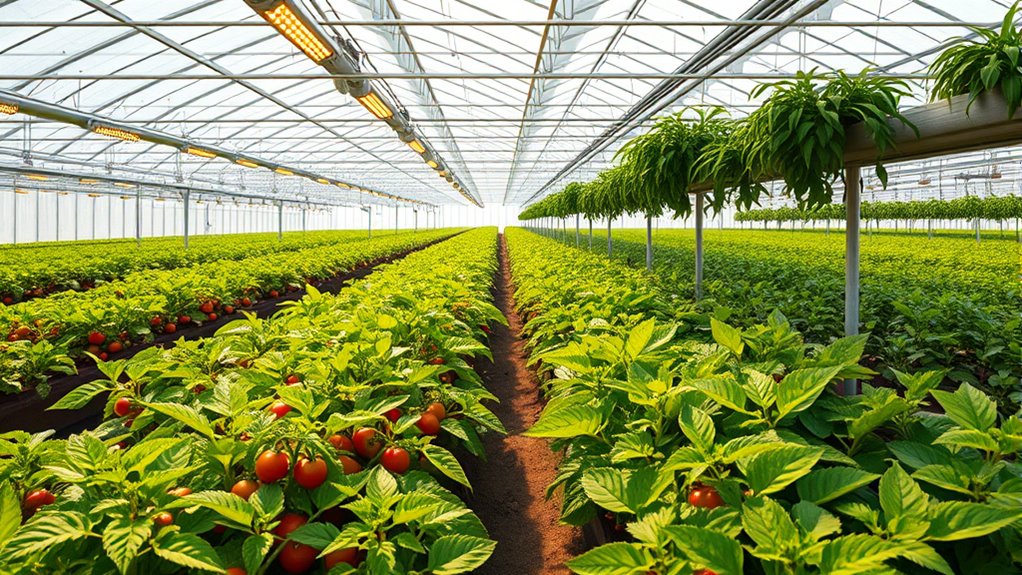
Have you ever wondered how vital consistent light levels are for healthy crop growth? Light isn’t just about making your plants look vibrant; it directly influences their growth rate, overall health, and resistance to pests. When light levels fluctuate or fall below ideal ranges, you risk slowing down your crop’s development, which can lead to underwhelming yields. Maintaining steady, appropriate light ensures your plants grow at their best pace, reducing the likelihood of stress that pests often exploit. When plants aren’t growing vigorously, they tend to become more vulnerable to pest infestations, making pest control more challenging and potentially more chemical-dependent. Guaranteeing consistent light levels helps keep your plants healthy, making pests less likely to take hold and reducing the need for aggressive pest control measures later.
Consistent light levels strengthen plants’ health and pest resistance, boosting yields and reducing chemical reliance.
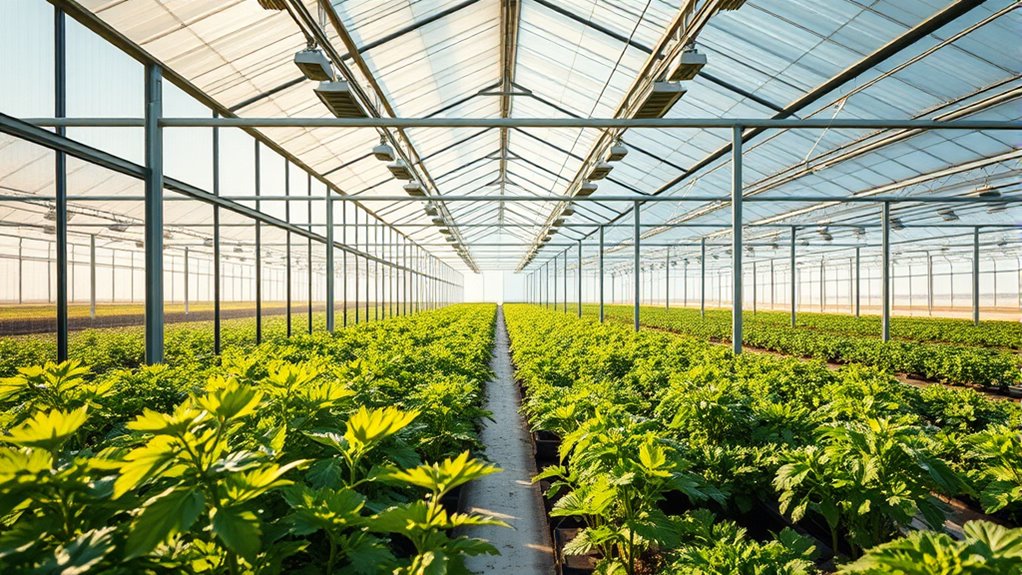
To maximize growth rate, you need to understand the specific light requirements of each crop. Some crops thrive under intense, direct sunlight, while others prefer diffused or partial light. Using tools like light meters allows you to monitor real-time light levels and adjust your setup accordingly. If natural light isn’t sufficient, supplemental lighting systems like LED grow lights can fill in the gaps, maintaining the necessary intensity and duration for healthy growth. Properly calibrated lighting not only boosts growth rate but also promotes uniform development across your entire crop, preventing uneven maturity that can compromise harvest quality.
Maintaining consistent light levels is also crucial for preventing plant stress, which can weaken crops and make them more susceptible to pests and diseases. Consistent light management also plays a vital role in pest control. When plants receive adequate light, they develop strong, healthy tissues that are less attractive or susceptible to pests. Conversely, insufficient or irregular light can weaken plants, making them more prone to pest attacks. Weak plants often exhibit slower growth and can become stressed, creating an inviting environment for pests like aphids, mites, or fungi. By maintaining reliable light levels, you help your crops stay vigorous and resilient, naturally reducing the need for chemical interventions. Regularly adjusting light exposure and ensuring even distribution across your fields or indoor grow areas can greatly diminish pest pressures.
In essence, managing light levels isn’t just about maximizing photosynthesis; it’s a strategic approach to promoting faster growth and robust pest resistance. Your attention to lighting details can lead to healthier, more productive crops, with less reliance on pest control chemicals. Consistent light levels help nurture strong plants that can withstand pest challenges and reach harvest readiness on schedule. So, stay vigilant, use the right tools, and fine-tune your lighting setup to support ideal growth rates and effective pest management—your crops will thank you, and your harvest will reflect your careful planning.
Frequently Asked Questions
How Do Light Requirements Change During Different Crop Growth Stages?
During different growth stages, your crop’s light requirements change through light adaptation. In early stages like germination and seedling development, they need lower light levels to avoid stress. As they grow, they require more light for photosynthesis and healthy development. During flowering and fruiting, increasing light intensity supports better yields. Adjust your lighting accordingly to match each growth stage, ensuring your plants get the most suitable light for robust growth.
Can Artificial Lighting Fully Replace Natural Sunlight for Crops?
Artificial lighting can’t fully replace natural sunlight, even with advanced photoperiod management and light spectrum optimization. Think of sunlight as a vibrant painter, blending colors effortlessly, while artificial lights are like a limited palette. You can simulate many aspects, but the full spectrum and intensity of natural sunlight remain unmatched. To maximize growth, you’ll need to supplement with natural light whenever possible, using artificial sources as needed.
What Are the Signs of Inadequate or Excessive Light in Crops?
You’ll notice signs of inadequate light in your crops, like leaf discoloration and elongated, stretched stems from crop stretching. Excessive light can cause leaf scorch or bleaching, leading to leaf damage. If you see leaf discoloration or crop stretching, check your light setup. Adjust the light intensity or duration accordingly to prevent stress and promote healthy growth, ensuring your crops remain vibrant and well-developed.
How Does Light Intensity Affect Crop Yield and Quality?
Light intensity boosts crop yield and quality by enhancing photosynthesis efficiency. When light is just right, plants grow stronger, produce better fruits, and resist pests more effectively. Too much light can cause stress, reducing photosynthesis and increasing pest susceptibility, while too little hampers growth and lowers yields. You need to balance light levels to optimize crop health, ensuring each plant reaches its full potential without suffering from excess or shortage.
Are There Specific Light Levels Recommended for Organic Farming Systems?
In organic farming, you should focus on shade management to optimize light levels, ensuring your crops get enough sunlight without excessive shading. Aim for a balanced light spectrum, including full sun or partial shade depending on the crop, to promote healthy growth and yield. Adjust your practices based on seasonal changes and crop needs, maintaining sufficient light without compromising soil health or ecological balance.
Conclusion
By adjusting light levels precisely, you paint a vibrant canvas where each crop thrives under its perfect glow. Imagine your greenhouse as a well-tuned symphony, where every note of light harmonizes with plant needs. When you master this balance, your crops flourish like a lush, green forest, each leaf shining with vitality. Remember, maintaining ideal light isn’t just about growth—it’s about creating a living masterpiece that blooms beautifully under your careful watch.