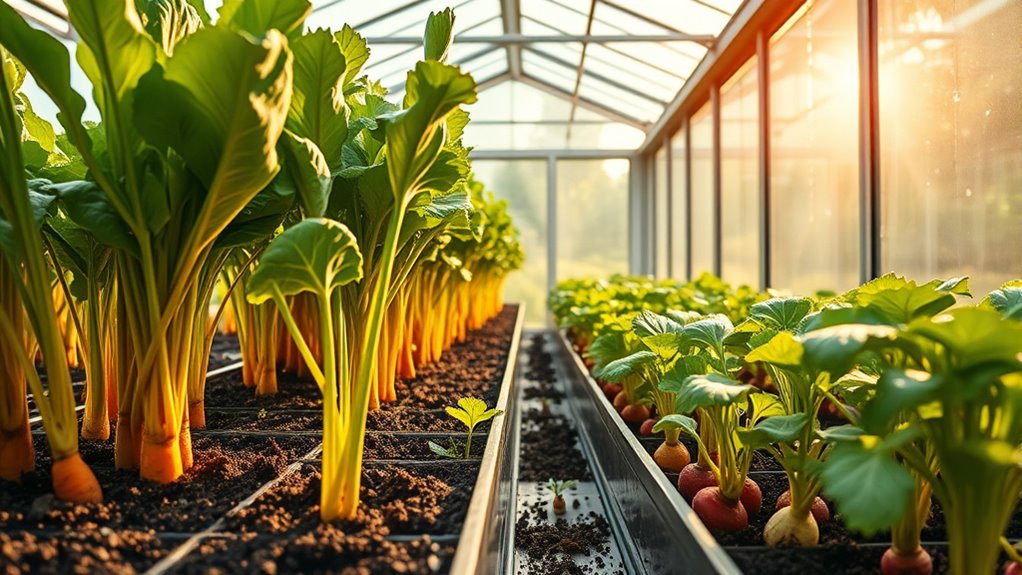

Growing root vegetables in containers inside a greenhouse offers you a controlled environment that guarantees year-round growth and better pest management. By using containers, you can easily customize soil or hydroponic setups, regulate temperature, and reduce soil-borne diseases. Regular inspection and proper sanitation further protect your crops. With these practices, you’ll maximize your harvest. Keep exploring these techniques to learn more about optimizing your container garden for healthy, homegrown root vegetables.
Key Takeaways
- Use deep, well-draining containers to accommodate root growth and prevent waterlogging.
- Maintain optimal soil moisture and nutrient levels through regular monitoring in a controlled greenhouse environment.
- Incorporate hydroponic or soilless systems for efficient space use and faster root development.
- Implement pest prevention measures such as physical barriers and beneficial insects to protect root crops.
- Ensure consistent temperature and humidity control to promote healthy root growth year-round indoors.
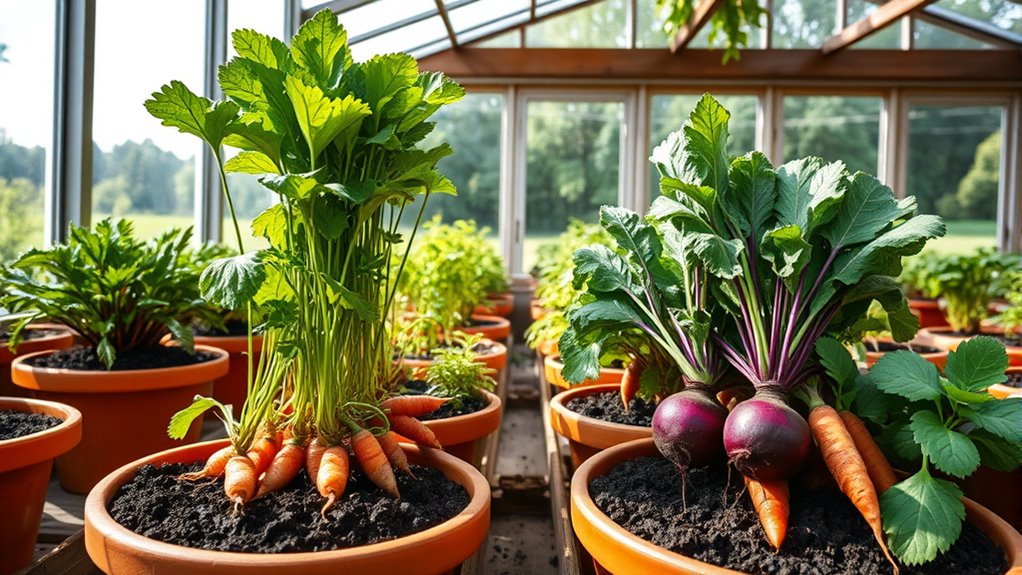
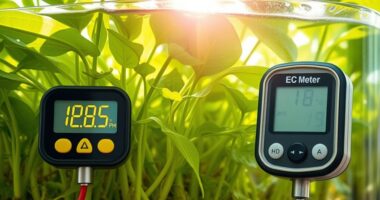
Growing root vegetables in containers inside a greenhouse offers a practical way to enjoy fresh produce year-round, regardless of outdoor weather conditions. When you set up your growing space inside, you gain control over environmental factors such as temperature, humidity, and pests, creating an ideal environment for healthy root development. One effective method to maximize space and productivity is by using hydroponic systems. These soilless setups allow you to grow root vegetables efficiently, with faster growth rates and less soil-borne disease risk. For example, you can use deep water culture or nutrient film techniques tailored for root crops like carrots, radishes, and beets. Hydroponic systems also make it easier to monitor and adjust nutrient levels, ensuring your plants receive precisely what they need for effective growth. Regularly inspecting your plants and maintaining cleanliness are essential components of pest management. Although a greenhouse provides some protection, pests such as aphids, fungus gnats, and root maggots can still pose threats. To keep these pests at bay, you should implement integrated pest management (IPM) strategies. This involves regularly inspecting your plants, maintaining cleanliness, and using physical barriers like fine mesh screens to prevent pest entry. Beneficial insects, such as predatory nematodes or ladybugs, can be introduced to control common pests naturally. Additionally, avoid overwatering, which can create conditions conducive to fungal diseases and attract pests. Proper sanitation and crop rotation also help break pest life cycles, reducing infestations over time. Growing root vegetables inside your greenhouse allows you to be proactive about pest control and nutrient management. Using hydroponic systems minimizes soil-borne issues and makes it easier to keep pests in check since you’re working in a controlled environment. You should also consider companion planting with herbs or flowers that repel pests or attract beneficial insects. Regular monitoring, combined with eco-friendly pest management techniques, ensures your crops stay healthy and productive. Additionally, understanding expiration of vape juice and storage tips can help prevent spoilage of supplies used in your gardening or other activities. Keep in mind that managing pests and nutrients in a greenhouse setup is an ongoing process requiring vigilance and adjustments, but the rewards of fresh, homegrown root vegetables make the effort worthwhile.
Frequently Asked Questions
What Are the Best Container Materials for Root Vegetables?
You should choose containers made of breathable materials like unglazed ceramic, terracotta, or wood because they promote good soil drainage and container ventilation. These materials prevent water from pooling around roots, reducing rot risks. Avoid plastic or non-porous containers, which can retain excess moisture. Proper drainage and airflow are essential for healthy root development and to prevent diseases, ensuring your root vegetables grow strong and tasty.
How Do I Prevent Pests in Indoor Root Vegetable Containers?
You can prevent pests in your indoor root vegetable containers by practicing companion planting, like pairing carrots with onions or garlic, which naturally repels pests. Also, use natural repellents such as neem oil or insecticidal soap, applying them regularly to keep pests away. Keep your greenhouse clean, remove dead plants, and inspect plants often to catch issues early, ensuring your vegetables stay healthy and pest-free.
Can I Grow Root Vegetables Year-Round Indoors?
Yes, you can grow root vegetables indoors year-round if you provide the right conditions. Make certain your indoor lighting is ample, like grow lights, to mimic sunlight. Keep the soil temperature between 55-75°F to promote healthy growth and prevent rot. Regularly check and adjust your lighting and temperature settings, and you’ll enjoy fresh root vegetables throughout the year, regardless of outdoor seasons.
What Fertilization Schedule Is Optimal for Container-Grown Roots?
You should fertilize your container-grown root vegetables every 2-3 weeks using a balanced, water-soluble fertilizer. Incorporate soil amendments like compost or organic matter to improve nutrient content. Maintain a consistent watering regime, ensuring the soil stays moist but not waterlogged. This schedule supports healthy root development, helping your vegetables grow strong and flavorful. Adjust fertilization based on plant growth and container size for ideal results.
How Do I Extend the Harvest Period for Root Vegetables?
Imagine biting into fresh, crisp root vegetables even as the season changes. To extend your harvest, use season extension techniques like row covers or supplemental heating. Incorporate crop rotation strategies to keep your soil healthy and prevent pests. Stagger planting times and choose fast-maturing varieties. These methods help you enjoy fresh produce longer, turning your greenhouse into a year-round bounty of delicious, homegrown roots.
Conclusion
Just like hidden treasures waiting to be uncovered beneath the soil, your greenhouse can become a sanctuary for thriving root vegetables. With patience and care, you’ll nurture vibrant carrots, beets, and radishes that reward your effort. Think of yourself as a gardener of secrets, revealing nature’s bounty one container at a time. Embrace the journey, and soon, you’ll harvest a colorful, flavorful bounty right from your indoor oasis—proof that good things grow underground.