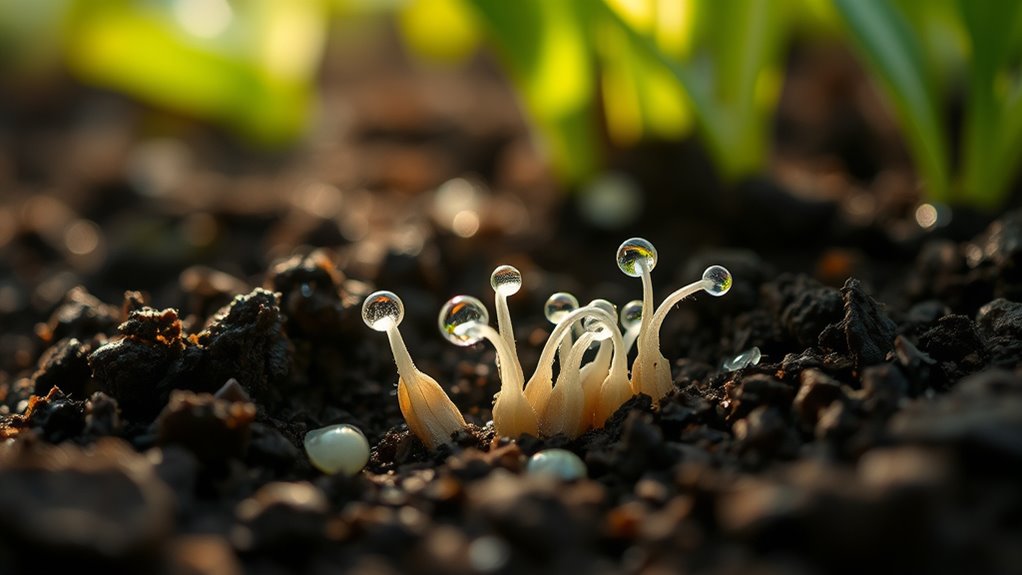
To guarantee healthy germination of common crops, you need to provide the right temperature, moisture, and oxygen levels. Most seeds prefer warm conditions, adequate water, and well-drained soil to start growing. Some crops may require specific treatments like scarification or stratification to break dormancy. Light might also influence germination for certain plants. Keep an eye on these factors, and you’ll discover how to optimize seed sprouting for your garden or field.
Key Takeaways
- Most crops require adequate water for seed imbibition and metabolic activation during germination.
- Optimal temperature ranges vary by crop but generally fall between 15°C to 30°C for successful sprouting.
- Sufficient oxygen availability is essential for respiration and energy production in germinating seeds.
- Light sensitivity differs among crops; some need light, while others germinate best in darkness.
- Breaking seed dormancy through scarification or stratification can improve germination rates for certain crops.
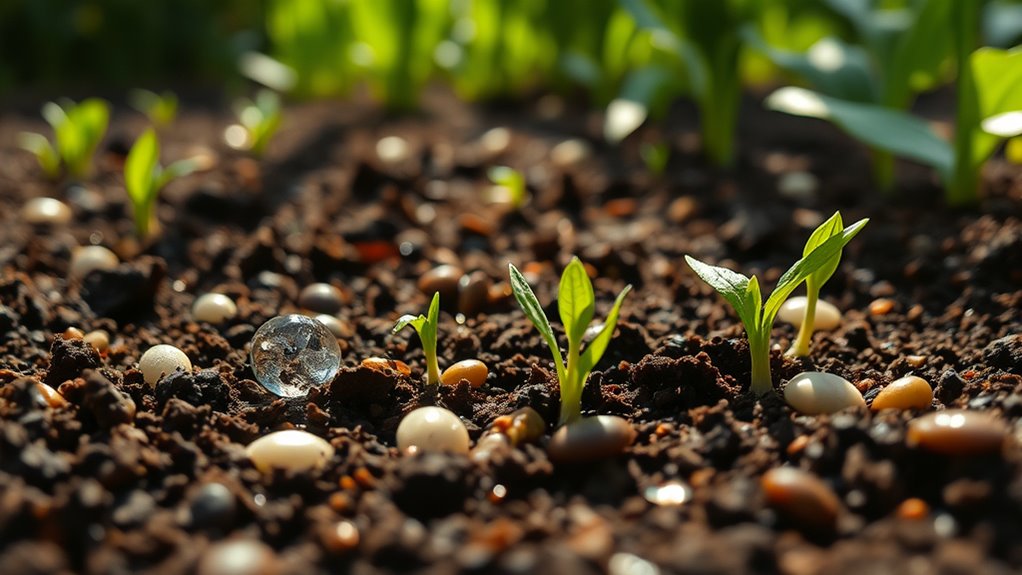
Have you ever wondered what it takes for a tiny seed to sprout into a healthy plant? It might seem simple—just plant the seed, water it, and wait—but there’s a complex process happening beneath the surface. One of the first hurdles a seed faces is seed dormancy, a natural state that prevents germination even under ideal conditions. Seed dormancy exists to guarantee that seeds don’t sprout at the wrong time, like during winter or a dry spell. Certain seeds contain germination inhibitors—chemical compounds that keep them from sprouting prematurely. These inhibitors act as a safeguard, blocking the seed’s growth until conditions are just right. To overcome this dormancy, you often need to break or bypass these inhibitors through specific treatments.
Understanding seed dormancy is crucial to successful germination. Some seeds have physical dormancy, where a hard seed coat prevents water and oxygen from entering. Others have physiological dormancy, involving internal chemical inhibitors like germination inhibitors that suppress the seed’s metabolic activity. These inhibitors may be naturally present within the seed or form part of the seed coat. To overcome this, you might need to scarify the seed—scratching or breaking the seed coat—to allow water penetration. Alternatively, stratification, which involves exposing seeds to cold, moist conditions for a period, can help dissolve chemical inhibitors and trigger germination. Heat treatments or soaking seeds in water can also neutralize germination inhibitors, signaling to the seed that environmental conditions are suitable for sprouting. Additionally, seed treatments can enhance germination success by breaking dormancy more effectively.
Once these inhibitors are neutralized or removed, the seed begins to respond to favorable conditions. The next step involves water absorption—called imbibition—where the seed swells as it takes in moisture. This activates enzymes that kickstart cellular activity, leading to the breakdown of stored nutrients and the emergence of the root. Temperature plays a crucial role here; most seeds require a specific temperature range to germinate efficiently. Adequate oxygen availability is also vital, as it supports metabolic processes during germination. Light can influence some seeds’ germination as well, either promoting or inhibiting sprouting depending on the species.
Frequently Asked Questions
How Do Soil Temperature Fluctuations Affect Germination Rates?
Soil temperature fluctuations can markedly impact your germination rate. If temperatures swing too much, seeds may struggle to sprout, leading to uneven or delayed germination. Consistent soil temperature helps seeds activate enzymes and metabolic processes efficiently, boosting germination success. Too cold or too hot conditions slow down or inhibit germination, reducing overall crop yield. You should aim for stable soil temperatures within the ideal range for your specific crops to improve germination outcomes.
What Are the Signs of Poor Germination in Seedlings?
When seedlings struggle to grow, it’s like a garden missing its song. You might notice uneven or sparse sprouting, yellowing leaves, or stunted growth—clear signs of poor germination. Seed coat dormancy can prevent seeds from breaking open, while low seedling vigor results in weak, fragile plants. Keep an eye on these clues, and you’ll catch early warning signs before your crop’s melody fades away.
Can Seed Priming Improve Germination Success?
Yes, seed priming can improve germination success. By soaking seeds in water or solutions before planting, you activate metabolic processes that speed up germination. This method helps seeds develop uniform sprouts, reduces dormancy, and enhances emergence rates. You’ll notice healthier seedlings and quicker establishment, especially in challenging conditions. Just make certain you follow proper priming techniques to avoid over-soaking, which can damage the seeds and hinder germination.
How Does Seed Depth Influence Germination Speed?
You should plant seeds at the correct seed depth to maximize germination speed. If you plant too deep, it takes longer for seeds to reach the surface, slowing down germination rate. Conversely, planting too shallow may expose seeds to drying out or pests. Generally, a proper seed depth ensures ideal conditions, speeding up germination and improving overall success. Always follow specific crop recommendations for best results.
Are There Specific Germination Requirements for Organic Farming?
Think of organic farming as tending a delicate garden where natural harmony matters. You should use organic seed treatments and embrace biodynamic practices to enhance germination. These methods avoid synthetic chemicals, focusing instead on compost, teas, and herbal preparations. Proper soil preparation, maintaining ideal moisture, and avoiding excessive tillage help seeds sprout naturally. Your goal is to create a thriving environment that respects nature’s cycle, ensuring healthy, vigorous crops from the very start.
Conclusion
Understanding seed germination requirements helps you grow healthy crops successfully. Did you know that about 85% of seed germination failure is due to incorrect conditions? By providing the right temperature, moisture, and light, you can boost your crop yields and ensure robust plant growth. Pay attention to these factors, and you’ll increase your chances of successful germination. With proper care, your crops will thrive, giving you a bountiful harvest to enjoy.