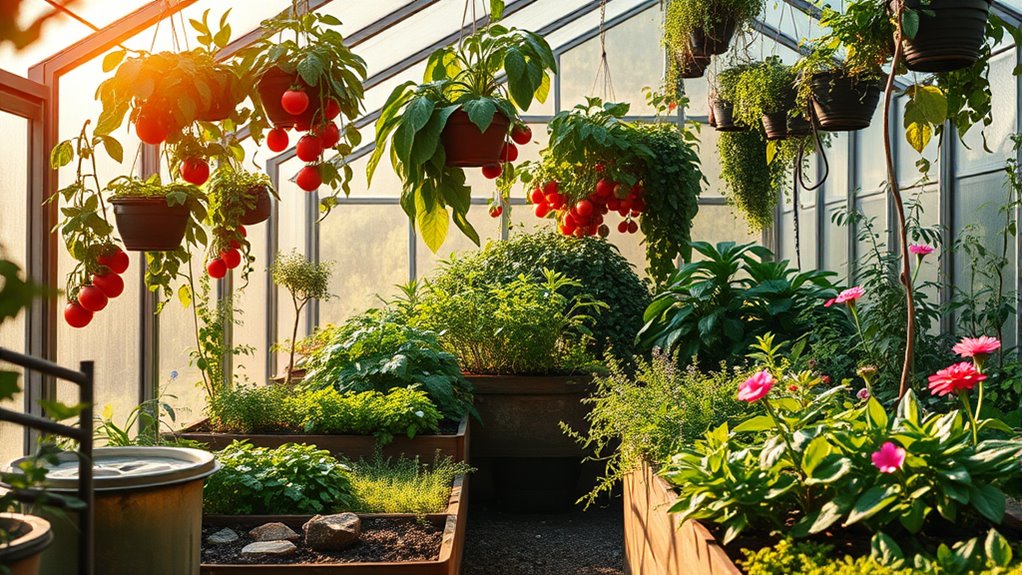

By applying permaculture principles in your greenhouse, you can create a resilient, self-sustaining ecosystem that boosts soil health, encourages beneficial insects, and naturally manages pests. Focus on enriching your soil with compost, cover crops, and mulch while designing plant arrangements to optimize sunlight, water, and nutrients. Incorporate crop diversity, physical barriers, and native plants to reduce chemical use. If you want to discover more ways to build harmony and sustainability, you’ve come to the right place.

Get garden gear delivered free with Prime
- Fast, free delivery on millions of items
- Prime Video, Amazon Music and more included
- Member-only deals all year
Key Takeaways
- Design plant layouts to maximize resource efficiency, supporting mutual relationships and natural pest control.
- Incorporate crop diversity, cover crops, and companion planting to enhance soil health and ecosystem balance.
- Use physical barriers, trap crops, and beneficial insects to naturally manage pests without chemicals.
- Implement water catchment, recycling, and mulching to conserve resources and maintain soil moisture.
- Foster microbial and insect diversity to create a resilient, self-sustaining greenhouse ecosystem.
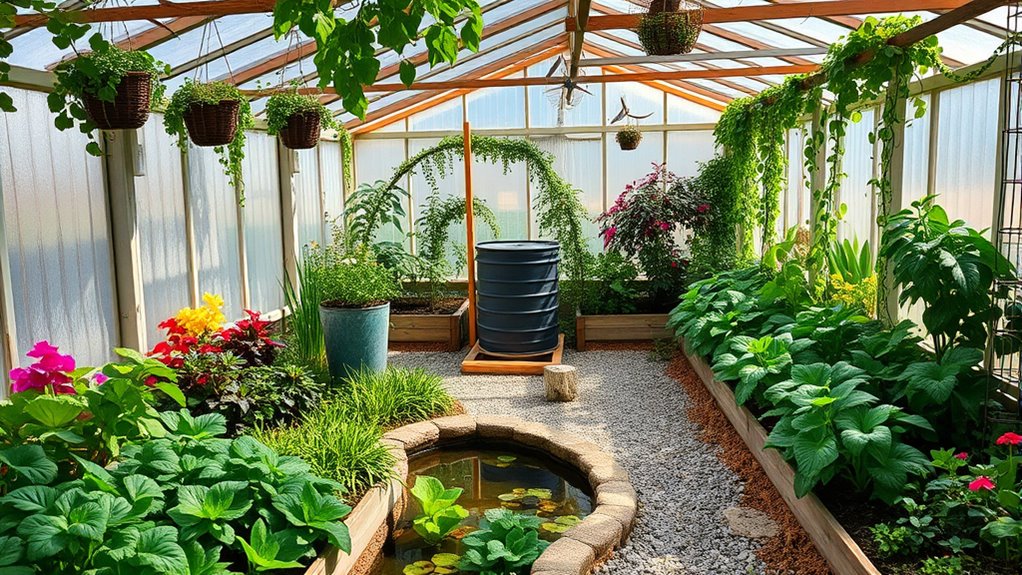
Permaculture in the greenhouse offers a sustainable way to optimize space, conserve resources, and create a resilient growing environment. When designing your greenhouse with permaculture principles, you focus on building healthy soil and managing pests naturally, which are key to creating a self-sustaining ecosystem. Healthy soil is the foundation of thriving plants. Instead of relying on synthetic fertilizers, you enrich your soil with compost, mulch, and cover crops that boost organic matter and microbial activity. This approach not only improves nutrient availability but also enhances soil structure, allowing roots to grow stronger and resist diseases. As you develop your soil, you foster a living system where beneficial insects and microorganisms flourish, naturally suppressing pest populations and reducing the need for chemical interventions. Incorporating cultural practices such as crop rotation and interplanting further supports soil health and pest management strategies. Pest management in a permaculture greenhouse isn’t about eradication but about creating a balanced environment. You introduce beneficial insects such as ladybugs, predatory mites, and parasitic wasps that keep pest populations in check. Planting a diversity of crops and companion plants encourages beneficial insects to thrive, creating a natural pest control system. You also use physical barriers like row covers and trap crops to divert pests away from your main plants. These methods work together to maintain harmony within your greenhouse, minimizing damage without harming the ecosystem. By observing pest patterns and understanding their life cycles, you can intervene only when necessary, avoiding the overuse of pesticides that could disrupt your soil’s health and beneficial insect populations. Incorporating permaculture principles means designing your greenhouse layout to maximize efficiency and sustainability. You position plants based on their needs and relationships, ensuring that water, nutrients, and sunlight are used efficiently. Water catchment and recycling systems conserve resources while maintaining moist, healthy soil. Mulching reduces water evaporation and suppresses weeds, further supporting soil health and pest management. You also consider the local ecosystem, selecting native or well-adapted plants that require less maintenance and are naturally resistant to pests and diseases.
As an affiliate, we earn on qualifying purchases.
Frequently Asked Questions
How Do I Choose the Best Greenhouse Location for Permaculture?
When choosing a greenhouse location, focus on sunlight optimization by placing it where it receives maximum daily sunlight, ideally facing south. Also, consider wind protection to prevent chilling and structural damage; find a site sheltered from strong winds, perhaps near natural barriers or with windbreaks. This guarantees your plants get enough light and stay protected, creating a stable environment for your permaculture system to thrive efficiently.
What Are Common Pest Management Strategies in Greenhouse Permaculture?
Think of pest management like tending a balanced garden. You can use companion planting to naturally deter pests and attract beneficial insects, kind of like inviting allies to your cause. Biological controls, such as introducing predatory insects, act like your garden’s immune system. Regular monitoring and maintaining healthy plant diversity are key. These strategies work together to keep pests at bay without chemicals, ensuring your greenhouse ecosystem remains resilient and productive.
How Much Maintenance Does a Permaculture Greenhouse Require?
A permaculture greenhouse requires moderate maintenance to stay productive. You’ll need to regularly manage compost to enrich your soil naturally and monitor water recycling systems to conserve resources. Keep an eye on plant health, prune when necessary, and ensure pest management strategies are in place without chemicals. With consistent care, your self-sustaining ecosystem thrives, reducing external inputs and creating a balanced environment that’s easier to guarantee over time.
Can Permaculture Principles Be Applied to Small-Scale Greenhouses?
Did you know small-scale greenhouses can produce up to 60% more yield with permaculture principles? Yes, you can apply them by practicing companion planting to naturally repel pests and boost growth, while water harvesting guarantees your plants stay hydrated sustainably. These techniques make your greenhouse more efficient and eco-friendly, turning it into a thriving, self-sustaining system that fits perfectly into your space and budget.
What Are the Initial Costs Involved in Setting up a Permaculture Greenhouse?
When planning your permaculture greenhouse, consider the initial investment needed for setup. Your costs will include durable materials, soil amendments, water systems, and possibly renewable energy sources. Budget planning helps you allocate funds effectively, balancing quality and affordability. While the upfront costs can be significant, investing in sustainable infrastructure pays off in long-term savings and productivity, making your greenhouse a self-sustaining ecosystem.
Conclusion
By embracing permaculture in your greenhouse, you’re not just creating a garden—you’re building a tiny universe that could outlast empires, rival nature itself, and sustain life through every storm and drought. Your self-sustaining ecosystem becomes a miracle machine, transforming chaos into harmony, scarcity into abundance. With every plant and insect working together, you’re crafting a living masterpiece so resilient, so vibrant, that even time itself will marvel at your green thumb’s unstoppable power.
Fall Picks
fall essentials
As an affiliate, we earn on qualifying purchases.