
Composting kitchen scraps is an easy way to turn waste into nutrient-rich fertilizer for your greenhouse. By regularly collecting vegetable peels, coffee grounds, and shredded paper, and using a compost bin or worm bin, you can accelerate decomposition and improve soil health. This method reduces waste and boosts plant growth naturally. If you want to discover simple tips to optimize your composting process and make your greenhouse more productive, keep exploring these techniques.
Key Takeaways
- Use a composting bin or worm bin to efficiently convert kitchen scraps into nutrient-rich fertilizer for your greenhouse.
- Incorporate kitchen waste such as vegetable peels, coffee grounds, and shredded paper into your compost system regularly.
- Maintain proper moisture, aeration, and temperature to ensure fast, odor-free decomposition of kitchen scraps.
- Use finished compost to improve soil structure, moisture retention, and nutrient content in your greenhouse beds.
- Regularly turn or aerate compost to accelerate decomposition and produce high-quality fertilizer for healthy plant growth.
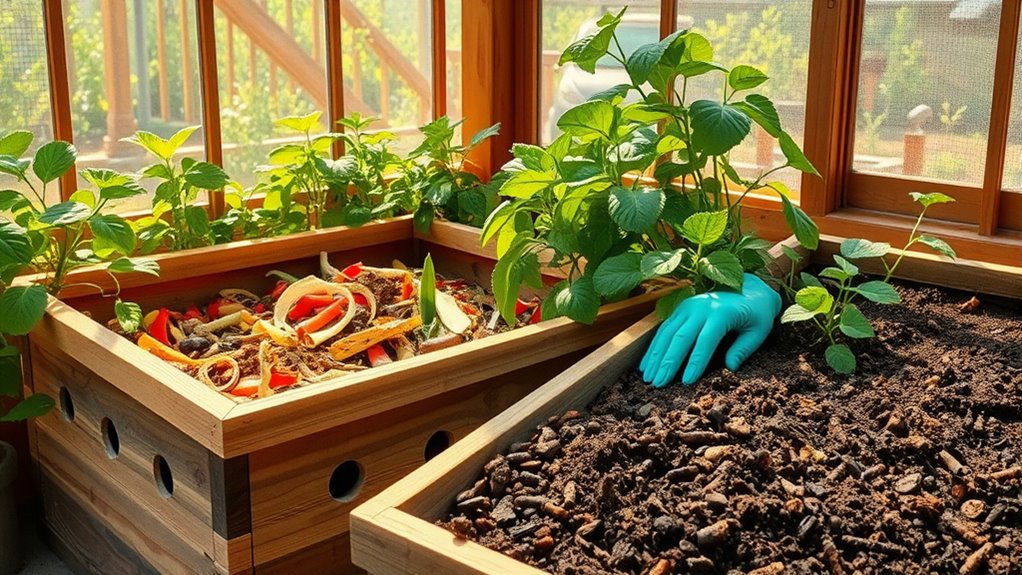
Composting kitchen scraps is an easy and effective way to reduce waste and create nutrient-rich soil for your garden. When you start composting, you turn everyday food scraps into valuable compost that boosts your greenhouse plants’ growth. One of the simplest methods is using composting bins, which keep your kitchen waste contained and manageable. These bins come in various sizes and styles, from simple plastic containers to more sophisticated tumblers. They help you control moisture levels and airflow, essential for healthy composting. As you collect fruit peels, coffee grounds, vegetable scraps, and eggshells, you’ll notice that composting bins make the process straightforward and mess-free. Regularly turning the compost inside the bin accelerates decomposition and prevents odors, ensuring your compost stays fresh and effective.
Composting kitchen scraps reduces waste and creates nutrient-rich soil for your garden.
A popular and eco-friendly approach is worm composting, also known as vermicomposting. You set up a worm bin, which is specially designed for red worms that thrive on kitchen scraps. These worms consume organic waste rapidly, producing high-quality castings that act as an excellent natural fertilizer for your greenhouse plants. Worm composting is particularly beneficial if you have limited space or want an odor-free composting method. You simply add your kitchen scraps—such as vegetable peels, coffee grounds, and shredded paper—into the worm bin. The worms do the work of breaking down the material efficiently, and in a few weeks, you’ll have rich worm castings ready to enhance your soil. Additionally, incorporating composting techniques can further optimize the process and ensure nutrient-rich results.
Using composting bins or worm composting not only minimizes waste but also provides you with a sustainable way to nurture your greenhouse. The compost you produce improves soil structure, increases nutrient content, and helps retain moisture, all crucial for healthy plant growth. When you incorporate this homemade compost into your planting routine, you’ll notice healthier, more vigorous plants and better yields. Plus, composting kitchen scraps reduces the need for chemical fertilizers, making your greenhouse more environmentally friendly.
Getting started is simple; just choose a suitable composting bin or worm bin, gather your kitchen scraps regularly, and maintain proper moisture and aeration. Over time, you’ll develop a productive composting habit that benefits your plants and reduces waste. Whether you opt for traditional composting bins or worm composting, you’ll find that turning kitchen scraps into garden gold is a rewarding and sustainable practice that elevates your greenhouse gardening to the next level.
Frequently Asked Questions
Can Composting Kitchen Scraps Eliminate Odors in My Greenhouse?
Yes, composting kitchen scraps can help with odor control in your greenhouse. Proper composting reduces unpleasant smells by breaking down organic waste efficiently. To prevent odors, make certain good greenhouse ventilation, which allows excess moisture and gases to escape. Regularly turning your compost and maintaining a balanced mix of greens and browns also minimizes odors, keeping your greenhouse smelling fresh while creating rich fertilizer from kitchen scraps.
How Long Does It Take for Kitchen Scraps to Decompose Fully?
The time to compost kitchen scraps varies, but typically, composting duration takes about 2 to 4 months. Factors like temperature, moisture, and the size of scraps influence how quickly they break down. You can speed up the process by chopping scraps into smaller pieces, maintaining proper moisture levels, and turning the compost regularly. Expect full decomposition within this timeframe if you manage these conditions well.
Are There Kitchen Scraps That Should Never Be Composted?
You should avoid composting toxic waste, meat scraps, dairy, and oily foods because they attract pests, create odors, and may introduce harmful bacteria. These scraps can disrupt your compost’s balance and pose health risks. Instead, focus on fruit and vegetable scraps, coffee grounds, and eggshells. Keep your compost healthy and safe by steering clear of items that could compromise your greenhouse’s environment and your gardening efforts.
What Are the Ideal Moisture Levels for Composting Kitchen Waste?
You should aim to keep your compost’s moisture levels similar to a damp sponge, about 40-60%. Use moisture monitoring to check regularly; it shouldn’t be too wet or too dry. If it feels soggy, add dry materials like leaves or paper. If it’s too dry, sprinkle water. Maintaining proper compost moisture levels helps speed up decomposition and prevents odors, making your kitchen scraps turn into rich fertilizer faster.
How Can I Prevent Pests When Composting Indoors?
To prevent pests when composting indoors, focus on pest prevention by choosing a well-sealed container with a tight-fitting lid. Use a container with small vents for airflow but avoid large openings that pests can access. Keep the compost balanced with browns and greens, and bury food scraps under the bedding. Regularly turn the compost and avoid overloading it to minimize odors and discourage pests effectively.
Conclusion
By composting your kitchen scraps, you’re not just recycling—you’re transforming your greenhouse into a lush, jungle-like paradise where plants grow so wildly they’ll seem to reach for the stars. Imagine your garden bursting with vibrant colors and bountiful harvests, all fueled by your everyday scraps. It’s like giving your plants a gourmet buffet every day, turning your green space into a magical, verdant kingdom. Start composting now, and watch your garden become the envy of the universe!