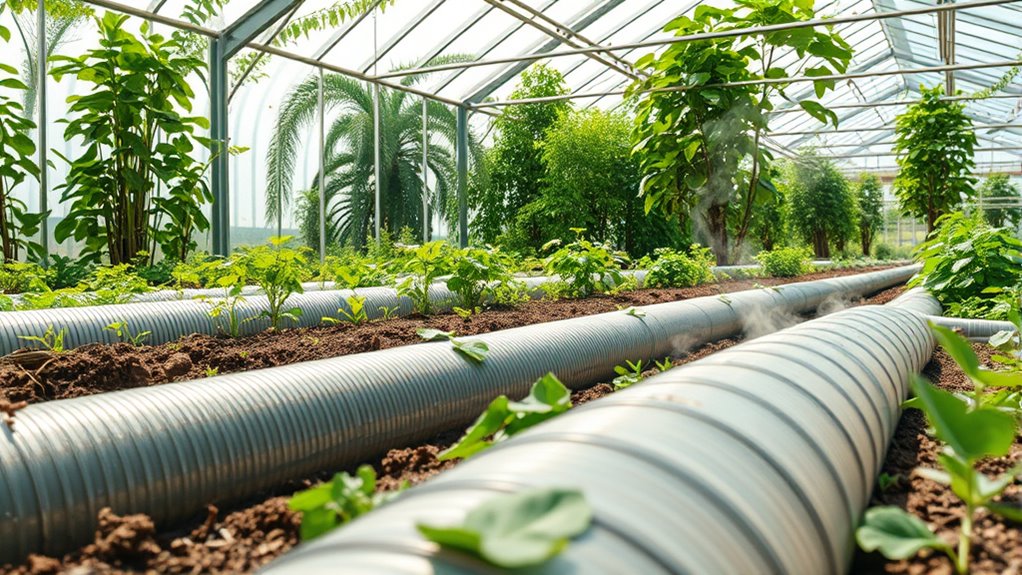

Using earth tubes combined with geothermal heating can make your greenhouse more energy-efficient and climate-resilient. Earth tubes pre-condition the air from beneath the surface, reducing the workload on your heating and cooling systems. Pairing this with geothermal energy provides consistent temperature control year-round. Insulation plays a key role in maximizing system performance and minimizing heat loss. To discover how these technologies work together to create a sustainable environment, keep exploring the details.
Key Takeaways
- Earth tubes pre-condition incoming air, reducing the workload on greenhouse heating and cooling systems.
- Geothermal systems provide consistent temperature regulation by tapping into the earth’s stable thermal energy.
- Proper insulation of ducts and ground around geothermal loops enhances system efficiency and reduces heat loss.
- Combining earth tubes with geothermal systems improves climate stability and resilience against extreme weather.
- Mindful design and installation of insulation maximize energy savings and system longevity in greenhouse environments.
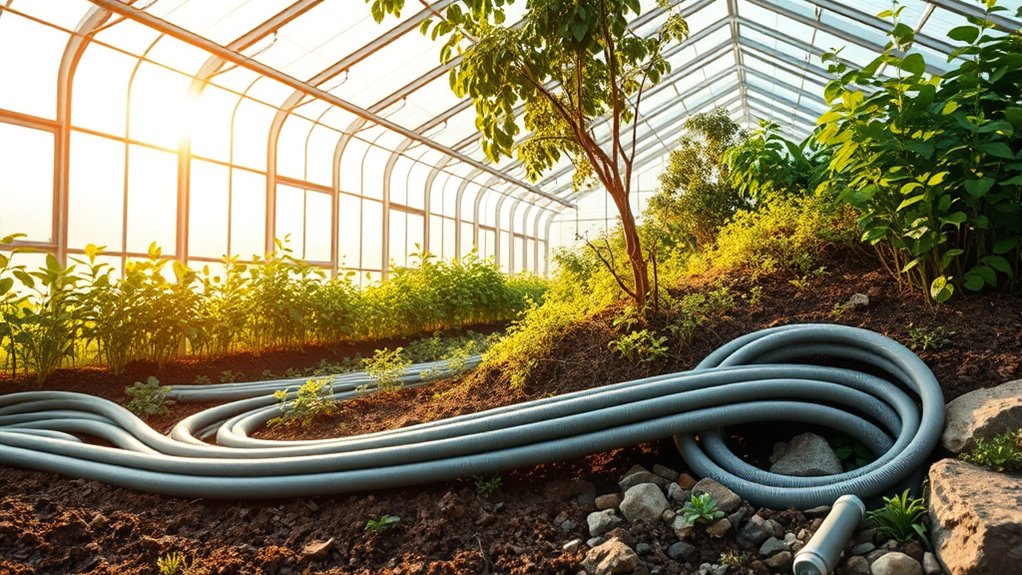
Greenhouses can substantially benefit from sustainable heating solutions, and earth tubes combined with geothermal heating offer an effective way to achieve this. When implementing these systems, insulation strategies become vital to maximize energy efficiency and guarantee consistent temperature regulation. Proper insulation minimizes heat loss during colder months and prevents unwanted heat gain in warmer periods, helping your greenhouse maintain stable conditions. This not only reduces energy consumption but also enhances the system’s overall performance, making your climate adaptation efforts more effective. You should focus on sealing gaps, insulating walls, and using thermal curtains or double-glazed panels where possible, creating a well-insulated environment that complements your geothermal and earth tube setup. Additionally, incorporating mindfulness practices during installation can improve focus and attention to detail, ensuring optimal system performance.
Climate adaptation is at the core of using earth tubes and geothermal heating in greenhouses. These systems allow you to respond flexibly to external weather variations, reducing reliance on external energy sources. Earth tubes work by drawing in fresh, pre-conditioned air from beneath the surface, where temperatures remain relatively constant throughout the year. This pre-conditioning lessens the load on your main heating or cooling systems, especially during extreme weather events. Geothermal systems tap into the earth’s stable thermal energy, providing consistent heat in winter and cooling in summer, which helps you adapt to fluctuating climate patterns. When combined, these technologies create a resilient environment that supports healthy plant growth regardless of seasonal changes.
To optimize climate adaptation, integrating effective insulation strategies with earth tubes and geothermal heating is essential. Insulation acts as a buffer, reducing the workload on your heating system and preventing temperature swings that could stress your plants. For example, installing insulated ducts for earth tubes ensures minimal heat exchange with the outside air, maintaining the desired indoor climate more effectively. Additionally, insulating the ground around geothermal loops enhances heat transfer efficiency, making the system more responsive to your greenhouse’s needs. By carefully designing your insulation approach, you guarantee that the energy captured from the earth is used efficiently, reducing operational costs and increasing system longevity.
Frequently Asked Questions
What Are the Initial Installation Costs for Earth Tubes and Geothermal Systems?
You’ll find that initial costs for earth tubes and geothermal systems vary, with geothermal often being pricier upfront. A cost comparison shows that while geothermal installation can range from $10,000 to $30,000, earth tubes are more affordable, typically costing a few thousand dollars. You should explore financing options, such as loans or incentives, to help manage these costs and make sustainable greenhouse heating more accessible for your project.
How Long Does It Take to See Energy Savings After Installation?
You’ll typically see energy savings within 3 to 6 months after installation, depending on system efficiency factors. Notably, some greenhouses report up to 40% reductions in heating costs in the first year. The energy savings timeline varies based on climate, insulation, and system maintenance. By optimizing these factors, you can accelerate your savings and enjoy lower energy bills sooner.
Are Earth Tubes Suitable for All Climate Zones?
Earth tubes aren’t suitable for all climate zones; their effectiveness depends on climate adaptability and specific design considerations. In moderate climates, they work well by providing natural ventilation and insulation. However, in extreme cold or hot climates, additional heating or cooling may be necessary. You should assess your local climate and carefully plan your earth tube system to guarantee it meets your greenhouse’s heating and ventilation needs effectively.
What Maintenance Is Required for Geothermal Heating Systems?
You need to perform routine inspections regularly on your geothermal heating system to guarantee it runs smoothly. Check for leaks, corrosion, or unusual noises, and clean or replace filters as needed. If you notice system troubleshooting issues, like decreased efficiency or temperature fluctuations, address them promptly. Proper maintenance keeps your system operating efficiently, extends its lifespan, and minimizes costly repairs, so stay vigilant with inspections and timely repairs.
Can These Systems Be Integrated With Existing Greenhouse Infrastructure?
Yes, you can integrate Earth Tubes and geothermal heating systems with your existing greenhouse infrastructure. You’ll need to take into account system compatibility and retrofit considerations carefully. It’s essential to evaluate your current setup’s capacity and design to guarantee seamless integration. Consulting with specialists helps identify necessary modifications, and proper planning ensures efficient operation without disrupting your greenhouse environment. This approach maximizes energy savings and sustainability benefits.
Conclusion
So, after all this talk about harnessing the earth’s natural warmth, you might think you’re winning the energy game. But don’t be too quick to celebrate—these eco-friendly systems can be tricky, costly, and require constant tweaking. Ironically, in trying to save the planet, you might just find yourself spending more time and money than you bargained for. Still, with patience and persistence, your greenhouse could become a true testimony to sustainable ingenuity.