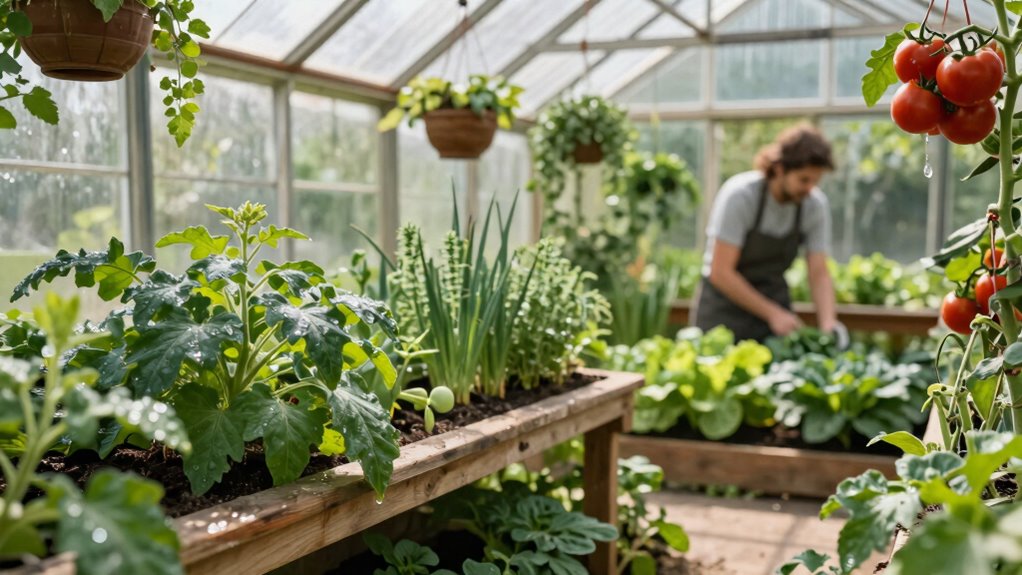
A greenhouse makes sustainable living feel more real because it lets you grow your own food, reducing reliance on store-bought produce with high carbon footprints. It also lets you harness renewable energy, like solar power, to run systems for heating and ventilation. With a greenhouse, you can efficiently manage water and resources, creating a resilient, eco-friendly environment. By taking control of your food and energy, you turn sustainability into a practical, daily practice—discover how to make it even easier.

Get garden gear delivered free with Prime
- Fast, free delivery on millions of items
- Prime Video, Amazon Music and more included
- Member-only deals all year
Key Takeaways
- Greenhouses enable year-round, local food production, making sustainable living tangible and achievable.
- They incorporate renewable energy, demonstrating practical ways to reduce reliance on fossil fuels.
- Controlled environments optimize resource use, reinforcing daily sustainable practices.
- Greenhouses serve as educational tools, fostering awareness of eco-friendly habits.
- They turn abstract sustainability ideals into concrete actions like growing food and harnessing clean energy.

Have you ever wondered how you can reduce your environmental impact while enjoying fresh, homegrown produce? Installing a greenhouse is a powerful step toward making sustainable living a reality. With a greenhouse, you can embrace urban agriculture, turning small city spaces into productive gardens that supply your daily needs. Instead of relying on store-bought vegetables and herbs that often come with a hefty carbon footprint, you gain control over your food sources, reducing transportation emissions and packaging waste. A greenhouse allows you to grow a variety of seasonal and even year-round crops, making sustainable living more tangible and rewarding.
One of the key advantages of having a greenhouse is the opportunity to integrate renewable energy solutions. Solar panels can be installed nearby to power ventilation fans, heating systems, or lighting, significantly decreasing your reliance on fossil fuels. By harnessing renewable energy, you contribute to a cleaner environment and lower your utility bills. The combination of urban agriculture within a greenhouse and renewable energy use creates a self-sufficient ecosystem that embodies the principles of sustainability. You become less dependent on external supply chains, which are often energy-intensive and environmentally damaging.
Integrating solar power with your greenhouse promotes sustainability and reduces reliance on fossil fuels.
A greenhouse also provides a controlled environment, making it easier to optimize resource use. You can implement water-saving techniques like drip irrigation or rainwater harvesting, ensuring minimal waste. Using renewable energy to power such systems amplifies your eco-friendly footprint. Plus, the greenhouse acts as a buffer against extreme weather, protecting your plants from heatwaves, frosts, and storms. This resilience means you can grow food consistently, regardless of climate fluctuations, reinforcing sustainable living as a practical, daily reality rather than just an ideal. Incorporating renewable energy solutions within your greenhouse can also serve as an educational tool, helping you and others understand how clean energy works in real-world applications.
Furthermore, a greenhouse encourages a deeper connection with nature. You become more aware of seasonal cycles and the importance of local food production. This awareness fosters responsible consumption and a sense of stewardship over the environment. When you see how renewable energy and urban agriculture work together in your greenhouse, it becomes more than just a structure; it becomes a symbol of your commitment to a sustainable lifestyle. You realize that reducing your ecological footprint isn’t just about big changes but about integrating eco-friendly solutions into everyday routines. Additionally, understanding biodiversity and its vital role in a healthy ecosystem can motivate you to support conservation efforts and create habitats for beneficial insects and local wildlife around your space.
In the end, a greenhouse makes sustainable living feel more real because it transforms abstract ideals into tangible actions. It allows you to produce your own food, harness renewable energy, and take control of your environmental impact—all within your own space. This holistic approach makes sustainability not just an aspiration but a practical, achievable part of your daily life. Understanding the importance of sustainable practices can help deepen your commitment and inspire further eco-friendly innovations.
Frequently Asked Questions
How Does a Greenhouse Reduce Overall Household Energy Consumption?
A greenhouse reduces your household energy consumption by acting as a natural insulator, maintaining warmth with minimal energy use. Its design boosts solar efficiency, capturing sunlight to heat your home passively. You’ll rely less on heating systems because insulation techniques inside the greenhouse keep the temperature stable. This sustainable approach lowers your energy bills and carbon footprint, making your home more eco-friendly and comfortable year-round.
Can a Small Greenhouse Significantly Impact Local Food Sustainability?
Yes, a small greenhouse can considerably impact local food sustainability by supporting urban farming. It allows you to grow fresh produce year-round, reducing reliance on store-bought food. Plus, it enhances pest control naturally, minimizing chemical use. This way, you promote healthier, more sustainable eating habits while strengthening your community’s food resilience. Even small efforts like this contribute meaningfully to local food systems and eco-friendly living.
What Are the Initial Costs of Building a Sustainable Greenhouse?
The initial costs of building a sustainable greenhouse vary based on size and design, but you should budget for material costs and building permits. Material costs depend on eco-friendly materials like recycled metal or sustainable wood, which can be more expensive upfront but save money long-term. Building permits are necessary to guarantee your greenhouse meets local regulations, adding to your startup costs. Planning carefully helps you balance cost and sustainability goals effectively.
How Do Greenhouse-Grown Foods Compare Nutritionally to Store-Bought Produce?
Greenhouse-grown foods often have higher nutritional content than store-bought produce because you control soil enrichment, ensuring plants receive ideal nutrients. Additionally, pest management is more sustainable and less reliant on chemicals, leading to healthier crops. This means you get fresher, more nutrient-dense foods straight from your greenhouse, making your sustainable living efforts more tangible and rewarding. Plus, you reduce your exposure to pesticides and preservatives.
Are There Specific Climate Conditions Ideal for Greenhouse Sustainability?
Ever wondered what climate conditions boost greenhouse sustainability? You need a climate adaptable environment with ideal temperature, humidity, and light, which you can control through environmental systems. Mild, stable temperatures with low wind and humidity levels are ideal. By managing these factors, you cut energy use and improve efficiency. Isn’t it empowering to create the perfect climate indoors, regardless of outside weather? That’s the essence of sustainable greenhouse living.
Conclusion
So, next time you step into a greenhouse, remember you’re not just gazing at lush greens but subtly practicing your noble art of pretend sustainability. After all, who needs a planet when you have a glass box full of carefully curated life? Embrace your inner eco-warrior — just don’t forget to water your ideals and occasionally, maybe, turn off the unnecessary lights. Because, in the end, it’s all just a beautiful, green illusion.
Fall yard work Picks
leaf blowers
As an affiliate, we earn on qualifying purchases.