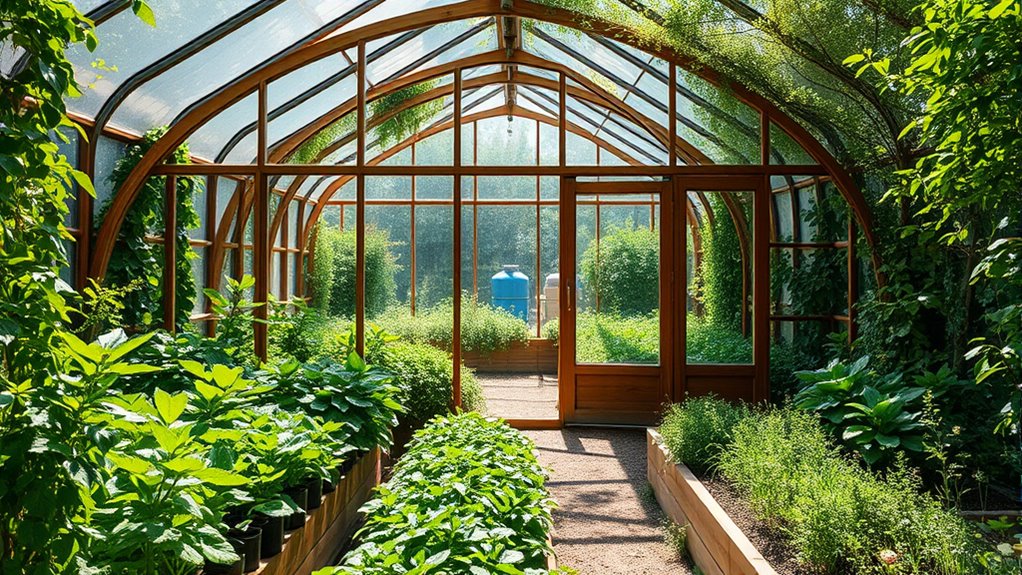

By integrating greenhouses with permaculture principles, you create a resilient, closed-loop system that maximizes resource efficiency and year-round food production. Using vertical farming and aquaponics, you can grow diverse crops while recycling water and nutrients, reducing waste and dependence on external inputs. This eco-friendly approach promotes sustainability, conserves land, and supports healthy ecosystems. Exploring these methods further reveals how you can transform your space into a productive, eco-conscious environment that benefits both people and the planet.
Key Takeaways
- Integrate greenhouses with permaculture principles to create sustainable, resilient food systems that maximize resource efficiency.
- Utilize vertical farming within greenhouses to optimize limited space and boost crop yields.
- Implement aquaponics as a closed-loop system that recycles water and nutrients between fish and plants.
- Control environmental factors to enable year-round production and reduce pest and disease issues sustainably.
- Promote eco-friendly practices that enhance food security, reduce dependency on external inputs, and support planetary health.
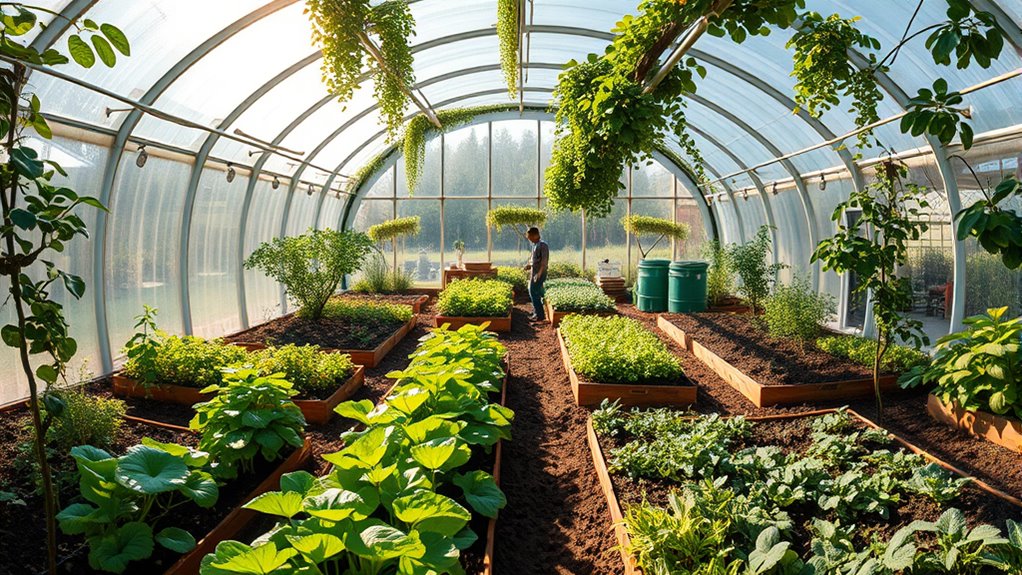
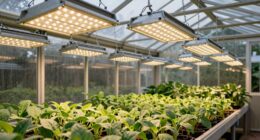
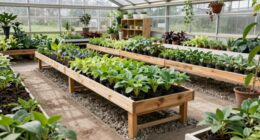
Greenhouses and permaculture work together to create resilient, sustainable food systems by extending growing seasons and maximizing resource efficiency. When you combine these methods, you open a powerful approach to producing food that’s both environmentally friendly and highly productive. In particular, integrating vertical farming within greenhouse structures allows you to grow crops upwards, making the most of limited space and increasing yields. Vertical farming inside greenhouses means you can stack plant layers, which is especially beneficial in urban or constrained areas. This setup not only boosts productivity but also reduces the need for land expansion, aligning perfectly with permaculture principles of efficient land use.
Integrating vertical farming in greenhouses maximizes space and productivity while supporting permaculture’s efficient land use principles.
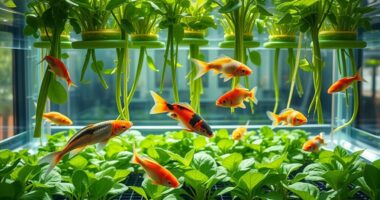
Aquaponics, another innovative technique, fits seamlessly into this system. By creating a symbiotic relationship between fish and plants, aquaponics offers a closed-loop solution that conserves water and nutrients. You can set up an aquaponic system within a greenhouse to cultivate vegetables and herbs while raising fish such as tilapia or trout. The fish waste provides organic nutrients for the plants, which in turn purify the water for the fish. This cycle minimizes waste and reduces dependency on external inputs like fertilizers and water, making your operation more sustainable. Plus, aquaponics inside greenhouses lets you control environmental factors like temperature, humidity, and light, ensuring ideal growth conditions year-round.
The beauty of combining greenhouses with permaculture principles and advanced techniques like vertical farming and aquaponics is the level of resource efficiency you achieve. Water recycling becomes second nature as you reuse and filter water within these closed systems. You can also harness renewable energy sources, such as solar power, to further reduce your carbon footprint. This integrated approach means you’re not just growing food—you’re creating a resilient ecosystem that mimics natural processes. You benefit from fewer pests and diseases because of controlled environments and diverse plantings, which are hallmarks of permaculture design.
Additionally, understanding zodiac compatibility can inspire collaborations and community planning in sustainable projects by aligning personal strengths and traits.
Furthermore, this synergy allows you to produce a variety of crops simultaneously, increasing food security and reducing seasonal dependency. You’re able to offer fresh, local produce consistently, even in harsh or unpredictable climates. By implementing greenhouses with vertical farming and aquaponics, you’re not only maximizing your land and water resources but also fostering a sustainable, closed-loop system that supports long-term resilience. This approach exemplifies how innovative, eco-conscious design can revolutionize food production—making it more efficient, productive, and aligned with the health of the planet.
Frequently Asked Questions
How Do Greenhouses Affect Local Climate Change Efforts?
Greenhouses can positively impact local climate change efforts by enhancing microclimate regulation, allowing you to control temperature and humidity efficiently. They also support carbon sequestration by growing plants that absorb CO₂ from the atmosphere. By optimizing resource use and reducing the need for transportation, greenhouses help lower your carbon footprint and contribute to sustainable climate solutions. Your proactive greenhouse practices can make a meaningful difference in battling climate change locally.
Can Permaculture Principles Be Applied in Urban Greenhouse Settings?
Imagine you’re channeling Leonardo da Vinci’s ingenuity—you can definitely apply permaculture principles in urban greenhouse settings. By embracing ecological design and urban integration, you create resilient systems that mimic natural processes. Incorporate composting, rainwater harvesting, and diverse plantings to enhance sustainability. This approach reduces waste, conserves resources, and fosters local food production, making your urban greenhouse a thriving hub of eco-friendly innovation.
What Are the Initial Costs of Setting up a Permaculture Greenhouse?
The initial costs of setting up a permaculture greenhouse vary based on size, materials, and design, but you should expect a cost estimation of $5,000 to $20,000. Your startup expenses include purchasing sustainable materials, installing efficient systems, and creating a diverse planting plan. Planning carefully helps manage costs and guarantees you allocate funds effectively, making your permaculture greenhouse both sustainable and affordable from the outset.
How Do Greenhouses Impact Native Biodiversity and Ecosystems?
Imagine a delicate web unraveling—your greenhouse’s impact on native species can cause ecosystem disruption, threatening local biodiversity. By introducing non-native plants or altering natural habitats, you risk disrupting the balance of native ecosystems. While greenhouses can protect certain plants, they may inadvertently harm native species by competing for resources or spreading diseases. You must carefully manage your greenhouse to preserve the fragile harmony of surrounding ecosystems.
What Are the Long-Term Maintenance Challenges of a Closed-Loop System?
You’ll face long-term maintenance challenges like soil degradation and pest management. Over time, soil health can decline without proper nutrient cycling, requiring you to add compost or amendments. Pests may also become resistant or difficult to control, making integrated pest management essential. Regular monitoring, maintaining soil vitality, and implementing natural pest controls help sustain your closed-loop system’s productivity and ecological balance.
Conclusion
Think of greenhouses and permaculture as a delicate dance, each step feeding into the next in a seamless cycle. By embracing this closed-loop approach, you create a self-sustaining ecosystem where waste becomes nourishment, and growth knows no bounds. It’s like tending a thriving garden where every element, from soil to sunlight, works in harmony. When you harness this synergy, you’re cultivating more than plants—you’re nurturing resilience and harmony in every harvest.