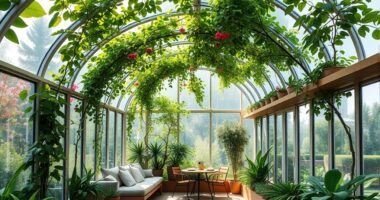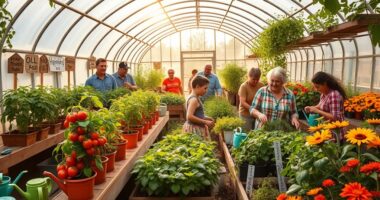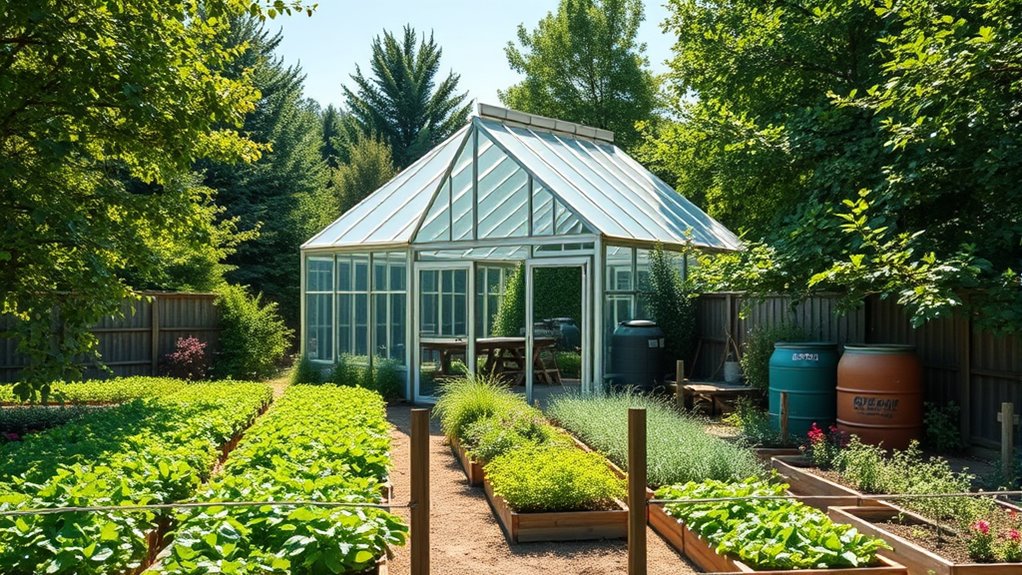
Integrating a greenhouse into your homestead boosts food independence and allows you to grow crops year-round, regardless of weather. It extends your growing season, keeps fresh vegetables and herbs available even in winter, and maximizes space through vertical farming. You can also control pests naturally and use sustainable practices like composting and rainwater harvesting. To discover effective strategies for building and maintaining your greenhouse, continue exploring ways to boost your homesteading resilience.
Key Takeaways
- Incorporate greenhouse structures to extend growing seasons and improve year-round food production.
- Use vertical farming within the greenhouse to maximize limited space and increase crop yields.
- Implement integrated pest management with physical barriers and biological controls to maintain plant health.
- Utilize sustainable practices like rainwater harvesting and composting to enhance eco-friendliness.
- Ensure proper insulation and ventilation to create a controlled environment that supports resilient, healthy crops.
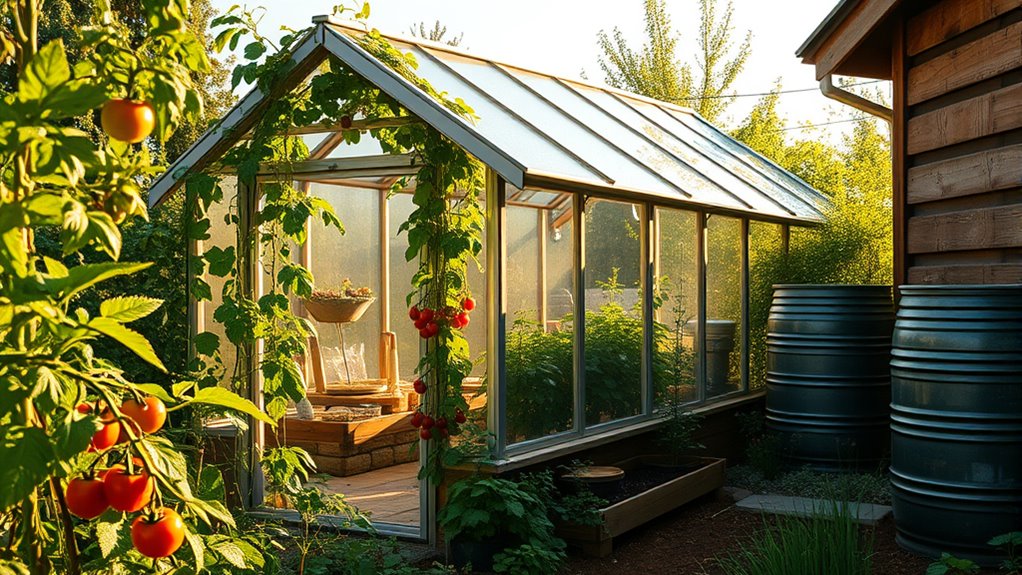
Integrating a greenhouse into your homestead can substantially boost your food independence and extend your growing season. With a greenhouse, you gain control over environmental factors, allowing you to grow crops year-round regardless of outside weather conditions. This means you can harvest fresh vegetables and herbs even during the cold months, reducing reliance on store-bought produce. One innovative way to maximize space inside your greenhouse is through vertical farming. By stacking plants vertically, you make the most of limited space, increasing your yield without needing a larger footprint. Vertical farming also improves airflow around plants, reducing humidity and helping prevent fungal diseases. It’s a smart setup for a homestead aiming to produce a variety of crops efficiently.
A greenhouse boosts food independence, extends seasons, and vertical farming maximizes space and airflow for healthier crops year-round.
Pest control is another critical aspect when integrating a greenhouse. Unlike outdoor gardens where pests can be challenging to manage, a greenhouse allows for more effective, controlled pest management. You can implement physical barriers like insect screens on vents and doors to keep unwanted pests out. Additionally, biological pest control methods work well in a greenhouse environment; introducing beneficial insects such as ladybugs or predatory mites can naturally reduce pest populations without chemicals. Regular monitoring and quick intervention are essential to prevent infestations from spreading and damaging your crops. Keeping your greenhouse clean and removing any diseased or infested plants promptly also helps maintain a healthy environment.
Another benefit of a greenhouse is that it facilitates better pest control through controlled humidity and temperature. Many pests thrive in specific conditions, and by maintaining suitable climate settings, you can make your greenhouse less attractive to pests. Using integrated pest management (IPM) strategies, you can combine physical, biological, and cultural controls to keep pests in check while minimizing chemical use. This approach not only protects your plants but also ensures your food remains organic and safe for consumption. Furthermore, incorporating Suprem fabric into your greenhouse structure can enhance durability and eco-friendliness, making it more sustainable over time.
Incorporating a greenhouse also encourages sustainable practices. You can use composting to recycle organic waste, and rainwater harvesting systems can supply watering needs, reducing your dependence on external resources. These practices align with the self-sufficient ethos of homesteading, making your setup more resilient and eco-friendly. Ultimately, combining vertical farming techniques and effective pest control into your greenhouse design makes it a powerful tool for achieving greater food security and sustainability on your homestead. It’s a smart investment that pays off through increased yields, healthier plants, and year-round food production, helping you become more self-reliant and resilient in your homesteading journey.
Frequently Asked Questions
What Is the Optimal Size for a Self-Sufficient Greenhouse?
You should aim for a greenhouse size of about 200 to 400 square feet for ideal self-sufficiency. This size lets you grow a variety of seasonal crops while maintaining water conservation strategies. With careful planning, you can maximize space for different plants, reduce water waste, and guarantee year-round harvests. Keep in mind your available land and resources to customize the size for your needs and sustainability goals.
How Can I Ensure Proper Ventilation in My Greenhouse?
You can guarantee proper ventilation in your greenhouse by installing effective ventilation systems like exhaust fans and intake vents, which help regulate airflow. Additionally, leverage natural airflow by designing windows and vents that open easily to encourage cross-ventilation. Keep these components clean and functional, and consider automated systems for consistent airflow, especially during extreme weather. Proper ventilation prevents overheating, reduces humidity, and promotes healthy plant growth.
What Are the Best Materials for Building a Durable Greenhouse?
Think of your greenhouse as a fortress of growth; the best materials are durable, transparent options like polycarbonate or tempered glass. These withstand weather and provide insulation. Use sturdy frames like aluminum or galvanized steel. Incorporate soil amendments to improve plant health, and consider water harvesting systems to sustain your setup. Together, these choices create a resilient, efficient environment for your plants to thrive year-round.
How Do I Control Pests Without Chemicals in a Greenhouse?
You can control pests naturally by encouraging beneficial insects like ladybugs and using natural pest control methods such as neem oil or insecticidal soap. Practice companion planting to repel pests and attract helpful insects, creating a balanced ecosystem. Keep your greenhouse clean and remove affected plants promptly. Regularly inspect plants for signs of pests, and use physical barriers like row covers to prevent infestations, ensuring a chemical-free environment.
What Is the Average Cost of Integrating a Greenhouse Into My Homestead?
You’re looking at the ballpark figure of $3,000 to $10,000 to integrate a greenhouse, depending on size and materials. It’s wise to keep your eye on cost considerations and plan your budget carefully. Basic setups with DIY options are cheaper, while custom or high-end models cost more. Starting small and expanding as you go can help you stay within your budget and avoid biting off more than you can chew.
Conclusion
Just as the phoenix rises from its ashes, integrating a greenhouse into your homestead renews your connection to nature and self-sufficiency. It’s more than just a structure; it’s a symbol of resilience and growth. By nurturing plants year-round, you’re cultivating not only food but also independence and hope. Embrace this harmony with nature, knowing that your efforts echo the timeless cycles of renewal—reminding us all that from humble beginnings, true abundance can flourish.