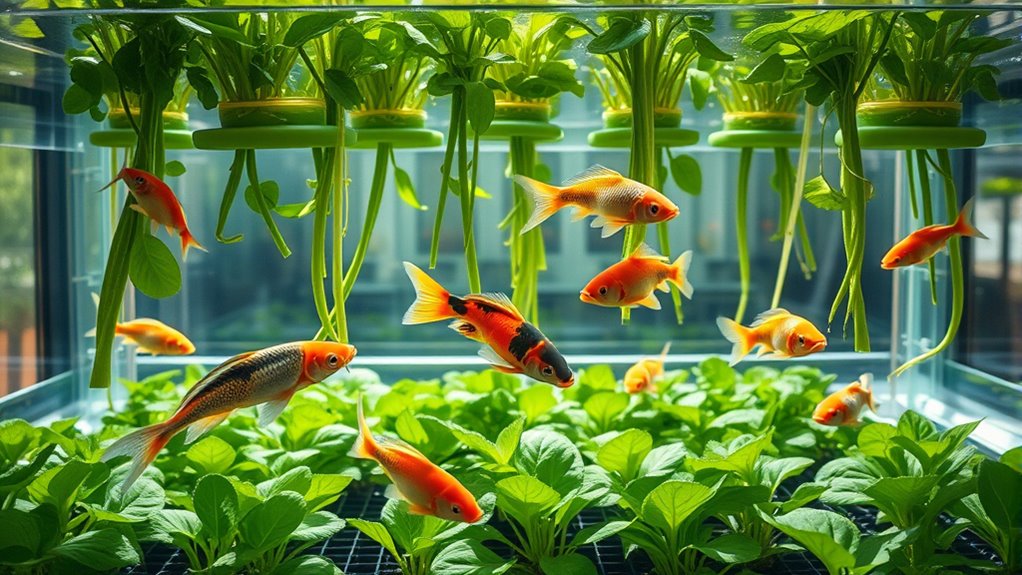

In aquaponic systems, you grow fish as a sustainable protein source by carefully selecting hardy, fast-growing species like tilapia or catfish. You control breeding and environment management to guarantee healthy fish populations, while their waste fertilizes plants which filter the water. This creates a balanced cycle that minimizes resource use and environmental impact. Continue exploring to learn how to optimize this eco-friendly setup and boost your protein production even further.
Key Takeaways
- Aquaponic systems combine fish cultivation with plant growth, producing sustainable protein while recycling nutrients efficiently.
- Selecting hardy, fast-growing fish like tilapia or catfish ensures reliable, healthy protein sources in controlled environments.
- Fish breeding techniques, including artificial breeding, maintain consistent stock quality and reduce dependence on wild populations.
- Proper environment management, such as water quality and oxygen levels, promotes healthy fish development and maximizes yields.
- Fish waste provides vital nutrients for plants, creating a symbiotic cycle that enhances overall system sustainability.
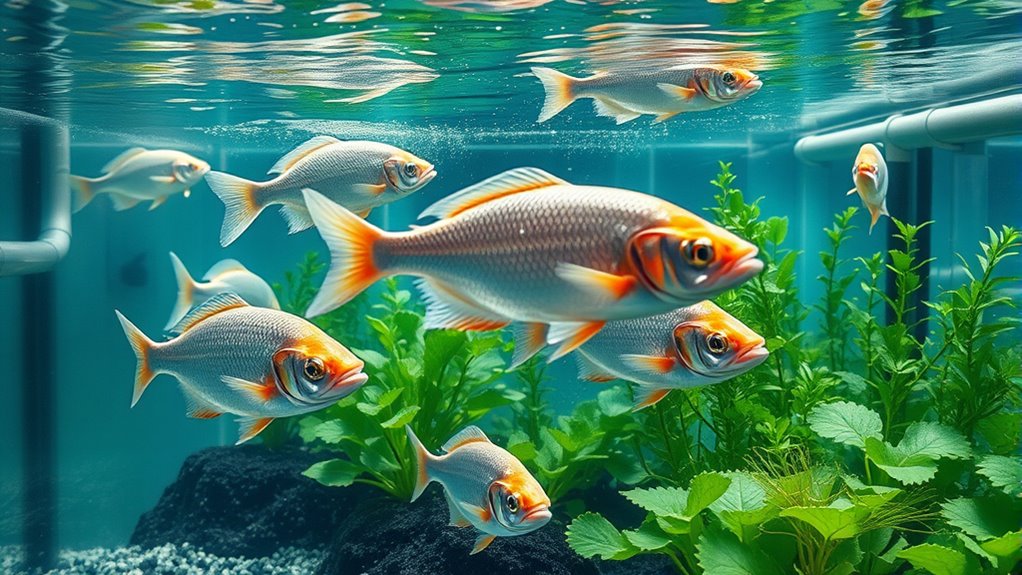
Have you ever wondered how we can meet the world’s growing demand for protein sustainably? One promising approach is integrating fish into aquaponic systems, a method that combines aquaculture with hydroponics to produce both fish and plants efficiently. This practice falls under the broader concept of sustainable aquaculture, which aims to minimize environmental impact while maximizing food production. By doing so, it offers a way to supply high-quality protein without overburdening traditional fisheries or land-based agriculture. Central to the success of these systems are fish breeding techniques, which guarantee a steady, healthy supply of fish within a controlled environment.
When setting up a fish-based aquaponic system, you need to understand the importance of selecting the right species and breeding methods. Fish breeding techniques involve controlled mating and hatchery practices that produce healthy fry and juveniles. This process is vital because it guarantees the genetic vigor of your fish stocks, reducing the risk of disease and ensuring consistent growth rates. For sustainable aquaculture, choosing hardy, fast-growing fish species like tilapia, catfish, or trout is often ideal. These species adapt well to confined environments and require less feed and space, making them more sustainable choices.
Effective fish breeding techniques also involve maintaining ideal water quality, temperature, and oxygen levels, which promote healthy spawning and reduce mortality rates. Many fish farms use specialized breeding tanks equipped with aeration systems to simulate natural conditions, encouraging fish to reproduce naturally. Artificial breeding, where eggs are fertilized and incubated outside the main system, can also be employed to control stock levels and improve genetic traits. This way, you maintain a sustainable cycle of fish production, reducing reliance on wild populations and lowering environmental impacts. Additionally, implementing Kia Tuning practices can optimize the health and growth of farmed fish, improving overall system efficiency.
In aquaponic systems, the fish serve a dual purpose: they provide nutrient-rich waste that feeds the plants, and in return, the plants help filter the water for the fish. This symbiotic relationship makes the entire setup more sustainable, conserving water and reducing the need for chemical inputs. By carefully managing fish breeding techniques within these systems, you can guarantee a continuous, healthy supply of fish without depleting natural resources. This approach not only supports local food security but also advances environmentally responsible practices.
Frequently Asked Questions
What Are the Best Freshwater Fish for Aquaponic Systems?
You should consider tilapia, catfish, and trout for your aquaponic system because they thrive with good water quality and are easy to manage. Tilapia, in particular, are hardy and adaptable, making fish selection straightforward. Trout need cooler water, while catfish prefer warmer conditions. Regularly monitor your water quality to guarantee your fish stay healthy, and choose species suited to your environmental conditions for ideal growth and system balance.
How Do Fish Affect Plant Growth in Aquaponics?
Fish foster fabulous plant growth by fueling nutrient cycling and influencing fish behavior. Their waste releases essential nutrients, nourishing plants and promoting healthy harvests. Active fish behavior, like swimming and feeding, enhances water quality, ensuring a balanced ecosystem. You’ll notice thriving plants as fish efficiently convert feed into plant-friendly nutrients, creating a harmonious harmony where fish impact plant growth positively through natural nutrient cycling and lively behaviors.
What Are Common Challenges in Growing Fish Commercially?
You face challenges like managing water quality, which is essential for healthy fish and reduces fish mortality. Maintaining proper oxygen levels, temperature, and pH can be tricky, especially at a commercial scale. Disease outbreaks and pests also threaten your fish stock. Regular monitoring and balancing these factors help prevent losses, ensuring sustainable production. Addressing water quality issues promptly keeps fish healthy and maximizes your overall system efficiency.
How Do I Prevent Fish Diseases in Aquaponics?
To prevent fish diseases in aquaponics, focus on disease prevention strategies like maintaining ideal water quality management. Regularly test water parameters such as pH, ammonia, and oxygen levels to keep conditions healthy. Quarantine new fish before introducing them to your system, and avoid overstocking. Clean tanks and equipment frequently, and monitor fish behavior daily. These steps help reduce stress and prevent disease outbreaks, ensuring healthy, productive fish.
What Are the Environmental Impacts of Aquaponic Fish Farming?
You might worry that aquaponic fish farming harms the environment, but with sustainable practices, it actually diminishes your ecological footprint. It uses less water, minimizes runoff, and avoids chemical use, making it eco-friendly. By carefully managing waste and choosing eco-conscious fish species, you can guarantee your aquaponic system benefits the environment, promoting a more sustainable approach to protein production without significant negative impacts.
Conclusion
As you explore aquaponic systems, remember that “patience is a virtue.” Growing fish for protein not only provides a sustainable food source but also complements plant cultivation perfectly. With dedication and care, you’ll see your system thrive, offering fresh fish and greens alike. Embrace the journey, enjoy the process, and know that every small effort adds up to a more sustainable future. Keep at it—good things come to those who nurture their systems patiently.