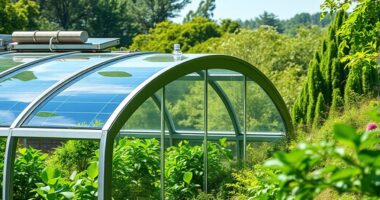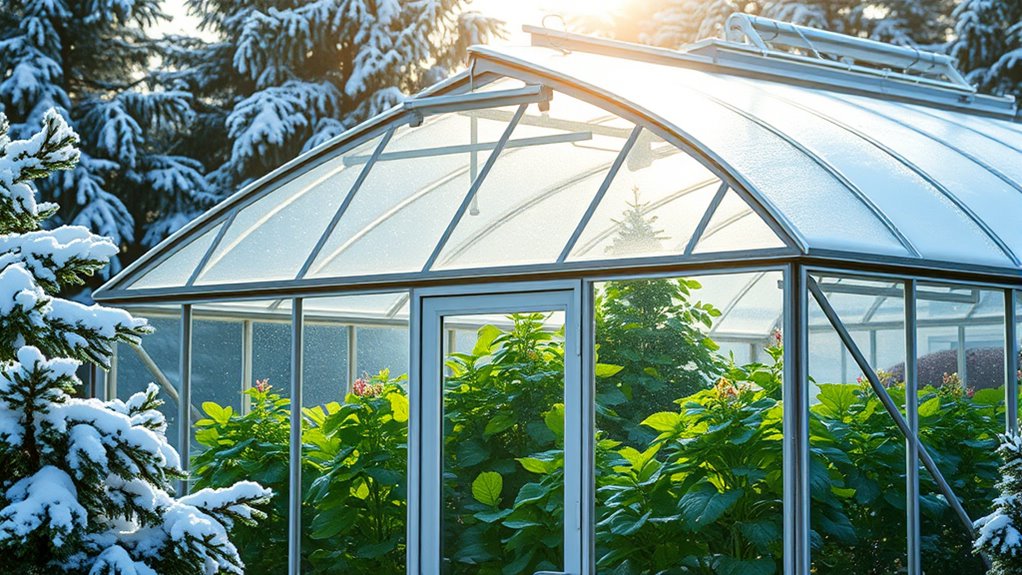

To design an off-grid winter greenhouse, position it facing true south for maximum sunlight and incorporate large south-facing glazing. Use thermal mass like water barrels or stone walls to absorb heat, and guarantee proper insulation with high-quality materials to retain warmth overnight. Install passive vents at the top and bottom for natural airflow, promoting temperature regulation and humidity control without power. If you keep exploring, you’ll discover more tips to optimize your greenhouse for year-round growing.
Key Takeaways
- Orient the greenhouse true south (or north) and use south-facing glazing to maximize solar heat gain.
- Incorporate thermal mass inside, like water barrels or stone walls, to regulate temperature during winter.
- Install passive ventilation vents at the top and bottom to promote airflow and prevent overheating without power.
- Use high-quality insulation and sealing to minimize heat loss and maintain consistent internal temperatures.
- Design for off-grid sustainability by combining solar thermal collection with passive airflow to control humidity and temperature.
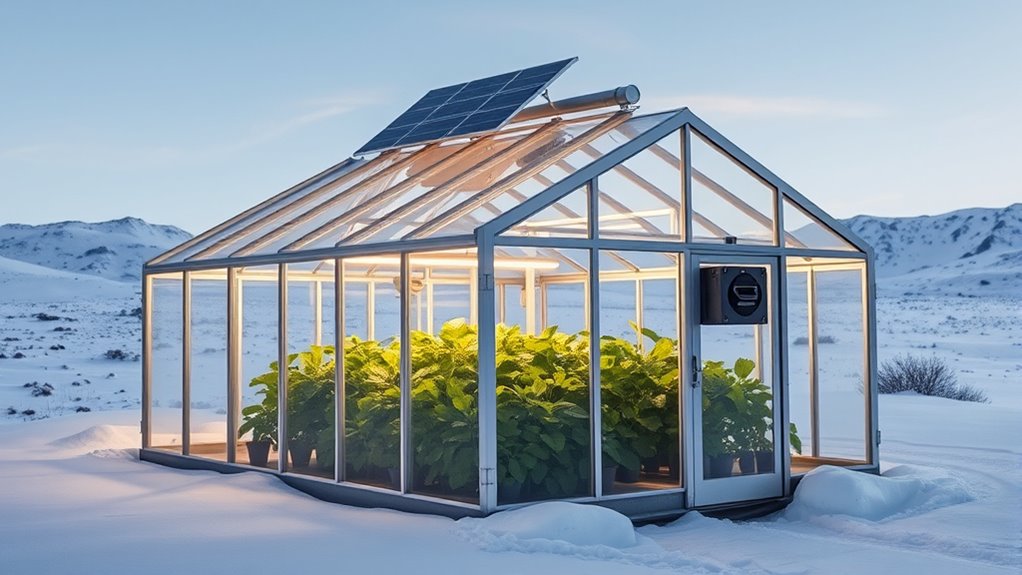
Growing fresh vegetables during winter while living off-grid may seem challenging, but with the right greenhouse design, it’s entirely possible. The key lies in harnessing natural elements like solar heat and implementing effective passive ventilation. When designing your off-grid greenhouse, you want to maximize solar gain to keep temperatures steady without relying on external power sources. This means positioning your greenhouse to face true south (or north, depending on your hemisphere) so it captures as much sunlight as possible throughout the day. Incorporate large, south-facing windows or glazing to absorb maximum solar energy, which warms the interior during daylight hours. Using high-quality, insulating materials helps retain that heat overnight, reducing your reliance on supplemental heating.
Maximize solar gain and passive ventilation for an off-grid winter greenhouse.
Passive ventilation plays a fundamental role in maintaining a healthy environment inside your greenhouse. Rather than installing powered fans, you can design openings that naturally regulate airflow. For example, vents placed at the top and bottom of the structure create a chimney effect, allowing hot air to escape naturally and cooler air to enter at the base. This airflow prevents overheating during sunny days and reduces humidity levels, which is essential for preventing fungal diseases. When planning your ventilation system, consider using operable windows or adjustable vents that respond to temperature fluctuations. By doing so, you encourage a continuous exchange of fresh air without the need for electricity. Proper passive ventilation also helps to control condensation, which can be detrimental to your crops.
Integrating solar heat and passive ventilation into your greenhouse design isn’t just about functionality—it’s about sustainability. With careful planning, you can keep your off-grid greenhouse warm and well-ventilated using only natural energy sources. Think about incorporating thermal mass elements like water barrels or stone walls inside your greenhouse; these absorb heat during the day and release it at night, further stabilizing temperatures. The placement of these thermal mass elements should be optimized for maximum heat absorption during sunlight hours. Combine this with well-sealed insulation and strategic ventilation, and you’ll create a microclimate that supports winter vegetable growth.
Additionally, understanding the importance of solar gain can help you optimize your greenhouse’s placement and materials for maximum efficiency. In essence, designing a greenhouse for off-grid winter gardening revolves around maximizing solar heat and ensuring effective passive ventilation. These strategies work together seamlessly, allowing you to grow fresh vegetables year-round without relying on external power. By thoughtfully positioning your greenhouse, selecting the right materials, and incorporating natural airflow systems, you’re setting yourself up for a productive, sustainable winter garden. It’s a smart, eco-friendly approach that makes off-grid living more rewarding and self-sufficient.
Frequently Asked Questions
What Are the Best Insulation Materials for Off-Grid Greenhouses?
You should use insulation panels like polystyrene or polycarbonate for your off-grid greenhouse, as they provide excellent thermal resistance. Additionally, thermal curtains are essential for sealing in heat during cold nights, improving energy efficiency. Combining insulation panels with thermal curtains helps maintain stable temperatures, reduces heating needs, and keeps your plants healthy through winter. These materials are affordable, easy to install, and effective for off-grid winter gardening.
How Can I Maximize Solar Gain During Winter Months?
You can maximize solar gain during winter by incorporating passive solar design principles and thermal mass. Position your greenhouse to face south, ensuring maximum sunlight exposure. Use materials like concrete or water barrels to add thermal mass, which stores heat during the day and releases it at night. Keep vents open during the day to prevent overheating and close them at night to retain warmth, maintaining a stable temperature.
What Off-Grid Heating Options Are Most Efficient for Greenhouses?
Imagine you’re using passive solar design combined with thermal mass, like in a small off-grid greenhouse. This setup efficiently retains heat overnight, reducing energy needs. For off-grid heating, a well-insulated thermal mass—such as water barrels or concrete—absorbs daytime warmth and releases it at night. This method maximizes heat retention, minimizes energy use, and keeps your plants cozy during winter without relying on external power sources.
How Do I Manage Ventilation Without Grid Access?
You can manage ventilation without grid access by utilizing natural ventilation and passive cooling techniques. Open vents or windows strategically placed to promote airflow, especially during warmer days, help regulate temperature naturally. Use adjustable louvers or vent flaps to control airflow and prevent overheating. Incorporate shade cloths or reflective surfaces to assist passive cooling. These methods keep your greenhouse well-ventilated, energy-efficient, and suitable for off-grid winter gardening.
What Are Cost-Effective Ways to Build an Off-Grid Greenhouse?
Building an off-grid greenhouse is like planting seeds for future sustainability. You can save costs with DIY construction using recycled materials like old windows, pallets, or plastic bottles. These resources act as the building blocks of your eco-friendly haven. Focus on simple design, harness natural sunlight, and incorporate passive heating methods. This approach keeps expenses low while creating a functional, sustainable space for winter gardening off the grid.
Conclusion
With your thoughtfully designed greenhouse, you’ll create a cozy sanctuary where winter’s chill cannot reach your thriving plants. Like a warm cradle amid icy whispers, it shields your garden’s dreams from the cold’s grasp. As you nurture life against the odds, your off-grid haven becomes a demonstration of resilience and ingenuity. Embrace this sanctuary, and watch as your winter garden blossoms into a vibrant oasis—proof that with care, even the harshest seasons can be tamed.