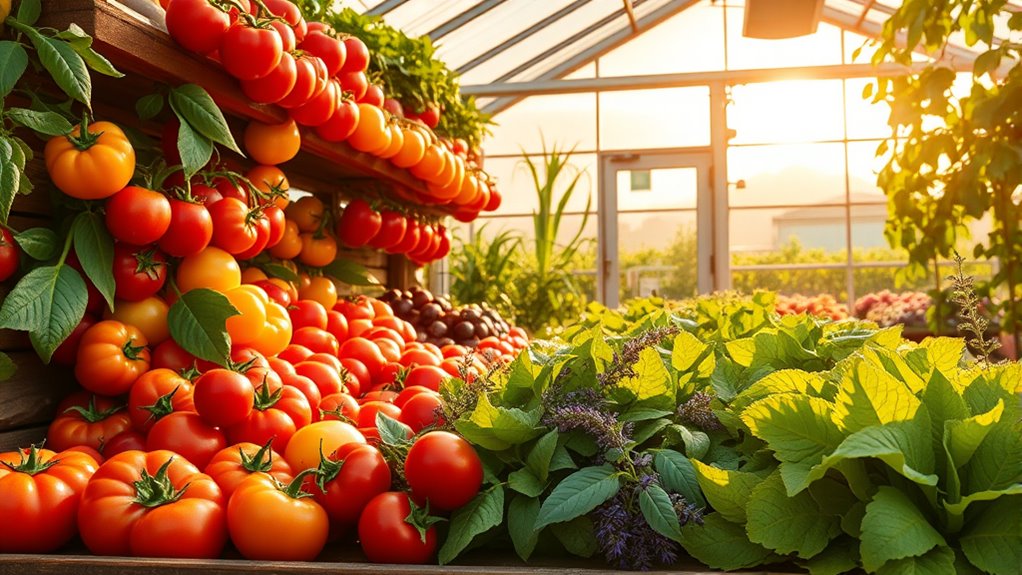
Eating seasonally from your greenhouse means you can enjoy fresh, nutrient-rich produce year-round no matter the outdoor weather. By growing vegetables and herbs suited to different seasons, you control your food supply and enjoy peak flavors. Proper plant care and pest management help keep your crops healthy and plentiful. With the right techniques, you can create a sustainable, homegrown diet. Keep exploring how to optimize your greenhouse to maximize your seasonal harvests.
Key Takeaways
- Grow and harvest crops aligned with regional seasonal cycles to enjoy peak freshness and flavor.
- Use climate-appropriate plants to maximize yield during their natural growing seasons.
- Implement seasonal planting schedules to reduce energy use and extend harvest periods.
- Incorporate a variety of vegetables and herbs suited for each season to diversify your diet.
- Plan crop rotations and composting to maintain soil health and support seasonal plant growth.
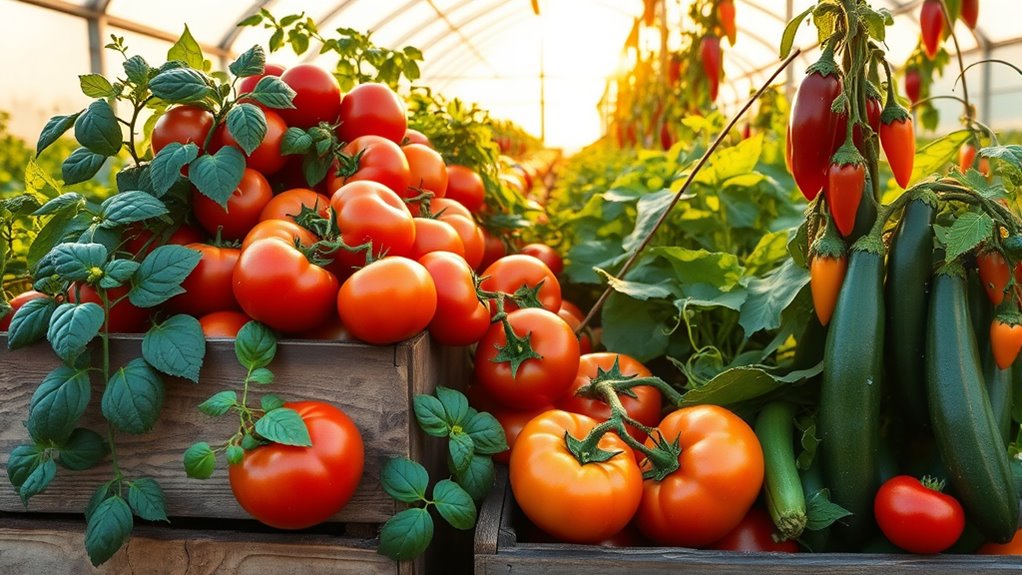
Have you ever considered growing your own fresh produce year-round? If you’ve set up a greenhouse, you already know how empowering it is to have control over your food sources. But to truly enjoy a continuous supply of healthy, seasonal vegetables and herbs, you need to manage pests effectively and practice sustainable composting methods. Greenhouse pest control is essential for maintaining healthy plants. In a controlled environment, pests can spread quickly if not kept in check. You’ll want to start by inspecting your plants regularly, catching problems early before they become severe. Introducing natural predators, like ladybugs or predatory mites, can help keep common pests at bay without resorting to chemicals. Using organic pest control methods, such as neem oil or insecticidal soaps, provides an effective, eco-friendly way to protect your crops. Proper ventilation and airflow also play roles in preventing pest infestations, as stagnant humidity and poor circulation attract troublemakers. Keep your greenhouse clean by removing dead leaves and debris, which serve as hiding spots for pests. This proactive approach makes pest control more manageable and sustainable. Additionally, employing suction power and filtration efficiency from top vacuums can help in maintaining a clean environment by removing dust and allergens that may attract pests or cause plant issues.
Equally important is implementing effective composting methods inside or near your greenhouse. Composting not only recycles organic waste but also enriches your soil naturally, boosting plant health and productivity. You should select composting methods suited for your space and climate, such as hot composting for faster results or vermicomposting if you prefer worm-based systems. Regularly turning your compost encourages aerobic decomposition, which reduces odors and speeds up nutrient release. Be mindful of what you add—avoid diseased plant material or invasive weeds to prevent spreading pests or pathogens. Composting helps create a closed-loop system where waste is transformed into valuable soil amendments, reducing reliance on synthetic fertilizers. When done correctly, composting also improves soil structure, moisture retention, and nutrient content, all of which are vital for year-round greenhouse growing.
Frequently Asked Questions
How Can I Extend My Greenhouse Growing Season?
You can extend your greenhouse growing season by using techniques like row covers and heating systems. Improve soil fertility by adding compost and practicing crop rotation to prevent disease and maintain healthy soil. Use supplemental lighting to boost growth during shorter days, and consider installing thermal curtains at night. These strategies help create a stable environment, allowing you to grow crops longer and enjoy fresh produce year-round.
What Pests Are Common in Seasonal Greenhouse Crops?
You’ll often encounter pests like aphids, whiteflies, and spider mites in your greenhouse crops. To keep them in check, focus on pest identification so you can target them effectively. Use organic pest control methods like neem oil, insecticidal soap, or introducing beneficial insects. Regularly inspect your plants, remove affected leaves, and maintain good airflow to prevent infestations. Staying vigilant helps protect your seasonal crops naturally and effectively.
How Do I Manage Humidity Levels Effectively?
Did you know that humidity levels over 85% can lead to mold growth? To manage humidity effectively, you should use humidity control methods like ventilating your greenhouse and installing misting systems. Misting systems help maintain consistent moisture and prevent sudden spikes. Regularly monitor humidity levels with a hygrometer, and adjust ventilation or misting accordingly to keep conditions ideal for healthy plants.
What Are the Best Practices for Crop Succession Planting?
You should plan your crop succession by rotating crops to prevent soil depletion and reduce pests. Start by planting quick-maturing crops, then follow with longer-growing varieties, ensuring you maintain soil fertility through compost or organic amendments. Keep track of planting dates and harvest cycles to optimize space and productivity. Regularly assess soil health, adjusting your rotation plan as needed to sustain healthy, productive crops throughout the season.
How Can I Reduce Energy Costs While Heating My Greenhouse?
You can cut energy costs by investing in solar heating and enhancing thermal insulation. While some worry about upfront costs, the long-term savings are significant. Use reflective surfaces to maximize solar gain and insulate walls and floors effectively. Installing thermal curtains or bubble wrap on cold nights helps retain heat. Combining these strategies guarantees your greenhouse stays warm efficiently, reducing reliance on expensive supplemental heating sources.
Conclusion
By eating seasonally from your greenhouse, you’re not just growing food—you’re creating a culinary masterpiece that could rival the bounty of a thriving farm. Imagine the satisfaction of snipping fresh veggies right outside your door, knowing you’re nourishing yourself with the freshest, most flavorful produce imaginable. Embrace this green journey, and watch your meals transform into vibrant, delicious celebrations of nature’s perfect timing. Your greenhouse is your secret weapon for a truly bountiful, mouthwatering year-round harvest.