
To maximize vertical space in your small greenhouse, consider installing tiered shelving or stacking systems like tower hydroponics for efficient plant layering. Use trellises to support vining crops, allowing them to grow upward instead of outward. Combining hydroponic setups with sturdy supports enables you to grow more crops in less space. Adding AI monitoring can optimize growth conditions. Keep exploring different techniques to open even greater food production from your vertical garden.
Key Takeaways
- Implement vertical hydroponic systems like tower farms and stacked trays to grow multiple plant layers efficiently.
- Use trellises and supports for vining crops to grow upward, saving ground space for additional plants.
- Combine hydroponics with vertical trellises to support diverse crops and maximize spatial utilization.
- Optimize environmental conditions with AI monitoring to ensure healthy growth and higher yields in vertical setups.
- Regularly prune, train, and plan plant layout to maintain organization and improve light exposure in small greenhouses.

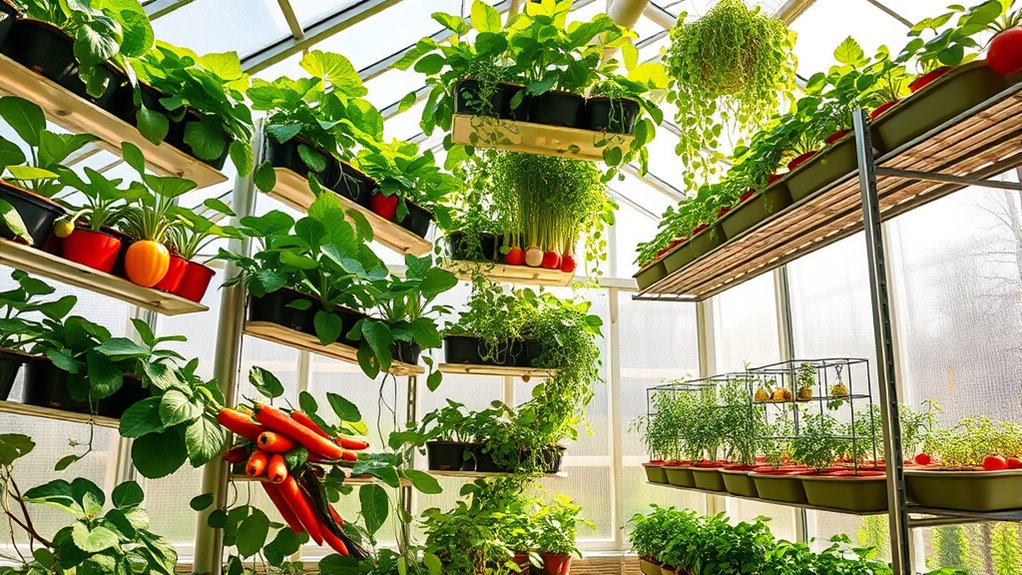
Maximizing vertical space in small greenhouses is essential for increasing plant growth and productivity. When space is limited, you need to think upward, not just outward. One effective way to do this is by implementing hydroponic systems that are designed to utilize vertical arrangements. These systems allow you to grow multiple layers of plants in a compact footprint, significantly boosting your yield without expanding your greenhouse’s footprint. For example, vertical hydroponic setups like tower systems or stacked trays enable you to grow leafy greens, herbs, and even strawberries efficiently. They also streamline watering and nutrient delivery, making maintenance easier and more consistent. Incorporating such systems not only saves space but can also accelerate plant growth, as plants often thrive with optimized nutrient access and airflow.
Furthermore, leveraging AI-enhanced monitoring systems can help optimize environmental conditions and nutrient delivery, ensuring your vertical garden remains healthy and productive. Alongside hydroponic systems, trellis techniques play a crucial role in maximizing your vertical space. Trellising involves training plants to grow vertically by supporting their stems with nets, wires, or stakes. This method is especially beneficial for vining crops like tomatoes, cucumbers, pole beans, and peas. By encouraging plants to grow upward, you free up ground space for other crops or allow more plants to be cultivated in the same area. Proper trellis installation ensures plants are well-supported, reducing the risk of disease and damage from falling or sprawling vines. Using trellises also improves air circulation around plants, which further decreases disease risk and promotes healthy growth.
Combining hydroponic systems with trellis techniques can be particularly powerful. For instance, you can install vertical hydroponic towers and run trellises alongside them to support climbing plants. This synergy allows you to grow a variety of crops vertically, maximizing every inch of your small greenhouse. When setting up trellises, choose durable materials that withstand humidity and frequent watering, ensuring longevity. Position the trellises where they won’t block light and provide easy access for maintenance. Remember, the goal is to create a vertical garden that’s both space-efficient and easy to manage.
To get the most out of these techniques, plan your layout carefully. Think about the mature size of each plant, their light requirements, and how they will be supported. Regularly prune and train your plants to keep them within their trellises or hydroponic structures. This will ensure that your plants grow healthily and that your vertical space remains organized. By integrating hydroponic systems and trellis techniques into your small greenhouse, you’ll dramatically increase your food production, making the most of every vertical inch and turning limited space into a thriving, productive garden.
Frequently Asked Questions
How Do I Prevent Plants From Shading Each Other Vertically?
To prevent plants from shading each other vertically, you should focus on proper plant spacing and light penetration. Space your plants adequately so taller ones don’t cast shadows on shorter ones, and arrange your crops to allow maximum light access. Use staggered planting or trellising to keep light flowing evenly. Regularly prune or train plants to maintain open growth, ensuring that each plant gets enough sunlight for ideal growth.
What Are the Best Tools for Installing Vertical Plant Supports?
They say “a strong foundation is key,” and that’s true when installing vertical plant supports. Use a sturdy plant trellis to give your plants room to grow upward. Support brackets are essential for securing the trellis to walls or frames. Invest in adjustable hooks or clips for easy setup and removal. These tools keep your plants upright, maximize space, and make your greenhouse more productive.
How Can I Optimize Airflow in a Tall Greenhouse?
You can optimize airflow in your tall greenhouse by installing ventilation fans and airflow vents strategically. Use exhaust fans at the top to pull hot air out and intake vents at the bottom to bring in fresh air. Guarantee vents are adjustable for better control, and position fans to promote even circulation. This setup helps maintain consistent temperature and humidity, keeping your plants healthy and maximizing your vertical space.
Are There Specific Plant Types Suited for Vertical Gardening?
You should choose plant types suited for vertical gardening, like strawberries, herbs, or leafy greens, which grow well in hydroponic systems. These plants thrive in limited space and are easier to manage with pest control methods. Vertical gardening allows better airflow and light exposure, reducing disease risks. By selecting these plants, you maximize your small greenhouse’s productivity while maintaining healthy, pest-free growth.
How Do I Ensure Safety When Working at High Heights?
You can guarantee safety when working at high heights by always using safety harnesses and checking ladder stability beforehand. Some might worry about equipment failure, but regular inspections and proper training markedly reduce risks. Keep your workspace clear of obstructions, wear non-slip shoes, and use secure anchors for harnesses. With these precautions, you’ll work confidently and safely, even at elevated heights, reducing accidents and protecting your valuable crops.
Conclusion
By maximizing your vertical space, you can boost your greenhouse’s productivity markedly. Did you know that using vertical farming techniques can increase your growing area by up to 200% in the same footprint? This means more food, more efficiently, even in small greenhouses. So, don’t overlook those vertical opportunities—install shelves, hanging planters, or trellises. With a little creativity, you’ll turn every inch into a thriving food-producing powerhouse.