When selecting the best peat moss for gardening, the Espoma Organic Sphagnum Peat Moss stands out as the Best Overall choice due to its consistent texture and reliable moisture retention. For those needing volume without breaking the bank, Hoffman Canadian Sphagnum Peat Moss offers superior bulk value for large beds and raised planters. The primary tradeoff in this category lies between particle size consistency and bag size convenience; smaller bags often provide finer, easier-to-work material, while bulk options require more effort to break up clumps. This guide breaks down these differences to help you match the product to your specific soil amendment tasks. Continue reading for a detailed comparison of texture, origin, and practical application.

Get garden gear delivered free with Prime
- Fast, free delivery on millions of items
- Prime Video, Amazon Music and more included
- Member-only deals all year
Complete the kit


Key Takeaways
- Espoma products dominate the small-bag category for their consistent, low-dust texture, making them ideal for indoor seed starting and terrariums.
- Bulk options from Hoffman and Sun Gro offer better cost-per-quart efficiency but often require pre-wetting to avoid hydrophobic clumps.
- Sphagnum peat moss from Canadian sources generally maintains higher structural integrity over time compared to generic ‘peat moss’ blends.
- Smaller packaging sizes like Doter and Leaves and Soul are specifically designed for precision tasks like bonsai or reptile enclosures, not garden beds.
- Gardenwise differentiates itself by marketing explicitly for multi-use environments including orchids and reptiles, though its particle size is coarser than Espoma.
| Espoma Peat Moss, 8 qt |  | Best for Seed Starting | Brand: Espoma | Volume: 8 quarts | Organic gardening: Approved | VIEW LATEST PRICE | See Our Full Breakdown |
| Old Potters Organic Sphagnum Peat Moss, 20 Quarts |  | Best for Larger General-Purpose Batches | Brand: Old Potters | Material: 100% sphagnum peat moss | Volume: 20 quarts | VIEW LATEST PRICE | See Our Full Breakdown |
| GARDENWISE Organic Sphagnum Peat Moss for Plants, Orchids, Terrariums, Seed Starting, and Reptiles, 15 Quarts |  | Best Ready-to-Mix Option | Brand: GARDENWISE | Material: Sphagnum peat moss | Volume: 15 quarts | VIEW LATEST PRICE | See Our Full Breakdown |
| Leaves and Soul Organic Peat Moss Soil Additive, 2.2 Quarts |  | Best Compact Bag | Brand: Leaves and Soul | Material: Organic peat moss | Volume: 2.2 quarts | VIEW LATEST PRICE | See Our Full Breakdown |
| Hoffman Canadian Sphagnum Peat Moss, 18 Quarts |  | Best for Custom Soilless Mixes | Brand: Hoffman | Material: Coarse Canadian sphagnum peat moss | Volume: 18 quarts | VIEW LATEST PRICE | See Our Full Breakdown |
| Espoma Organic Sphagnum Peat Moss, 8 Quarts, 2-Pack |  | Best for Multi-Use Organic Gardening | Material: 100% peat moss | Volume per bag: 8 quarts | Pack count: 2 | VIEW LATEST PRICE | See Our Full Breakdown |
| Espoma Organic Sphagnum Peat Moss, 8 Quarts |  | Best Single-Bag Organic Pick | Material: 100% sphagnum peat moss | Volume: 8 quarts | Item weight: 1.4 pounds | VIEW LATEST PRICE | See Our Full Breakdown |
| Espoma PTM8 Organic Peat Moss, 8-Quart Bag |  | Best for Improving Heavy Soil | Material: Sphagnum peat moss | Volume: 8 quarts | Item weight: 5.8 pounds | VIEW LATEST PRICE | See Our Full Breakdown |
| Miracle-Gro Sphagnum Peat Moss, 8 qt, 2-Pack |  | Best Peat Moss with Added Plant Food | Material: Sphagnum peat moss | Volume per bag: 8 quarts | Pack quantity: 2 bags | VIEW LATEST PRICE | See Our Full Breakdown |
| Sun Gro Organic Sphagnum Peat Moss, 2.2 cu. ft. |  | Best Bulk Bag for Large Projects | Material: Canadian sphagnum peat moss | Volume: 2.2 cubic feet | Weight: 36.5 pounds | VIEW LATEST PRICE | See Our Full Breakdown |
| Doter Organic Sphagnum Peat Moss, 1 Quart |  | Best Compact Pick | Brand: Doter | Material: Sphagnum peat moss | Volume: 1 quart | VIEW LATEST PRICE | See Our Full Breakdown |
| peat moss for gardening | Material | Volume | Brand |
|---|---|---|---|
| Espoma Peat Moss | — | 8 quarts | Espoma |
| Old Potters Organic Sphagnum P | 100% sphagnum peat moss | 20 quarts | Old Potters |
| GARDENWISE Organic Sphagnum Pe | Sphagnum peat moss | 15 quarts | GARDENWISE |
| Leaves and Soul Organic Peat M | Organic peat moss | 2.2 quarts | Leaves and Soul |
| Hoffman Canadian Sphagnum Peat | Coarse Canadian sphagnum peat moss | 18 quarts | Hoffman |
| Espoma Organic Sphagnum Peat M | 100% peat moss | — | — |
| Espoma Organic Sphagnum Peat M | 100% sphagnum peat moss | 8 quarts | — |
| Espoma PTM8 Organic Peat Moss | Sphagnum peat moss | 8 quarts | Espoma |
| Miracle-Gro Sphagnum Peat Moss | Sphagnum peat moss | — | — |
| Sun Gro Organic Sphagnum Peat | Canadian sphagnum peat moss | 2.2 cubic feet | — |
| Doter Organic Sphagnum Peat Mo | Sphagnum peat moss | 1 quart | Doter |
More Details on Our Top Picks
Espoma Peat Moss, 8 qt
Espoma Peat Moss is a focused pick for gardeners making a modest seed-starting or soil-blending batch. Its stated uses include seed starting and custom mixes, while its moisture retention, drainage, and aeration benefits address several jobs a peat amendment is expected to do. Compared with the larger Old Potters Organic Sphagnum Peat Moss, this 8-quart bag is easier to reserve for trays or a few containers, but it gives you less material for widespread bed improvement. Its organic-gardening approval is a useful fit for gardeners following organic practices; it does not mean the moss is ready to use alone as a complete growing medium. You will need to blend it into soil or another mix, so this is less suited to buyers seeking a standalone planting substrate.
Pros:- Approved for organic gardening
- Can be used in seed-starting and custom mixes
- Supports both moisture retention and drainage
- Helps improve soil aeration
Cons:- Must be blended into soil or a custom growing mix
- The 8-quart volume may be insufficient for larger garden projects
Best for: Seed-starting gardeners and organic growers preparing a small batch of custom potting mix.
Not ideal for: Gardeners amending large beds or seeking a ready-to-use growing medium, since the 8-quart bag is limited and must be mixed.
- Brand:Espoma
- Volume:8 quarts
- Organic gardening:Approved
- Uses:Seed starting and custom mixes
- Soil benefits:Helps improve aeration, drainage, and moisture retention
- UPC:050197706087
Our verdict“Choose Espoma for a small, organic-gardening-friendly supply aimed at seed starting and custom soil blends.”
Old Potters Organic Sphagnum Peat Moss, 20 Quarts
Among these single-bag options, Old Potters’ 20-quart volume gives general-purpose gardeners more material for several pots, seed-starting batches, or indoor and outdoor projects. It is 100% sphagnum peat moss in semi-compressed form, with a porous texture described as helping aerate mixes while retaining moisture and nutrients. Compared with the smaller Espoma Peat Moss, 8 qt, this is the more practical choice when one bag needs to cover multiple tasks; Espoma, by contrast, specifically states organic-gardening approval. Old Potters’ description does not provide a pH level or nutrient analysis, leaving less guidance for gardeners who need those details to tune a recipe. For hydroponic use, the product information says it may need perlite or vermiculite, so it is not a ready-made, stand-alone hydroponic medium.
Pros:- 20-quart volume suits several gardening projects
- Made from 100% sphagnum peat moss
- Suitable for potted plants, seed starting, and indoor or outdoor gardening
- Porous texture can help aerate mixes while retaining moisture and nutrients
Cons:- Product information does not specify pH or nutrient analysis
- May require perlite or vermiculite for hydroponic use
- Semi-compressed form may need preparation before mixing
Best for: Home gardeners who want one larger bag for a mix of containers, seed starting, and indoor or outdoor projects.
Not ideal for: Buyers who need a stated pH or nutrient analysis, or a ready-to-use hydroponic mix without added materials.
- Brand:Old Potters
- Material:100% sphagnum peat moss
- Volume:20 quarts
- Item weight:4.74 kg
- Form:Semi-compressed
- Uses:Potted plants, seed starting, indoor and outdoor gardening
- Manufacturer part number:OP OPM
- UPC:196852781201
Our verdict“Pick Old Potters when you need more peat moss for varied projects and can work without a stated pH or nutrient profile.”
GARDENWISE Organic Sphagnum Peat Moss for Plants, Orchids, Terrariums, Seed Starting, and Reptiles, 15 Quarts
GARDENWISE stands out for its pre-fluffed form, which skips the extra step of loosening compressed material before blending it into potting soil. The 15-quart bag is described for potting mixes, seed starting, raised beds, and other uses, with moisture retention alongside improved aeration and drainage. Its acidic character also gives it a more specific fit than the broadly described Old Potters Organic Sphagnum Peat Moss: GARDENWISE is aimed at plants that prefer acidic conditions, while Old Potters offers a larger 20-quart volume without a stated pH. GARDENWISE’s versatility extends to terrariums and reptile or amphibian substrates, but those extra uses do not make it suitable for every garden plant. Skip it for neutral- or alkaline-soil preferences, and note that its stated volume may change when hydrated.
Pros:- Pre-fluffed and described as ready to use
- Combines moisture retention with aeration and drainage support
- Suitable for plants that prefer acidic conditions
- Can serve as a humidity-retaining terrarium substrate
Cons:- Acidity may not suit plants that prefer neutral or alkaline soil
- Volume may change when the product is hydrated
- The range of listed uses may not replace a purpose-made mix for every application
Best for: Gardeners who want loose, ready-to-mix peat for acidic-preferring plants, seed starting, and small terrarium projects.
Not ideal for: Growers of plants that prefer neutral or alkaline soil, or buyers who need a fixed usable volume after hydration.
- Brand:GARDENWISE
- Material:Sphagnum peat moss
- Volume:15 quarts
- Unit count:480 ounces
- Number of packs:1
- Features:Pre-fluffed, lightweight, moisture-retentive, acidic, and weed-free
- Listed uses:Potting mixes, orchids, seed starting, terrariums, reptiles, raised beds, lawn repair, and hydroponics
Our verdict“Choose GARDENWISE for convenient mixing and acidic-plant or terrarium projects, but not for gardens needing neutral soil conditions.”
Leaves and Soul Organic Peat Moss Soil Additive, 2.2 Quarts
Leaves and Soul is the small-project pick for gardeners who need an additive for a few containers rather than a bulk supply. Its 2.2-quart bag is much smaller than Hoffman Canadian Sphagnum Peat Moss, 18 Quarts, so it is easier to store and more proportionate for occasional indoor planting, seedlings, herbs, or a small potting-soil batch. The moss is described as supporting aeration, moisture retention, and drainage, and the resealable packaging helps keep leftover material contained between uses. That convenience comes with a clear limit: this is a soil additive, not a ready-to-plant medium, and the volume is unlikely to stretch across larger beds or multiple substantial projects. Choose a larger option such as Hoffman if you are building a custom mix in quantity.
Pros:- Compact volume suits small blending jobs
- Resealable bag helps store unused material
- Supports moisture retention while allowing drainage
- Described for indoor and outdoor plants
Cons:- Must be blended with potting soil rather than used as a complete medium
- 2.2 quarts is limited for larger projects
- Product information does not specify a pH level or nutrient analysis
Best for: Apartment gardeners and indoor plant owners blending a small amount of peat into potting soil for containers, herbs, or seedlings.
Not ideal for: Gardeners amending large beds or preparing several large batches, since the bag contains only 2.2 quarts and is an additive.
- Brand:Leaves and Soul
- Material:Organic peat moss
- Volume:2.2 quarts
- Pack count:1
- Packaging:Resealable bag
- Made in:USA
- Use:Soil additive for seedlings, flowers, vegetables, herbs, and other garden plants
Our verdict“Choose Leaves and Soul for occasional, small-scale soil blending when storage space matters more than bag size.”
Hoffman Canadian Sphagnum Peat Moss, 18 Quarts
Hoffman’s coarse Canadian sphagnum peat is the clearest fit here for gardeners who want to build a custom soilless potting mix. Its product information specifically calls out blending with perlite and vermiculite, while its water- and nutrient-holding role gives those additions a useful base to work with. Compared with GARDENWISE, which arrives pre-fluffed and lists a broader set of uses, Hoffman is more directly oriented toward deliberate mix-making and offers 18 quarts rather than 15. The tradeoff is that it is not presented as a finished growing medium: you need other materials to complete the blend. Its coarse texture may also be less convenient for gardeners seeking a fine, immediately usable seed-starting substrate. Choose it when mix control matters more than convenience.
Pros:- Coarse Canadian sphagnum peat moss
- 18-quart volume for custom mix preparation
- Can be blended with perlite and vermiculite
- Helps soil hold water and nutrients
Cons:- Requires other materials to make a custom soilless mix
- Coarse form may be less convenient for fine-textured seed-starting blends
- Product information does not specify pH or nutrient analysis
Best for: Gardeners who make their own soilless potting blends and want a substantial peat base to combine with perlite or vermiculite.
Not ideal for: Beginners seeking a ready-to-use seed-starting medium or growers who do not want to source and mix additional ingredients.
- Brand:Hoffman
- Material:Coarse Canadian sphagnum peat moss
- Volume:18 quarts
- Item weight:4 pounds
- Unit count:1
- Manufacturer:Good Earth Organics Corp.
- Manufacturer part number:15506
- Suggested blending materials:Perlite and vermiculite
Our verdict“Pick Hoffman when you want a larger, coarse peat base for a custom soilless mix and are prepared to add other components.”
Espoma Organic Sphagnum Peat Moss, 8 Quarts, 2-Pack
I’d choose this two-bag Espoma set for gardeners who want peat moss on hand for several jobs, from loosening heavy soil to starting cuttings and storing bulbs over winter. Its 100% peat moss with no additives suits organic gardening, while the combined 16-quart volume gives more working material than the single-bag Espoma PTM8. That makes it a better fit for several containers or a modest soil-improvement project, though it still falls well short of the bulk capacity of Sun Gro’s 2.2-cubic-foot bag. The tradeoff is that this is a soil amendment, not a ready-made potting blend: it needs thorough mixing, and you’ll need to add perlite separately if you want a custom soilless mix.
Pros:- Two 8-quart bags provide 16 quarts total for more than one gardening task.
- Contains 100% peat moss with no additives.
- Approved for organic gardening.
- Can be used in garden soil, potting mixes, cuttings, and bulb storage.
Cons:- Needs thorough mixing into soil or potting media to distribute evenly.
- Perlite and other ingredients must be purchased separately for a custom soilless mix.
Best for: Organic gardeners who want additive-free peat for a few different tasks and prefer two manageable bags over one bulky bale.
Not ideal for: Gardeners mixing large beds or many containers, since 16 quarts offers far less material than Sun Gro’s bulk bag.
- Material:100% peat moss
- Volume per bag:8 quarts
- Pack count:2
- Total volume:16 quarts
- Additives:None
- Organic gardening:Approved
- Manufacturer part number:PTM8
Our verdict“Pick this two-pack for versatile, additive-free organic gardening projects, but choose Sun Gro if you need bulk volume.”
Espoma Organic Sphagnum Peat Moss, 8 Quarts
Among these options, I’d give this single 8-quart bag the nod for gardeners who need a modest amount of additive-free peat rather than the larger commitment of Espoma’s two-pack. The 100% sphagnum peat moss can loosen heavy soil, support aeration, and help retain moisture; it also works for cuttings and overwintering bulbs. Compared with the two-pack, the smaller quantity is easier to match to a limited project, but it leaves less room for repeat use. Unlike Miracle-Gro’s peat moss, this Espoma product has no added plant food, a useful distinction for buyers who want to control their own mix. It is still just one ingredient, so gardeners making a soilless blend must supply perlite themselves.
Pros:- Made from 100% sphagnum peat moss with no additives.
- Approved for organic gardening.
- Supports soil aeration and moisture retention.
- Useful for potting mixes, cuttings, and overwintering bulbs.
Cons:- The 8-quart quantity may run short on larger projects.
- Requires perlite or other ingredients for a custom soilless mix.
Best for: Container gardeners or home growers who need one manageable bag of additive-free peat for a small soil amendment or propagation task.
Not ideal for: Gardeners planning several large containers or repeated projects, who will get more material from the Espoma two-pack or Sun Gro bulk bag.
- Material:100% sphagnum peat moss
- Volume:8 quarts
- Item weight:1.4 pounds
- Number of packs:1
- Additives:None
- Organic gardening:Approved
- Model:PTM8
Our verdict“Choose this single bag for a small organic gardening project when you want plain peat and do not need bulk capacity.”
Espoma PTM8 Organic Peat Moss, 8-Quart Bag
This Espoma listing makes the most sense for gardeners focused on loosening heavy, compacting soil rather than stocking up on peat. Its sphagnum peat is described as supporting aeration, drainage, and moisture retention, so it can help improve texture in a potting mix or garden soil. The 8-quart bag is more project-sized than Sun Gro’s 2.2-cubic-foot option, which suits a few containers but limits coverage for broad beds. Compared with Miracle-Gro’s peat, this product is listed as plain sphagnum peat rather than peat enriched with plant food, giving the gardener more control over amendments. The tradeoff is limited capacity, and the product data lists China as its origin, which may matter to buyers seeking a different source.
Pros:- Sphagnum peat can help loosen heavy soil and reduce compaction.
- Supports aeration and drainage in potting mixes.
- Helps soil retain moisture.
- Suitable for organic gardening applications.
Cons:- An 8-quart bag may require frequent replenishment for larger projects.
- Listed as originating in China, which may not suit buyers seeking locally sourced material.
Best for: Gardeners amending a few containers or a small patch of dense soil who want plain sphagnum peat for organic gardening.
Not ideal for: Buyers covering large beds or prioritizing locally sourced material; the bag is small and its listed origin is China.
- Material:Sphagnum peat moss
- Volume:8 quarts
- Item weight:5.8 pounds
- Container type:Bag
- Origin:China
- Model number:PTM8
- Brand:Espoma
Our verdict“Select this Espoma bag for small-scale soil-structure work, but step up to Sun Gro for broad coverage.”
Miracle-Gro Sphagnum Peat Moss, 8 qt, 2-Pack
I’d choose this two-pack when the appeal is peat moss enriched with plant food, not when the goal is a completely unamended ingredient. The two 8-quart bags supply 16 quarts total, matching the volume of Espoma’s two-pack while adding plant food to the mix. That can suit gardeners blending peat into container or garden soil who welcome that addition; buyers who prefer to control every amendment may favor Espoma’s plain peat instead. The product is also listed for potting mixes, seed-starting blends, and indoor or outdoor containers, but it is not a finished mix, so it still needs blending with suitable materials. Keep drainage in mind: plants should not sit in water collected beneath their containers.
Pros:- Two 8-quart bags provide 16 quarts total.
- Enriched with Miracle-Gro plant food.
- Can be blended into potting mixes, seed-starting blends, and garden soil.
- Suitable for indoor and outdoor container plants.
Cons:- Plant food makes it less suitable for buyers seeking plain, additive-free peat.
- Must be blended with other materials for seed-starting and some potting mixes.
- Containers need good drainage; plants should not sit in collected water.
Best for: Container gardeners who want a two-bag peat supply with plant food already included and plan to blend it into other media.
Not ideal for: Organic gardeners or growers who want additive-free peat and precise control over nutrients; Espoma’s plain peat is a better match.
- Material:Sphagnum peat moss
- Volume per bag:8 quarts
- Pack quantity:2 bags
- Total volume:16 quarts
- Enriched with:Miracle-Gro plant food
- Suitable use:Indoor and outdoor plants
Our verdict“Choose this two-pack if you want peat with plant food for blended container media, and choose Espoma if you want an unamended organic option.”
Sun Gro Organic Sphagnum Peat Moss, 2.2 cu. ft.
For large planting jobs, I’d rank this 2.2-cubic-foot bag above the smaller Espoma and Miracle-Gro packs because it supplies substantially more material in one purchase. Its Canadian sphagnum peat moss is suited to improving moisture retention and soil aeration, and the fine texture blends with perlite or other amendments for potting, planting, seed starting, and lawn care. That versatility makes it a practical bulk ingredient, not a ready-to-use growing mix. Compared with the 8-quart Espoma options, it is far better suited to broad coverage, but the tradeoff is a 36.5-pound package measuring 24 by 16.5 by 9.5 inches, which takes more effort to handle and store. Gloves are recommended, with care to avoid skin and eye contact.
Pros:- 2.2 cubic feet provides much more material than the 8-quart options.
- Canadian sphagnum peat moss helps retain moisture and improve soil aeration.
- Fine texture blends with perlite and other amendments.
- Listed for potting, planting, seed starting, and lawn care.
Cons:- At 36.5 pounds, the bag can be difficult to lift and move.
- Large package dimensions require more storage space.
- Gloves are recommended, and skin and eye contact should be avoided.
Best for: Gardeners preparing multiple containers, planting areas, or lawn projects who need a large supply of peat for blending.
Not ideal for: Apartment gardeners and anyone with a small one-off project, since the heavy, bulky bag is harder to handle and store than an 8-quart pack.
- Material:Canadian sphagnum peat moss
- Volume:2.2 cubic feet
- Weight:36.5 pounds
- Package dimensions:24 × 16.5 × 9.5 inches
- Packs:1
- Recommended handling:Gloves recommended; avoid skin and eye contact
Our verdict“Pick Sun Gro for large-scale blending and soil work; choose an Espoma 8-quart bag for a smaller, easier-to-store supply.”
Doter Organic Sphagnum Peat Moss, 1 Quart
Doter’s 1-quart pouch suits small, targeted jobs better than larger options such as Old Potters Organic Sphagnum Peat Moss, 20 Quarts. Its modest volume is easier to store and portion when refreshing a small pot, blending a little peat into another medium, or preparing a limited amount for acid-loving plants. The listed pH range of 3.5–6 makes it a better fit for blueberries, strawberries, and carnivorous plants than for crops that prefer neutral conditions. Mixed with other growing materials, it can help retain moisture while reducing compaction and improving drainage. The tradeoff is scale: a quart runs out quickly for broad garden beds or frequent repotting, and the acidic profile may not suit every plant. The resealable pouch helps keep unused material stored between small projects.
Pros:- Compact one-quart quantity is manageable for small potting projects.
- Retains moisture when mixed into growing media.
- Can improve drainage and reduce compaction as part of a blend.
- Resealable pouch supports storage between uses.
Cons:- Too little material for large beds or repeated, high-volume potting.
- Acidic pH may not suit plants that prefer neutral or alkaline growing media.
Best for: Container gardeners and carnivorous-plant growers who need a small amount of acidic peat for occasional mixing or repotting.
Not ideal for: Gardeners amending beds, filling many containers, or growing plants that prefer neutral or alkaline media; the one-quart volume is limited and the acidic pH may be unsuitable.
- Brand:Doter
- Material:Sphagnum peat moss
- Volume:1 quart
- Unit count:32 ounces
- Item weight:0.13 kg
- Average pH:3.5–6
- Package:Resealable pouch
- Number of packs:1
Our verdict“Choose Doter for small batches and acid-loving plants, but pick a larger bag such as Old Potters for projects that need substantial volume.”
How We Picked
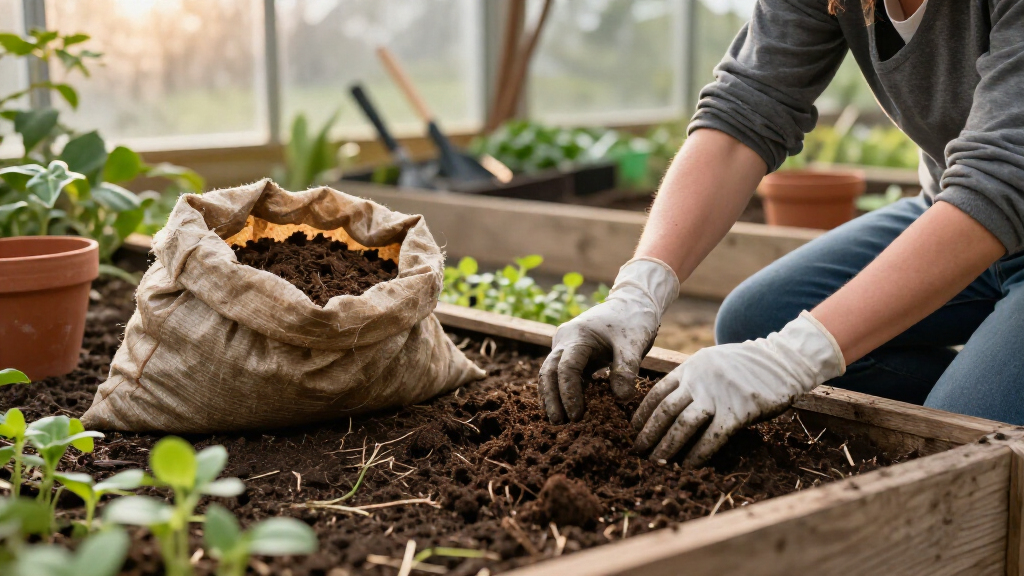
I evaluated these products based on particle consistency, moisture retention capability, and packaging practicality. Not all peat moss is created equal; some bags contain fine dust that creates a mess during handling, while others contain large, woody chunks that fail to integrate smoothly into potting mixes. My ranking prioritizes products that offer a balance of ease of use and soil structure improvement, ensuring that the amendment actually helps roots breathe rather than compacting the soil.
I also considered the source origin and organic certification status, as these factors influence purity and environmental impact. Products were ranked higher if they provided clear information about their origin (such as Canadian sphagnum) and if the bag design facilitated storage and pouring. This approach ensures the recommendations reflect real-world gardening workflows, from small indoor pots to large outdoor raised beds.
| peat moss for gardening | Brand |
|---|---|
| Espoma Peat Moss | Espoma |
| Old Potters Organic Sphagnum P | Old Potters |
| GARDENWISE Organic Sphagnum Pe | GARDENWISE |
| Leaves and Soul Organic Peat M | Leaves and Soul |
| Hoffman Canadian Sphagnum Peat | Hoffman |
| Espoma Organic Sphagnum Peat M | — |
| Espoma Organic Sphagnum Peat M | — |
| Espoma PTM8 Organic Peat Moss | Espoma |
| Miracle-Gro Sphagnum Peat Moss | — |
| Sun Gro Organic Sphagnum Peat | — |
| Doter Organic Sphagnum Peat Mo | Doter |
Factors to Consider When Choosing Best Peat Moss For Gardening
Choosing the right peat moss requires understanding how your specific gardening tasks interact with the physical properties of the moss.Particle Size and Texture
The physical texture of peat moss dictates how well it integrates with your existing soil or potting mix. Fine-grade peat moss is superior for seed starting and delicate root systems because it creates a uniform medium that holds moisture evenly around tiny roots. Conversely, coarse-grade peat moss is better suited for heavy clay soils where aeration is the primary goal, as the larger particles create more air pockets. Many gardeners make the mistake of using fine peat in large outdoor beds, which can lead to compaction and poor drainage. Always match the particle size to the scale of your project: fine for pots, coarse for ground application.
Bag Size and Storage Practicality
Peat moss is bulky and lightweight, meaning storage space becomes a significant constraint for many home gardeners. 8-quart bags are manageable for most people to lift and store in a garage or shed, whereas 20-quart or larger bales can be unwieldy and difficult to open without spilling. If you have limited storage, buying multiple small bags might cost more per quart but saves you from dealing with a massive, dusty bale in your living space. Consider your physical ability to handle the weight and the space you have available before committing to bulk purchases. For occasional use, smaller packages prevent the moss from drying out or getting contaminated between uses.
Moisture Retention vs. Drainage
Peat moss is famous for its water-holding capacity, but this feature can backfire if not managed correctly. High-absorbency sphagnum peat moss can become hydrophobic when completely dry, meaning it repels water instead of absorbing it unless pre-soaked. In contrast, some blends with added perlite or coarser fibers drain faster, which is preferable for succulents or cacti that hate ‘wet feet’. Understanding your plant’s water needs is key; if you tend to overwater, a more aerated, coarse mix is safer than a dense, moisture-trapping fine peat. Always test the drainage of your mix before planting to avoid root rot issues.
Organic Certification and Purity
Not all peat moss is certified organic, and the difference matters if you are growing edible crops or sensitive houseplants. Certified organic peat moss is guaranteed to be free from synthetic pesticides and fertilizers that might have been used during harvesting or processing. Non-certified options may contain traces of chemicals or weed seeds, which can introduce pests into your indoor garden. For vegetable gardens and herb pots, paying a premium for certified organic products reduces the risk of contaminating your food. If you are using peat moss for non-edible ornamental plants, standard options may suffice, but always check the label for ‘sphagnum’ specifically to avoid low-quality filler materials.
Environmental Impact and Alternatives
Peat moss is a non-renewable resource harvested from ancient wetlands, which has led to increased scrutiny from environmentally conscious gardeners. Coir (coconut fiber) is a renewable alternative that behaves similarly to peat moss but is more sustainable and often slightly more alkaline. If sustainability is a primary concern for you, you might consider blending peat moss with coir or opting for composted bark alternatives where possible. However, peat moss still offers unmatched acidity for blueberries and azaleas, which coir cannot replicate without amendments. Weigh the immediate gardening benefits against the environmental cost and consider using peat moss sparingly or in combination with renewable organic matter.
Frequently Asked Questions
Can I use peat moss directly in my garden beds without mixing it?
No, you should never use peat moss alone as a planting medium. It lacks the necessary nutrients and microbial life that plants need to thrive, and it can become too compacted to allow proper root respiration. Peat moss is designed to be a soil amendment, meaning it should be mixed into your existing topsoil or potting mix, typically at a ratio of 1:1 or 1:2. This blending process ensures that the peat improves water retention and aeration without creating an anaerobic environment that suffocates roots. Always combine it with compost or fertilizer to provide the nutritional balance your plants require.
Is Canadian peat moss really better than other sources?
Canadian peat moss is often regarded as higher quality because Canada has strict harvesting regulations and a long history of sustainable peat production. The sphagnum moss harvested in Canadian bogs tends to be cleaner, with fewer woody bits and less dust than peat sourced from less regulated regions. This results in a more consistent product that is easier to work with and less likely to introduce pathogens or debris into your garden. While not all Canadian peat is inherently superior, the regulatory environment generally ensures a higher standard of purity and processing. If you can find Canadian-labeled sphagnum peat, it is usually a safer bet for sensitive plants.
How do I prevent peat moss from blowing away or making a mess?
Peat moss is extremely lightweight, so wind and static can make it messy during application. To control dust, lightly mist the peat moss with water before mixing it into your soil; this adds weight and reduces airborne particles. Work in a sheltered area or on a calm day if you are amending outdoor beds. Using a tarp underneath your mixing area also helps contain spills and makes cleanup significantly easier. For indoor potting, mixing the peat with damp compost before adding it to pots can further minimize dust and static cling.
Does peat moss go bad or expire over time?
Peat moss does not expire in the traditional sense, but its quality can degrade if stored improperly. If a bag is left open or exposed to moisture, it can develop mold or mildew, which is harmful to plant health. Dry, sealed bags of peat moss can last for years without losing their structural integrity or water-holding capacity. Always store your peat moss in a cool, dry place and reseal bags tightly after use. If you notice any foul odor or visible mold growth, discard the product to avoid introducing pathogens to your garden.
Can I use peat moss for succulents and cacti?
Peat moss is not ideal as the primary component for succulents and cacti because it holds too much water, which can lead to root rot. However, it can be used in small percentages (10-20%) within a gritty mix dominated by perlite, pumice, or coarse sand. The peat provides a slight nutrient buffer and helps retain just enough moisture for the plant to access between waterings. Ensure that your overall mix drains rapidly, so water does not sit in the peat component. For these plants, a fast-draining, low-peat mix is always safer than a moisture-retentive one.
Conclusion
Choosing the best peat moss for gardening depends largely on your specific application and storage constraints. For the majority of home gardeners, the Espoma Organic Sphagnum Peat Moss remains the Best Overall pick due to its clean, consistent texture and reliable performance in both indoor and outdoor settings. If you are working on large raised beds or need to cover significant square footage, the Hoffman Canadian Sphagnum Peat Moss offers the Best Value in bulk, though you should be prepared to break up clumps before use. Gardenwise serves as a solid Best for Beginners option because its multi-use marketing clarifies its versatility for orchids and terrariums, reducing confusion for new hobbyists. For those with very limited space or specific small-scale needs like bonsai, the Doter or Leaves and Soul small bags provide Best Compact solutions that minimize waste. Ultimately, prioritize particle size and organic certification over brand name alone to ensure your soil amendments support healthy plant growth.