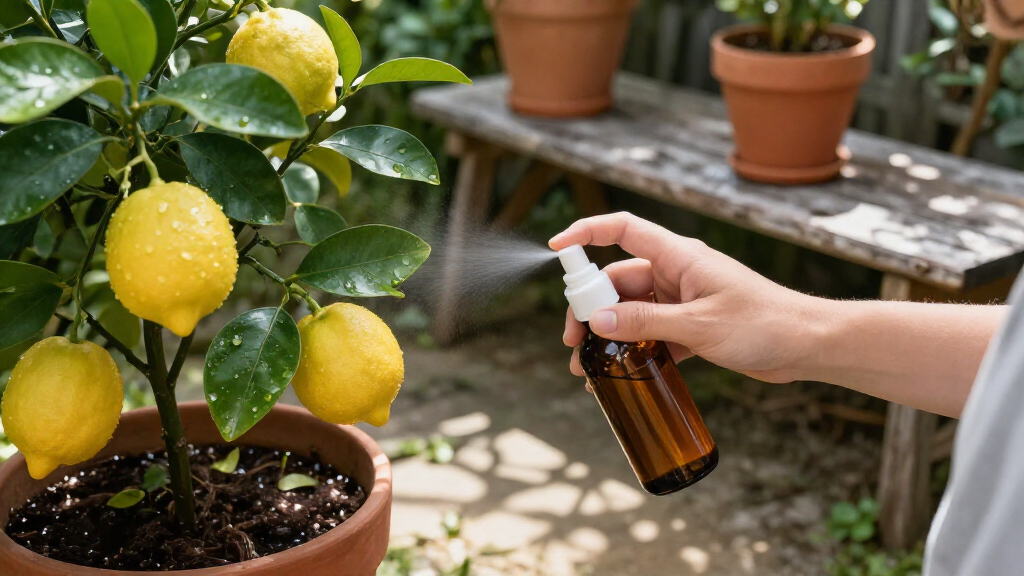
The best citrus tree care products depend on whether your tree needs steady feeding, targeted pest treatment, or support in a container. I’d put Espoma Citrus-Tone first for a straightforward granular feeding option, while GrowScripts’ small-potted-tree kit stands out for container growers and BioAdvanced 3-in-1 spray for shoppers seeking a combined pest and disease treatment. The main tradeoff is convenience versus control: spikes and ready-to-use products simplify application, while granular and liquid feeds offer more flexibility but require closer attention to directions. Product fit also depends on tree size, growing conditions, and the specific problem you’re trying to solve. Read on for the full comparison and guidance on choosing the right care products for your citrus.

Get garden gear delivered free with Prime
- Fast, free delivery on millions of items
- Prime Video, Amazon Music and more included
- Member-only deals all year
Complete the kit


Key Takeaways
- Espoma Citrus-Tone is the strongest all-around fertilizer choice in this lineup for shoppers who want a granular formula labeled for citrus and several other fruiting trees.
- Container growers have more targeted options: GrowScripts’ small-potted-tree kit is designed for smaller citrus, while liquid concentrates can be easier to dose in limited potting mix.
- Fertilizers and sprays solve different problems. Feeding products support nutrient needs; BioAdvanced and neem oil are treatment options, not substitutes for routine nutrition.
- Jobe’s spike products mainly differ by package count and formula. Match the quantity and organic option to your tree-care routine rather than assuming more spikes mean better results.
- Convenience comes with tradeoffs: spikes and ready-to-use sprays reduce measuring, while concentrates and granular products may offer more control over application.




| citrus tree care product | Brand | Form |
|---|---|---|
| Jobe’s Fruit and Citrus Fertil | Jobe’s | Sticks |
| BioAdvanced 3-in-1 Fruit | BioAdvanced | Liquid |
| Jobe’s Organics Fruit & Citrus | Jobe’s Organics | Granules |
| Bonide Captain Jack’s Neem Oil | Bonide | Liquid |
| GrowScripts Citrus Fertilizer | GrowScripts | — |
| Jobe’s Organics Fruit & Citrus | Jobe’s Organics | Time-release spikes |
| Gardenera Liquid Citrus Tree F | Gardenera | Liquid concentrate |
| Jobe’s Fruit and Citrus Fertil | Jobe’s Organics | — |
| Espoma Organic Citrus-Tone 5-2 | Espoma | Granules |
| Miracle-Gro Fruit & Citrus Pla | Miracle-Gro | — |
| Farmer’s Secret Citrus Tree Bo | Farmer’s Secret | Liquid |
| Miracle-Gro Shake ‘N Feed Citr | Miracle-Gro | Granules |
| Jobe’s Fruit and Citrus Fertil | Jobe’s Organics | Fertilizer spikes |
| GrowScripts Citrus Tree Fertil | GrowScripts | Granules and liquid |
| TPS Nutrients Lemon Tree Liqui | TPS Nutrients | Liquid |
More Details on Our Top Picks
Jobe’s Fruit and Citrus Fertilizer Spikes, 15 Count
Jobe’s 15-count spikes suit citrus growers who want scheduled feeding without repeatedly measuring and spreading granules. The 9-12-12 slow-release formula is inserted around the tree’s dripline, directing nutrients below the soil surface while helping limit runoff, mess, and odors. Its twice-yearly schedule is simpler than Jobe’s Organics Fruit & Citrus Granular Fertilizer, which calls for applications every 4–8 weeks during the growing season. That convenience comes with less flexibility: spikes must be placed around the dripline, and this product is formulated for fruit, citrus, and nut trees rather than general-purpose gardening. I’d choose it for an established in-ground citrus tree when fewer feeding sessions matter more than an organic-listed granular option or a custom pot-feeding kit.
Pros:- Slow-release nutrients are delivered below the soil surface.
- Made for fruit, citrus, and nut trees.
- Twice-yearly timing reduces repeat feeding work.
- Dripline placement is designed to reduce runoff, mess, and odors.
Cons:- Requires placing spikes around the tree’s dripline.
- Its twice-yearly schedule offers less frequent adjustment than granular feeding every 4–8 weeks.
- Not formulated as a general-purpose fertilizer.
Best for: Gardeners with established in-ground citrus or fruit trees who want a twice-yearly feeding routine and minimal spreading.
Not ideal for: Growers seeking an OMRI-listed fertilizer, a product for varied garden plants, or a feeding system for small potted citrus trees.
- Brand:Jobe’s
- Plant types:Fruit, citrus, and nut trees
- NPK ratio:9-12-12
- Form:Sticks
- Quantity:15 spikes
- Application frequency:Twice a year
- Recommended timing:Early spring and late fall
Our verdict“Choose these spikes for established in-ground citrus when simple, twice-yearly feeding matters more than frequent dose adjustments.”
BioAdvanced 3-in-1 Fruit, Citrus, and Nut Tree Spray, 32 oz
When a citrus tree has a problem identified on the label, BioAdvanced 3-in-1 offers a ready-to-spray way to address listed insects, mites, and plant diseases with one product. It targets examples such as aphids, caterpillars, black spot, powdery mildew, and rust, and the directions allow use up to the day before harvest. That breadth makes it a different kind of care product from Bonide Captain Jack’s Neem Oil Spray, which also covers insect, mite, and fungal uses but is specified for repeat applications every 7–14 days as needed. BioAdvanced’s main limitation is that “3-in-1” does not mean every pest or disease is covered: the target must appear on its label, and use must follow its directions. I’d pick it for growers who want a ready-to-use treatment matched to a listed problem, not routine feeding.
Pros:- Combines control for listed insects, mites, and plant diseases.
- Ready-to-spray liquid avoids mixing a concentrate.
- Suitable for fruit and nut trees, vegetables, and vine plants.
- Label directions permit use up to the day before harvest.
Cons:- Only targets insects, mites, and diseases listed on the label.
- Must be used according to product directions.
- Provides pest and disease control rather than nutrition for the tree.
Best for: Citrus growers who have identified an insect, mite, or disease listed on the product label and want a ready-to-spray treatment.
Not ideal for: Buyers seeking fertilizer, broad treatment for an unlisted problem, or an organic-gardening product.
- Brand:BioAdvanced
- Size:32 oz
- Form:Liquid
- Item weight:2.2 lb
- Targets:Listed insects, mites, and plant diseases
- Suitable plants:Fruit and nut trees, vegetables, and vine plants
- Use timing:Up to the day before harvest, when used as directed
- EPA registration number:67702-17-92564
Our verdict“Choose BioAdvanced when a listed pest or disease needs treatment and a ready-to-spray format is more useful than neem oil’s repeat-application approach.”
Jobe’s Organics Fruit & Citrus Granular Fertilizer, 4 lb
Jobe’s Organics Fruit & Citrus Granular Fertilizer is the choice here for gardeners who want an OMRI-listed fertilizer they can spread around the base and adjust through the growing season. Its 3-5-5 NPK ratio and granular form make application more flexible than Jobe’s Fruit and Citrus Fertilizer Spikes, 15 Count, which is designed around a twice-yearly schedule and dripline placement. The tradeoff is more frequent upkeep: this product calls for application every 4–8 weeks or as needed during active growth, rather than twice-yearly feeding. It is made specifically for fruit and citrus plants, so it is not the best fit for someone who wants one fertilizer for a mixed garden. I’d choose it for citrus growers who value organic gardening compatibility and hands-on control over application timing.
Pros:- OMRI listed for organic gardening.
- Granules can be measured and spread around the plant base.
- Formulated for fruit and citrus plants and trees.
- Application timing can be adjusted within a 4–8 week growing-season interval.
Cons:- Requires repeated applications during the growing season.
- Designed for fruit and citrus rather than general-purpose use.
Best for: Organic gardeners who want a granular feed for fruit or citrus plants and are willing to reapply during the growing season.
Not ideal for: Busy growers looking for twice-yearly feeding, or gardeners who need a general-purpose fertilizer for many plant types.
- Brand:Jobe’s Organics
- Weight:4 lb
- Form:Granules
- NPK ratio:3-5-5
- Application method:Spread evenly around base
- Application frequency:Every 4–8 weeks or as needed during the growing season
- Target plants:Fruit and citrus plants and trees
- Organic gardening:OMRI listed
Our verdict“Pick this granular option if organic-gardening compatibility and adjustable growing-season feeding outweigh the convenience of slow-release spikes.”
Bonide Captain Jack’s Neem Oil Spray for Plants, 32 oz, Ready-to-Use
Bonide Captain Jack’s Neem Oil Spray makes the most sense for citrus growers who want one ready-to-use product for insect, mite, and fungal concerns across indoor and outdoor plants. Its neem oil-based formula targets insects at egg, larval, and adult stages, while also serving as a fungicide and miticide; it is approved for organic gardening and can be used up until harvest as directed. Compared with BioAdvanced 3-in-1 Fruit, Citrus, and Nut Tree Spray, Bonide is specified for a wider range of plants and organic gardening, while BioAdvanced names example pests and diseases and has its own label-specific target list. Bonide still demands thorough coverage and repeat spraying every 7–14 days as needed. I’d favor it for gardeners who can keep up with coverage and follow-up, not those seeking a single application.
Pros:- Combines fungicide, insecticide, and miticide uses.
- Targets insects at egg, larval, and adult stages.
- Ready-to-use trigger spray requires no concentrate mixing.
- Approved for organic gardening and suitable for a wide range of plants.
Cons:- Affected plants must be completely covered during application.
- May require repeat applications every 7–14 days.
- Coverage and reapplication require more hands-on work than a twice-yearly fertilizer spike routine.
Best for: Organic-minded citrus growers who also care for houseplants or other garden plants and can reapply spray as directed.
Not ideal for: Gardeners who cannot thoroughly cover affected plants or want a treatment with no repeat-application routine.
- Brand:Bonide
- Volume:32 fluid ounces
- Form:Liquid
- Active ingredient:Clarified Hydrophobic Extract of Neem Oil
- Application:Ready-to-use trigger spray
- Use:Fungicide, insecticide, and miticide
- Suitable plants:Houseplants, roses, flowers, trees, shrubs, turf, fruits, nuts, vegetables, herbs, and spices
- Reapplication:Every 7–14 days as needed
- Harvest timing:Can be used up until the day of harvest as directed
Our verdict“Choose Bonide for ready-to-use, organic-gardening spray care across multiple plant types if thorough coverage and repeat applications fit your routine.”
GrowScripts Citrus Fertilizer Kit for Small Potted Citrus Trees
GrowScripts Citrus Fertilizer Kit is tailored to a specific job: feeding one container-grown citrus tree in a pot up to 3 gallons. Rather than offering fertilizer alone, its three-part setup pairs 18-6-12 controlled-release fertilizer with trace element and calcium concentrates, plus an application calendar for soil feeding and foliar spraying. That makes it more specialized than Jobe’s Organics Fruit & Citrus Granular Fertilizer, which is spread around the base and suited to broader fruit-and-citrus planting, but requires repeat applications every 4–8 weeks. The kit’s fit is also its limit: it is sized for a small pot, requires mixing and spraying, and does not include a sprayer. I’d choose it for a container-tree owner who wants a guided multi-part routine, not someone with a larger tree or a preference for simple granules.
Pros:- Combines controlled-release NPK fertilizer, trace elements, and calcium concentrate.
- Sized for one small container-grown citrus tree.
- Includes an application calendar with feeding amounts and timing.
- Supports both soil application and foliar spraying.
Cons:- Limited to pots up to 3 gallons.
- Requires mixing concentrates and spraying foliage.
- Sprayer is not included.
Best for: Owners of a single lemon, lime, orange, or mandarin tree in a container up to 3 gallons who want a guided feeding and foliar-spray routine.
Not ideal for: Growers with larger pots or in-ground trees, or anyone who wants a ready-to-apply feed without mixing concentrates or supplying a sprayer.
- Brand:GrowScripts
- Suitable plants:Lemon, lime, orange, mandarin, and similar citrus trees
- Pot size:Up to 3 gallons
- Fertilizer NPK:18-6-12
- Fertilizer amount:2 oz (56.6 g)
- Trace elements concentrate:8 mL
- Calcium nutrient concentrate:8 mL
- Prepared solution per concentrate:32 fl oz
- Application methods:Soil application and foliar spray
Our verdict“Choose this kit for a small potted citrus tree if you want a guided, multi-part feeding plan and accept the extra mixing and spraying.”
Jobe’s Organics Fruit & Citrus Tree Fertilizer Spikes, 3-5-5, 6 Spikes per Package (3-Pack)
For indoor and container-grown citrus, these pre-measured organic spikes keep feeding simple: insert them near the roots rather than measuring fertilizer and mixing it into water. The 3-5-5 formula and slow-release format suit buyers who want a targeted product with less potential for runoff, while Jobe’s Biozome blend includes archaea, mycorrhizal fungi, and bacteria intended to support soil quality. Compared with Gardenera Liquid Citrus Tree Fertilizer, this pick avoids routine dilution but gives you less flexibility to adjust feeding through watering. Its OMRI listing is a plus for organic gardening, though the citrus-and-fruit focus makes it less versatile than Espoma Citrus-Tone, which also names nut and avocado trees. The tradeoff is placement: spikes can be harder to distribute evenly than granules.
Pros:- Pre-measured spikes simplify application and help limit excess fertilizer.
- Slow-release nutrients are placed near the roots.
- Biozome blend contains archaea, mycorrhizal fungi, and bacteria.
- OMRI listed for organic gardening.
Cons:- Stated use is limited to container and indoor fruit and citrus trees.
- Spikes can be less convenient to distribute evenly than granular fertilizer.
Best for: Indoor citrus and fruit-tree growers who prefer an OMRI-listed, pre-measured feed over mixing a liquid concentrate.
Not ideal for: Growers who want one fertilizer for a broad mix of plants or who need to spread nutrients evenly across a large root zone.
- Brand:Jobe’s Organics
- Fertilizer analysis:3-5-5
- Form:Time-release spikes
- Quantity:3 packages of 6 spikes
- Stated use:Container and indoor fruit and citrus trees
- Certification:OMRI listed for organic gardening
- Ingredients:Archaea, mycorrhizal fungi, and bacteria
Our verdict“Choose these for organic, low-measuring care of container citrus; pick Gardenera’s liquid concentrate if you prefer feeding through watering.”
Gardenera Liquid Citrus Tree Fertilizer Concentrate, 3-1-2, 8 fl oz
This concentrate is aimed squarely at citrus owners who already water their trees and want to add feeding to that routine. Its 3-1-2 NPK ratio is formulated for citrus, and the stated dose—one teaspoon per gallon—makes it possible to prepare a diluted feed as needed. Compared with Jobe’s Organics Fruit & Citrus Tree Fertilizer Spikes, Gardenera gives you more control over how the fertilizer is delivered, but it also requires measuring and mixing each time. The product is described as organic and intended to support vigor, fruit production, and fruit quality; those goals may appeal to indoor growers managing a single potted tree. Its citrus-specific focus is also a limitation: unlike Espoma Citrus-Tone, it is not presented for fruit, nut, and avocado trees alike. The small bottle suits modest use better than broad collections.
Pros:- Formulated specifically for citrus trees.
- Concentrated formula is diluted at one teaspoon per gallon of water.
- Liquid application fits into a watering routine.
- Described as an organic formula.
Cons:- Must be diluted before use, so each application requires measuring and mixing.
- Stated target use is limited to citrus trees.
- The 8-fluid-ounce bottle may be a less practical fit for feeding many trees.
Best for: Indoor citrus owners who want a concentrated fertilizer they can mix into their regular watering routine.
Not ideal for: People who prefer ready-to-apply products, dislike measuring dilution, or need a feed specified for several kinds of trees.
- Brand:Gardenera
- NPK ratio:3-1-2
- Form:Liquid concentrate
- Volume:8 fl oz
- Target plants:Citrus trees
- Application method:Dilute and apply while watering
- Mixing ratio:1 teaspoon per 1 gallon of water
Our verdict“Pick Gardenera if you want a citrus-focused liquid feed for indoor trees and do not mind mixing it into water.”
Jobe’s Fruit and Citrus Fertilizer Spikes, 5 Count
These spikes suit tree owners who want a simple, seasonal routine: place them around the dripline in early spring and late fall, rather than applying a liquid feed repeatedly. The 8-11-11 analysis is higher in phosphorus and potassium than Jobe’s Organics 3-5-5 spikes, so the two products are not interchangeable choices just because both use spikes. This formula is intended for fruit, citrus, and nut trees and releases nutrients below the soil surface, which can reduce the mess and runoff associated with surface application. The cost of that convenience is a narrower schedule and more involved placement: you need to insert the sticks around the tree, with application quantity guided by the label. Compared with Espoma Citrus-Tone granules, this option avoids spreading and watering in fertilizer but is less adaptable across a broad planting area.
Pros:- Slow-release spikes place nutrients below the soil surface.
- Formulated for fruit, citrus, and nut trees.
- Dripline placement helps direct feeding around the tree.
- Avoids spreading granules across the soil surface.
Cons:- Recommended feeding schedule calls for early-spring and late-fall applications.
- Spikes require insertion around the dripline and may take more placement effort than granules.
- The tree-focused formula is not presented as a general-purpose fertilizer.
Best for: Owners of established fruit, citrus, or nut trees who want a twice-seasonal spike routine around the dripline.
Not ideal for: Gardeners feeding mixed plantings or those who want to adjust fertilizer amounts through smaller, more frequent applications.
- Brand:Jobe’s Organics
- Product type:Fertilizer spikes
- Count:5
- NPK ratio:8-11-11
- Target plants:Fruit, citrus, and nut trees
- Application method:Insert into soil around the tree’s dripline
- Recommended application:Early spring and late fall
- Item weight:0.4 kg
Our verdict“Choose these for straightforward spring-and-fall feeding of fruit, citrus, or nut trees; choose Espoma Citrus-Tone if you prefer to spread granules.”
Espoma Organic Citrus-Tone 5-2-6 Fertilizer and Plant Food for Citrus, Fruit, Nut & Avocado Trees – 4 lb Bag
Espoma Citrus-Tone is the most flexible fit here for gardeners feeding several kinds of trees, since it is formulated for citrus, fruit, nut, and avocado trees. The ready-to-use granules need no dilution, and the 5-2-6 analysis with 5% calcium gives citrus growers a specific nutrient profile without requiring a spike in each feeding spot. The listed schedule—late winter, after spring bloom, and fall—calls for more seasonal applications than the twice-yearly schedules for Jobe’s 5-count spikes and Miracle-Gro Fruit & Citrus Plant Food Spikes. That makes this better for gardeners comfortable with spreading and watering fertilizer than for anyone seeking a minimal-placement routine. Its organic certification and stated lack of fillers may appeal to organic growers, but the 4-pound bag may not stretch far across a large orchard.
Pros:- Suitable for citrus, fruit, nut, and avocado trees.
- Ready-to-use granules require no mixing.
- Includes 5% calcium alongside a 5-2-6 NPK analysis.
- Certified for organic gardening and described as containing no fillers.
Cons:- The 4-pound bag may be insufficient for large orchards.
- Granules need thorough watering after application.
- The listed schedule involves three seasonal applications.
Best for: Organic gardeners with a small or medium mix of citrus, fruit, nut, or avocado trees who prefer ready-to-use granules.
Not ideal for: Large-orchard owners who need a larger bag, or growers who want to avoid spreading fertilizer and watering it in.
- Brand:Espoma
- Model number:CT4
- Form:Granules
- Fertilizer analysis:5-2-6 NPK
- Calcium content:5%
- Package weight:4 lb (64 oz)
- Target trees:Citrus, fruit, nut, and avocado trees
- Application:Spread around the tree area and water thoroughly
- Recommended timing:Late winter, post-bloom spring, and fall
Our verdict“Pick Citrus-Tone if you want certified-organic granules for several types of trees and can manage spreading and watering them in.”
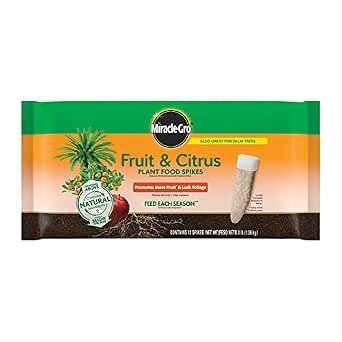
Miracle-Gro Fruit & Citrus Plant Food Spikes, 12 Count, 3 lb
Miracle-Gro’s spikes make sense for growers who want to feed more than citrus: the stated uses include fruit, citrus, and palm trees, and the package contains 12 spikes. They release nutrients into the root zone, with applications scheduled for early spring and mid-fall. Compared with Jobe’s 5-count 8-11-11 spikes, this product has a higher 10-15-15 NPK analysis and also names palms as a target; those differences may matter when choosing for a mixed tree collection, but they do not make the formulas interchangeable. Application requires driving spikes into soft soil around the dripline, and spacing and quantity depend on tree size and label directions. Unlike Espoma Citrus-Tone, it avoids spreading granules, yet it offers less flexibility for distributing fertilizer across an entire soil area.
Pros:- Feeds nutrients into the root zone.
- Suitable for fruit, citrus, and palm trees.
- Seasonal schedule calls for early-spring and mid-fall applications.
- Twelve spikes provide a larger count than Jobe’s 5-count option.
Cons:- Spikes must be driven into soft soil around the dripline.
- Spacing and quantity depend on tree size and label directions.
- Spike placement offers less flexibility than spreading granules over a wider area.
Best for: Gardeners with fruit or citrus trees, or palms, who prefer root-zone spikes and can follow tree-size-based placement directions.
Not ideal for: Growers who want organic-certified fertilizer, need to feed a mixed garden beyond the listed tree types, or have soil too hard for spike placement.
- Brand:Miracle-Gro
- Product type:Plant food spikes
- Count:12 spikes
- Package weight:3 lb (48 oz)
- NPK ratio:10-15-15
- Suitable trees:Fruit, citrus, and palm trees
- Application area:Around the tree’s dripline
- Application schedule:Early spring and mid-fall
Our verdict“Choose Miracle-Gro for twice-yearly spike feeding across fruit, citrus, and palm trees, provided your soil is soft enough for placement.”
Farmer’s Secret Citrus Tree Booster Fertilizer, 8 oz
Farmer’s Secret Citrus Tree Booster suits growers who prefer to feed through watering rather than work solids into the soil. Its concentrated mix calls for one teaspoon per gallon, making the bottle suitable for repeated diluted applications, while indoor and container trees can receive half-strength or less frequent doses. Compared with TPS Nutrients Lemon Tree Liquid Fertilizer, this formula names a wider range of citrus and also lists avocado trees, though TPS offers more application options, including hose-end spraying and leaf misting. The weekly schedule gives a grower control over feeding, but it also means measuring and mixing regularly. Mature trees may need up to two teaspoons per week, so this small bottle is not a no-maintenance choice. I’d pick it for flexible, measured feeding, not for buyers who want a long-lasting granular application.
Pros:- Concentrated dosage makes one gallon of diluted feed from a teaspoon.
- Formulated for lemons, limes, oranges, and other citrus trees.
- Indoor and container use has lower-dose or less-frequent guidance.
- Also suitable for avocado trees.
Cons:- Must be diluted before each application.
- Weekly feeding requires regular measuring and mixing.
- Mature trees may require up to two teaspoons per week.
Best for: Citrus and avocado growers who want a concentrated liquid they can dose differently for outdoor trees and indoor containers.
Not ideal for: Growers seeking a low-effort, infrequent feeding routine or a product that can be applied without measuring and dilution.
- Brand:Farmer’s Secret
- Form:Liquid
- Container size:8 fluid ounces
- Target plants:Citrus trees, including lemons, limes, and oranges
- Additional suitable plant:Avocado trees
- Mixing ratio:1 teaspoon per gallon of water (1:128)
- Application:Weekly along the drip line
- Indoor or container use:Half dosage or every other week
Our verdict“Choose Farmer’s Secret if you want a concentrated liquid with adjustable guidance for citrus and avocado; choose a slow-release product if you want fewer feeding sessions.”
Miracle-Gro Shake ‘N Feed Citrus, Avocado & Mango Plant Food, 4.5 lb
For gardeners who would rather feed on a calendar than mix fertilizer every week, Miracle-Gro Shake ‘N Feed offers a straightforward routine: apply to the soil, work it into the top layer, water, and repeat about every three months. Its up-to-three-month feeding period makes it less hands-on than Farmer’s Secret Citrus Tree Booster, whose liquid formula calls for weekly applications. The listed nutrients include potassium, magnesium, sulfur, and iron, while microbes are included to support root development. It can be used with citrus, avocado, and mango in containers or garden beds, giving it broader placement flexibility than Jobe’s Fruit and Citrus Fertilizer Spikes. The tradeoff is a more involved application than simply watering in a liquid: granules must be kept off trunks and foliage and worked into the soil. I’d choose it for regular, scheduled feeding, not for someone avoiding soil work.
Pros:- Feeds for up to three months per application.
- Suitable for indoor and outdoor containers as well as in-ground plants.
- Includes potassium, magnesium, sulfur, and iron.
- Microbes are included to support root development.
Cons:- Granules need to be worked into the top one to three inches of soil and watered.
- Application requires care to keep product away from trunks and foliage.
- The three-month schedule is less adjustable than weekly liquid dosing.
Best for: Citrus, avocado, or mango growers with container or in-ground plants who want a repeatable feeding routine every few months.
Not ideal for: People who want a quick liquid application or cannot work granules into the soil while keeping them clear of trunks and leaves.
- Brand:Miracle-Gro
- Form:Granules
- Package weight:4.5 pounds (72 ounces)
- Suitable plants:Citrus, avocado, and mango
- Growing locations:Indoor and outdoor containers and in-ground plants
- Feeding duration:Up to 3 months
- Reapplication frequency:Every 3 months
- Application method:Shake evenly onto soil, work into the top 1–3 inches, and water
- Listed nutrients:Potassium, magnesium, sulfur, and iron
Our verdict“Pick Shake ‘N Feed for a scheduled, soil-applied feed across citrus, avocado, and mango; choose Farmer’s Secret if you prefer frequent, adjustable liquid doses.”
Jobe’s Fruit and Citrus Fertilizer Spikes, 9 Count
Jobe’s Fruit and Citrus Fertilizer Spikes are a practical fit for tree owners who want to place fertilizer into the soil near active roots without spreading loose material across the surface. Insert the spikes around the dripline, with early spring and late fall listed as application times. Against Miracle-Gro Shake ‘N Feed, this format avoids working granules into the soil, though it still requires placing each spike in the right area. The 8-11-11 NPK blend is formulated for fruit, citrus, and nut trees, so it is more specialized than a general-purpose plant food, but less suitable if you need one fertilizer for unrelated plants. Nine spikes also give a defined supply rather than a large bulk package. I’d favor this option for targeted tree feeding; skip it if your soil is too hard to insert spikes or you want flexible, frequent dosing.
Pros:- Spikes place nutrients into soil around the dripline.
- Application avoids spreading loose granules over the soil surface.
- Slow-release format is intended to supply nutrients below the surface.
- 8-11-11 NPK blend is formulated for fruit, citrus, and nut trees.
Cons:- Requires inserting spikes around the tree’s dripline.
- The fruit, citrus, and nut focus limits use for unrelated plants.
- The nine-spike pack may not suit growers managing many trees.
Best for: Home orchard growers with fruit, citrus, or nut trees who want a soil-inserted feed placed around each tree’s dripline.
Not ideal for: Container growers with limited soil area, gardeners with hard soil that resists spike insertion, or buyers seeking a general-purpose fertilizer.
- Brand:Jobe’s Organics
- Form:Fertilizer spikes
- Quantity:9 spikes
- NPK ratio:8-11-11
- Suitable plants:Fruit, citrus, and nut trees
- Application method:Insert into soil around the tree’s dripline
- Recommended timing:Early spring and late fall, or as needed during the growing season
- Unit count:31.68 ounces
Our verdict“Choose these spikes for targeted feeding around established fruit and citrus trees; choose Shake ‘N Feed for broader container and garden-bed flexibility.”
GrowScripts Citrus Tree Fertilizer Kit, 3-in-1 NPK 18-6-12 Granules, Micronutrients and Calcium
GrowScripts Citrus Tree Fertilizer Kit is the most involved pick here, combining controlled-release 18-6-12 granules with liquid micronutrients and a calcium supplement. That makes it a different proposition from Jobe’s Fruit and Citrus Fertilizer Spikes, which focus on a single spike-based feed: GrowScripts aims to cover several parts of a citrus feeding routine and includes a seasonal calendar. Its stated feeding duration of up to 12 months may suit in-ground trees or large containers where a planned program is appealing. The tradeoff is that the components have different coverage limits—up to 78 square feet for fertilizer and up to 312 square feet for the liquid supplements—so they do not run out at the same rate. Multiple components and seasonal timing also ask more of the grower than Miracle-Gro Shake ‘N Feed’s three-month granular routine. I’d choose this for citrus-focused care, not simplicity.
Pros:- Combines controlled-release NPK granules, liquid micronutrients, and a calcium supplement.
- Temperature-activated granules are designed to feed for up to 12 months.
- Formulated for a range of citrus, including lemon, orange, lime, and grapefruit.
- Includes a seasonal application calendar.
Cons:- Fertilizer and liquid supplements have different coverage areas.
- Multiple components require separate application steps and seasonal timing.
- Broadcast application may be less convenient for a single small potted tree.
Best for: Citrus growers with in-ground trees or large containers who want fertilizer, micronutrients, calcium, and a seasonal application calendar in one kit.
Not ideal for: Beginners wanting a single, simple application or growers who need all kit components to cover the same area.
- Brand:GrowScripts
- NPK ratio:18-6-12
- Form:Granules and liquid
- Feeding duration:Up to 12 months
- Fertilizer coverage:Up to 78 square feet
- Micronutrient and calcium coverage:Up to 312 square feet
- Target plants:Lemon, orange, lime, grapefruit, and other citrus trees
- Application method:Broadcast
- Included components:NPK 18-6-12 fertilizer, trace elements, and calcium bloom supplement
Our verdict“Pick the GrowScripts kit if you want a multi-part, calendar-guided citrus program; choose Shake ‘N Feed for a simpler granular routine.”
TPS Nutrients Lemon Tree Liquid Fertilizer, 8 fl oz
TPS Nutrients Lemon Tree Liquid Fertilizer stands out for application flexibility: the diluted feed can go on with a watering can, a hose-end sprayer, or as a leaf mist. That range can make it easier to fit feeding into different garden setups than Farmer’s Secret Citrus Tree Booster, which specifies weekly watering at the dripline. TPS is aimed at lemon and citrus trees, including Meyer and dwarf varieties, and is listed for both pots and in-ground planting. Its 1:200 mixing ratio means dilution is required, and the supplied details do not give a feeding frequency, so buyers should follow the product label for timing rather than assume a schedule. Compared with the GrowScripts kit, this is a simpler single liquid, not a complete program with separate calcium and micronutrient components. I’d choose it for application choice, not for a long-duration, all-in-one plan.
Pros:- Formulated for lemon and citrus trees, including Meyer and dwarf varieties.
- Suitable for both potted and in-ground citrus.
- Offers watering-can, hose-end sprayer, and leaf-misting application methods.
- Described as supporting leaves, roots, tree strength, and fruit development.
Cons:- Requires dilution at a 1:200 mixing ratio.
- The provided product details do not specify an application frequency.
- A single liquid formula does not include the separate calcium and micronutrient components found in the GrowScripts kit.
Best for: Meyer lemon and dwarf citrus owners who want to apply diluted liquid feed with a watering can, hose-end sprayer, or leaf mist.
Not ideal for: Growers who want a ready-to-use product, a stated long-term feeding schedule, or a multi-part citrus nutrition kit.
- Brand:TPS Nutrients
- Form:Liquid
- Container size:8 fluid ounces
- Target species:Lemon trees
- Suitable growing locations:In-ground and potted citrus
- Mixing ratio:1:200
- Application methods:Watering can, hose-end sprayer, or leaf misting
- Item weight:8 ounces
Our verdict“Choose TPS Nutrients for lemon-focused liquid feeding with several application methods; choose Farmer’s Secret if you want a specified weekly schedule and avocado compatibility.”

How We Picked
I compared these products by how clearly they serve citrus trees, how practical their application is for different growing setups, and whether their format suits a recurring care routine or a specific treatment need. I also considered the distinction between products intended to feed plants and those marketed for pest or disease control, since choosing the wrong category can leave the actual problem unaddressed. Where the product name or format indicates a particular audience—such as small potted trees—I treated that specialization as a meaningful advantage for the right buyer, not a universal benefit.
The ranking favors products with a clear role and broad usefulness for citrus growers, then places more specialized, format-specific, or problem-focused options where they best fit. Granular fertilizers and established spike formats rank ahead of narrow-use products for routine feeding; targeted kits and liquids follow for growers who need dosing flexibility or container-specific care. Sprays rank as complements rather than general-purpose citrus care, because their value depends on the pest or disease concern and the product label. I did not treat package size or product count alone as proof of better value.
Factors to Consider When Choosing Best Citrus Tree Care Products
Before choosing a product, identify what your tree needs and how it grows. A potted lemon tree, an in-ground orange tree, and a citrus tree with visible pest damage call for different care decisions. These factors can help narrow the options without turning routine maintenance into unnecessary product use.
Match the product to the problem
Start by separating nutrition from pest or disease treatment. Yellowing leaves, slow growth, and poor fruiting can have several causes, including watering, light, root stress, or nutrient issues, so fertilizer is not an automatic fix. A spray may be relevant when you have identified a pest or disease concern, but it will not replace feeding or correct a watering problem. Avoid applying several products at once just because they target different symptoms; overlapping treatments can make it harder to tell what helped or caused stress. Check the label to confirm the intended use and the citrus plants it covers. If the cause is uncertain, inspect the plant and growing conditions before buying a treatment.
Choose a format that fits your routine
Spikes, granules, and liquids differ in how much measuring and placement they require. Spikes can simplify feeding, but the count and instructions must suit the tree and pot or soil conditions; forcing an unsuitable spike into a small container is not a shortcut. Granules need careful placement and watering according to the label, while concentrates call for accurate dilution. Ready-to-use products reduce mixing steps but give you less control over concentration. Pick the format you can apply consistently and correctly, rather than the one that sounds fastest. A convenient product is only useful when its directions fit your setup.
Account for container size and growing conditions
Container citrus needs a different level of attention from established trees in the ground because limited potting mix can dry out and accumulate salts more readily. A product intended for small potted trees may be easier to match to that setting, but it does not remove the need to follow dosing directions. Think about pot size, drainage, watering frequency, and how often you already feed before adding another product. For in-ground trees, coverage and the tree’s size matter more than a small-container format. Do not assume a formula is suitable for every citrus variety or growing environment just because citrus appears on the label.
Read the nutrient analysis, not just the front label
NPK numbers describe the balance of nitrogen, phosphorus, and potassium, but they do not tell the whole story of how a product fits your plant. Compare the analysis with the label’s application directions and any listed micronutrients, especially when choosing between a general citrus fertilizer and a kit with added components. More concentrated numbers do not automatically mean better results or a smaller effective dose for your tree. Avoid combining multiple fertilizers without accounting for their nutrient contributions. If you are changing products, follow the new product’s schedule rather than stacking it onto the previous routine.
Know when a bundle or treatment is worth adding
Kits can simplify shopping when their included components match a real need, such as care tailored to a small potted citrus tree. They can also add steps or products you may not need, so check what each component does before committing to a bundled routine. For sprays, confirm the target pest or disease and read the full label, including application limits and precautions for people, pets, pollinators, and edible crops. A broad treatment is not automatically the right first response to a minor or unidentified issue. Pay for a bundle or specialized treatment when it addresses a clear gap in your care plan, not simply because it includes more items.
Frequently Asked Questions
Should I buy citrus fertilizer or a spray if my tree looks unhealthy?
First look for a specific symptom and check growing conditions, since poor drainage, inconsistent watering, low light, and pests can produce overlapping signs. Fertilizer is suited to nutrition, while a spray is meant for a treatment need stated on its label. Adding feed to a tree stressed by wet roots or applying a spray without identifying a target may not help and can add stress. Inspect leaves, stems, and the soil, then choose the product category that matches the likely cause. If the problem is spreading or unclear, seek local horticultural advice before combining products.
Are fertilizer spikes a good choice for citrus trees in pots?
They can be convenient, but suitability depends on the pot size, tree size, and the spike’s directions. A container has less soil than a garden bed, so incorrect placement or excessive feeding may affect roots more quickly. Check the label for container use and how many spikes to apply; do not estimate based only on the tree’s height. Granular or liquid products may offer more control for small pots, though they require accurate application. If a spike does not fit the container or the directions do not cover potted citrus, choose another format.
Can I use an organic citrus fertilizer and a conventional fertilizer together?
Usually, there is no good reason to combine them without first calculating what each contributes. Both can supply overlapping nutrients, and adding them together may exceed the intended feeding rate. Organic labeling does not mean a product cannot contribute to overfeeding, while conventional products still need to be used according to their directions. Pick one feeding plan, follow its schedule, and watch how the tree responds before changing products. If you do switch, avoid applying the new fertilizer on top of a recent full dose unless the label supports that timing.
Do citrus fertilizer kits replace separate pest control?
No. A fertilizer kit is intended to support plant nutrition, while pest products address specific organisms or plant-health problems named on their labels. Even a multi-part feeding kit should not be treated as pest control unless its labeling explicitly says so. Inspect the tree for insects, webbing, sticky residue, or leaf damage and identify the issue before choosing a spray. This distinction helps avoid buying a second fertilizer when the real problem is a pest, or applying a pesticide when the tree needs changes to its growing conditions.
Which kind of citrus care product is easiest for a first-time grower?
For routine feeding, a clearly labeled product with straightforward application directions is usually simpler than a multi-step kit or a concentrate that must be diluted. Spikes and ready-to-use formulas reduce measuring, but their instructions still need to match your tree’s size and growing setup. A beginner should avoid using multiple fertilizers or treatments at once, since that makes results harder to interpret. Choose one product for the immediate need, record when and how much you apply, and reassess before the next application. If you cannot identify whether the issue is nutrition or pests, investigate before treating.
Conclusion
For an all-around granular feeding option, I’d choose Espoma Citrus-Tone; it has a clearly citrus-focused role and suits growers who want one product for several fruiting-tree types. For best value in routine feeding, compare the Jobe’s spike packages by count and select the version that fits your tree-care schedule rather than buying extra product without a use for it. GrowScripts’ small-potted-tree kit is my pick for beginners growing citrus in containers who want a more targeted setup, while the broader GrowScripts kit is the premium-style choice for shoppers seeking a multi-component approach. For a specific pest or disease concern, choose BioAdvanced 3-in-1 spray or neem oil only when the label matches the problem and your intended use. In short, match the product to the tree’s growing setup and actual need: feed for nutrition, treat only identified problems, and keep the routine as simple as your citrus allows.
Evergreen bestsellers Picks

Breville Bambino Espresso Machine, Brushed Stainless Steel

Ninja Foodi 10-Quart DualZone 6-in-1 Air Fryer, Black, DZ302

KitchenAid Artisan 5-Qt Tilt-Head Stand Mixer, Almond Cream
As an affiliate, we earn on qualifying purchases.