
The best growing media for plants overall in this roundup is Miracle-Gro Organic Indoor Potting Mix, a ready-to-use choice for houseplant growers who want a familiar soil-based medium. For soilless setups, Happy Trees Coco Coir and Perlite pairs two useful components, while Back to the Roots offers a larger volume of expanding coco coir. The main tradeoff is between a convenient, moisture-holding mix and media such as coir or LECA that call for more preparation or a different watering routine. Bag size, particle consistency, and whether the product is meant to hold nutrients or simply support roots also separate these options. Read on for the full comparison and guidance on matching a medium to your plants and growing method.

Get garden gear delivered free with Prime
- Fast, free delivery on millions of items
- Prime Video, Amazon Music and more included
- Member-only deals all year
Complete the kit


Key Takeaways
- Miracle-Gro Organic Indoor Potting Mix is the clearest general-purpose pick for growers who want a ready-to-use soil-based medium rather than loose coir or LECA.
- Happy Trees Coco Coir and Perlite stands apart among the coir options by combining coir with an aerating ingredient, reducing the need to source and blend both materials separately.
- Back to the Roots 51-quart coco coir suits projects that need a larger quantity, while compact bricks such as Miuwauer are easier to store but require expansion.
- The LECA options vary more by bag weight and particle-size range than by growing purpose; choose based on how much media your setup needs and whether the size suits your pots or system.
- Across the lineup, media are not interchangeable: potting mix, coco coir, and LECA differ in nutrient retention, preparation, and watering demands, so the right choice depends on the growing method.


| growing media for plant | Brand | Material | Weight | pH |
|---|---|---|---|---|
| Miracle-Gro Organic Indoor Pot | Miracle-Gro | — | — | — |
| Legigo 10-Pack Organic Coco Co | Legigo | Organic coconut coir | — | — |
| Coco Bliss Organic Coco Coir B | Plantonix | Coconut fiber (coco coir) | 10 pounds | Neutral |
| Happy Trees Coco Coir and Perl | Happy Trees Hemp | — | — | — |
| Miuwauer Organic Coco Coir Bri | Miuwauer | Coconut coir | 1.3 pounds | Neutral |
| Halatool 10LB Leca Clay Pebble | Halatool | Kiln-fired clay pebbles | 10 lb (4.46 kg) | Neutral |
| Back to the Roots Organic Coco | Back to the Roots | 100% organic coconut coir | 10 lb | Balanced |
| FoxFarm Cream of the Crop 50/5 | FoxFarm | 50% coconut coir and 50% perlite | 30 lb | — |
| YISZM Clay Pebbles | YISZM | Natural clay pebbles | 2 lb (0.89 kg) | Neutral |
| Sunwinx 2 lb Organic LECA Clay | Sunwinx | Expanded clay | 2 lb (32 oz) | Neutral |
| Leca Expanded Clay Pebbles 5 l | WAURHER | Expanded clay | 5 lb (80 oz) | — |
| Leca Expanded Clay Pebbles | — | Natural expanded clay | 2 lb | Neutral |
| Legigo 10 lb LECA Clay Pebbles | Legigo | Natural expanded clay | 10 lb (160 oz) | Neutral |
| Riare Organic LECA Clay Pebble | Riare | High-temperature fired expanded clay | 16 lb (256 oz) | Neutral |
| Voulosimi Clay Pebbles Hydropo | — | Clay | 18 lb (item weight: 17.69 lb) | Neutral |
More Details on Our Top Picks
Miracle-Gro Organic Indoor Potting Mix, 16 qt.
I’d choose this as the most straightforward all-around medium for indoor growers who want a ready-to-use mix rather than a single amendment. Peat moss and coir balance moisture retention with air space, while the included natural fertilizer supplies a starting source of nutrition for houseplants, herbs, and seedlings. Its OMRI listing also distinguishes it from the coir-only bricks in this group, which generally need added nutrients when used alone. Compared with Happy Trees Coco Coir and Perlite Growing Medium, this mix includes fertilizer but does not specify a fixed coir-to-aeration amendment ratio. The tradeoff is its limited 16-quart volume and moisture-retentive character: growers who prefer a highly airy, custom-blended medium may want to amend it, and the actual fill depends on the root ball and container shape.
Pros:- Ready-to-use blend combines sphagnum peat moss and coir for moisture retention and air space.
- Includes quick-start natural fertilizer for an initial source of nutrition.
- Suitable for indoor plants, herbs, and seed starting.
- OMRI Listed for organic use.
Cons:- The 16-quart bag may not cover multiple large containers.
- Moisture-retentive ingredients may not suit growers who prefer a faster-drying, more open mix.
- Coverage varies with root-ball size and container shape.
Best for: Indoor plant owners who want one organic-listed mix for houseplants, herbs, or starting seeds without first hydrating a brick.
Not ideal for: Growers filling several large containers or seeking a highly airy, fertilizer-free base they can customize from scratch.
- Brand:Miracle-Gro
- Volume:16 qt.
- Ingredients:Sphagnum peat moss, coir, and quick-start natural fertilizer
- Use:Indoor container plants, houseplants, herbs, and seed starting
- Organic listing:OMRI Listed
- Coverage:Fills one 12-inch container
Our verdict“Choose this for a convenient, organic-listed indoor mix with starter nutrition; pick Happy Trees instead if you want a defined coir-and-perlite blend.”
Legigo 10-Pack Organic Coco Coir Bricks for Plants – Natural Coconut Coir Soil
The appeal here is the 10-brick format: it stores compactly and lets gardeners hydrate coir in smaller batches instead of keeping a large bag of loose medium on hand. Once expanded, the coconut fiber offers moisture retention and aeration for seedlings, herbs, vegetables, and indoor plants. Its low-EC specification is useful for growers looking for a low-salt starting medium, though coir alone does not provide a complete feeding plan. Compared with the single Miuwauer Organic Coco Coir Brick, this multipack suits repeated projects or a shared growing space; compared with Happy Trees Coco Coir and Perlite, it takes preparation but gives the buyer more control over batch size. The main tradeoff is labor: every brick needs water before use, and careful hydration plus added nutrients may be needed for plants grown in coir alone.
Pros:- Ten compact bricks are easier to store than an equivalent volume of loose coir.
- Low-EC coconut coir provides a low-salt base medium.
- Expands with water into a light, aerated medium that retains moisture.
- Can be used for seedlings, herbs, vegetables, and indoor plants.
Cons:- Bricks must be hydrated before planting, which adds preparation and can create a mess.
- Coir used alone may need supplemental nutrients.
- The product data does not state a total expanded volume for the multipack.
Best for: Seed starters, community gardeners, and indoor growers who use coir regularly and want compact bricks to hydrate as needed.
Not ideal for: People who need a medium straight from the package or want a complete, nutrient-supplied potting mix without extra preparation.
- Brand:Legigo
- Pack count:10 bricks
- Unit count:224 ounces
- Item weight:1.4 pounds
- Brick dimensions:8 × 4 × 2 inches
- Volume per brick:64 cubic inches
- Material:Organic coconut coir
- pH and EC:Balanced pH; low EC
Our verdict“Pick Legigo for repeated growing projects and compact storage, but choose Happy Trees if you want pre-expanded coir blended with perlite.”
Coco Bliss Organic Coco Coir Brick, 10 lb
This is the strongest fit for gardeners who want a larger coir supply for mixing into existing potting soil or preparing multiple containers. The 10-pound compressed brick expands to a stated 15 gallons, and its pre-rinsed, screened fiber avoids some of the debris that can accompany less-processed coir. Used as an amendment, coir can add moisture retention while opening up the mix; it is not presented as a complete, fertilized potting medium. Compared with Legigo’s 10-pack, Coco Bliss offers one substantial block rather than several small bricks, which may be more convenient for a larger batch but less flexible for small projects. It also needs water to expand, unlike the ready-to-use Happy Trees blend. Its OMRI listing and neutral pH add useful specifications, but growers should plan to mix or feed it according to their plants’ needs.
Pros:- One 10-pound brick expands to a stated 15 gallons.
- Pre-rinsed and screened to remove fiber, sand, and rocks.
- Can improve moisture retention, aeration, and drainage when mixed with potting soil.
- Neutral pH and OMRI-listed certification are specified.
Cons:- Requires water and time to expand before use.
- May need mixing with potting soil for some applications.
- A single large brick is less convenient to portion than Legigo’s smaller multipack bricks.
Best for: Gardeners preparing larger batches of potting soil who want screened, pre-rinsed coir in a single bulk brick.
Not ideal for: Small-space growers seeking a ready-to-pot mix, or anyone who does not want to hydrate and blend a compressed medium.
- Brand:Plantonix
- Weight:10 pounds
- Expanded volume:15 gallons
- Pack count:1
- Material:Coconut fiber (coco coir)
- pH:Neutral
- Processing:Pre-rinsed and screened
- Certification:OMRI-listed
Our verdict“Choose Coco Bliss for a screened bulk coir amendment, while Happy Trees is the easier choice when you want a prepared coir-and-perlite medium.”
Happy Trees Coco Coir and Perlite Growing Medium, 9 Quarts (10 L)
Happy Trees earns its place for growers who want coir’s water-holding capacity without relying on coir alone. Its 70% buffered coir and 30% perlite blend arrives pre-expanded, so it can go straight into seed trays or containers without the soaking step required by Coco Bliss or Legigo. Perlite gives the medium a more open structure, while triple-washed, low-salt coir and buffering are intended to make it a more prepared growing base. It is also peat-free and listed for seed starting, raised beds, and containers. The tradeoff is that this is a 9-quart bag rather than a bulk compressed brick, and the product data does not list fertilizer. Compared with Miracle-Gro Organic Indoor Potting Mix, it offers a defined aeration blend but lacks specified quick-start nutrition.
Pros:- Ready-to-use loose fill requires no rehydration.
- Defined blend of 70% coir and 30% perlite balances moisture retention with drainage and air space.
- Triple-washed, buffered, low-salt, and pH-balanced features are specified.
- Peat-free and suited to seed starting, containers, and raised beds.
Cons:- The 9-quart volume may be limiting for larger planting projects.
- No fertilizer is listed, so plants may need a separate nutrient source.
- Loose fill takes more storage space than a compressed coir brick.
Best for: Seed starters and container gardeners who want a peat-free, pre-expanded coir blend with perlite for added air space.
Not ideal for: Growers who need a large volume of medium, want fertilizer included, or prefer a compressed product for compact storage.
- Brand:Happy Trees Hemp
- Volume:9 quarts (10 L)
- Blend:70% coconut coir, 30% perlite
- Form:Pre-expanded loose fill
- Features:Triple-washed, buffered, low salt/EC, pH balanced, peat-free
- Pack count:1
- Model:Loose10
- Manufacturer part number:CC50
Our verdict“Choose Happy Trees for immediate use and a defined airy blend; select Miracle-Gro instead if you want a potting mix that includes starter fertilizer.”
Miuwauer Organic Coco Coir Brick, 1 Pack
Miuwauer is the simple, small-format pick for a grower who wants to try coco coir or prepare one modest planting batch without storing a multipack. The compressed 1.3-pound brick saves shelf space and expands with water into a lightweight medium with a neutral pH. Coir can hold moisture while allowing airflow around roots, making it a useful base for seed starting or as part of a customized mix. Unlike Miracle-Gro Organic Indoor Potting Mix, it is not described as including fertilizer, so it gives the buyer more control but also leaves feeding to them. Compared with Legigo’s 10-pack, this is easier to buy for a single project but offers less supply for repeated sowings. The product mentions naturally occurring minerals without stating amounts, so I would not treat that claim as a substitute for a defined nutrient program.
Pros:- Single compact brick is convenient to store and portion for a small project.
- Expands with water into a lightweight coconut-coir growing medium.
- Neutral pH is specified.
- Offers moisture retention and root aeration as a soil alternative or mix component.
Cons:- Must be hydrated before use.
- No expanded volume is specified in the product data.
- Nutrient claims do not include amounts, and no fertilizer program is specified.
Best for: First-time coir users and small-space gardeners who need one compact brick for a limited seed-starting or container project.
Not ideal for: Growers preparing many containers, needing a ready-to-use medium, or relying on a specified fertilizer blend.
- Brand:Miuwauer
- Material:Coconut coir
- Pack quantity:1 brick
- Dimensions:7.8 × 3.9 × 1.6 inches
- Weight:1.3 pounds
- Volume:826.36 cubic centimeters
- pH:Neutral
- Format:Compressed brick
Our verdict“Choose Miuwauer for a compact one-brick introduction to coir, but pick Legigo for a regular supply or Miracle-Gro for a mix with listed starter fertilizer.”
Halatool 10LB Leca Clay Pebbles for Plants, 4-16mm Hydro Balls for Drainage
For growers who want one clay medium across several pots or hydroponic setups, Halatool’s 10-pound supply offers more working material than YISZM’s 2-pound bag. Its 4–16 mm mixed particle size can fit different root spaces and uses, from potting mix amendment to a drainage layer or standalone hydroponic media. The kiln-fired, pH-neutral clay is described as rinsing clean, though I’d still rinse it before planting to remove shipping dust. Compared with the ready-to-use FoxFarm Cream of the Crop, this is a more specialized, reusable mineral medium rather than a coir-and-perlite blend designed for broad container planting. The tradeoff is that clay pebbles provide no stated nutrients, and their size can vary; growers who want a complete, fine-textured potting medium should choose a different format.
Pros:- 10-pound quantity suits multiple pots or hydroponic uses.
- Mixed 4–16 mm sizes offer flexibility for different root spaces and applications.
- Porous clay supports airflow and drainage around roots.
- Can be used as a soil amendment, top dressing, drainage layer, or hydroponic medium.
Cons:- Must be rinsed before use to remove shipping dust.
- Natural size variation makes the mix less uniform.
- Provides no stated plant nutrients, so feeding must come from elsewhere.
Best for: Indoor growers and hydroponic gardeners who need a substantial supply of reusable clay pebbles for multiple plants or setups.
Not ideal for: New growers seeking a nutrient-providing, ready-to-plant potting mix, or anyone who needs uniform particle sizing.
- Brand:Halatool
- Material:Kiln-fired clay pebbles
- Weight:10 lb (4.46 kg)
- Volume:10 liters
- Particle size:4–16 mm
- pH:Neutral
- Model number:10
Our verdict“Choose Halatool if you need a larger, versatile LECA supply and are prepared to rinse it and manage plant nutrition separately.”
Back to the Roots Organic Coconut Coir, 51-Quart Expanding Soil
Back to the Roots coconut coir makes sense for gardeners who need a sizable peat-free base but have little room to store a loose bag of medium. The compressed 10-pound block expands to 51 quarts, or about 2 cubic feet, after water is added, making it a different kind of value proposition from FoxFarm Cream of the Crop, which arrives ready-mixed with perlite. This coir can be used for seeds, vegetables, flowers, herbs, or as an amendment, but it is not a complete feeding mix: no added fertilizer or nutrient content is specified. Its balanced pH and OMRI listing may appeal to organic-minded growers, while the water-retentive, aerating texture suits many planting tasks. The compromise is the prep step, and gardeners who want immediate use or built-in nutrients should look elsewhere.
Pros:- Compressed block stores more compactly than an equivalent volume of loose medium.
- Expands to 51 quarts, providing material for several planting projects.
- Peat-free and OMRI Listed.
- Can be used for seeds and a range of indoor or outdoor plants, alone or as an amendment.
Cons:- Requires water and preparation before planting.
- No added fertilizer or nutrient content is specified.
- Coir alone may not provide the drainage profile some container plants need.
Best for: Seed starters and home gardeners who want a compactly stored, peat-free coir base for multiple planting projects.
Not ideal for: Growers who need a ready-to-use medium straight from the bag or want specified added fertilizer and nutrients.
- Brand:Back to the Roots
- Material:100% organic coconut coir
- Weight:10 lb
- Expanded volume:51 quarts (about 2 cubic feet)
- pH:Balanced
- Peat-free:Yes
- Certification:OMRI Listed
- Pack count:1
Our verdict“Pick this block if compact storage and a peat-free coir base matter more than instant use or built-in feeding.”
FoxFarm Cream of the Crop 50/50 Growing Media, 2 cu ft – Aeration & Drainage for Indoor/Outdoor Container Gardens
Among these options, FoxFarm Cream of the Crop is the most immediately usable choice for container gardeners who want both moisture retention and drainage without mixing ingredients themselves. Its equal parts coconut coir and perlite create a more balanced planting medium than Back to the Roots coir alone, which may need an additional aerating component depending on the plant and pot. The 2-cubic-foot bag is intended for indoor and outdoor containers across vegetables, herbs, flowers, fruits, and houseplants. It also suits growers who prefer to follow their own feeding schedule rather than rely on a fertilizer claim. That flexibility has limits: this is a substantial 30-pound bag, and perlite may produce dust during handling. Compared with LECA, it provides a finer, more conventional medium for planting directly, but it is less suited to reusable, standalone hydroponic setups.
Pros:- Equal parts coir and perlite balance water retention with aeration and drainage.
- Ready to use without mixing additional ingredients.
- Suitable for a broad range of indoor and outdoor container plants.
- Two cubic feet can fill several pots or support a larger container-gardening project.
Cons:- The 30-pound bag may be awkward to lift and move.
- Perlite can create dust during handling.
- No fertilizer or nutrient content is specified, so plants may need a separate feeding plan.
Best for: Container gardeners who want a ready-to-use coir-and-perlite blend for a variety of indoor or outdoor plants.
Not ideal for: Hydroponic growers seeking reusable clay media, or gardeners who need a lightweight, easy-to-carry bag.
- Brand:FoxFarm
- Material:50% coconut coir and 50% perlite
- Volume:2 cubic feet
- Weight:30 lb
- Use:Indoor and outdoor container gardening
- Model number:086385
- Manufacturer part number:FXF690099
Our verdict“Choose FoxFarm for a ready-made, versatile container blend; skip it if you need lightweight handling or standalone hydroponic media.”
YISZM Clay Pebbles (8mm-12mm) – 2 lb LECA Balls for Hydroponics, Aquaponics & Orchid Potting
YISZM’s 2-pound LECA bag is a focused pick for growers who need clay pebbles for a small number of plants rather than a bulk supply. Its 8–12 mm size range is narrower than Halatool’s 4–16 mm blend, which may suit setups where a more consistent pebble size is preferred. The pH-neutral, reusable clay is described as lightweight and useful for aeration and drainage in orchids, succulents, herbs, and hydroponic or aquaponic systems. Unlike FoxFarm’s coir-and-perlite blend, these pebbles are not a fine-textured medium for conventional seed starting or broad container planting; they are better suited to root support and airflow in specialized setups. The small package is easier to handle than Halatool’s 10-pound supply, but it can run short quickly across several planters, and loose particles may spill during handling.
Pros:- 8–12 mm sizing is narrower than the mixed range in Halatool’s LECA.
- Lightweight pebbles are easy to handle.
- pH-neutral clay is described as suitable for a range of plant types.
- Reusable for repeated growing setups.
Cons:- Two pounds may not cover multiple large planters or a larger hydroponic system.
- Small particles can spill during handling.
- Does not provide the fine texture or stated nutrients of a conventional potting medium.
Best for: Orchid owners and hydroponic or aquaponic growers who need a modest quantity of reusable, medium-sized clay pebbles.
Not ideal for: Gardeners filling many pots, starting seeds in a fine medium, or looking for a coir-based mix that retains moisture throughout the container.
- Brand:YISZM
- Material:Natural clay pebbles
- Weight:2 lb (0.89 kg)
- Particle size:8–12 mm
- pH:Neutral
- Model number:YI-YYT
- Reuse:Reusable
Our verdict“Choose YISZM for a small hydroponic or orchid setup that benefits from a narrower pebble size, not for filling many containers.”
Sunwinx 2 lb Organic LECA Clay Pebbles, 4–16 mm
Sunwinx’s 2-pound bag brings mixed-size LECA to growers who want a small amount for indoor plants, orchids, or a semi-hydro trial. Its 4–16 mm particle range matches Halatool’s broader sizing, but the smaller quantity is easier to manage when only a few pots need extra aeration or drainage. The pebbles are pH-neutral and reusable, and the product description also identifies hydroponic use. Compared with YISZM’s 8–12 mm clay balls, Sunwinx offers more size variation, which adds flexibility across applications but may be less suitable when a consistent particle size is wanted. Rinsing is required to remove fine dust, and the supplied information does not give an expanded volume or nutrient content. This is a specialist substrate component, not a replacement for a nutrient-rich potting mix.
Pros:- Small bag suits a few pots or an initial semi-hydro setup.
- Mixed 4–16 mm particles allow use across different planting applications.
- pH-neutral expanded clay supports drainage and root aeration.
- Reusable after rinsing and suitable for indoor plants, orchids, and hydroponics.
Cons:- Must be rinsed before use to remove fine dust.
- Mixed particle sizes may not suit setups that need uniform media.
- Two pounds may be insufficient for a larger system, and no expanded volume is specified.
Best for: Indoor plant owners or beginners testing semi-hydroponics who need a small quantity of mixed-size, reusable clay pebbles.
Not ideal for: Growers outfitting multiple large containers or anyone who needs a uniform-size medium, a stated expanded volume, or nutrients in the substrate.
- Brand:Sunwinx
- Material:Expanded clay
- Weight:2 lb (32 oz)
- Particle size:4–16 mm
- pH:Neutral
- Pack count:1
- Reuse:Reusable
Our verdict“Pick Sunwinx for a small, flexible LECA supply for a few plants, but choose a larger bag for extensive hydroponic or container use.”
Leca Expanded Clay Pebbles 5 lbs Grow Media for Indoor Plants, Hydroponic Gardening System
These 5-pound LECA pebbles suit growers who want one medium for indoor pots, hydroponics, and mixed soil without taking on a large supply. Their 7–15 mm size leaves room for airflow and drainage, while the lightweight, reusable clay can help reduce water loss around roots. Compared with Malifea’s 2-pound bag, this gives you more material for several pots; Legigo’s 10-pound option makes more sense if you are filling larger containers or building a bigger system. The tradeoff is a little preparation: rinse away dust and presoak the pebbles before planting. They are also bulkier than finer media, so they may not suit growers trying to keep storage compact.
Pros:- Lightweight pebbles support drainage and airflow around roots.
- Can be reused after cleaning rather than replaced after each crop.
- Suitable for indoor plants, hydroponics, and soil mixes.
- May reduce evaporation while keeping some moisture near roots.
Cons:- Needs rinsing and presoak before use.
- Dust can be present when first opened.
- Pebbles take up more storage space than finer growing media.
Best for: Indoor plant owners who want a mid-sized supply for a few pots, orchids, or a small hydroponic setup.
Not ideal for: Growers filling many large containers or seeking a ready-to-use medium that needs no rinsing or soaking.
- Brand:WAURHER
- Model number:SF1979
- Weight:5 lb (80 oz)
- Pebble size:7–15 mm
- Material:Expanded clay
- Part number:cp-5lbs
Our verdict“Choose this 5-pound bag for a flexible supply across several indoor pots; pick Legigo’s 10-pound option for a larger growing area.”
Leca Expanded Clay Pebbles – 2 lb Hydroponic Growing Media
Malifea’s 2-pound bag is the easiest entry point here for a grower trying LECA in a few small pots before changing a whole collection. Its lightweight, inert, pH-neutral clay offers aeration and moisture-holding pores without the heft of a large bulk bag. That small format is a practical contrast with Riare’s 16-pound supply, which better fits repeated repotting or larger systems. The pebbles are described as reusable after cleaning, but the limited quantity narrows their usefulness: larger pots or multiple hydroponic containers can use up the bag quickly. Like other clay media, it calls for rinsing and preparation, and it does not provide the same ready-made nutrient base as a potting mix.
Pros:- Small, manageable quantity for testing LECA with a few plants.
- Lightweight alternative to carrying and handling soil.
- Inert, pH-neutral material supports aeration around roots.
- Reusable after cleaning.
Cons:- Two pounds may not cover more than a few small pots.
- Limited quantity can mean buying additional bags for larger projects.
- Requires preparation and does not supply a potting mix’s built-in nutrients.
Best for: New LECA users who want to try semi-hydroponic growing in a handful of small pots or a compact system.
Not ideal for: People filling large planters, several hydroponic baskets, or a broad collection who would need multiple small packages.
- Manufacturer:Malifea
- Model number:cp2lbs
- Weight:2 lb
- Dimensions:8 × 2.5 × 11.5 in
- Material:Natural expanded clay
- pH:Neutral
Our verdict“Pick Malifea to test LECA on a small scale, but choose a larger bag such as Legigo’s if you already know you need to fill several containers.”
Legigo 10 lb LECA Clay Pebbles for Plants (4‑16 mm) – Hydroponic
Legigo’s 10-pound bag hits a useful middle ground for growers who need more than a trial quantity but do not want Riare’s 16-pound supply. The 4–16 mm pebble range suits a mix of containers and applications, from hydroponics to orchids and terrariums, while porous, pH-neutral clay supports airflow and holds some moisture and nutrients. That broad utility makes it more adaptable than Malifea’s 2-pound bag for a multi-pot setup. In return for the larger supply, expect more handling: the pebbles need rinsing and drying before reuse, and the product information does not specify a uniform single pebble size. It is a strong practical choice for repeated use, but less appealing if you only need enough medium for one small plant.
Pros:- Ten-pound supply suits multiple containers better than a trial-size bag.
- 4–16 mm range supports varied plant and system uses.
- Porous, pH-neutral clay supports drainage and root-zone airflow.
- Reusable after cleaning.
Cons:- Rinsing and drying before reuse adds preparation time.
- The broad size range may be less consistent for applications needing uniform pebbles.
- More material than a single small-pot grower is likely to need.
Best for: Plant owners filling several medium pots or assembling a modest hydroponic, orchid, or terrarium setup.
Not ideal for: Someone testing LECA in one small container or anyone who wants a clearly stated narrow pebble-size range.
- Brand:Legigo
- Weight:10 lb (160 oz)
- Pebble size:4–16 mm
- Material:Natural expanded clay
- pH:Neutral
- Pack count:1
- Model number:L-CA-Clay Ball
- Manufacturer part number:L-UK-CLay Ball-10lb
Our verdict“Choose Legigo for a reusable, multi-purpose supply for several pots, while Malifea is the better fit for a small LECA trial.”
Riare Organic LECA Clay Pebbles for Plants, 16 lb, 4–16 mm
Riare’s 16-pound bag is aimed at growers who expect to use LECA across multiple containers, propagation projects, or a larger soilless system. Its 4–16 mm expanded-clay pebbles are described as lightweight, reusable, and pH-neutral, with airflow and drainage that suit hydroponic and semi-hydroponic growing. The larger amount sets it apart from Legigo’s 10-pound bag when a project calls for more media on hand; Voulosimi offers even more weight, but specifies a narrower 0.3–0.5-inch size and calls its pebbles sterile. Riare’s main tradeoff is basic prep: rinse off fine dust before filling pots. The product details do not give a more specific cleaning or nutrient routine, so growers new to soilless culture will need to plan that care themselves.
Pros:- Sixteen-pound supply suits larger or repeated growing projects.
- 4–16 mm range works across several soilless applications.
- Lightweight, reusable medium supports drainage and root-zone airflow.
- Neutral pH is specified.
Cons:- Fine dust means rinsing before first use.
- Large quantity may be excessive for a few small pots.
- The broad size range may not fit projects requiring uniform pebble dimensions.
Best for: Experienced indoor growers or propagation enthusiasts setting up several pots or a larger semi-hydroponic system.
Not ideal for: Beginners who only need a small amount, or buyers who want a stated sterile condition and narrower size specification.
- Brand:Riare
- Weight:16 lb (256 oz)
- Pebble size:Approximately 4–16 mm
- Material:High-temperature fired expanded clay
- pH:Neutral
- Pack count:1
- Reusable:Yes
Our verdict“Choose Riare when a larger supply matters more than a compact package; Voulosimi may suit buyers who prefer its stated sterile condition and narrower size range.”
Voulosimi Clay Pebbles Hydroponic Grow Media, 18 lb
Voulosimi’s 18-pound bag offers the largest stated supply in this group, making it a fit for growers maintaining several containers or using clay media across soil, hydroponic, and aeroponic setups. Its 0.3–0.5-inch pebbles are described as sterile and pH-neutral, a useful specification for buyers who want those properties stated rather than inferred. Compared with Riare’s 16-pound bag, Voulosimi provides more weight and a narrower stated size band; Riare, by contrast, lists a 4–16 mm range and emphasizes semi-hydroponic and propagation use. The main limitation is that small pebbles may not suit every application, particularly setups that call for larger media. Its substantial quantity can also be more than a single small planting project needs.
Pros:- Eighteen-pound supply supports multiple growing projects.
- Stated sterile and non-toxic condition suits buyers prioritizing those properties.
- Neutral pH and drainage support use across soil and soilless setups.
- Pebble size is specified as 0.3–0.5 inches.
Cons:- Small pebble size may not suit every plant or system.
- Large quantity can be cumbersome for growers with limited storage or few pots.
- The product details do not specify a reuse-cleaning process.
Best for: Growers maintaining multiple hydroponic, aeroponic, or soil-amended plant setups who want a substantial supply of sterile, neutral-pH clay.
Not ideal for: Small-space growers using one or two pots, or anyone whose system calls for larger, more uniform growing media.
- Manufacturer:Voulosimi
- Model:edfr-01q
- Weight:18 lb (item weight: 17.69 lb)
- Pebble size:0.3–0.5 in
- Material:Clay
- pH:Neutral
- Condition:Non-toxic and sterile
- Dimensions:7 × 4 × 3 in
Our verdict“Choose Voulosimi for a large, multi-system supply with stated sterile properties; choose Riare instead if you prefer its 4–16 mm range and propagation-focused use.”
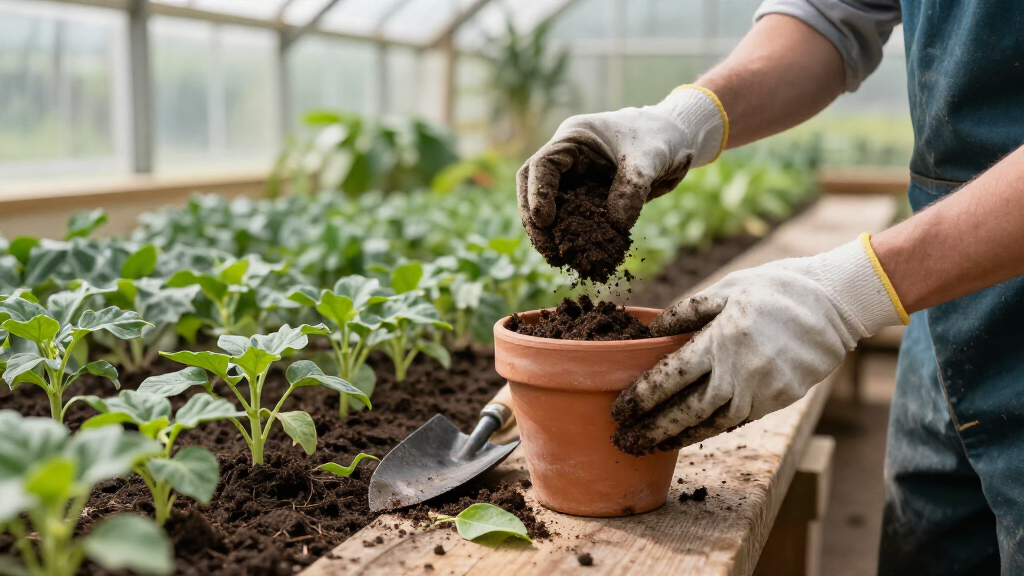
How We Picked
I compared these 15 options by how clearly each fits a distinct growing task: general container planting, coir-based soilless growing, or hydroponic and semi-hydroponic use. I gave preference to products whose format and stated ingredients make their use straightforward, then considered usable quantity, storage and preparation demands, and whether the medium combines materials or leaves blending to the grower. Those factors matter because the right medium should match a plant’s watering needs and the buyer’s growing setup, not just offer a large bag.
The ranking favors versatility and ease of matching to common indoor growing needs, which puts the ready-to-use Miracle-Gro mix first. Happy Trees follows for buyers who want a coir-and-perlite blend without assembling a mix themselves; large-volume coir and multi-pack bricks serve bulk or storage-minded buyers after that. LECA products rank lower for general use—not because they are poor media, but because they suit a more specific method and require growers to manage watering and nutrients differently. Within the LECA group, package weight and stated particle size guide fit rather than assumptions about performance that product details do not establish.
Factors to Consider When Choosing Best Growing Media For Plants
Before choosing a bag or brick, match the medium to the job it needs to do. A plant grown in a conventional pot, a coir-based propagation mix, and a LECA reservoir setup place different demands on root support, moisture, and feeding. I’d use these broader checks to avoid buying a medium that is sound on its own but mismatched to your routine.
Start With Your Growing Method
Decide whether you want a conventional potting mix, a soilless coir medium, or an inert support medium such as LECA before comparing package sizes. A potting mix is generally the more direct route for container planting, while coir and LECA call for more deliberate decisions about feeding and watering. Switching a plant from soil to LECA is not simply a matter of replacing one material; roots and care routines may need to adjust. If you are not prepared to manage a new method, a ready-to-use mix can be a simpler fit. Choose the medium for the system you plan to maintain, rather than assuming one product will suit every plant.
Think About Watering Habits and Pot Design
The same medium can behave differently in a small nursery pot, a glazed decorative planter, or a container with generous drainage. Coir can retain moisture, while perlite in a blend adds air space; LECA relies on a different approach to water access and is often used with a reservoir or hydroponic setup. If you tend to water frequently, consider how quickly your chosen container drains and whether the medium will stay wetter than your routine allows. If you often forget to water, don’t assume that a more moisture-holding product will solve every problem, since pot size and plant needs still matter. A medium and pot should be selected as a pair.
Account for Preparation and Nutrient Management
Some media are ready to use, while compressed coco coir bricks need water and space to expand before planting. Coir and LECA may also require the grower to plan nutrient feeding rather than rely on a conventional potting mix’s ingredients. That extra control can suit experienced growers, but it adds steps and makes it easier to overlook feeding or preparation. Check the product instructions and have the supplies and time to follow them before choosing a compressed or inert medium. Paying for convenience can make sense when you value a simpler setup more than customization.
Match Volume to the Project, Not Just the Package
Compare the finished volume you can use with the number and size of containers you plan to fill. A large expanded-coir bag can suit several pots or a bigger project, while bricks reduce storage bulk before use but need room to hydrate and expand. LECA is sold by weight in this lineup, so weight alone does not tell you how many pots it will fill; pebble size and container shape affect the amount needed. Buying too much can leave you storing bulky or damp material, while buying too little may interrupt a planting session. Estimate your needs first and allow for a small amount of extra media for topping up or repotting.
Treat Particle Size as a Fit Issue
LECA size ranges affect how the pebbles fit around roots and into containers, so compare the listed dimensions with drainage openings and the scale of your setup. Smaller pots or narrow baskets may be awkward to fill with larger pieces, while very small media can shift through wide openings. Product listings in this group specify different ranges, but those details alone do not prove a difference in plant results. For an established system, matching the media size to its baskets or channels can prevent avoidable handling problems. For a new setup, choose containers and media together rather than purchasing either in isolation.
Decide How Much Customization You Want
A pre-blended product trades some control over the recipe for convenience, while separate coir and other components let growers tune a mix to particular plants or routines. More customization is useful only if you know what you want to change and can repeat the blend consistently. Beginners often benefit from fewer preparation decisions; experienced growers may prefer a component they can combine with materials already on hand. Don’t pay for a complex setup simply because it offers more options. The best fit is the medium you can use and maintain reliably.
Frequently Asked Questions
Can I use coco coir instead of potting mix for every houseplant?
No; coir and potting mix are not automatic substitutes. Coir can work as a growing medium, but a grower may need to manage feeding and watering differently than with a conventional mix. Plant needs, pot drainage, and the rest of the growing setup all matter. If you want a familiar, ready-to-use option, a potting mix is often the simpler starting point. Choose coir when its soilless format fits your care routine, not just because it is sold as a plant medium.
Do I need to add perlite to coco coir?
Not in every setup; the need depends on the plant, container, and how quickly the medium dries under your conditions. Perlite can add air space to a coir blend, which is why a combined product can save a separate mixing step. A grower who already has a suitable recipe may prefer buying coir and adjusting it independently. Avoid adding material by habit without considering drainage and watering frequency. If you are unsure, a pre-blended coir-and-perlite option reduces one decision.
Is LECA a good choice if I am new to houseplants?
LECA can suit a beginner who is ready to learn a different watering and feeding routine, but it is not the most direct substitute for potting mix. Inert pebbles support roots without functioning like a conventional nutrient-bearing mix, so growers need to plan how plants receive water and nutrients. Starting with a small number of plants can make it easier to learn the setup before converting a whole collection. If you want minimal changes to your routine, a ready-to-use potting mix is a more straightforward first choice. Pick LECA for a specific growing method rather than assuming it is automatically easier.
How do I choose between LECA sold by weight and coco coir sold as a brick or expanded volume?
First decide which medium suits your growing method; package format comes second. Coir bricks are compact before hydration and expand, so you need water and room to prepare them. LECA is sold as pebbles by weight, and the volume you get depends partly on pebble size and how you pack the container. For a specific project, estimate the container volume and check the product’s stated dimensions or expansion information rather than comparing package weights directly. These quantities are not equivalent measures of planting capacity.
Can I reuse LECA or leftover coco coir after repotting?
Reuse depends on the material’s condition and how it was used. LECA may be reusable after appropriate cleaning, but growers should remove old roots and residue and follow care guidance suited to their system. Coco coir left over after planting should be kept clean and stored according to product instructions; damp, contaminated material is not a good candidate for reuse. Don’t assume reuse removes the need to monitor nutrients or moisture in the next planting. When the material’s condition is uncertain, fresh media can be the simpler choice.
Conclusion
For most buyers seeking a straightforward starting point, I recommend Miracle-Gro Organic Indoor Potting Mix as the best overall because it is a ready-to-use soil-based option. For best value in a larger coir format, Back to the Roots 51-quart expanding coco coir makes sense when you have room to prepare and store a larger quantity; buyers who want a component blend should look at Happy Trees instead. The best premium choice for convenience in this lineup is Happy Trees Coco Coir and Perlite, which combines two materials rather than requiring a separate blend. Beginners who want a familiar planting routine should start with the Miracle-Gro mix, while growers drawn to soilless methods can begin with coir and follow the product’s preparation guidance. For specific hydroponic or semi-hydroponic needs, choose a LECA option by required volume and particle-size fit; Riare or Voulosimi suit buyers seeking heavier packages, while smaller bags make more sense for a limited setup. Match the medium to your plants, container, and willingness to manage preparation and feeding, and the choice becomes much clearer.
Fall yard work Picks
leaf blowers
As an affiliate, we earn on qualifying purchases.