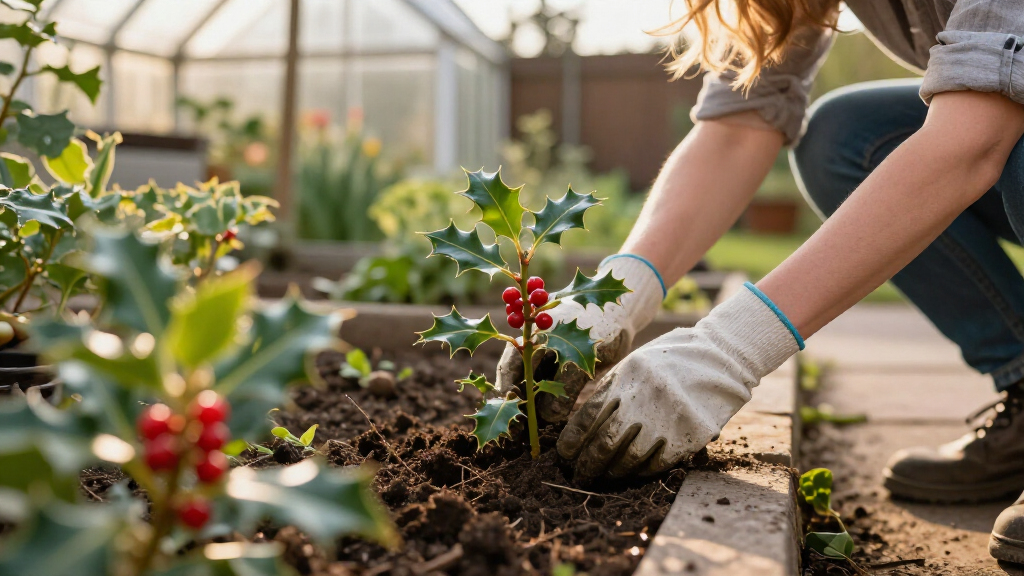
The best holly plants depend on whether you need a dense privacy screen, a narrow accent, or berries for winter color. My best overall pick is Nellie R. Stevens Holly for buyers seeking a classic evergreen hedge, while Sky Pencil Holly suits tight spaces and Berryific Holly stands out for berry-focused planting. The main tradeoffs are mature size, how quickly a small plant fills its space, and whether the variety needs a pollinator nearby. Read on for a comparison of all 15 options, plus guidance on matching a holly to your site and planting goals.

Get garden gear delivered free with Prime
- Fast, free delivery on millions of items
- Prime Video, Amazon Music and more included
- Member-only deals all year
Complete the kit


Key Takeaways
- Nellie R. Stevens Holly appears in several sizes and formats, so the choice often comes down to how many plants you need and how long you are willing to wait for a screen—not simply which listing uses the same variety name.
- Sky Pencil Holly fills a different role from hedge hollies: its narrow form is suited to tight planting areas, but it will not create a broad privacy barrier as readily as a fuller-growing type.
- Berryific listings address berry production differently. One is described as a plant with male and female flowers in the same pot, while the other is a 2-gallon plant; check the listing details and local growing fit before choosing.
- Winterberry is the standout deciduous option among these evergreen-heavy picks, making it a better match for seasonal fruit display than year-round screening.
- Container size and plant count shape the value comparison: multi-plant and smaller-pot Nellie R. Stevens options may suit budget-conscious hedge plans, while larger containers can reduce the time needed to establish visible structure.
| Nellie R. Stevens Holly – 10 Live Evergreen Trees for Privacy and Landscaping |  | Best for Large Privacy Screens | Plant variety: Nellie R. Stevens Holly | Quantity: 10 rooted plants | Listed height: 3 feet | VIEW LATEST PRICE | See Our Full Breakdown |
| Brighter Blooms Soft Touch Holly Shrub, 1 Gallon |  | Best for Manageable Spaces | Plant type: Soft Touch Holly | Container size: 1 gallon | Quantity: 1 | VIEW LATEST PRICE | See Our Full Breakdown |
| Ilex X meserveae ‘Berryific’ Holly Live Plant – 2 Gallon Container |  | Best for Cold-Climate Berry Color | Botanical variety: Ilex × meserveae ‘Berryific’ | Container size: 2 gallon | Plant type: Shrub | VIEW LATEST PRICE | See Our Full Breakdown |
| Christmas Jewel Holly, Live Evergreen Shrub, 3 Gallon |  | Best Self-Pollinating Pick | Botanical name: Ilex × ‘HL10-90’ PP14477 | Container size: 3 gallon | Growth habit: Column-shaped, upright | VIEW LATEST PRICE | See Our Full Breakdown |
| Needlepoint Holly Bush – Small Size, Hardy Evergreen Holly Tree with Red Berries, Ideal for Privacy Hedges & Gardens |  | Best Two-Plant Starter Hedge | Plant variety: Needlepoint Holly | Quantity: 2 | Plant type: Evergreen holly shrub | VIEW LATEST PRICE | See Our Full Breakdown |
| Nellie R Stevens Holly – Healthy Plants – Potted Plant – 6-8 Inches Tall – 3 Plants |  | Best Value for Planting a Small Hedge | Plant type: Holly | Number of plants: 3 | Plant height: 6–8 inches | VIEW LATEST PRICE | See Our Full Breakdown |
| Southern Living 1 Gal. Holly Red Sky Shrub |  | Best for Distinctive Foliage | Botanical name: Ilex crenata Hybrid ‘RutHol8’ | USDA hardiness zones: 6–9 | Expected mature height: Up to 96 inches | VIEW LATEST PRICE | See Our Full Breakdown |
| Sky Pencil Holly Tree, 1-2 ft. |  | Best for Narrow Vertical Spaces | Plant form: Tall, slender, columnar evergreen | Shipping height: 1–2 feet | Expected mature height: 7 feet | VIEW LATEST PRICE | See Our Full Breakdown |
| Southern Living 3 Gal. Oakland Holly Shrub |  | Best for a Large Evergreen Screen | Mature height: 15–20 feet | Mature width: 12–15 feet | Sun exposure: Full sun to part shade | VIEW LATEST PRICE | See Our Full Breakdown |
| Nellie R. Stevens Holly (Ilex) Shrub, 7 Gallon |  | Best Established Hedge Specimen | Botanical name: Ilex x ‘Nellie R. Stevens’ | Container size: 7 gallons | Listed plant height: 240 inches | VIEW LATEST PRICE | See Our Full Breakdown |
| Perfect Plants Oakleaf Holly, 1-2 ft, Evergreen Shrub |  | Best Self-Fruitful Landscape Holly | Plant type: Evergreen shrub | Hardiness zones: 6–9 | Mature height: Up to 14 feet | VIEW LATEST PRICE | See Our Full Breakdown |
| Nellie R. Stevens Holly Shrub – 6-12 inches Tall Live Plant in 3-inch Pot |  | Best Small Starter Plant | Plant type: Holly, Ilex ‘Nellie R. Stevens’ | Starting height: 6–12 inches | Pot size: 3 inches | VIEW LATEST PRICE | See Our Full Breakdown |
| 3 Winterberry Holly Plants for Growing (Ilex verticillata) Live Shrubs |  | Best Native Winter Berry Planting | Botanical name: Ilex verticillata | Plant type: Native deciduous holly shrubs | Number of plants: 3 | VIEW LATEST PRICE | See Our Full Breakdown |
| Nellie Stevens Holly 1 Gal. Pot | Fast Growing Privacy Evergreen, Easy to Maintain, Glossy Green Foliage |  | Best for Privacy Screening | Scientific name: Ilex ‘Nellie R. Stevens’ | Container size: 1 gallon | Expected height: Up to 25 feet | VIEW LATEST PRICE | See Our Full Breakdown |
| Ilex X meserveae ‘Berryific’ Holly – Evergreen Male & Female in Same Pot, #3 Container |  | Best for Built-In Berry Pollination | Botanical name: Ilex x meserveae ‘Berryific’ | Container: #3 container | Hardiness zones: 5–8 | VIEW LATEST PRICE | See Our Full Breakdown |
| holly plant | Sunlight |
|---|---|
| Nellie R. Stevens Holly | Full sun |
| Brighter Blooms Soft Touch Hol | Full sun |
| Ilex X meserveae ‘Berryific’ H | Full sun or partial shade |
| Christmas Jewel Holly | Full sun to partial shade |
| Needlepoint Holly Bush | — |
| Nellie R Stevens Holly | — |
| Southern Living 1 Gal. Holly R | — |
| Sky Pencil Holly Tree | — |
| Southern Living 3 Gal. Oakland | — |
| Nellie R. Stevens Holly | — |
| Perfect Plants Oakleaf Holly | — |
| Nellie R. Stevens Holly Shrub | Partial sun |
| 3 Winterberry Holly Plants for | Full sun to partial shade |
| Nellie Stevens Holly 1 Gal. Po | Full sun |
| Ilex X meserveae ‘Berryific’ H | Partial sun |
More Details on Our Top Picks
Nellie R. Stevens Holly – 10 Live Evergreen Trees for Privacy and Landscaping
For buyers planning a substantial hedge, the main advantage here is the 10 rooted Nellie R. Stevens plants: they offer a head start on filling a boundary compared with the single Soft Touch Holly. Dense evergreen branches create screening, while red berries bring seasonal color and can attract birds. This variety is described as adaptable to sun and shade and low maintenance, making it a practical choice across several landscape uses. The tradeoff is the scale of the planting job: a fast growth rate of 2–3 feet per year can mean regular pruning, and the listed three-foot height is a current size rather than a mature limit. Fruit production may also benefit from a nearby male holly, so I would not choose this pack if guaranteed berries are the main goal.
Pros:- Pack of 10 rooted plants suits multi-plant hedge and screen projects
- Dense evergreen branching provides year-round structure and privacy
- Red berries add seasonal color and may attract wildlife
- Described as low maintenance and adaptable to sun and shade
Cons:- Growth of 2–3 feet per year can call for regular pruning
- Berry production may be improved by having a male holly nearby
- The listed three-foot height does not indicate the plant’s mature size
Best for: Homeowners who need several plants to establish a long privacy hedge or screen and have room to prune as they grow
Not ideal for: Gardeners with a small planting area or buyers seeking a single, slow-growing specimen that needs little size control
- Plant variety:Nellie R. Stevens Holly
- Quantity:10 rooted plants
- Listed height:3 feet
- Sunlight:Full sun
- Expected blooming period:Winter
- Expected planting period:Winter
- Color:Green
Our verdict“Choose this 10-plant pack for a fast-filling privacy screen if you have space and are prepared to manage its growth.”
Brighter Blooms Soft Touch Holly Shrub, 1 Gallon
The single one-gallon Soft Touch Holly is the most manageable choice in this group for someone who wants one outdoor shrub rather than a hedge project. Its glossy foliage, spring blooms, and black berries offer seasonal interest, while drought tolerance can reduce watering demands once the plant is established. Compared with the 10-plant Nellie R. Stevens pack, this is a simpler fit for a smaller planting plan, though it is not the better pick when broad screening is the priority. The product data lists full sun and sandy soil, alongside adaptability to various soil conditions; I would still match the planting site to local growing guidance. A notable limitation is the shipping restriction in several states, and cosmetic yellowing or dried leaves are not covered by the stated warranty.
Pros:- Single one-gallon shrub is suited to a smaller planting plan
- Drought-tolerant description may mean less watering after establishment
- Glossy green foliage, spring blooms, and black berries provide seasonal interest
- Described as adaptable to a range of soil conditions
Cons:- Does not provide the scale or immediate screening potential of the 10-plant Nellie R. Stevens pack
- Shipping is restricted to Alaska, Arizona, Hawaii, and Oregon
- Yellow or dried leaves are described as cosmetic and are not covered under warranty
Best for: Gardeners who want one drought-tolerant holly shrub for a sunny outdoor bed and do not need a multi-plant privacy screen
Not ideal for: Buyers in Alaska, Arizona, Hawaii, or Oregon, or anyone who needs a large quantity of plants for immediate hedge coverage
- Plant type:Soft Touch Holly
- Container size:1 gallon
- Quantity:1
- Usage:Outdoor
- Sunlight:Full sun
- Soil type:Sandy soil
- Moisture needs:Drought tolerant
Our verdict“Pick Soft Touch Holly for a single, manageable outdoor shrub if it can ship to your state and you do not need a hedge.”
Ilex X meserveae ‘Berryific’ Holly Live Plant – 2 Gallon Container
Berryific’s paired Blue Prince and Blue Princess plants are its key distinction: the listing describes them growing close together, with red berries each season. That makes this a more direct choice for berry color than the Soft Touch Holly, which has black berries, and may suit gardeners who want winter interest in a colder region. It is rated for USDA zones 5–8 and accepts full sun or partial shade, with low water needs and well-drained soil. The upright pyramidal form can work in a mass planting or as a barrier, but its stated mature height of 10–12 feet means “limited spaces” should not be read as a promise of a truly small shrub. Compared with Christmas Jewel Holly, Berryific has a narrower listed zone range and does not claim self-pollination.
Pros:- Blue Prince and Blue Princess plants are described as growing together for seasonal red berries
- Rated for USDA zones 5–8
- Tolerates full sun or partial shade
- Low water needs and pyramidal form suit mass planting or barrier use
Cons:- Mature height of 10–12 feet may overwhelm a small garden
- Requires well-drained soil
- Unlike Christmas Jewel Holly, it is not described as self-pollinating
Best for: Gardeners in USDA zones 5–8 who want a cold-hardy evergreen with red berries and have room for a 10–12-foot shrub
Not ideal for: Owners of very small gardens or buyers who need a self-pollinating holly or a variety rated for zones outside 5–8
- Botanical variety:Ilex × meserveae ‘Berryific’
- Container size:2 gallon
- Plant type:Shrub
- Expected height:10–12 feet
- USDA hardiness zones:5–8
- Sunlight:Full sun or partial shade
- Soil type:Well-drained
- Water needs:Low
Our verdict“Choose Berryific for red-berried cold-climate structure if your site fits zones 5–8 and can accommodate its mature height.”
Christmas Jewel Holly, Live Evergreen Shrub, 3 Gallon
Christmas Jewel stands out for shoppers who want red berries without adding a separate male holly: it is described as self-pollinating, unlike Berryific, whose listing highlights Blue Prince and Blue Princess growing together. Its column-shaped, upright habit and mature dimensions of 10–12 feet tall by 6–8 feet wide offer a defined shape for a hedge or focal point, with glossy foliage and berries for winter display. The three-gallon container is a larger starting size than the Soft Touch Holly’s one-gallon offering, but this variety grows slowly, so it may take patience to reach its full presence. It suits zones 6–9 and full sun to partial shade. Shipping restrictions across many states are a substantial drawback, so check availability before planning around it.
Pros:- Self-pollinating description removes the need for a separate male plant
- Red berries and glossy dark green leaves add winter interest
- Upright, column-shaped habit suits hedges, focal points, or holiday decor
- Three-gallon container offers a larger starting size than Soft Touch Holly’s one-gallon plant
Cons:- Slow growth can make it a poor choice for quick screening
- Mature width of 6–8 feet requires room
- Shipping is restricted to numerous states, including California, Oregon, and Washington
Best for: Gardeners in USDA zones 6–9 who want an upright, red-berried holly and prefer not to plant a separate pollinator
Not ideal for: Buyers in restricted shipping states, gardeners seeking rapid screening, or anyone without room for a shrub 6–8 feet wide
- Botanical name:Ilex × ‘HL10-90’ PP14477
- Container size:3 gallon
- Growth habit:Column-shaped, upright
- Mature height:10–12 feet
- Mature width:6–8 feet
- USDA zones:6–9
- Soil preference:Well-drained soil
- Sunlight:Full sun to partial shade
- Watering needs:Moderate
Our verdict“Choose Christmas Jewel for self-pollinating berry display and upright form if your state is eligible for shipping and you can wait for slow growth.”
Needlepoint Holly Bush – Small Size, Hardy Evergreen Holly Tree with Red Berries, Ideal for Privacy Hedges & Gardens
This Needlepoint listing offers two plants, giving hedge-minded buyers more than the single Soft Touch Holly while taking up less initial commitment than the 10-plant Nellie R. Stevens pack. Dense evergreen foliage, upright growth, and red berries make the variety suited to a small hedge or paired landscape accents. Its stated USDA zone range of 3–8 is broader on the cold end than Berryific’s 5–8 rating, though it does not cover warmer zones 9. The description promises low maintenance, but the specs call for moderate watering, and the listing gives no mature height or width. That makes it harder to plan spacing than with Christmas Jewel Holly, whose mature dimensions are specified. I would treat “small size” as the supplied plant size, not proof that the mature shrub stays compact.
Pros:- Quantity of two supports a small hedge or paired planting
- Dense evergreen foliage offers year-round structure
- Red berries add seasonal color
- Listed for USDA zones 3–8
Cons:- No mature height or width is provided for planning spacing
- Moderate watering needs may not suit buyers seeking a drought-tolerant option like Soft Touch Holly
- Growth may take time to reach full hedge density
Best for: Gardeners seeking two evergreen plants for a modest hedge or paired accents in USDA zones 3–8
Not ideal for: Buyers who need exact mature dimensions before planting, live outside zones 3–8, or want a quick, fully dense screen
- Plant variety:Needlepoint Holly
- Quantity:2
- Plant type:Evergreen holly shrub
- USDA hardiness zones:3–8
- Sunlight exposure:Full sun
- Moisture needs:Moderate watering
- Expected blooming period:Spring to summer
Our verdict“Pick this two-plant Needlepoint option for a small, hardy hedge if you can plan without stated mature dimensions and wait for density.”
Nellie R Stevens Holly – Healthy Plants – Potted Plant – 6-8 Inches Tall – 3 Plants
This three-plant set is the practical choice for buyers who want to start a Nellie R. Stevens hedge without buying one larger shrub. The plants arrive only 6 to 8 inches tall, so they need time and care before they make a screen; by comparison, the 7-gallon Nellie R. Stevens is a better fit if you want a more established specimen. Full sun or partial shade gives these young plants some placement flexibility, while moderate watering keeps the care plan relatively straightforward. The tradeoff is limited growing guidance: the listing gives no specific planting instructions or growth-rate details. I’d choose this set for a patient gardener planting several spots, not for someone who needs immediate privacy or wants a larger, ready-to-place holly.
Pros:- Includes three plants for filling several hedge or landscape positions
- Suitable for full sun or partial shade
- Moderate watering needs are specified
- Described as suitable for winter planting
Cons:- Small 6- to 8-inch starting size takes time to fill out
- Growth rate and detailed planting instructions are not provided
- Sandy soil is listed, which may not match every garden site
Best for: Gardeners starting a multi-plant Nellie R. Stevens hedge who can wait for small plants to establish.
Not ideal for: Buyers seeking an immediate screen or a larger, established shrub; each plant is only 6 to 8 inches tall.
- Plant type:Holly
- Number of plants:3
- Plant height:6–8 inches
- Sun exposure:Full sun or partial shade
- Expected bloom period:Winter
- Soil type:Sandy soil
- Moisture needs:Moderate watering
Our verdict“Choose this three-plant set to start a Nellie R. Stevens hedge affordably in scale, provided you can wait for the young shrubs to grow.”
Southern Living 1 Gal. Holly Red Sky Shrub
The Red Sky Holly earns its place for foliage that brings a different look to a holly planting: glossy green leaves with a red tint add color beyond the familiar dark-green forms of the Nellie R. Stevens Holly. Its listed mature dimensions—up to 8 feet tall and 3 feet wide—suit a narrow accent or a container where a broader shrub would crowd the space. It is also listed for USDA zones 6–9 and full sun to partial shade. The tradeoff is patience: shipping height averages 14–18 inches, so the plant will need time to approach its stated size. Regular watering is specified, and the description does not give a detailed pruning or establishment guide. I’d pick it for foliage character, not fast screening.
Pros:- Red-tinted foliage offers a distinct look among the lineup’s green-leaved hollies
- Listed mature width of 36 inches suits narrower spaces
- Can be used in containers, landscapes, or as an accent
- Hardiness range is specified as USDA zones 6–9
Cons:- Average shipping height of 14–18 inches is far below its listed mature height
- Regular watering is required
- A single plant is not suited to creating a broad screen on its own
Best for: Gardeners in USDA zones 6–9 seeking an evergreen accent with red-tinted foliage for a container or narrow landscape spot.
Not ideal for: Buyers who need a broad privacy screen quickly or prefer a holly with detailed care and growth guidance.
- Botanical name:Ilex crenata Hybrid ‘RutHol8’
- USDA hardiness zones:6–9
- Expected mature height:Up to 96 inches
- Expected width:36 inches
- Sun exposure:Full sun to partial shade
- Water needs:Regular watering
- Foliage color:Green with a red tint
- Container size:1 gallon
Our verdict“Choose Red Sky for a narrower evergreen accent with unusual red-tinted foliage, rather than for quick hedge coverage.”
Sky Pencil Holly Tree, 1-2 ft.
Where most hollies in this roundup fill out as shrubs, Sky Pencil Holly is chosen for its slim, columnar shape. That makes it a better fit than the wide-spreading Oakland Holly for a tight entry, border, or spot where vertical structure matters more than screening width. Its evergreen foliage keeps that upright accent visible through the year, and the listed mature height is 7 feet. The supplied plant is only 1–2 feet tall, however, so the finished effect is not immediate. Full sun and moderate watering are specified; the listing also warns that environmental stress can cause yellow or dried leaves. Shipping restrictions apply to certain states, so buyers should check eligibility before ordering. I’d choose it for a narrow design role, not as a substitute for a broad hedge.
Pros:- Columnar form adds vertical interest without the broad footprint of Oakland Holly
- Evergreen foliage provides year-round structure
- Listed mature height is 7 feet
- Moderate watering needs are specified
Cons:- Ships at only 1–2 feet tall, so it takes time to reach its stated height
- Full sun is the listed exposure, limiting placement flexibility
- Environmental stress may cause yellowing or dried leaves, and shipping restrictions apply
Best for: Gardeners needing a slim evergreen accent for a narrow border, entrance, or vertical landscape feature.
Not ideal for: Buyers seeking immediate height, broad privacy coverage, or delivery to Alaska, Arizona, Hawaii, or Oregon.
- Plant form:Tall, slender, columnar evergreen
- Shipping height:1–2 feet
- Expected mature height:7 feet
- Sun exposure:Full sun
- Moisture needs:Moderate watering
- Use:Outdoor
- Expected bloom period:Winter
- Planting period:Winter
Our verdict“Pick Sky Pencil Holly when a narrow upright accent matters more than fast height or wide screening.”
Southern Living 3 Gal. Oakland Holly Shrub
Oakland Holly is the lineup’s substantial screening choice: its stated mature size of 15–20 feet tall and 12–15 feet wide can form a major evergreen backdrop, while red berries add winter interest. That scale sets it apart from the Sky Pencil Holly, which is designed for a narrow vertical accent rather than broad coverage. Full sun to part shade and moderate soil moisture give it some siting flexibility, and the listing describes pruning needs as low for its habit. Still, “low pruning” does not mean small: this shrub can outgrow a modest garden and may need cutting back if space is limited. Buyers should also allow for establishment and water it before planting, then keep the soil moist. I’d reserve it for larger yards or planned screens.
Pros:- Large mature dimensions suit screening and substantial landscape accents
- Evergreen foliage provides year-round coverage
- Produces red berries in late winter
- Tolerates full sun to part shade
Cons:- Mature width of 12–15 feet can overwhelm small gardens
- May require pruning to control its eventual size
- Needs watering before planting and continued moisture while establishing
Best for: Homeowners with room for a large evergreen screen or landscape anchor who want winter berries as well as foliage.
Not ideal for: Small-garden owners or anyone unable to accommodate a shrub that may reach 15–20 feet tall and 12–15 feet wide.
- Mature height:15–20 feet
- Mature width:12–15 feet
- Sun exposure:Full sun to part shade
- USDA hardiness zones:6–9
- Soil type:Loam
- Soil moisture needs:Moderate
- Berry color and season:Red berries in late winter
- Container size:3 gallons
Our verdict“Choose Oakland Holly for a roomy site where a broad, berry-bearing evergreen screen is more useful than a compact accent.”
Nellie R. Stevens Holly (Ilex) Shrub, 7 Gallon
This 7-gallon Nellie R. Stevens Holly is the strongest choice here for buyers who want a larger starting plant rather than a small, multi-plant pack. The listed shipping height averages 36–45 inches, compared with just 6–8 inches for the three-plant Nellie R. Stevens set, so it can make a more immediate landscape presence. Its fast growth, glossy evergreen leaves, spring flowers, and fall red berries also give it year-round seasonal interest. Full sun to partial shade and USDA zones 6–9 make it broadly usable within that range. The tradeoff is space: the listed plant height reaches 240 inches, and the listing calls for about 120 inches of room. Moderate watering and mulching are also part of the care needs. I’d choose it for a substantial hedge or accent, not a confined bed.
Pros:- 7-gallon container and listed 36–45-inch shipping height give it a larger start than the 6–8-inch three-plant set
- Fast growth can help it fill a landscape role sooner
- Glossy evergreen foliage, spring flowers, and fall berries provide seasonal interest
- Suitable for full sun to partial shade in USDA zones 6–9
Cons:- Listed mature height of 20 feet calls for generous space
- Moderate watering and mulching are needed for good establishment
- Average shipping height may still be smaller than buyers expect from a mature-size listing
Best for: Gardeners in USDA zones 6–9 who want a larger-starting Nellie R. Stevens for a hedge or prominent landscape accent.
Not ideal for: Owners of small yards or narrow beds who cannot provide roughly 10 feet of space for a fast-growing shrub.
- Botanical name:Ilex x ‘Nellie R. Stevens’
- Container size:7 gallons
- Listed plant height:240 inches
- Average shipping height:36–45 inches
- USDA hardiness zones:6–9
- Sun exposure:Full sun to partial shade
- Growth rate:Fast-growing
- Watering needs:Moderate
- Seasonal features:White spring flowers and red fall berries
Our verdict“Choose this 7-gallon Nellie R. Stevens when you want a larger-starting, fast-growing evergreen and have room for its mature size.”
Perfect Plants Oakleaf Holly, 1-2 ft, Evergreen Shrub
The Oakleaf Holly is a strong choice if you want a naturally upright evergreen with berries but would rather not plan around a separate pollinator. Its self-fruitful growth makes it simpler to place than the three-plant Winterberry Holly, which needs a male plant nearby for reliable berry production. The columnar-to-pyramidal habit also gives this shrub a defined landscape shape, though a mature spread of up to 8 feet means it is not a narrow-space solution. At up to 14 feet tall, it can anchor a bed or screen a view, but it will need pruning if kept compact. It suits zones 6–9 and calls for moderate watering. Compared with the taller Nellie Stevens Holly, it offers a more limited stated height, but it still needs room to mature.
Pros:- Self-fruitful, so no separate pollinator is required for berry production.
- Evergreen foliage provides greenery through the year.
- Columnar-to-pyramidal shape gives it a defined landscape presence.
- Red berries add seasonal color in late spring and summer.
Cons:- Mature size of up to 14 feet tall and 8 feet wide may call for pruning or generous space.
- Hardiness is limited to zones 6–9.
- Shipping is unavailable to California and Arizona.
Best for: Gardeners in zones 6–9 who want one berry-producing evergreen with a naturally upright form and space to let it grow.
Not ideal for: Gardeners with narrow planting strips, climates outside zones 6–9, or delivery addresses in California or Arizona.
- Plant type:Evergreen shrub
- Hardiness zones:6–9
- Mature height:Up to 14 feet
- Mature width:Up to 8 feet
- Moisture needs:Moderate watering
- Berry color:Vibrant red
- Self-fruitful:Yes
Our verdict“Choose this self-fruitful holly if you want a substantial upright shrub without needing a separate pollinator.”
Nellie R. Stevens Holly Shrub – 6-12 inches Tall Live Plant in 3-inch Pot
This 6–12-inch Nellie R. Stevens Holly is the small-start option in this group: it arrives in a 3-inch pot, so it is easier to place and handle than the one-gallon Nellie Stevens Holly. That modest starting size is also the main tradeoff. Buyers planning an immediate privacy screen will wait for it to fill in, even though the description calls it fast-growing. Green foliage and bright red berries give it the familiar evergreen-and-berry look, and partial sun is its stated light preference. Compared with the Oakleaf Holly, this listing gives a shorter starting plant but less information about mature dimensions and hardiness zones. I would choose it for gradual landscape development, not when a specific hedge height or quick visual coverage matters.
Pros:- Small 6–12-inch plant is easier to place than the one-gallon Nellie Stevens option.
- Glossy green foliage keeps color through the year.
- Bright red berries add seasonal interest.
- Described as low-maintenance and fast-growing.
Cons:- Its small starting height is not suited to immediate screening.
- Partial sun is specified for best growth, limiting placement choices.
- The listing does not provide hardiness zones or mature dimensions.
Best for: Gardeners who want a compact, easy-to-handle young Nellie R. Stevens Holly to grow on gradually in a partly sunny outdoor spot.
Not ideal for: Buyers who need an established privacy screen soon or need confirmed mature-size and hardiness details before planting.
- Plant type:Holly, Ilex ‘Nellie R. Stevens’
- Starting height:6–12 inches
- Pot size:3 inches
- Foliage color:Green
- Berry color:Bright red
- Sunlight:Partial sun
- Maintenance:Low
- Listed usage:Outdoor and indoor
Our verdict“Pick this small Nellie Stevens plant for a gradual start, but choose the one-gallon version if you want a larger shrub sooner.”
3 Winterberry Holly Plants for Growing (Ilex verticillata) Live Shrubs
These three Winterberry Holly shrubs stand apart from the evergreen picks because Ilex verticillata is a native deciduous holly: it offers red berries that persist through winter, but does not provide year-round leafy screening. That seasonal profile makes it a better fit for wildlife-minded gardens and wet-soil areas than the Nellie Stevens Holly, which is sold chiefly as an evergreen privacy plant. There is an important planting condition: Winterberry needs a male holly for strong berry production, so the three plants alone do not guarantee a crop unless a suitable male is included or planted nearby. The listing gives no mature height, making spacing harder to plan than with the Oakleaf Holly. Choose it for winter color and habitat value, not as a quick, dimension-predictable hedge.
Pros:- Includes three live shrubs for a grouped planting.
- Red berries provide color through winter.
- Native holly can support local wildlife, including birds.
- Tolerates wet soils and grows in full sun to partial shade.
Cons:- A male holly is needed for optimal berry production.
- As a deciduous holly, it does not provide year-round foliage like Nellie Stevens Holly.
- Mature height and other size details are not provided.
Best for: Gardeners seeking a native, wildlife-supporting planting for a site with moist soil and room to plan for a male pollinator.
Not ideal for: Buyers who want evergreen screening, need a specified mature size, or cannot provide a male holly for dependable berries.
- Botanical name:Ilex verticillata
- Plant type:Native deciduous holly shrubs
- Number of plants:3
- Berry color:Red
- Sunlight:Full sun to partial shade
- Soil tolerance:Tolerant of wet soils
- Pollination:Male holly required for optimal berry production
Our verdict“Choose this set for native winter berry color and wildlife value if you can accommodate its pollination needs and seasonal leaf loss.”
Nellie Stevens Holly 1 Gal. Pot | Fast Growing Privacy Evergreen, Easy to Maintain, Glossy Green Foliage
For a hedge or screen, the one-gallon Nellie Stevens Holly has a clearer purpose than the small 3-inch-pot Nellie Stevens plant: it is described as dense and fast-growing, with a potential height of up to 25 feet. That makes it the more practical choice when the aim is substantial coverage, though the height can become a liability in a small yard or beneath windows and eaves. Glossy evergreen foliage holds the screen’s structure through the year, while white spring flowers and red fall berries add seasonal changes. Compared with the Oakleaf Holly, this option can grow much taller and is specifically positioned for hedges, but it calls for regular watering, especially after planting. Full sun and loam are listed, so it is not the most flexible pick for shaded or dry sites.
Pros:- Dense, fast-growing habit suits privacy screens and hedges.
- Evergreen foliage maintains coverage year-round.
- Can be pruned into different shapes.
- White spring flowers and red fall berries add seasonal interest.
Cons:- Potential 25-foot height can exceed the needs of smaller landscapes.
- Regular watering is required, particularly after planting.
- Listed for zones 6–9, so it may not suit colder climates.
Best for: Homeowners in zones 6–9 who want a fast-growing evergreen hedge and have room for a large shrub or are prepared to prune it.
Not ideal for: Small-yard gardeners, buyers seeking a compact holly, or those unable to provide regular watering and a full-sun site.
- Scientific name:Ilex ‘Nellie R. Stevens’
- Container size:1 gallon
- Expected height:Up to 25 feet
- Hardiness zones:6–9
- Sunlight:Full sun
- Soil type:Loam
- Soil moisture:Regular watering
- Planting period:Spring
Our verdict“Choose this Nellie Stevens Holly for a substantial evergreen screen if you have the space, sunlight, and watering routine it needs.”
Ilex X meserveae ‘Berryific’ Holly – Evergreen Male & Female in Same Pot, #3 Container
The Berryific Holly solves a planning challenge that sets it apart from the Winterberry set: male and female plants are supplied in the same pot, so buyers do not have to source a separate pollinator for berry production. Its USDA zones 5–8 also extend into colder areas than the Oakleaf Holly and Nellie Stevens Holly, both listed for zones 6–9. The tradeoff is size: this is not a compact shrub, reaching about 12 feet tall and spreading 6–8 feet, so small beds may feel crowded as it matures. It arrives in a #3 container and is described as rooted and ready to plant when conditions suit. Partial sun and moderate moisture are specified; it is not a plant for frozen-ground planting or a spot with no room to grow.
Pros:- Male and female plants in one pot remove the need to find a separate pollinator.
- Hardy in zones 5–8, including areas colder than the Nellie Stevens options allow.
- Evergreen foliage and red berries provide year-round structure and seasonal color.
- Supplied in a #3 container and described as rooted and ready to plant when weather permits.
Cons:- Mature height of about 12 feet and spread of 6–8 feet require substantial room.
- Partial sun and moderate watering are needed for suitable growing conditions.
- Not suited to planting during extremely cold winter months.
Best for: Gardeners in zones 5–8 who want an evergreen berry-producing holly with male and female plants supplied together.
Not ideal for: Small-space gardeners, buyers who need a compact shrub, or anyone planting during extremely cold winter weather.
- Botanical name:Ilex x meserveae ‘Berryific’
- Container:#3 container
- Hardiness zones:5–8
- Expected height:Up to 12 feet
- Mature spread:6–8 feet
- Sunlight:Partial sun
- Soil type:Loam
- Soil moisture:Moderate
- Pollination:Male and female plants in the same pot
Our verdict“Choose Berryific if you want a larger evergreen holly with pollination handled in the pot and a hardiness range that includes zone 5.”

How We Picked
I compared these 15 listings by the job each holly can do: screening, compact-space planting, ornamental foliage, or berry display. The ranking favors options with a clear role, useful listing details about size or container, and a variety that matches a common garden need. I also weighed whether a buyer can plan around the plant’s mature form and pollination needs rather than relying on a name or a berry photo alone.
The order reflects practical differences, not a claim that one holly is best for every yard. Nellie R. Stevens leads for its repeated availability across several sizes and its familiar hedge use; Sky Pencil earns a distinct place for narrow spaces, while Berryific and winterberry serve buyers prioritizing fruit. Smaller starter plants rank lower for immediate impact, and listings with limited size or growing details are harder to recommend without checking their specifications against local conditions.
| holly plant | Sunlight |
|---|---|
| Nellie R. Stevens Holly | Full sun |
| Brighter Blooms Soft Touch Hol | Full sun |
| Ilex X meserveae ‘Berryific’ H | Full sun or partial shade |
| Christmas Jewel Holly | Full sun to partial shade |
| Needlepoint Holly Bush | — |
| Nellie R Stevens Holly | — |
| Southern Living 1 Gal. Holly R | — |
| Sky Pencil Holly Tree | — |
| Southern Living 3 Gal. Oakland | — |
| Nellie R. Stevens Holly | — |
| Perfect Plants Oakleaf Holly | — |
| Nellie R. Stevens Holly Shrub | Partial sun |
| 3 Winterberry Holly Plants for | Full sun to partial shade |
| Nellie Stevens Holly 1 Gal. Po | Full sun |
| Ilex X meserveae ‘Berryific’ H | Partial sun |
Factors to Consider When Choosing Best Holly Plants
Before choosing a holly, match the plant to the space it will occupy at maturity—not just the pot size shown in the listing. The right selection also depends on winter conditions, sunlight, soil drainage, berry expectations, and how quickly you want the planting to look established.
Choose for the mature shape, not the shipping size
A young holly can look small beside its eventual footprint, so use the variety’s expected mature height and width to plan spacing. Broad hedge types need room to fill out; planting them too close can lead to crowding and extra pruning. A narrow variety such as Sky Pencil can fit a constrained bed, but its upright shape is not a substitute for a wide screen. Check the plant label or seller’s growing information for dimensions in your climate, since growth can vary by site. If the listing gives only a current height, treat that as a shipping detail rather than a landscape plan.
Decide whether you need year-round privacy or seasonal berries
Evergreen hollies keep foliage through winter, which makes them more useful for screening and structure across seasons. Winterberry drops its leaves, so its appeal centers on fruit display rather than a year-round visual barrier. Berry production also depends on the plant’s flowering and pollination setup, and requirements can vary among varieties. Do not assume that every holly listing with a berry reference will fruit reliably as a single plant. If fruit is a priority, verify whether the variety needs a compatible pollinator and whether the offered plant or container arrangement addresses that need.
Match hardiness and exposure to your garden
Hollies are not interchangeable across climates: cold tolerance, heat response, and preferred light can differ by species and cultivar. Use the plant’s stated hardiness range as a starting point, then check whether your site has harsh winter wind, reflected heat, or prolonged wet soil. A sunny location may support dense growth for some varieties, while others can tolerate partial shade. Poor drainage can stress roots even when the plant is otherwise suited to the region. If your conditions sit near the edge of a listed range, local nursery guidance can help avoid a costly mismatch.
Compare container size with the time you can wait
A larger container usually offers a more developed plant at planting time, but it does not remove the need for careful establishment and watering. Smaller pots and short starter plants can make sense when you are planting a long hedge and can wait for it to fill in. Multi-plant packs may simplify buying for a row, though you should still confirm the count, plant size, and spacing needed. Avoid choosing by pot size alone: root condition, cultivar, and the size the plant can reach matter just as much. For an area that needs immediate screening, compare larger specimens with the cost and effort of planting several smaller ones.
Plan for pruning and the shape you want
Hollies can be used as informal shrubs, clipped hedges, or upright accents, but those roles call for different maintenance. A naturally narrow plant may need less shaping to stay vertical, while a hedge generally needs periodic pruning to keep a consistent outline. Check whether the plant flowers or fruits on growth that you plan to cut back, since heavy trimming can affect ornamental display. Do not plant a fast-growing hedge where its mature width will press against paths, fences, or windows. A little space planning can reduce repeated pruning and preserve the plant’s natural form.
Treat variety names and listing details as separate checks
Several listings here share the Nellie R. Stevens name, yet differ in plant count, container size, or stated height. Those differences change how quickly a planting can create structure and how much coordination a hedge project requires. Compare the botanical or cultivar name, the quantity included, and the size at shipment before placing an order. Also confirm whether the listing describes one plant, multiple plants, or a paired pollination arrangement. When details conflict or remain vague, favor the listing that clearly states what arrives and then verify the growing requirements for your location.
Frequently Asked Questions
Which holly in this roundup makes the most sense for a privacy hedge?
Nellie R. Stevens Holly is the clearest starting point for a traditional evergreen screen among these listings. The roundup includes it in several formats, from small starter plants and multi-plant offerings to a larger container, so buyers can choose between lower initial size and a more developed specimen. Compare the stated plant count and dimensions carefully before planning spacing. If the hedge site is narrow, consider whether a broad-growing hedge type will outgrow the available width. For a slim vertical accent rather than a full screen, Sky Pencil serves a different purpose.
Do I need more than one holly plant to get berries?
It depends on the holly variety, since some need a compatible male plant nearby for reliable fruiting while others may have different pollination arrangements. The Berryific listing described as male and female in the same pot is aimed at simplifying that question, but buyers should verify exactly what the listing includes. Do not assume that all hollies—or all plants sold under a similar variety name—will fruit alone. Check the cultivar’s pollination requirements and ask whether another compatible plant is needed within practical distance. If berries are your main goal, make pollination part of the purchase decision rather than an afterthought.
Should I buy a small holly or a larger container plant?
A small plant is a sensible choice when you are planting several hollies, have time for them to grow, and can provide consistent care while they establish. A larger container can give a garden bed more immediate structure, though it still needs proper planting and watering. This roundup includes both small Nellie R. Stevens starts and larger-container options, which makes the difference especially clear for hedge planning. Compare the total number of plants, their listed size, and the spacing they need rather than judging one container in isolation. If you need a screen soon, prioritize plant size and the mature growth habit together.
Is winterberry a good choice if I want a year-round screen?
Winterberry is better suited to seasonal fruit display than to a year-round privacy screen because it is deciduous. Its bare branches can show off berries in the colder months, but it will not keep the same leafy barrier as an evergreen holly. The winterberry listing is a distinct pick in this roundup for buyers who value seasonal color and are comfortable with that change in appearance. For privacy through winter, choose an evergreen variety instead. You can also use winterberry as a separate accent within a planting that relies on evergreen shrubs for screening.
How can I tell whether a holly will fit my climate and site?
Start with the variety’s stated hardiness range, then compare it with your local winter lows and the exposure of the planting site. Sun, shade, heat reflected from paving, wind, and drainage can all affect how a holly establishes. Listing names alone do not provide enough information to confirm a good fit, especially when several cultivars and plant sizes are included in the same roundup. Check the seller’s growing details and compare them with reliable local horticultural guidance before ordering. If your site is near the edge of the plant’s stated range, selecting a locally proven variety is the safer route.
Conclusion
For most buyers planning an evergreen hedge, I recommend Nellie R. Stevens Holly as the best overall, with the right listing size chosen to match the project timeline. The best value direction is a smaller or multi-plant Nellie R. Stevens option if you can wait for growth; the best premium choice is the larger 7-gallon Nellie R. Stevens listing for buyers who want a more developed specimen. Beginners may prefer a clearly sized single shrub such as the Soft Touch Holly, while gardeners with tight beds should look to Sky Pencil. For winter fruit, compare Berryific and winterberry, paying close attention to pollination needs and whether you want evergreen foliage. Choose by mature form, site conditions, and the planting job—not by plant name alone.
Fall yard work Picks
leaf blowers
As an affiliate, we earn on qualifying purchases.