For a year-round screen, Perfect Plants Thuja Green Giant Arborvitae, 3 Gallon is my best overall pick in this lineup, pairing an evergreen screening habit with a larger starting size than the 1-gallon options. Curled Leaf Privet, 10 Live Quart-Size Plants stands out for buyers who want a multi-plant hedge, while Podocarpus Japanese Yew, 10 Live Plants offers another evergreen route. The main tradeoffs are how quickly a screen fills in, how much planting and pruning it needs, and whether its mature size and climate fit your yard. Small pots and cuttings can stretch across more planting spots, but they need time and care before they provide meaningful coverage. Read on for the full comparison and guidance on matching a plant to your conditions.

Get garden gear delivered free — and shop member deals
- Fast, free delivery on millions of items
- Access to Prime Big Deal Days deals on October 6–7
- Prime Video, Amazon Music and more included
Complete the kit


Key Takeaways
Green Giant arborvitae appears in several sizes and pack formats. The 3-gallon single plant is my overall pick for a larger start; the liner 18-pack and 8-pack favor buyers planting a longer run.
Privet has the broadest range of hedge-ready formats. The quart-size 10-pack suits a row, while single larger pots make more sense when you need only a few plants.
Evergreen choices serve different yard plans. Green Giant, Emerald Green, and podocarpus offer distinct starting sizes and forms, so mature width and local growing conditions should guide the choice.
Small starts trade immediate coverage for planting flexibility. The 2-inch waxleaf privet pots, 4–6-inch cherry laurels, and willow cuttings need time and attentive establishment before they screen a view.
Foliage color is a design choice, not a substitute for screening fit. Sunshine Ligustrum adds golden foliage, but buyers should check its expected size and seasonal behavior against the privacy job.
| Perfect Plants Thuja Green Giant Arborvitae, 2 ft, 8-Pack |  | Best for a Long, Tall Privacy Screen | Plant type: Evergreen tree | Height at purchase: 2 ft | Quantity: 8 trees | VIEW LATEST PRICE | See Our Full Breakdown |
| Carolina Cherry Laurel Shrubs, 2 Live Plants, 4–6 in. Tall, 3 in. Pots |  | Best for Seasonal Interest | Quantity: 2 plants | Plant height: Approximately 4–6 inches | Pot size: 3 inches | VIEW LATEST PRICE | See Our Full Breakdown |
| Ligustrum Recurvifolium Privet Shrub, 2.25 Gallon |  | Best for a Prunable Flowering Hedge | Plant type: Evergreen shrub | Container size: 2.25 gallon | Mature height: 8 ft (96 inches) | VIEW LATEST PRICE | See Our Full Breakdown |
| Curled Leaf Privet, 10 Live Quart-Size Plants |  | Best for Planting a Hedge in Quantity | Plant: Curled Leaf Privet (Ligustrum japonicum ‘Recurvifolium’) | Quantity: 10 live plants | Size: Quart size | VIEW LATEST PRICE | See Our Full Breakdown |
| Perfect Plants Podocarpus Maki Live Plant, 1 Gallon, Japanese Yew |  | Best for a Narrow Evergreen Screen | Plant type: Evergreen shrub (Japanese Yew) | Pot size: 1 gallon | Mature height: 8–10 feet | VIEW LATEST PRICE | See Our Full Breakdown |
| Green Wall Willow Privacy Tree Cuttings for Living Fences and Screens, 10 Count |  | Best Living Fence Starter | Plant type: Willow cuttings | Quantity: 10 cuttings | Recommended spacing: 2–3 feet apart | VIEW LATEST PRICE | See Our Full Breakdown |
| Brighter Blooms Waxleaf Privet Shrub, 3 Gallon |  | Best for Shaped Hedges | Plant type: Evergreen shrub | Foliage: Glossy | Container size: 3 gallon | VIEW LATEST PRICE | See Our Full Breakdown |
| 2.25 Gal. Ligustrum Recurvifolium (Privet Shrub) | | Best for Prunable Privacy | Plant type: Ligustrum Recurvifolium privet shrub | Pot size: 2.25 gallon | USDA hardiness zones: 7–11 | VIEW LATEST PRICE | See Our Full Breakdown |
| Perfect Plants Emerald Green Arborvitae, 1 Gallon |  | Best for Narrow, Year-Round Screens | Plant type: Emerald Green Arborvitae | Pot size: 1 gallon | Mature height: 8–15 feet | VIEW LATEST PRICE | See Our Full Breakdown |
| Perfect Plants Thuja Green Giant Arborvitae, 3 Gallon |  | Best for Fast, Large Screens | Plant type: Evergreen tree | Container size: 3 gallon | Growth rate: Up to 3 feet per year | VIEW LATEST PRICE | See Our Full Breakdown |
| Waxleaf Privet Live Plants, 10-Pack, 2-Inch Pots |  | Best Fast-Filling Privet | Quantity: 10 plants | Pot size: 2 inches | Plant type: Upright deciduous, occasionally semi-evergreen shrub | VIEW LATEST PRICE | See Our Full Breakdown |
| Perfect Plants Thuja Green Giant Arborvitae Liner (18-Pack), Privacy Trees |  | Best for Long Boundaries | Quantity: 18 liners | Plant type: Thuja Green Giant Arborvitae, evergreen | Mature height: Up to 60 feet | VIEW LATEST PRICE | See Our Full Breakdown |
| Podocarpus Japanese Yew, 10 Live Plants |  | Best for a Refined, Manageable Hedge | Scientific name: Podocarpus macrophyllus | Quantity: 10 plants | Plant type: Evergreen shrub | VIEW LATEST PRICE | See Our Full Breakdown |
| Sunshine Ligustrum Plant, 1 Gallon, Golden Foliage Privacy Hedge |  | Best Colorful Evergreen Hedge | Pot size: 1 gallon | Foliage color: Golden-yellow | Sun exposure: Full sun | VIEW LATEST PRICE | See Our Full Breakdown |
| Thuja Green Giant – 10 Live Trees (Thuja standishii x plicata) Fast Growing Evergreen Privacy Screen |  | Best for a Smaller Evergreen Planting | Quantity: 10 live trees | Botanical name: Thuja standishii × plicata | Plant type: Shrub and hedge | VIEW LATEST PRICE | See Our Full Breakdown |
| privacy hedge plant | Plant type | Quantity |
|---|---|---|
| Perfect Plants Thuja Green Gia | Evergreen tree | 8 trees |
| Carolina Cherry Laurel Shrubs | — | 2 plants |
| Ligustrum Recurvifolium Privet | Evergreen shrub | — |
| Curled Leaf Privet | Shrub and hedge | 10 live plants |
| Perfect Plants Podocarpus Maki | Evergreen shrub (Japanese Yew) | — |
| Green Wall Willow Privacy Tree | Willow cuttings | 10 cuttings |
| Brighter Blooms Waxleaf Privet | Evergreen shrub | — |
| 2.25 Gal. Ligustrum Recurvifol | Ligustrum Recurvifolium privet shrub | — |
| Perfect Plants Emerald Green A | Emerald Green Arborvitae | — |
| Perfect Plants Thuja Green Gia | Evergreen tree | — |
| Waxleaf Privet Live Plants | Upright deciduous, occasionally semi-evergreen shrub | 10 plants |
| Perfect Plants Thuja Green Gia | Thuja Green Giant Arborvitae, evergreen | 18 liners |
| Podocarpus Japanese Yew | Evergreen shrub | 10 plants |
| Sunshine Ligustrum Plant | Evergreen shrub | — |
| Thuja Green Giant | Shrub and hedge | 10 live trees |
More Details on Our Top Picks
Perfect Plants Thuja Green Giant Arborvitae, 2 ft, 8-Pack
Eight young trees give this Green Giant set an edge for buyers who want to plant a longer hedge in one go. Its dense, wide-bottomed shape can form a substantial visual screen, and the trees can be pruned to fit a managed boundary. Compared with the Perfect Plants Emerald Green Arborvitae in the broader roundup, this variety is the better fit when the goal is a much taller screen: it can reach 60 feet, while that scale also demands more room and planning. The tradeoff is the 2-foot starting height; privacy will take time as the plants establish and grow. I’d shortlist it for a spacious property in zones 5–9, but skip it for a narrow yard or a low hedge where its mature size would be excessive.
Pros:- Eight trees make it possible to plant a longer screen in one purchase.
- Dense evergreen foliage suits year-round privacy.
- Wide-bottomed pyramidal growth can provide substantial coverage.
- Can be pruned to maintain a chosen size.
Cons:- The 2-foot plants need time to grow into an effective screen.
- Mature dimensions require generous space and long-term planning.
- Suitable climate is limited to USDA zones 5–9.
Best for: Homeowners in USDA zones 5–9 who need multiple evergreen plants for a tall screen and have room for large mature trees.
Not ideal for: Small-yard gardeners or anyone needing immediate screening, since the trees start at 2 feet and can reach 60 feet tall and 20 feet wide.
- Plant type:Evergreen tree
- Height at purchase:2 ft
- Quantity:8 trees
- Mature size:Up to 60 ft tall and 20 ft wide
- USDA hardiness zones:5–9
- Growth habit:Wide-bottomed pyramidal
Our verdict“Choose this eight-pack for a roomy, zone-appropriate property where a tall evergreen screen is worth waiting for.”
Carolina Cherry Laurel Shrubs, 2 Live Plants, 4–6 in. Tall, 3 in. Pots
Evergreen leaves, spring flowers, and ornamental berries give these Carolina cherry laurels more seasonal character than the lineup’s straightforward Thuja options. The stated growth rate of 2–3 feet per year could help them build toward a screen, but the 4–6-inch starting size means they are a patient, small-scale beginning rather than an instant privacy solution. Compared with the Curled Leaf Privet, 10 Live Quart-Size Plants, this set supplies fewer plants and arrives much smaller, so it is less suited to covering a long boundary quickly. Its appeal is the mix of year-round foliage and seasonal features, along with tolerance for varied soil and light conditions. I’d choose it for a shorter planting where that variety matters; skip it if you need broad coverage from the outset.
Pros:- Evergreen foliage offers year-round visual screening.
- Spring flowers and ornamental berries add seasonal interest.
- Listed growth rate is 2–3 feet per year.
- Tolerates varied soil types and light conditions.
Cons:- Two plants provide limited initial coverage.
- The 4–6-inch plants need substantial time to establish into a hedge.
- Minimal care is described for after establishment, so early care is still needed.
Best for: Gardeners who want a small evergreen planting with flowers and berries and can wait for young shrubs to establish and grow.
Not ideal for: Buyers screening a long boundary quickly, since the set contains only two plants that arrive 4–6 inches tall.
- Quantity:2 plants
- Plant height:Approximately 4–6 inches
- Pot size:3 inches
- Growth rate:2–3 feet per year
- Foliage:Glossy green, evergreen
- Care:Low maintenance once established
Our verdict“Pick these two young laurels for a patient gardener who values flowers and berries alongside evergreen foliage.”
Ligustrum Recurvifolium Privet Shrub, 2.25 Gallon
Pruning flexibility is the main reason to choose this single Ligustrum Recurvifolium: it tolerates heavy trimming, letting gardeners shape a hedge rather than accept an unrestrained screen. It also brings waxy evergreen leaves and fragrant white spring flowers. Compared with the Curled Leaf Privet, 10 Live Quart-Size Plants, this listing gives more detail about mature dimensions and growing conditions, but it is one shrub rather than a multi-plant set, so building a continuous hedge means sourcing additional plants. Its 8-foot height and 6-foot width call for meaningful spacing, and it needs regular watering until established. Listed for zones 7–11 and full sun, this is a better match for a warm-climate gardener who wants a maintainable shape than for someone seeking a narrow, low-care screen immediately.
Pros:- Tolerates heavy pruning for a shaped hedge.
- Evergreen waxy foliage provides year-round coverage.
- Fragrant white flowers appear in spring.
- Listed as deer resistant and adaptable to varied soils and sun exposures.
Cons:- One shrub alone cannot form a continuous hedge.
- Mature width of 6 feet requires considerable spacing.
- Needs regular watering until established and is listed for zones 7–11.
Best for: Gardeners in USDA zones 7–11 who want to shape a flowering evergreen hedge and can water plants during establishment.
Not ideal for: Buyers seeking a complete multi-plant hedge in one order or a narrow screen for a space that cannot accommodate a shrub up to 6 feet wide.
- Plant type:Evergreen shrub
- Container size:2.25 gallon
- Mature height:8 ft (96 inches)
- Mature width:6 ft
- USDA hardiness zones:7–11
- Sunlight:Full sun
- Bloom season:Spring
- Flower color:White
- Watering:Water well until established
Our verdict“Choose this privet if you want a warm-climate flowering shrub you can prune into a hedge and have room to space multiple plants.”
Curled Leaf Privet, 10 Live Quart-Size Plants
Ten live plants make this curled leaf privet the clearest choice in this batch for buyers who want to start a hedge with several shrubs at once. Its evergreen foliage supports year-round screening, while the distinctive curled leaves add texture that the Thuja Green Giant listings do not offer. The listing also suggests use as a border or specimen shrub, so the plants can serve more than one layout. There is less growing detail here than for the 2.25-gallon Ligustrum Recurvifolium: no mature dimensions or hardiness zones are supplied, and full sun and sandy soil are specified. That leaves less guidance for matching the hedge to a particular site. I’d favor this pack when quantity and foliage character matter, but choose a better-documented option if climate or spacing requirements are decisive.
Pros:- Ten plants provide a starting group for a longer hedge.
- Evergreen foliage supports year-round screening.
- Distinctive curled leaves add texture.
- Can be used as a hedge, border, or specimen shrub.
Cons:- Full sun is specified, limiting placement options.
- Sandy soil is the only listed soil type.
- Mature size and hardiness zones are not provided.
Best for: Gardeners who want multiple evergreen privets for a hedge or border and have a sunny site with sandy soil.
Not ideal for: Buyers who need stated hardiness zones, mature dimensions, or confirmation that the plant suits soil other than sandy soil.
- Plant:Curled Leaf Privet (Ligustrum japonicum ‘Recurvifolium’)
- Quantity:10 live plants
- Size:Quart size
- Plant type:Shrub and hedge
- Blooming period:Year round
- Sunlight exposure:Full sun
- Soil type:Sandy soil
- Brand:Florida Foliage
Our verdict“Choose this ten-plant pack for a sunny, sandy site where you want several textured evergreen privets and can work with limited sizing data.”
Perfect Plants Podocarpus Maki Live Plant, 1 Gallon, Japanese Yew
Upright growth and a 3–4-foot mature width give this Podocarpus Maki a space-saving profile among the broader hedge options. Its glossy evergreen foliage can form a year-round screen, while full sun to partial shade offers more placement flexibility than the full-sun Ligustrum Recurvifolium Privet Shrub. It is listed for zones 7–11 and becomes drought-tolerant once established, which may suit a warm-climate garden where ongoing watering is a concern. The tradeoff is the 1-gallon starting pot: this is a young plant, so privacy will take time to develop. It also needs well-draining soil, and the product does not ship to California or Arizona. I’d choose it for a narrow site in an eligible state; skip it if you need rapid, broad coverage.
Pros:- Upright growth and 3–4-foot mature width suit narrower hedge spaces.
- Evergreen glossy foliage supports year-round screening.
- Tolerates full sun to partial shade.
- Drought-tolerant once established and described as resistant to pests, diseases, and air pollution.
Cons:- The 1-gallon plant needs time to grow into a privacy screen.
- Requires well-draining soil and a suitable zone 7–11 climate.
- Cannot be shipped to California or Arizona.
Best for: Gardeners in USDA zones 7–11 who want an upright, relatively narrow evergreen screen for a sunny or partly shaded site.
Not ideal for: Buyers in California or Arizona, gardeners with poorly draining soil, or anyone needing immediate screening from a young 1-gallon plant.
- Plant type:Evergreen shrub (Japanese Yew)
- Pot size:1 gallon
- Mature height:8–10 feet
- Mature width:3–4 feet
- USDA zones:7–11
- Light requirements:Full sun to partial shade
- Soil requirements:Well-draining soil
- Drought tolerance:Drought-tolerant once established
- Shipping restrictions:Does not ship to California or Arizona
Our verdict“Choose this Podocarpus for a narrow, warm-climate screen where its slow start, drainage needs, and shipping limits fit your site.”
Green Wall Willow Privacy Tree Cuttings for Living Fences and Screens, 10 Count
These ten willow cuttings suit buyers who want a living fence they can plant directly in the ground, with recommended spacing of 2–3 feet. The listing describes them as quick to root and low care after establishment, and positions them for privacy, wind protection, and natural borders. Compared with the Emerald Green Arborvitae, which has a stated mature size and growth rate, these cuttings offer less certainty about how long a complete screen will take or how tall it will become. That makes them a flexible choice for informal boundaries, but a harder pick when you need a predictable hedge plan. The main tradeoff is time: they need to grow into a dense barrier, and the product data gives no growth timeline or mature dimensions.
Pros:- Ten cuttings provide a starting point for a planted living fence
- Designed for direct planting in soil
- Recommended spacing of 2–3 feet helps plan a row
- Listed for privacy screens, windbreaks, borders, and living fences
Cons:- Needs time to grow into a full privacy screen
- No specific growth timeline or mature size is provided
Best for: Gardeners who want to establish a natural, informal living fence or windbreak and can wait for the cuttings to fill in
Not ideal for: Buyers who need an immediate screen or a hedge with stated mature dimensions and a predictable growth rate
- Plant type:Willow cuttings
- Quantity:10 cuttings
- Recommended spacing:2–3 feet apart
- Planting:Directly in soil
- Uses:Privacy screens, windbreaks, living fences, and borders
- Care:Minimal care once established
Our verdict“Choose these cuttings for a flexible, natural fence project if you can wait for the screen to develop and accept uncertainty about its final size.”
Brighter Blooms Waxleaf Privet Shrub, 3 Gallon
Waxleaf privet’s glossy evergreen foliage and range of pruning forms make this the most style-flexible shrub in this group: it can be shaped as a hedge, topiary, or small standard tree. That adaptability makes it a stronger fit for a deliberately designed garden than the Green Wall Willow cuttings, which are presented as a natural screen without formal shaping options. The listing says it suits gardeners with varying experience, though it does not give mature dimensions, growth rate, or hardiness zones, so planning a continuous privacy wall takes some guesswork. The 3-gallon container identifies its supplied size, not how quickly it will fill a hedge. Shipping is restricted in several states, so regional availability may rule it out before planting plans begin.
Pros:- Glossy foliage is described as evergreen
- Can be pruned as a hedge, topiary, or small standard tree
- The listed pruning options suit both formal and varied garden designs
Cons:- No mature height, width, or growth rate is supplied for planning a screen
- Shipping is restricted in Alaska, Arizona, Hawaii, Oregon, and Pennsylvania
Best for: Gardeners who want evergreen foliage they can prune into a formal hedge or use as a topiary or small standard tree
Not ideal for: Buyers who need a hedge with published mature dimensions or live in Alaska, Arizona, Hawaii, Oregon, or Pennsylvania
- Plant type:Evergreen shrub
- Foliage:Glossy
- Container size:3 gallon
- Pruning forms:Hedge, topiary, or small standard tree
- Shipping restrictions:Alaska, Arizona, Hawaii, Oregon, and Pennsylvania
- Gardener suitability:Described as suitable for varying experience levels
Our verdict“Pick this privet if shaping options matter more than published growth dimensions and it can be shipped to your state.”
2.25 Gal. Ligustrum Recurvifolium (Privet Shrub)
Ligustrum Recurvifolium pairs evergreen foliage with a stated mature height of up to 8 feet and width of 6 feet, giving hedge planners more size guidance than the Brighter Blooms Waxleaf Privet listing. Its fast growth and tolerance for heavy pruning make it a useful candidate when you want to shape a dense screen rather than leave a row of trees to grow columnar. It also produces fragrant white spring flowers, an extra garden feature the Emerald Green Arborvitae listing does not offer. The tradeoff is establishment care: the shrub needs thorough watering until established, and its zone range of 7–11 excludes colder climates where the arborvitae is listed as hardy. The provided data also names no specific manufacturer.
Pros:- Fast-growing evergreen foliage can form a screen
- Mature dimensions are listed as up to 8 feet tall and 6 feet wide
- Tolerates heavy pruning for hedge shaping
- Fragrant white spring flowers add seasonal interest
Cons:- Needs thorough watering until established
- Hardiness is limited to USDA zones 7–11
- The listing provides no specific manufacturer details
Best for: Gardeners in USDA zones 7–11 who want a fast-growing evergreen hedge they can prune to shape
Not ideal for: Gardeners in colder climates or buyers who want a compact, narrow screen with a stated width under 6 feet
- Plant type:Ligustrum Recurvifolium privet shrub
- Pot size:2.25 gallon
- USDA hardiness zones:7–11
- Mature size:Up to 8 feet tall and 6 feet wide
- Sunlight:Full sun listed; description also says it tolerates varied sun exposures
- Blooming period:Spring
- Flowers:Fragrant white
- Moisture needs:Water well until established
Our verdict“Choose this privet for a prunable, flowering hedge in a suitable warm climate, provided you can water it well while it establishes.”
Perfect Plants Emerald Green Arborvitae, 1 Gallon
Emerald Green Arborvitae’s 3–4-foot mature width gives it a clear advantage where a hedge has to fit a narrow boundary. Its dense foliage stays green year-round, and the listed height of 8–15 feet suits a screening row without the Thuja Green Giant’s potential 20-foot width and 40-foot height. That smaller footprint comes with slower progress: the stated growth rate is about 1 foot per year, so buyers seeking a fast barrier may prefer the larger Green Giant. This arborvitae is listed for USDA zones 3–8, extending into colder areas, and as deer resistant and drought tolerant once established. It still needs regular watering, and the product notes extra winter protection during its first year.
Pros:- Dense foliage is listed as year-round evergreen
- Narrow 3–4-foot mature width fits tighter hedge rows
- Hardiness range covers USDA zones 3–8
- Listed as deer resistant and drought tolerant once established
Cons:- Growth is about 1 foot per year, slower than the Thuja Green Giant
- Needs regular watering and extra winter protection in its first year
Best for: Homeowners in USDA zones 3–8 who need an evergreen screen for a narrow planting strip and can wait for gradual growth
Not ideal for: Buyers who need a tall privacy barrier quickly or want a screen wider than the listed 3–4-foot mature spread
- Plant type:Emerald Green Arborvitae
- Pot size:1 gallon
- Mature height:8–15 feet
- Mature width:3–4 feet
- Growth rate:About 1 foot per year
- USDA hardiness zones:3–8
- Sunlight:Full sun
- Special features:Compact, deer resistant, and drought tolerant
Our verdict“Choose this arborvitae for a narrow, cold-hardy evergreen screen if gradual growth and first-year care fit your plans.”
Perfect Plants Thuja Green Giant Arborvitae, 3 Gallon
Thuja Green Giant’s stated growth rate of up to 3 feet per year makes it the speed-focused choice in this batch, compared with the Emerald Green Arborvitae’s roughly 1 foot per year. It can reach up to 40 feet tall and 20 feet wide, so it has the scale to form a substantial screen, but that same spread demands generous room and a planting plan that accounts for its mature size. The 3-gallon container gives buyers the listed supplied size, while the product is also described as deer resistant and drought tolerant. Establishment still takes attention: regular watering and mulching are called for during the first year. Availability is restricted for California and Arizona residents.
Pros:- Listed growth rate of up to 3 feet per year can build screening height faster
- Mature size of up to 40 feet tall and 20 feet wide suits large properties
- Dark green foliage stays green year-round
- Described as deer resistant and drought tolerant
Cons:- Potential 20-foot width requires substantial planting space
- Needs regular watering and mulching during its first year
- Cannot be ordered by California or Arizona residents
Best for: Property owners in USDA zones 5–9 with room for a wide, tall screen and a need for faster growth
Not ideal for: Gardeners with narrow boundaries or residents of California and Arizona, where orders are restricted
- Plant type:Evergreen tree
- Container size:3 gallon
- Growth rate:Up to 3 feet per year
- Mature size:Up to 40 feet tall and 20 feet wide
- USDA hardiness zones:5–9
- Soil:Well-drained
- Foliage color:Dark green year-round
- Order restrictions:Cannot be ordered by California or Arizona residents
Our verdict“Choose the Green Giant for a fast-growing, large-scale privacy screen if you have the space and can provide first-year care.”
Waxleaf Privet Live Plants, 10-Pack, 2-Inch Pots
I’d choose this 10-pack when a hedge needs to fill in sooner than slower-growing Podocarpus Japanese Yew, and when a broadleaf look suits the yard better than the Thuja Green Giant’s conifer form. Waxleaf privet grows quickly and can reach 8–10 feet, making it useful for screens, windbreaks, and borders. Its glossy foliage and creamy-white flowers add seasonal interest, while its tolerance for sun or partial shade gives it more placement flexibility than the full-sun Sunshine Ligustrum.
The tradeoff is that this privet is deciduous, though it may stay semi-evergreen in some conditions, so it can provide less winter screening than an evergreen. The 2-inch pots also mean the plants need time to establish and grow into a substantial barrier. I’d skip it where year-round coverage is essential or where there isn’t room to prune a tall hedge.
Pros:- Fast growth can fill a hedge sooner than slow-to-moderate Podocarpus Japanese Yew.
- Tolerates sun and partial shade.
- Glossy foliage and fragrant creamy-white flowers add seasonal garden interest.
- Suitable for hedges, windbreaks, screens, and borders.
Cons:- Deciduous or only occasionally semi-evergreen, so winter coverage may be limited.
- Can reach 8–10 feet and may need pruning and ample space.
- The 2-inch pots start small for buyers seeking an immediate screen.
Best for: Gardeners who want a quick-growing broadleaf hedge for a sunny or partly shaded boundary and can wait for small plants to fill in.
Not ideal for: Buyers who need dependable winter screening or a compact hedge that will not require height management.
- Quantity:10 plants
- Pot size:2 inches
- Plant type:Upright deciduous, occasionally semi-evergreen shrub
- Mature height:8–10 feet
- Foliage:Glossy green
- Flowers:Fragrant, creamy white
- Fruit:Blue-black
- Light:Sun to partial shade
Our verdict“Choose this privet for a fast-growing, flexible broadleaf hedge if seasonal gaps and eventual pruning are acceptable.”
Perfect Plants Thuja Green Giant Arborvitae Liner (18-Pack), Privacy Trees
The 18-pack gives buyers more individual liners to work with than the 10-tree Thuja Green Giant set, which can help cover a longer boundary when the planting layout and spacing suit these young plants. Like the 10-tree set, this is a fast-growing evergreen with dense green foliage, but its listed mature size—up to 60 feet tall and 20 feet wide—makes it a choice for substantial property lines rather than a small garden. Once established, it needs little maintenance and can be pruned.
That potential scale is also the main tradeoff: liners need time to grow, and a mature plant can outgrow tight spaces without regular size management. Compared with Waxleaf Privet, this Thuja offers year-round evergreen screening, but it asks for more room and full privacy will not arrive immediately. It suits zones 5–9 and cannot ship to California or Arizona.
Pros:- Eighteen liners provide more plants for a long screen than the 10-tree Thuja set.
- Dense evergreen foliage supports year-round screening.
- Wide-bottomed pyramidal growth can form a substantial windbreak.
- Low maintenance once established and listed for zones 5–9.
Cons:- Liners require time to grow into a privacy screen.
- Mature size of up to 60 feet tall and 20 feet wide demands substantial space and possible pruning.
- Cannot ship to California or Arizona.
Best for: Property owners in zones 5–9 who need to plant a long boundary and have ample room for tall, wide evergreens.
Not ideal for: Gardeners with narrow yards, a need for immediate privacy, or planting sites in California or Arizona.
- Quantity:18 liners
- Plant type:Thuja Green Giant Arborvitae, evergreen
- Mature height:Up to 60 feet
- Mature width:Up to 20 feet
- Growth habit:Wide-bottomed pyramidal; prunable
- USDA hardiness zones:5–9
- Maintenance:Low once established
- Shipping restrictions:Cannot ship to California or Arizona
Our verdict“Pick this larger Thuja liner pack for a long, spacious boundary where you can wait for young evergreens to mature.”
Podocarpus Japanese Yew, 10 Live Plants
For a measured, evergreen screen, I’d favor this Podocarpus over fast-growing Waxleaf Privet. Its dense, dark green foliage stays on year-round, and slow-to-moderate growth gives buyers more time to manage the hedge’s shape. It also tolerates urban pollution, making it a useful candidate for a street-facing garden where a tidy screen matters more than filling the space as quickly as possible. The 10-plant quantity can suit a modest hedge or a planting plan that will be extended over time.
The drawback is the wait: compared with the 18-pack Thuja Green Giant liners, these plants are not the pick for quickly covering a long property line. They also need well-drained soil, and the listed expected height of 2 inches describes the supplied plants, not a mature hedge. I’d choose them for controlled growth and evergreen foliage, not instant screening.
Pros:- Dense evergreen foliage provides year-round coverage.
- Slow-to-moderate growth offers more control than fast-growing privets.
- Suitable for hedges, privacy screens, and topiary.
- Tolerates urban pollution and full sun or partial shade.
Cons:- Slow-to-moderate growth means a longer wait for privacy than with Thuja Green Giant.
- Requires well-drained soil.
- Listed expected plant height is only 2 inches, so these are small starting plants.
Best for: Urban gardeners who want a dense evergreen hedge with slower, more manageable growth and have well-drained soil.
Not ideal for: Buyers who need a fast privacy barrier or cannot provide well-drained planting conditions.
- Scientific name:Podocarpus macrophyllus
- Quantity:10 plants
- Plant type:Evergreen shrub
- Growth rate:Slow to moderate
- Expected plant height:2 inches
- Color:Green
- Light:Full sun or partial shade
- Soil:Well-drained
Our verdict“Choose Podocarpus for a slower-growing evergreen screen when long-term shape control matters more than quick coverage.”
Sunshine Ligustrum Plant, 1 Gallon, Golden Foliage Privacy Hedge
This Sunshine Ligustrum is for buyers who want a screen to add color as well as separation. Its golden-yellow foliage makes it stand apart from the green Thuja Green Giant and dark green Podocarpus Japanese Yew, while its sterile, non-invasive cultivar is described as unable to reseed or spread. It produces no flowers, which the product identifies as an allergy-friendly feature. In USDA zones 7–10, it stays evergreen and can form a dense screen or border.
Placement is less flexible than with Waxleaf Privet: this ligustrum needs full sun for its best color and growth, and it becomes semi-deciduous in zone 6, reducing winter coverage. At one gallon, it is a more established starting point than tiny liners, but the data gives no mature height or spread to help plan spacing. I’d pick it for a sunny, colorful boundary where those limits fit.
Pros:- Golden-yellow foliage adds contrast to green hedge plants such as Thuja Green Giant.
- Sterile, non-invasive cultivar described as unable to reseed or spread.
- Evergreen in USDA zones 7–10.
- Produces no flowers, a feature suited to buyers seeking a flower-free planting.
Cons:- Needs full sun for best color and growth.
- Semi-deciduous in zone 6, so winter screening may be reduced.
- No mature height or width is provided to guide hedge spacing.
Best for: Gardeners in zones 7–10 who want a sunny boundary with golden foliage and a sterile cultivar.
Not ideal for: Buyers in shade or zone 6 who need reliable evergreen coverage through winter.
- Pot size:1 gallon
- Foliage color:Golden-yellow
- Sun exposure:Full sun
- USDA zones:7–10; semi-deciduous in zone 6
- Plant type:Evergreen shrub
- Invasiveness:Sterile, non-invasive cultivar
- Flowers:Does not produce flowers
- Uses:Privacy screen or landscape border
Our verdict“Choose Sunshine Ligustrum for a sunny zone 7–10 site where golden foliage matters as much as privacy.”
Thuja Green Giant – 10 Live Trees (Thuja standishii x plicata) Fast Growing Evergreen Privacy Screen
This 10-tree Thuja Green Giant set suits buyers who want a familiar evergreen screen in a smaller plant count than the 18-liner pack. The hybrid’s dense green foliage stays year-round, and its fast growth can eventually provide a tall hedge, windbreak, or property border. Compared with the 18-pack, it may suit a shorter run or a layout that calls for fewer plants; compared with Waxleaf Privet, it trades seasonal broadleaf foliage for evergreen cover.
The listing gives no starting height or mature dimensions, so it is harder to judge how soon the screen will close or how much room to reserve. The trees also need time to establish before rapid growth begins, and full sun is recommended for best performance. I’d choose this set for a sunny site with adaptable soil, but buyers wanting more plants for a long boundary should look at the 18-pack instead.
Pros:- Evergreen foliage provides year-round structure and screening.
- Fast growth after establishment can build a tall hedge or windbreak.
- Adaptable to different soils, with minimal pruning required.
- Ten trees suit a smaller planting plan than the 18-liner Thuja pack.
Cons:- Needs time to establish before rapid growth begins.
- Full sun is recommended for best performance.
- No starting size or mature dimensions are listed for planning coverage and spacing.
Best for: Homeowners who need a 10-tree evergreen screen for a sunny residential or commercial boundary and can wait through establishment.
Not ideal for: Buyers covering a long boundary who need more plants, or those without a full-sun planting site.
- Quantity:10 live trees
- Botanical name:Thuja standishii × plicata
- Plant type:Shrub and hedge
- Foliage color:Green
- Sun exposure:Full sun
- Growth:Fast-growing after establishment
- Soil:Adaptable to different soils
- Pruning:Minimal pruning required
Our verdict“Pick this 10-tree Thuja set for a sunny, moderate-sized screen if you can plan around an unspecified starting size and establishment period.”
How We Picked
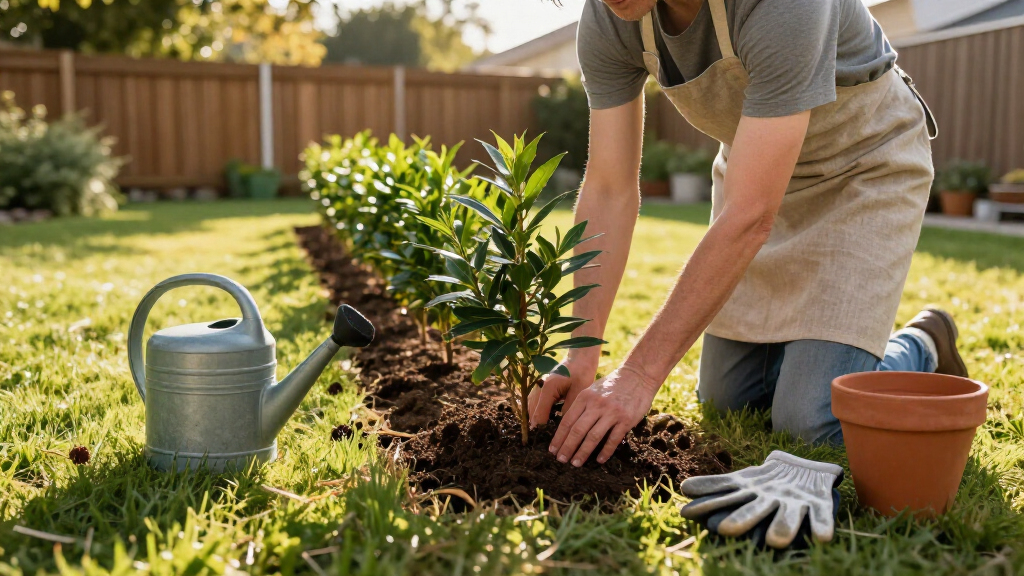
I compared these plants by how directly their growth habit and listed format suit a privacy screen: evergreen versus other foliage, single plants versus multi-plant packs, and the size of the starting stock. I also weighed practical planting needs, likely pruning demands, and how clearly a listing supports planning a continuous hedge. The best-ranked options pair a recognizable screening use with a format that suits a common yard project.
Ranking reflects the product details provided, not a claim that every plant will thrive in every region. Larger nursery pots rank ahead where a buyer wants a stronger start, while multi-packs rank well for longer rows and value across planting positions. Smaller plants and cuttings remain useful for patient gardeners, but rank lower for buyers expecting quick privacy. Before ordering, confirm hardiness, mature dimensions, spacing, and whether the plant is suitable or invasive in your location.
Factors to Consider When Choosing Best Privacy Hedge Plants
Privacy comes from a planted screen reaching the right height and filling its allotted space, not from the plant label alone. I would settle the site, timeline, and maintenance plan before choosing among these formats.
Match mature size to the space
A hedge that grows too wide can crowd paths, windows, fences, or neighboring plants, while one that stays too short may never screen the view you care about. Look up the mature height and width for your local conditions, then measure the planting strip rather than estimating from a photo. Narrow spaces often call for a more compact habit or regular pruning, while broad boundaries can accommodate larger screening trees. Check the expected spread of every plant in a multi-pack before calculating how many you need. Planting too close may seem like a shortcut to a solid wall, but it can increase competition and make airflow and maintenance harder. Your target screen height should account for overhead wires and local rules as well as sight lines.
Check climate and site conditions first
Evergreen does not mean suitable for every climate, soil, or exposure. Compare each plant’s hardiness range with your location, and check how it handles summer heat, winter cold, wind, and wet or dry soil. Sunlight and drainage can vary across one yard, especially near buildings or under trees. A plant that tolerates your region may still struggle in a poorly drained corner or a hot, exposed strip. Ask a local nursery or extension service about region-specific performance and pest concerns before ordering a large quantity. This check matters especially when a listing gives limited growing information.
Choose a starting size for your timeline
A larger pot generally gives you a more developed start, but it does not promise an instant screen; recently planted shrubs still need time to establish. Small pots and cuttings can cover more planting positions, though they leave a longer wait before the hedge offers much privacy. Decide whether you need screening this season or can grow into it over several years. If you choose smaller stock, plan a temporary solution for the gap and give each plant proper establishment care. Avoid judging progress from height alone: width and branching determine whether sight lines actually close. The pack format should match both your planting area and the time you can give the hedge.
Calculate spacing and total plant count
Use the recommended center-to-center spacing for the specific plant and hedge style, then measure the run to work out how many plants fit. Tighter spacing can close gaps sooner, but crowding can mean more pruning and competition as plants mature. Wider spacing uses fewer plants and gives each more room, with a longer wait for a continuous screen. Multi-packs are convenient for longer borders, but check whether the plants are all the same size and whether the count suits your measured layout. Do not mix species solely to fill gaps unless their growth rates, mature sizes, and care needs are compatible. A consistent row is easier to prune and tends to look more uniform.
Budget for maintenance and seasonal appearance
Some hedges need regular shaping to stay within bounds; others can be left to develop a more natural form if the site allows. Before choosing, consider how often you can prune, whether you can reach the top safely, and how you will handle fallen leaves or clippings. Foliage that changes seasonally can be attractive, but it may not provide the same year-round screening as an evergreen in your area. Golden-leaved options can add contrast yet may need a different placement from a dark green privacy row. Check for local pest or disease issues, since a long hedge made from one species can share a problem across the row. The lowest-maintenance choice is often the one whose mature form already fits the space.
Compare pack size with planting risk
A large pack can simplify a long project, but ordering many plants at once magnifies the cost of a poor site match or weak establishment. For an unfamiliar species, a smaller order lets you confirm how it performs in your yard before expanding the hedge. Multi-packs make sense when you have a measured run, prepared soil, and a clear care plan. Small liners may be convenient to plant, yet they can be more vulnerable to missed watering while roots establish. Check the seller’s shipping season, plant condition policy, and instructions for unpacking live stock. Keep the order size aligned with the amount you can plant promptly after delivery.
Frequently Asked Questions
Which option in this roundup makes the most sense for year-round privacy?
I would start by comparing the evergreen choices, especially the Green Giant arborvitae, Emerald Green arborvitae, and podocarpus listings. The right one depends on your climate, available width, and how tall you need the screen to grow. Green Giant is my general pick here when the goal is a substantial screen and the site can accommodate its eventual size. A compact planting area may call for a narrower-growing choice, but confirm mature dimensions for your region before buying. None of these listings alone can guarantee year-round coverage in every location.
Should I buy a multi-pack of small plants or fewer larger shrubs?
Choose based on the length of the hedge and how soon you need it to fill in. A multi-pack can cover a longer run for each order, while larger pots offer a more developed starting point at fewer planting positions. Small plants still need time to grow together, so they are a better fit when you can wait and care for them consistently. Larger shrubs do not eliminate establishment time or the need for correct spacing. Measure the planting line and compare the listed plant count and container size before deciding.
Can I plant different hedge species together in one row?
You can, but I would first check that their mature heights, widths, growth rates, and water needs are compatible. A fast-growing plant beside a slower one can create gaps or uneven height that require extra pruning. Mixing foliage types may add visual interest, but it can also make a formal screen harder to maintain. For the most even privacy row, a single species is usually easier to space and care for. If you mix plants, map their positions before ordering and leave room for each mature spread.
How can I tell whether a privacy hedge plant suits my region?
Check hardiness guidance alongside the plant’s tolerance for your local summer heat, winter cold, rainfall, and soil drainage. The listing name or the word evergreen is not enough to establish regional fit. Local extension services and nurseries can flag pests, disease, or invasive behavior that may affect a specific plant in your area. Also assess sun exposure and how much room roots and branches will have. If any of these details are uncertain, try a small number of plants before committing to a full boundary row.
Is golden foliage a good choice when privacy is the main goal?
Golden foliage can make a hedge more visible and add color, but the privacy value depends on the plant’s density, mature dimensions, and whether it holds leaves through your local winter. Sunshine Ligustrum stands out for color in this lineup, while the evergreen arborvitae and podocarpus options are more direct candidates when year-round screening is the priority. Check the golden plant’s seasonal appearance and pruning needs before using it as the sole screen. You can also use colored foliage as an accent among plants chosen primarily for coverage, provided their growth habits work together.
Conclusion
For most buyers seeking a substantial evergreen screen, I recommend Perfect Plants Thuja Green Giant Arborvitae, 3 Gallon as the best overall option in this lineup. For a longer hedge on a multi-plant format, Curled Leaf Privet, 10 Live Quart-Size Plants is my best value pick, subject to local suitability and pruning needs. Buyers willing to plan around a larger planting project can consider the Green Giant 18-pack as my premium scale option, while beginners may find a single larger pot easier to place and care for than a row of tiny starts. For a smaller area, compare Emerald Green arborvitae and podocarpus against their mature widths; for a color-led screen, Sunshine Ligustrum is the specific foliage choice. Match your selection to local growing conditions, measured space, and the time you can wait for the hedge to fill in.
Fall yard work Picks
leaf blowers
As an affiliate, we earn on qualifying purchases.