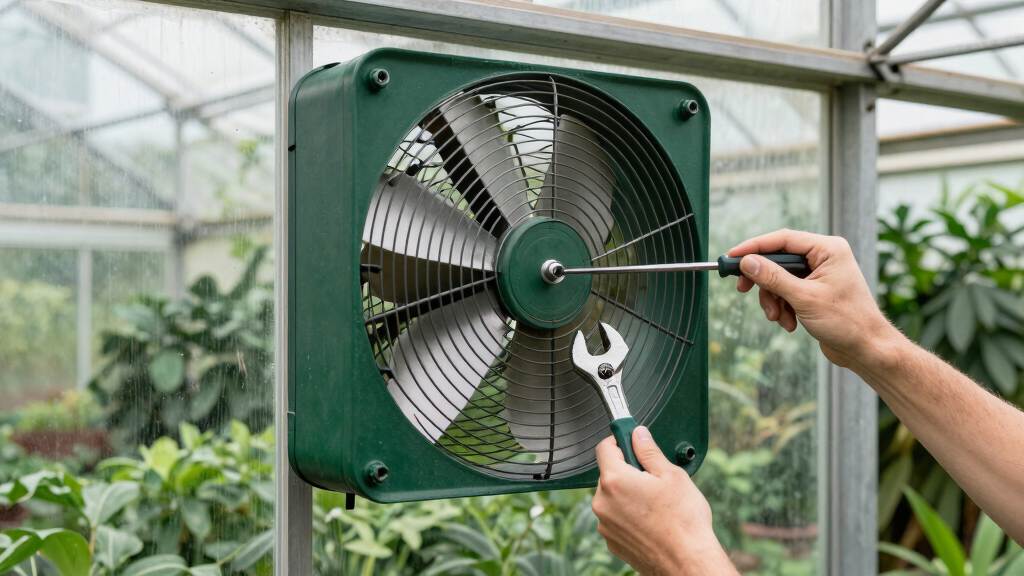

Finding the best greenhouse booster fans involves balancing power, noise levels, and energy efficiency. The VIVOSUN 4 Inch Inline Duct Fan stands out as a top overall choice for its reliable airflow and quiet operation. For those seeking a budget-friendly option, the BIOWIND Quiet Register Booster Fan offers smart controls at a low cost. Meanwhile, the Amico 10″ Exhaust Fan excels in larger spaces like greenhouses or garages thanks to its high CFM output. The main challenge lies in choosing between powerful airflow and quiet operation, alongside considerations like ease of installation and energy use. Continue reading for a detailed breakdown of these top options and how to pick the right fan for your greenhouse needs.
Key Takeaways
- The best booster fans balance airflow capacity with noise levels, avoiding overly loud models that could disrupt greenhouse conditions.
- Energy efficiency varies significantly; higher CFM fans often consume more power, so consider your long-term electricity costs.
- Smart features like remote control and thermostats add convenience but can drive up the price—evaluate if they justify the extra cost.
- Installation ease and size compatibility are critical; some fans fit standard register holes, while others require custom mounting.
- High CFM output is essential for large greenhouses but may be overkill for small setups, where more modest fans suffice.


More Details on Our Top Picks
Tjernlund ASLL Level to Level Aireshare Fan, 75 CFM
This fan excels at moving air between different levels of a home, making it ideal for extending comfort from ductless systems or fireplaces. Compared to the VIVOSUN 4 Inch Inline Duct Fan, which is more suited for targeted ventilation in grow tents or small spaces, the Tjernlund unit prioritizes whole-house airflow. Its quiet tangential blower and low wattage operation minimize noise transfer room to room, but it requires hard wiring and isn’t designed for continuous high-flow applications. This makes it a smart choice for homeowners seeking a discreet, reliable solution to balance air in multiple floors. The tradeoff is that it offers only 75 CFM, which might be insufficient for larger or more complex spaces, and installation complexity can be higher than plug-and-play options.
Pros:- Quiet operation with low sound transfer
- Low wattage blower reduces energy costs
- Designed for easy integration with home systems
- Staggered intake and discharge reduce sound transfer
Cons:- Requires hard wiring, complicating installation
- Limited airflow capacity at only 75 CFM
- Not suitable for continuous high-volume ventilation in large areas
Best for: Homeowners needing to transfer air efficiently between different levels of a house, especially with existing ductless systems or fireplaces.
Not ideal for: Small spaces or grow tents where localized, high-volume airflow is necessary, as it lacks the capacity for intense ventilation needs.
- CFM:75
- Wattage:20
- Voltage:120V
- Control:Push Button
- Installation:Hardwired
- Type:Level-to-Level Transfer Fan
Bottom line: Ideal for homeowners looking to move air quietly and efficiently between floors, but not for high-demand, localized ventilation.
VIVOSUN 4 Inch Inline Duct Fan 100 CFM
This duct fan offers a solid 100 CFM airflow with low noise levels under 30 dB, making it well-suited for bathrooms, kitchens, or grow tents. Compared to the BIOWIND HZD-610-BZ register booster fan, which is designed for small vent openings, the VIVOSUN unit is more versatile for ducted applications, especially where continuous operation at moderate airflow is needed. Its 14W brushless motor provides reliable, energy-efficient performance, but it’s less powerful than larger 6-inch models, limiting its ability to ventilate large spaces or remove heat rapidly. Its compact size allows easy installation in tight spots, though it may require additional mounting hardware for optimal placement, and maintenance involves regular cleaning of blades and ducts.
Pros:- Quiet operation at 30 dB
- Energy-efficient brushless motor
- Compact and easy to install
- Versatile for multiple indoor applications
Cons:- Limited airflow capacity for large spaces
- Requires regular cleaning for optimal performance
- Less suitable for high heat or odor removal in large areas
Best for: Gardeners, hobbyists, or homeowners needing quiet, efficient ventilation in small to medium spaces like grow tents or bathrooms.
Not ideal for: Large basements or commercial spaces that require higher airflow capacities, as it maxes out at 100 CFM and might struggle with heat removal or large volume ventilation.
- CFM:100
- Power:14W
- Noise Level:30dB
- Size:4 inches
- Voltage:120V
- Speed:2930 RPM
Bottom line: Best for quiet, moderate airflow needs in small to medium spaces, but not for high-volume or heat-intensive environments.
BIOWIND Quiet Register Booster Fan Fits 6″ x 10″ Register Holes
The BIOWIND HZD-610-BZ is a 10-speed smart fan designed to improve airflow directly from wall or floor vents, helping to balance uneven room temperatures. It features a remote control and thermostat integration, making it easy to customize airflow without manual adjustments. Compared to the VIVOSUN D4 duct fan, which is more for general ventilation, this unit focuses on enhancing existing HVAC performance, with 200 CFM airflow and ultra-quiet operation at 18 dBA. Its energy efficiency and ability to run after HVAC shutdown help save costs, but it’s limited to 6″ x 10″ openings, restricting use in larger vents. Installation is straightforward, but it requires compatibility with existing duct sizes and may need some mounting modifications.
Pros:- Smart operation with remote control
- Adjustable fan speed from 0-10
- Quiet at 18 dBA
- Energy-efficient and programmable
Cons:- Limited to 6″ x 10″ duct size
- Requires external power supply and installation effort
- Less effective for large-scale heat removal
Best for: Homeowners seeking to optimize HVAC airflow, improve comfort, and control temperature balance in specific rooms or zones.
Not ideal for: Large or industrial spaces where higher airflow and more robust heat removal are necessary, as it is designed for small to medium duct openings.
- CFM:200
- Power:6W
- Noise Level:18dBA
- Size:6″ x 10″
- Speed Levels:10
- Voltage:100-240V
Bottom line: Perfect for targeted HVAC enhancement and temperature balancing in small to medium vents, but not for large or high-heat environments.
VIVOSUN D4 4 Inch 195 CFM Inline Duct Ventilation Fan
The VIVOSUN D4 delivers a powerful 195 CFM airflow at 2500 RPM, making it a top choice for grow tents, basements, or kitchens where high ventilation capacity is needed. Its low noise level of 30 dB ensures minimal disturbance, even at full speed. Compared to the VIVOSUN 130 CFM model, this unit provides nearly double the airflow, suitable for more demanding environments. Its durable construction and easy-to-assemble flanges make installation straightforward, and the 5.9-foot power cord adds flexibility. However, it consumes more energy than smaller fans and can be somewhat louder at maximum speed, which might be a concern in noise-sensitive areas. Regular cleaning of the impeller is recommended for sustained performance.
Pros:- High airflow capacity of 195 CFM
- Low noise operation at 30 dB
- Durable, easy to install
- Ideal for demanding ventilation scenarios
Cons:- Higher energy consumption
- Louder at maximum speed
- Requires regular cleaning for longevity
Best for: Growers or homeowners needing high-capacity ventilation in grow tents, attics, or large rooms where heat and humidity control are critical.
Not ideal for: Small rooms or spaces where quiet operation is prioritized over high airflow, as its 195 CFM may be overkill and noisier than smaller fans.
- CFM:195
- Power:28W
- Noise Level:30dB
- Size:4 inches
- RPM:2500
- Voltage:120V
Bottom line: Excellent for high-demand environments like grow tents, but less suitable where low noise and low energy use are priorities.
Amico 10″ Shutter Exhaust Fan with Remote, 9-Speed Energy Efficient & Quiet 13W DC Motor 1000 CFM Wall Mount Ventilation Fan for Garage,Greenhouse,Attic & Chicken Coop,Plug & Play,8-Hour Timer,FCC
This Amico 10″ Shutter Exhaust Fan stands out for its impressive combination of high airflow, energy efficiency, and smart features. Compared to the Tjernlund LB2, which excels in dryer duct boosting, this model offers a larger 1000 CFM capacity, making it ideal for greenhouses that require robust ventilation. Its 9-speed remote control and 8-hour timer provide unmatched convenience for maintaining precise climate control, a feature the Tjernlund lacks. The quiet operation at 42dB ensures minimal disturbance, crucial for sensitive plants or livestock. While its installation is straightforward, its size and power may be overkill for small or low-ventilation needs. The 3-year warranty adds peace of mind, emphasizing durability and support. Overall, this pick makes the most sense for serious greenhouse growers who prioritize control and efficiency, accepting the higher upfront cost as a worthwhile investment.
Pros:- High 1000 CFM airflow capacity for demanding spaces
- Energy-efficient 13W DC motor reduces utility bills by up to 76%
- Smart 9-speed remote control with 8-hour timer for convenience
- Quiet operation at 42dB minimizes disturbance to plants and animals
Cons:- Size and power may be excessive for small or low-ventilation setups
- Higher price point compared to simpler fans
Best for: Large greenhouse owners seeking powerful, customizable ventilation with remote control and timer features.
Not ideal for: Small hobbyists or budget-conscious gardeners who need only basic airflow and minimal setup.
- Size:10 inches
- Air Flow Capacity:1000 CFM
- Noise Level:42 Decibels
- Motor Power:13 watts
- Number of Speeds:9
- Mounting Type:Wall mount
- Remote Control:Yes
- Timer:8 hours
- Warranty:3 years
Bottom line: This fan is best suited for serious greenhouse operators who need high capacity and smart features, despite its larger size and cost.
Tjernlund LB2 No-Clog, Zero Maintenance DEDPV Dryer Duct Booster Fan with Automatic Activation
The Tjernlund LB2 offers a specialized solution for duct runs over 25 feet, especially in dryer exhaust systems, making it ideal for reducing drying times and lint buildup. Compared to the Amico 10″ fan, which is designed for greenhouse ventilation, the LB2 focuses on maintaining optimal airflow in dryer ducts and preventing fire hazards. Its automatic activation and lint-repelling impeller simplify operation and reduce maintenance, a key advantage over more complex fans. However, its limited airflow capacity and focus on dryer ducts mean it isn’t suitable for greenhouse environments or spaces requiring continuous high-volume ventilation. The 5-year no-clog guarantee underscores reliability, but the fan’s design and application are more niche. Overall, this model is ideal for homeowners needing a maintenance-free, effective dryer duct booster, accepting its limited airflow range.
Pros:- Automated activation reduces user intervention
- Lint Blitzer impeller resists lint buildup and clogs
- Permanently lubricated motor offers long-lasting durability
- Easy installation in horizontal or vertical ducts
Cons:- Limited airflow capacity not suitable for large or demanding spaces
- Focused on dryer ducts, not ideal for general ventilation needs
Best for: Homeowners with long dryer duct runs who want a low-maintenance, fire-safe booster fan.
Not ideal for: Greenhouse growers or spaces requiring high-volume ventilation, as it’s optimized for dryer exhaust systems.
- Motor Power:50 watts
- Application:Dryer exhaust ducts
- Duct Length Support:Up to 150 feet
- Activation:Automatic
- Guarantee:5 years
- Installation:Horizontal/Vertical
Bottom line: This booster fan provides reliable, zero-maintenance operation for long dryer duct runs, but isn’t suitable for high-volume greenhouse ventilation.

How We Picked
To determine the best greenhouse booster fans, I evaluated each product based on airflow performance (CFM), noise levels, build quality, ease of installation, energy consumption, and added features like remote controls or thermostats. Durability and maintenance requirements also played key roles, as a fan that requires frequent upkeep isn’t ideal for greenhouse environments. I prioritized models that offer consistent performance across different conditions and that provide good value for their price. The ranking reflects a balance between power, usability, and cost, ensuring each option caters to specific needs without sacrificing reliability or convenience.Factors to Consider When Choosing Best Greenhouse Booster Fans
Choosing the right greenhouse booster fan involves understanding several key factors. It’s important to match the fan’s airflow capacity with your greenhouse size to ensure proper ventilation. Noise level is another consideration—quiet fans help maintain a peaceful environment, especially if you spend long hours nearby. Energy efficiency impacts long-term costs, so look for models with lower power consumption. Ease of installation and fit are often overlooked but crucial, as incompatible fans can lead to frustration. Lastly, consider additional features like remote controls or thermostats that can simplify operation and improve climate control.Airflow Capacity (CFM)
The airflow measurement, expressed in cubic feet per minute (CFM), determines how effectively a fan can ventilate your greenhouse. A fan with too low CFM might struggle to circulate air properly, leading to uneven temperatures and humidity. Conversely, an excessively high CFM for a small space can create drafts and waste energy. Matching the fan’s capacity to your greenhouse size is essential; in general, larger greenhouses require higher CFM fans to maintain consistent airflow. Overestimating needs can increase costs and noise, so selecting a fan with just enough power is often the best approach.
Noise Levels
Greenhouse booster fans can vary widely in noise output, which affects both comfort and concentration. Quiet models are preferable if your greenhouse is close to living or working spaces, as loud fans can be disruptive. Fans with brushless motors or those designed specifically for low noise tend to perform better in this regard. Keep in mind that higher airflow fans often generate more noise, so weigh the importance of silent operation against your ventilation needs. Additionally, some fans include noise dampening features or soundproof housings—these can be worth the extra investment if noise is a concern.
Energy Efficiency
Energy consumption directly impacts ongoing operational costs, especially if you run fans frequently. Fans with variable speed settings or smart controls allow for more precise adjustments, reducing unnecessary power use. Look for models with energy-efficient motors, such as DC brushless designs, which consume less electricity while still providing ample airflow. While high CFM fans might seem attractive, they can be costly to operate over time, so balancing performance with efficiency is key. Consider your climate and how often you’ll need to run the fan when evaluating energy efficiency.
Installation and Compatibility
Ease of installation can make or break your experience with a booster fan. Many models are designed to fit standard register sizes, simplifying mounting and setup. Others require custom brackets or ducting, increasing complexity and cost. Ensure the fan’s dimensions match your existing openings or plan for modifications if necessary. Also, consider how you’ll access controls and whether the fan can be integrated into your existing ventilation system. A straightforward installation saves time and prevents frustration, especially if you’re not experienced with HVAC setups.
Additional Features
Modern booster fans often include features like remote controls, thermostats, or timers that provide greater convenience and control over your greenhouse environment. These features allow you to automate ventilation cycles, maintain specific temperature ranges, and reduce manual adjustments. However, they often come at a higher price point and may require more complex wiring or setup. Decide which features are worth the extra investment based on your climate control needs and technical comfort level. Simple models may suffice for small or infrequent use, while more advanced options suit larger or more sensitive environments.
Frequently Asked Questions
How do I determine the right CFM for my greenhouse?
To choose the correct CFM, measure the volume of your greenhouse by multiplying its length, width, and height. A common rule of thumb is to aim for a complete air exchange every 1-3 minutes, depending on plant needs and climate. Divide the total cubic footage by the desired air change time to find the required CFM. For example, a 1000 cubic foot greenhouse needing a full air exchange every 2 minutes would require a fan with at least 500 CFM. Matching the fan’s capacity to your space ensures optimal ventilation without excess noise or energy use.
Are quieter fans always less effective?
Not necessarily. Many modern fans incorporate noise-reducing features without sacrificing performance. The key is to balance airflow capacity with noise levels—some fans use innovative blade designs or soundproof housing to maintain high CFM while operating quietly. It’s important to check the decibel ratings and user reviews, as some models claim quiet operation but may still be disruptive in practice. For sensitive environments or residential areas, selecting a fan with a proven low noise profile makes a noticeable difference without compromising airflow.
Should I prioritize energy efficiency over high airflow?
Balancing energy efficiency with airflow is essential. While high CFM fans provide robust ventilation, they often consume more power, leading to higher operating costs over time. If your greenhouse is small or only needs occasional ventilation, a more efficient, lower-CFM fan can be sufficient and cost-effective. Conversely, larger or more humid greenhouses may justify higher energy use for increased airflow. Look for models with variable speed controls or energy-saving motors to tailor power consumption to your needs, avoiding unnecessary waste.
Can I install a booster fan myself, or do I need a professional?
Many booster fans are designed for straightforward DIY installation, especially those that fit standard register sizes or have simple mounting options. Basic electrical wiring and mounting skills are usually enough for a confident DIYer, and detailed instructions are often included. However, for larger or more complex systems—such as integrating thermostats or running ductwork—consulting a professional can ensure safety and proper operation. Improper installation may reduce efficiency or cause damage, so consider your skill level and the complexity of the setup before proceeding on your own.
How often should I maintain or replace my greenhouse booster fan?
Regular maintenance extends the lifespan of your booster fan and maintains optimal performance. Typically, inspecting and cleaning the fan blades and housing every 6-12 months is recommended, especially if dust or debris accumulate. Lubricate moving parts as needed, following the manufacturer’s guidelines. Most fans are built to last several years with proper care, but components like motors or electrical connections may eventually wear out. If you notice persistent noise, reduced airflow, or electrical issues, it may be time to replace the unit to keep your greenhouse environment stable.
Conclusion
For most greenhouse owners, the VIVOSUN 4 Inch Inline Duct Fan offers a solid mix of power, quiet operation, and value, making it the best overall choice. If you’re working with a tight budget or small space, the BIOWIND Quiet Register Booster Fan provides smart control features without breaking the bank. Greenhouse growers seeking high airflow for large spaces should consider the Amico 10″ Exhaust Fan for its high CFM output. Beginners or those installing in standard-sized openings will appreciate models designed for easy setup, while advanced users might prioritize fans with smart features for automation. Your ideal choice depends on your space size, noise tolerance, and feature preferences—use these recommendations to match your specific needs effectively.