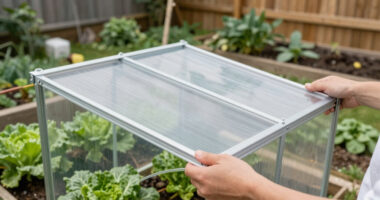
For anyone managing a greenhouse, controlling temperature, humidity, and lighting with precision is essential for healthy plants and successful cultivation. The best smart greenhouse controllers offer remote monitoring, automation, and integration with home systems, making setup easier and more reliable. The Inkbird WiFi ITC-308 stands out as the top overall choice for its versatile features and solid build, while the VIVOSUN GrowHub Controller provides comprehensive environmental control for larger setups. However, tradeoffs between ease of use, compatibility, and price can make choosing the right controller challenging. Keep reading for a detailed breakdown to help you find the perfect match for your greenhouse needs.
Key Takeaways
- Top picks vary based on the level of automation and environmental complexity required.
- Compatibility with smart home ecosystems like Alexa and Google Assistant influences usability and integration.
- Build quality and reliability are critical for long-term performance, especially in continuous-use environments.
- Price differences often reflect added features like multiple probes, advanced scheduling, or expanded control options.
- Ease of setup and user interface can be deciding factors for beginners versus experienced growers.




More Details on Our Top Picks
Inkbird WiFi ITC-308 Digital Temperature Controller Thermostat Remote Monitoring Controlling Home Brewing Fermentation Breeding Incubation Greenhouse
This option stands out for its robust Wi-Fi connectivity supporting both iOS and Android, making remote management straightforward for greenhouse growers and brewers alike. Unlike the Briidea, it offers dual relay outputs that handle both heating and cooling devices from a single unit, providing flexibility in complex environments. Its alarm system for high and low temperatures adds a layer of safety, especially useful when monitoring sensitive setups. A minor tradeoff is that its temperature logging occurs every 15 minutes, which may not satisfy those needing minute-by-minute data, yet the real-time app updates mitigate this limitation. The plug-and-play design simplifies setup, but calibration and compressor delay features require some familiarity with refrigeration systems. Overall, this controller makes sense for growers who prioritize remote control, safety alarms, and dual heating/cooling capability, accepting less granular historical data.
Pros:- Supports both iOS and Android with easy app control
- Dual relay outputs for heating and cooling devices
- High and low-temperature alarms for safety
- Plug-and-play setup with calibration options
Cons:- Logs temperature data only every 15 minutes, limiting granularity
- Requires some familiarity with refrigeration and compressor delay settings
Best for: Growers and brewers seeking reliable remote monitoring with integrated alarms and dual relay outputs.
Not ideal for: Beginners who prefer simple, single-function thermostats without advanced calibration or safety features.
- Controller Type:Push Button
- Connectivity Technology:Wi-Fi
- Maximum output load:1100 W (110 V)
- Display Type:Digital Screen
- Control Method:App Control
- Mounting Type:Wall Mount
Bottom line: Ideal for experienced growers and brewers who need comprehensive remote control and safety features over detailed temperature logs.
New Generation! Briidea Smart WiFi Temperature Control Outlet Compatible with Alexa Google Assistant, Perfect for Households Greenhouses Reptile Enclosures Incubators, 110V/16A
This pick makes the most sense for users who want a straightforward, budget-friendly Wi-Fi outlet with voice control, similar to the meross but at a lower cost. It supports three control modes—voice, app, and manual button—making it accessible for those less comfortable with complex setups. Its compatibility with Alexa and Google Assistant helps integrate it into existing smart home ecosystems, unlike the more specialized Inkbird. While it provides basic temperature control with a maximum load of 16A, it lacks advanced safety alarms or detailed calibration options found in more premium models. The app interface is simple, and the device’s setup is quick, but it doesn’t offer humidity control or multi-zone management. This device is perfect for casual users or hobbyists looking for reliable, voice-enabled control without extra complexity.
Pros:- Supports voice control via Alexa and Google Assistant
- App and manual button control modes
- Supports heating and cooling (0-100°C / 32°F-212°F)
- Affordable price point with reliable Wi-Fi connection
Cons:- Limited to basic temperature control without safety alarms
- No humidity or multi-zone support
- No detailed data logging or calibration features
Best for: Homeowners or hobbyists seeking an affordable, easy-to-use Wi-Fi outlet for greenhouses or reptile enclosures with voice integration.
Not ideal for: Professionals requiring detailed calibration, safety alarms, or multi-zone temperature management.
- Controller Type:Outlet Plug
- Control Method:App, Voice
- Maximum load:16A/110V
- Display Type:LCD
- Connectivity Protocol:Wi-Fi
- Mounting Type:Surface Mount
Bottom line: Best suited for casual users wanting simple, voice-enabled temperature control on a budget, with less focus on detailed safety or data features.
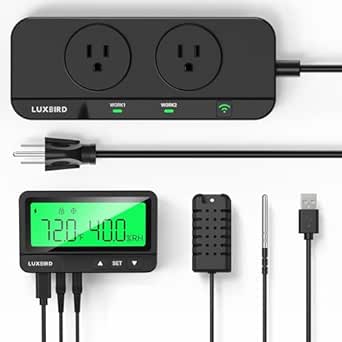
LUXBIRD WiFi Temperature and Humidity Controller LTC-318-W, Smart Thermostat Humidistat Outlet with Monitor, App Control for Reptile Terrarium Greenhouse Grow Tent,2-Year Warranty
This pick excels for its split design, allowing the display to be mounted where it’s easily visible, unlike the Briidea or meross units, which combine controls and displays in one. Its dual-zone capability supports independent control of temperature and humidity, ideal for sensitive environments like reptile terrariums or greenhouses, a feature not available in the other models. The high-grade, calibratable sensors provide accuracy, and the 2-year warranty adds peace of mind. However, the setup is more complex, and the device’s size and split components may be less convenient for small or simple setups. Its remote app control and alert features make it suitable for those who need detailed environmental monitoring, but it’s overkill for basic temperature control or casual use.
Pros:- Split design with separate monitor and outlet display
- Supports both temperature and humidity control independently
- High-accuracy, calibratable sensors
- 2-year warranty for durability
Cons:- More complex setup process
- Larger size may be cumbersome for small spaces
- Higher price point for advanced features
Best for: Reptile keepers and greenhouse growers needing simultaneous temperature and humidity management with remote alerts.
Not ideal for: Users seeking a simple, single-function thermostat without humidity controls or who prefer an all-in-one display unit.
- Control Type:Thermostat/Humidistat
- Control Features:Temperature & Humidity, App Control
- Display Type:Separate Monitor
- Connectivity Technology:Wi-Fi
- Sensor Type:High-grade, Calibratable
- Warranty:2 years
Bottom line: Perfect for professionals and serious hobbyists needing precise, dual environmental control with easy remote monitoring.
SmartLife/Tuya APP WiFi Temperature Controller with Dual Probes, Smart Digital Thermostat with Two Outlets for Reptile Heat Mat, Greenhouse Seedlings, Homebrew Fermentation
This device is ideal for users who need decent accuracy in monitoring two separate zones, like different parts of a greenhouse or terrarium, similar to the meross but with dual probes. Its app control is straightforward, allowing quick adjustment and alerts, comparable to the Briidea. Unlike the Inkbird, it doesn’t offer advanced safety alarms or calibration features, but it provides a good balance of ease and precision for hobbyist setups. The device supports heating and cooling with on/off control and can be mounted easily thanks to its wall-mount design. Its main limitation is that it lacks humidity control or detailed data logging, making it less suitable for highly sensitive or professional applications. Overall, it makes sense for those seeking reliable dual-zone temperature control at an accessible price point.
Pros:- Supports two high-precision probes
- Easy app control with real-time view
- Supports heating and cooling (on/off)
- Wall-mount design for flexible placement
Cons:- Lacks humidity control and advanced safety alarms
- No calibration options
- Limited data logging capabilities
Best for: Greenhouse growers and reptile keepers who want reliable dual-zone temperature control with straightforward app management.
Not ideal for: Professionals needing humidity management or detailed data logging for research purposes.
- Controller Type:Digital Thermostat
- Control Method:App, Button
- Number of Probes:Two
- Control Features:Heating & Cooling, On/Off
- Connectivity Protocol:Wi-Fi
- Mounting Type:Wall
Bottom line: Suitable for hobbyists and small-scale growers wanting dual-zone temperature regulation with simple app-based control.
meross Smart Temperature Controller 15A 1800W, Smart Wi-Fi Thermostat Controlled Outlet Plug Works with Apple Home, Alexa, Google Home for Heating Cooling Homebrew Fermentation Reptiles Greenhouse
This pick makes the most sense for users who want a comprehensive smart thermostat with scheduling, energy monitoring, and cross-platform compatibility, similar to the Inkbird but with more automation options. Its support for Apple Home, Alexa, and Google Home allows seamless integration into existing smart ecosystems, unlike the Briidea or the simpler outlets. The device’s scheduled control, child lock, and sensor failure alarms enhance safety and convenience, especially for automated environments needing reliable operation. Its temperature range from -22℉ to 230℉ broadens its applicability, and the power-off memory ensures settings persist after outages. While setup is straightforward, some users may find the LCD screen’s occasional flickering a minor inconvenience. Overall, this makes sense for tech-savvy homeowners who seek a highly programmable, fully integrated smart thermostat.
Pros:- Supports Apple Home, Alexa, Google Home, and SmartThings
- Advanced scheduling and energy monitoring
- Child lock and sensor failure alarms
- Supports both heating and cooling with high power capacity
Cons:- LCD display may flicker with long inactivity
- Higher price point for extensive features
- Setup and configuration require some familiarity with smart platforms
Best for: Homeowners wanting a feature-rich, fully automated Wi-Fi thermostat compatible with major smart platforms.
Not ideal for: Users seeking only basic temperature control without automation, scheduling, or cross-platform integration.
- Control Method:App, Voice, Button
- Control Type:Thermostat
- Maximum Wattage:1800W
- Supported Ecosystems:Apple Home, Alexa, Google
- Temperature Range:-22℉ to 230℉
- Connectivity Protocol:Wi-Fi
Bottom line: Best suited for users who prioritize full smart home integration, automation, and detailed environmental management.
VIVOSUN GrowHub Controller E42A+ for Grow Tent, Smart Environmental WiFi-Controller with Temperature, Humidity, VPD, Timer, Cycle, Schedule Controls, Cooling Ventilation Lighting Programming
The VIVOSUN GrowHub Controller E42A+ stands out for its ability to unify multiple devices within a single platform, simplifying complex greenhouse setups. Unlike the simpler TURBRO TC01, which mainly focuses on temperature control, the GrowHub offers comprehensive environmental monitoring with built-in temp and humidity gauges, plus an external probe, providing a more detailed picture of your environment. Its fully customizable programming allows for precise control over lighting, ventilation, and cycling, which is essential for optimizing plant growth stages. The WiFi app control adds convenience, enabling adjustments from anywhere—ideal for serious growers or those managing multiple zones. However, this added complexity comes with a steeper learning curve and higher cost, making it less suitable for beginners. Compared to basic controllers, it provides advanced features but requires more setup and maintenance.
Pros:- Unifies multiple devices into one platform for simplified control
- Detailed environmental data with internal and external sensors
- Fully customizable schedules for lighting, ventilation, and more
- WiFi app control for remote management
Cons:- Higher price point compared to simpler controllers
- Complex setup may be daunting for beginners
- Bulkier installation requiring more space
Best for: Growers seeking a comprehensive, customizable environment management system for advanced indoor gardening or small commercial setups.
Not ideal for: Casual hobbyists or those new to automation, as the interface and setup may be overwhelming without prior experience.
- Connectivity:WiFi-enabled
- Sensors:Built-in temp and humidity, external probe
- Control options:Lighting, fans, cooling, timers
- Compatibility:Supports various fans, lights via converters
- Display:LED with capacitive buttons
- Mounting:Can be mounted on tent fabric
Bottom line: This setup is perfect for experienced growers who need detailed control and integration across their greenhouse systems.
TURBRO Smart Temperature Controller Heating Cooling, WiFi-Enabled Thermostat with Timer and Temperature Monitoring for Home Brewing, Seedling, Greenhouse, and Reptile Terrarium, TC01
The TURBRO TC01 offers a straightforward approach to maintaining stable temperatures, making it ideal for those who prioritize simplicity over extensive customization. Unlike the VIVOSUN GrowHub, which manages multiple environmental factors, the TC01 focuses solely on temperature control, turning heating or cooling devices on or off based on your set target. Its WiFi control and scheduling are easy to use, suitable for hobbyists or small-scale growers who want reliable automation without the complexity. However, it lacks environmental monitoring features like humidity measurement, which are critical for more sensitive plants or detailed climate management. Its limited control scope means it’s less suited to larger or more demanding setups but excels in ease of use and quick setup.
Pros:- Easy plug-and-play setup with clear LCD display
- Reliable WiFi control with app scheduling
- Built-in safety alarms and sensor malfunction alerts
- Supports Fahrenheit and Celsius with calibration
Cons:- Limited to temperature control only, no humidity or VPD management
- Max power output of 1800W may restrict larger equipment
- No detailed environmental data tracking
Best for: Home growers or hobbyists who need reliable temperature regulation with minimal fuss and straightforward app controls.
Not ideal for: Advanced growers or commercial setups requiring humidity control, detailed data, or integration with multiple environmental factors.
- Connectivity:WiFi (2.4GHz only)
- Temperature Range:14°F to 212°F
- Power Support:Up to 1800W at 120V
- Alarm Features:High/low temp, sensor failure
- Display:LCD
- Safety:Waterproof temp probe, compressor delay
Bottom line: This controller suits small-scale or beginner growers who want simple, reliable temperature automation without extra complexity.
How We Picked
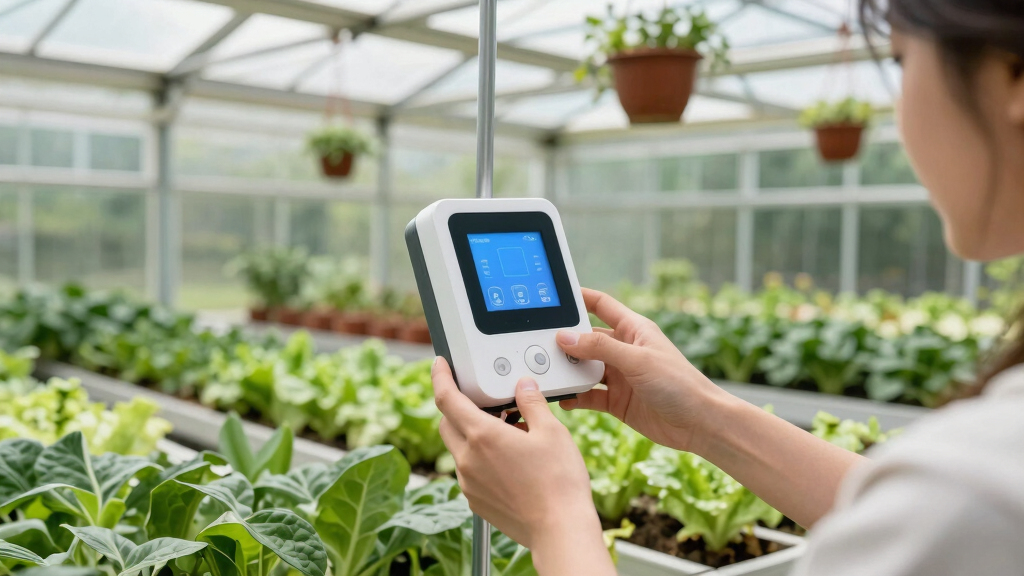
The products in this roundup were evaluated based on a combination of features, usability, build quality, compatibility, and value. We prioritized controllers that offer reliable remote monitoring, automation capabilities, and compatibility with popular smart home platforms. Devices with multiple environmental sensors, detailed scheduling, and intuitive interfaces ranked higher, as these features directly impact ease of use and control precision. Cost was also a factor, with a focus on delivering options for different budgets without sacrificing core functionality. The ranking reflects a balance between performance, versatility, and user experience, helping buyers identify options suited for both beginner and advanced greenhouse setups.Factors to Consider When Choosing Best Smart Greenhouse Controllers
Choosing the right smart greenhouse controller involves balancing features, compatibility, and ease of use. It’s important to consider your specific needs, such as the size of your greenhouse, the types of environmental parameters you want to monitor, and your existing smart home ecosystem. Understanding these factors can help you avoid common pitfalls, like overpaying for unnecessary features or selecting incompatible devices that complicate setup.Compatibility and Ecosystem Integration
One of the first considerations should be how well a controller integrates with your existing smart home system. Devices that support Alexa, Google Assistant, or Apple HomeKit can simplify automation and voice control. However, not all controllers offer seamless integration, so check compatibility before purchasing. This choice influences convenience and future expandability, especially if you plan to automate multiple aspects of your greenhouse environment.
Number and Type of Sensors
More sensors typically mean better environmental control, especially in larger or more complex setups. Look for controllers that support multiple probes for temperature, humidity, and VPD (Vapor Pressure Deficit). This allows for precise adjustments and helps prevent issues like overheating or humidity spikes. Beware of overly simplistic models that only monitor a single parameter, which can lead to suboptimal conditions and more manual intervention.
Ease of Setup and User Interface
Ease of installation can vary significantly and impacts how quickly you start benefiting from your controller. Devices with clear setup instructions, intuitive apps, and simple interfaces reduce frustration, especially for new growers. Conversely, overly complex systems might offer advanced features but require a steep learning curve, so match complexity to your comfort level and technical skills.
Control and Scheduling Features
Effective scheduling options allow for automation based on time or environmental conditions, reducing manual adjustments. Look for controllers with customizable timers, thresholds, and alerts. Some models include advanced features like VPD control or cycle programming, which are valuable for maintaining optimal plant health but may be unnecessary for small or hobbyist setups. Consider how much automation you want versus manual control.
Build Quality and Reliability
Since these controllers often run continuously, durability is key. Look for units with quality construction, good reviews on longevity, and reliable wireless connections. A poorly built device may fail unexpectedly, risking your plants’ health. Weigh the cost against the potential inconvenience and replacement costs when choosing higher-end models with more robust components.
Frequently Asked Questions
Can I use a smart greenhouse controller with my existing smart home system?
Many smart greenhouse controllers support integration with popular platforms like Alexa, Google Assistant, or Apple HomeKit. Compatibility varies, so it’s important to verify device specifications before buying. Using a controller compatible with your ecosystem can streamline automation, allow voice commands, and enable centralized control, making your greenhouse management more efficient and less time-consuming.
How many sensors do I need for a small versus large greenhouse?
For a small greenhouse, a single sensor monitoring temperature and humidity might suffice. Larger or more complex setups benefit from multiple sensors placed at different zones to ensure consistent environmental conditions. Additional sensors for VPD, CO2, or light can further optimize growth, but they also increase cost and setup complexity. Consider your greenhouse size and crop needs when deciding how many sensors are necessary.
Are more expensive controllers worth the extra cost?
Higher-priced controllers often offer advanced features like multiple sensors, detailed scheduling, and stronger build quality, which can justify the investment for serious growers. However, for hobbyists or small setups, basic models with core features may be sufficient and more budget-friendly. Evaluate your needs carefully—sometimes, a mid-range model provides the best balance of features and value.
Do I need a controller with app control, or is manual operation enough?
App control adds convenience, especially for monitoring and adjusting conditions remotely. It allows for real-time alerts, detailed data logging, and automation, reducing manual work. However, manual operation can be adequate for small or simple setups where environmental stability is less critical. Choose based on how much automation and remote access you want to maintain control over your greenhouse environment.
What are common mistakes to avoid when choosing a smart greenhouse controller?
A common mistake is choosing a model that isn’t compatible with your existing smart home system, which can limit automation. Overlooking the number of sensors needed leads to insufficient environmental control. Failing to consider build quality and reliability may result in frequent failures and plant stress. Lastly, overpaying for features you won’t use can inflate costs without added benefit, so focus on your specific requirements.
Conclusion
The best overall choice for most growers is the Inkbird WiFi ITC-308, thanks to its reliable performance and versatile features. For those seeking value, the meross Smart Temperature Controller offers solid functionality at a lower price. Beginners will appreciate the simplicity of the TURBRO Smart Temperature Controller, while larger or more advanced setups benefit from the comprehensive controls of the VIVOSUN GrowHub Controller. If you prioritize premium build and extensive automation, investing in a high-end model makes sense. Ultimately, your decision should match your greenhouse size, automation needs, and budget constraints.