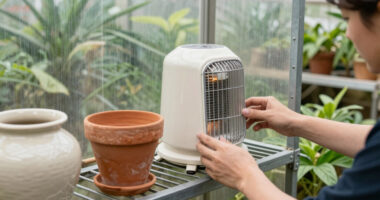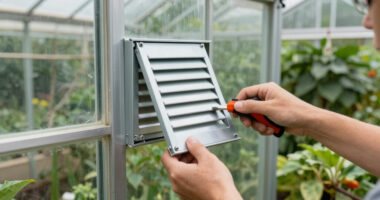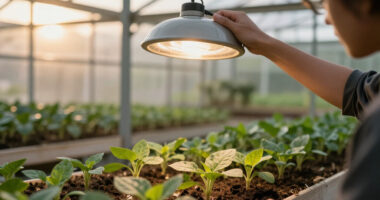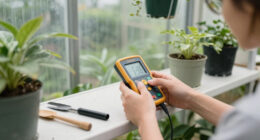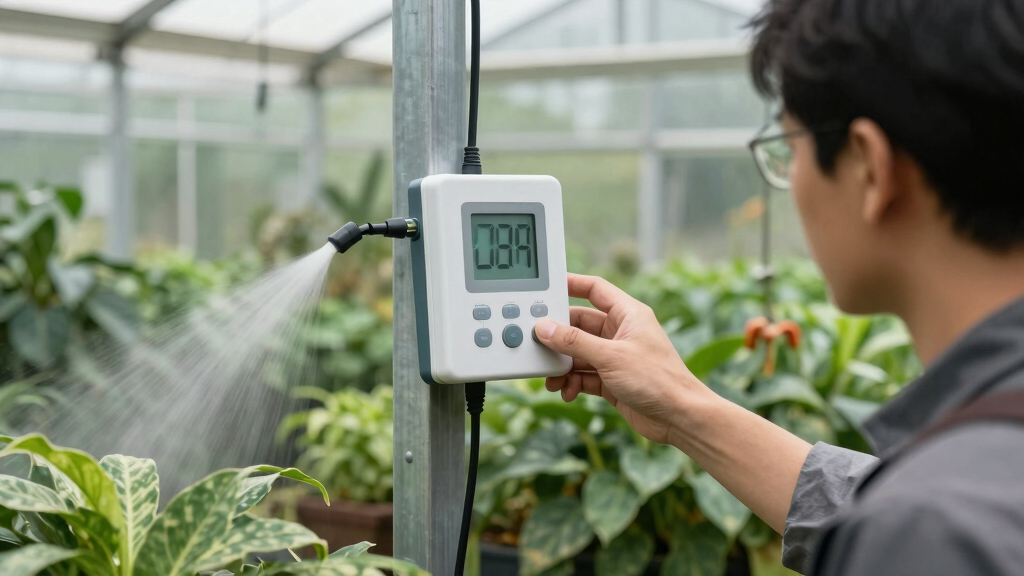
Finding the best humidity control system for a greenhouse can be challenging, as options vary widely in features, complexity, and price. The VIVOSUN Humidity Controller, 1200W Dual-Stage Digital Humidistat stands out as the overall top choice due to its reliable performance and clear display. For those seeking smart app control, the VIVOSUN E42A+ GrowHub Environmental Controller offers seamless connectivity, while the INKBIRD IHC200 provides a budget-friendly solution for hobbyists. The main tradeoffs involve balancing ease of use against advanced features and the level of automation desired. Continue reading for a detailed breakdown of these options and how they compare across key factors.

Get garden gear delivered free — and shop member deals
- Fast, free delivery on millions of items
- Access to Prime Big Deal Days deals on October 6–7
- Prime Video, Amazon Music and more included
Complete the kit


Key Takeaways
- Top-performing controllers combine accurate sensors with straightforward interfaces, reducing setup errors.
- Smart app-enabled systems like VIVOSUN E42A+ provide remote management but often come at a higher price point.
- Plug-in controllers such as DIGITEN DHTC-1011 excel for quick installation but may lack advanced automation features.
- Premium options often feature dual-stage control for precise humidity and temperature regulation, ideal for sensitive crops.
- Budget-friendly models can meet basic needs but may require more manual adjustments and lack integration options.


More Details on Our Top Picks
Environmental Controller with Dual Sensors for Temperature and Humidity
This environmental controller shines in environments where accurate and stable climate conditions are vital, such as greenhouses or mushroom cultivation. Its dual sensors provide highly reliable readings, ensuring your temperature and humidity stay within desired ranges. Compared to simpler single-sensor models like the DIGITEN DHTC-1011, this controller offers more comprehensive environmental management, but it also means setup can be slightly more complex. Its wide temperature range and clear digital display make it user-friendly for experienced growers who prioritize accuracy. However, limited info on system compatibility might require some testing before full deployment. This pick makes sense for growers needing dependable, real-time control over sensitive environments where precision outweighs the need for remote access.
Pros:- Highly accurate temperature and humidity regulation
- Wide temperature range suitable for various environments
- Easy to install with intuitive controls
- Clear digital display for quick monitoring
Cons:- Limited details on system compatibility
- No user reviews available for long-term reliability
Best for: Greenhouse operators or mushroom cultivators who need highly accurate, dual-parameter regulation and are comfortable with basic setup.
Not ideal for: Beginners or hobbyists who prefer plug-and-play solutions without complex setup or system integration concerns.
- Model Series:Tc Series
- Warranty:1 Year
- Unit Count:1
- Application:Greenhouse, Mushroom Cultivation, Cigar Preservation
- Sensor Type:Dual Sensors
- Control Type:Auto-Mode for Humidifier/Dehumidifier/Heater/Cooler
Our verdict“This controller is ideal for experienced growers demanding precise climate control in sensitive settings.”
VIVOSUN E42A+ GrowHub Environmental Controller for Grow, Smart App Control
The VIVOSUN GrowHub stands out for growers seeking to automate and control their environment remotely, thanks to its smartphone app integration. While it supports temperature and humidity monitoring with customizable settings, its reliance on WiFi and the need for additional converters can complicate setup for less tech-savvy users. Compared to the more straightforward DIGITEN DHTC-1011, this device offers extensive automation but at the cost of some initial complexity. Its support for multiple devices and remote control features make it perfect for those managing larger or multi-zone greenhouses from afar. However, those who prefer simple, wired solutions without app dependencies may find this model overly complex. This makes it best suited for growers who want flexible, smartphone-enabled environmental management.
Pros:- Remote control and automation via mobile app
- Supports multiple devices and customizable settings
- Monitors temperature and humidity effectively
- Supports integration with grow lights and fans via converters
Cons:- Setup can be complex for non-technical users
- Requires additional converters for some equipment
- Limited to WiFi connectivity
Best for: Tech-savvy growers or commercial operations needing remote, programmable climate control via smartphone.
Not ideal for: Beginners or hobbyists who prefer no app setup or wireless dependency, due to potential setup complexity.
- Brand:VIVOSUN
- Model:GH-E42A
- Item Count:1
- Connectivity:WiFi
- Monitoring:Temperature, Humidity
- Customer Rating:4.5/5
Our verdict“This controller is best for growers seeking convenient remote management and automation, willing to handle initial setup complexity.”
DIGITEN DHTC-1011 Plug-In Temperature and Humidity Controller
The DIGITEN DHTC-1011 offers a straightforward solution for managing temperature and humidity in greenhouses, reptile enclosures, or fermentation setups. Its large LCD and three-button interface make it accessible for users who prefer manual operation over smart systems. Compared to the more sophisticated VIVOSUN GrowHub, this device focuses on core control functions without wireless connectivity, which is a plus for those avoiding tech complexity. The dual relay outputs allow it to simultaneously control heating, cooling, humidifying, or dehumidifying equipment, but configuring these correctly requires careful attention to prevent conflicting actions. Its wide control ranges make it versatile, but the lack of automation features limits flexibility for large-scale or dynamic environments. This device suits growers who desire dependable, no-fuss environmental regulation.
Pros:- Controls both temperature and humidity with dual relays
- Wide temperature and humidity ranges
- Large LCD display with simple controls
- Includes calibration and alarms
Cons:- No wireless or app control options
- Requires careful setup to avoid conflicting device commands
- Basic interface may be less convenient for frequent adjustments
Best for: Growers needing reliable, manual environmental control without the need for smart features or advanced automation.
Not ideal for: Users seeking remote control, app integration, or multi-device automation, as this device is purely manual and local.
- Brand:DIGITEN
- Model:DHTC-1011
- Part Number:DHTC-1011
- Temperature Control Range:-40°F to 248°F
- Humidity Control Range:1% RH to 100% RH
- Output:Dual relay for temperature and humidity
Our verdict“Ideal for those who want dependable, straightforward environmental regulation without additional tech features.”
DIGITEN Humidity Controller with Temperature Display for Reptile and Mushroom Cultivation
This DIGITEN model excels in environments where humidity precision and ease of use are priorities, such as reptile habitats or incubation chambers. Its high-accuracy Swiss sensor maintains ±3% RH, providing reliable regulation within a broad 5% to 99% RH range. Unlike the more comprehensive controllers like the VIVOSUN GrowHub, it doesn’t support remote control or complex programming, but its plug-and-play design makes setup simple and fast. While it only measures temperature without controlling it, this can be a drawback for users needing integrated climate management. Its mode switching between humidification and dehumidification is seamless, but it relies on compatible humidifiers with auto-restart features. This makes it a solid choice for focused humidity control in small-scale or sensitive environments.
Pros:- High-precision humidity sensor with reliable regulation
- Real-time temperature display
- Simple plug-and-play setup
- Supports mode switching between humidification and dehumidification
Cons:- Only measures temperature, cannot control it
- Requires compatible humidifiers with auto-restart
- Limited customization options
Best for: Growers or hobbyists who need precise humidity management with minimal setup effort, especially in incubation or reptile habitats.
Not ideal for: Large-scale growers or those requiring integrated temperature control and advanced automation features.
- Sensor Accuracy:±3% RH
- Humidity Range:5% to 99% RH
- Temperature Display:Yes
- Modes:Humidification and Dehumidification
Our verdict“Best suited for those prioritizing accurate humidity regulation with minimal setup complexity.”
Humidity Controller with LCD Display and High Accuracy Sensor for Greenhouse and Grow Tent
This humidity controller combines high-accuracy sensing with an easy-to-read LCD, making it accessible for growers of all experience levels. Its ±3%RH sensor ensures precise readings, and the manual/automatic modes provide flexible operation. Compared with the DIGITEN DHTC-1011, this device offers more straightforward controls and a robust display, but it lacks integrated WiFi or app connectivity, limiting remote management options. Its plug-in design simplifies setup, yet it requires external humidifiers or dehumidifiers to complete the climate control system. The limited temperature range may restrict use in some environments, but its overall reliability and simplicity make it a practical choice for small to medium-sized greenhouses or grow tents.
Pros:- High-accuracy sensor with calibration support
- Easy to operate with large LCD and controls
- Automatic modes and alarms for better management
- Plug-and-play design for quick setup
Cons:- Limited temperature range for some applications
- Requires external humidifiers/dehumidifiers
- No built-in power supply
Best for: Greenhouse growers or hobbyists seeking accurate, easy-to-operate humidity control with manual or automatic modes.
Not ideal for: Growers wanting remote control or automation features, or those managing large-scale or highly variable environments.
- Type:Pre-Wired Humidistat
- Display:LCD
- Humidity Sensor Accuracy:±3%RH
- Temperature Range:Up to 70°C
- Temperature Accuracy:0.3°C
Our verdict“This device suits those who prioritize straightforward, reliable humidity control with minimal fuss.”
VIVOSUN Humidity Controller, 1200W Dual-Stage Digital Humidistat with Dual LED Displays for Greenhouse, Grow Tent, Home-Brewing, Mushroom
This VIVOSUN model stands out for its dual relay outputs, allowing simultaneous control of humidifiers and dehumidifiers, which offers comprehensive humidity management. Compared to the Inkbird IHC200, it provides more precise regulation over a broader humidity range (5%-99% RH), making it ideal for sensitive crops or mushroom cultivation. Its user-friendly interface with large dual LED displays simplifies operation, but it requires external humidifier or dehumidifier units, adding to setup complexity. While its power is limited to AC sources, this ensures stable, continuous operation, unlike battery-powered options. This pick is best suited for growers seeking integrated, precise control without needing a standalone device, but it’s less portable and needs external equipment.
Pros:- Dual relay outputs enable simultaneous humidification and dehumidification
- Large dual LED screens for easy monitoring and setup
- Includes safety alarms and protection features
Cons:- Requires external humidifier and dehumidifier units for full functionality
- Limited to AC power sources, not battery operated
Best for: Greenhouse growers needing precise, dual-stage humidity control with integrated alarms
Not ideal for: Small indoor growers or hobbyists lacking space for external humidifiers/dehumidifiers
- Power:1200W
- Humidity Range:5%-99% RH
- Sensor Accuracy:±3% RH
- Display:Dual LED screens
- Mounting:Tabletop
- Voltage Compatibility:AC100-240V
Our verdict“This system is ideal for serious growers who want precise, automated humidity regulation with safety features, accepting additional equipment needs.”
Inkbird ITC-308 Digital Temperature Controller Thermostat
The Inkbird ITC-308 excels at controlling temperature rather than humidity, making it a better choice for growers needing precise heat management. Unlike the humidity-specific Inkbird IHC200, it supports both heating and cooling modes, which is vital for maintaining stable greenhouse conditions. Its easy-to-use LCD display and safety alarms ensure reliable operation, but it’s limited to 110V power and a maximum load of 1100W, which restricts its use with high-power equipment. The wall-mount design saves space but reduces portability. This controller suits growers focused on temperature stability, though it’s less effective for detailed humidity regulation.
Pros:- Supports both heating and cooling modes for full climate control
- Easy-to-use LCD with adjustable settings and alarms
- Provides safety protections against overheating or freezing
Cons:- Limited to 110V power supply, restricting use in some regions
- Maximum load of 1100W may not support high-power devices
Best for: Growers needing reliable temperature control with safety features, especially in climates with fluctuating temperatures
Not ideal for: Hobbyists seeking integrated humidity management or those with high-power heating/cooling needs
- Controller Type:Push Button
- Display Type:LCD
- Temperature Control Type:Heating and Cooling
- Voltage:110 volts
- Maximum Output Load:1100 W
- Additional Features:Temperature Display, Buzzer Alarm, Safety Protections
Our verdict“This controller is suitable for growers prioritizing temperature stability with safety, but it’s less suited for precise humidity needs or high-power setups.”
Inkbird IHC200 Humidity Controller for Mushroom Greenhouse
The Inkbird IHC200 is designed specifically for consistent humidity control in mushroom and reptile habitats, making it a prime choice for specialized greenhouse applications. Its adjustable humidity range from 5% to nearly 100%, coupled with calibration support, ensures accuracy in sensitive environments. Compared with the VIVOSUN controller, the IHC200 offers automatic switching between humidification and dehumidification, providing more flexibility for delicate crops. Its digital display is straightforward, but setup and calibration can be a bit technical for beginners. While it lacks detailed build info, its automatic mode switching makes it a reliable choice for maintaining stable humidity levels in more sensitive applications.
Pros:- Supports calibration for high accuracy
- Automatic switching between humidification and dehumidification
- Digital display for easy monitoring
Cons:- Limited details on build quality and durability
- Requires some technical setup for calibration
Best for: Growers or hobbyists cultivating mushrooms or maintaining reptile habitats needing precise humidity control
Not ideal for: Large-scale greenhouse operations requiring robust, high-capacity systems or detailed environmental monitoring
- Humidity Range:5% to 99.99% RH
- Accuracy:±3% RH
- Control Type:Digital
- Mode Support:Humidification and Dehumidification
- Power:Pre-wired outlet
Our verdict“This controller is ideal for growers needing accurate, automatic humidity management in delicate environments, despite some setup complexity.”
VIVOSUN AeroStream H05 1.32 Gal Smart WiFi Humidifier with Humidity Probe
The VIVOSUN AeroStream H05 offers advanced humidity control through WiFi connectivity and a sensitive environmental probe, making it well-suited for growers who want remote management. Compared to the manual or simpler digital controllers, its app integration allows for real-time adjustments and monitoring, ideal for busy growers managing multiple spaces. Its 1.32-gallon tank and coverage of up to 150 sq. ft make it suitable for small to medium grow tents or rooms. However, its limited coverage area makes it less ideal for larger greenhouses, and setup via the app can be tricky for less tech-savvy users. This humidifier is best for those who prioritize convenience and remote control over large-scale coverage.
Pros:- WiFi-enabled for remote operation via app
- Environmental probe provides accurate humidity feedback
- Easy to refill and clean with top opening
Cons:- Limited coverage area for larger spaces
- Requires app setup and internet connection
Best for: Growers managing small to medium grow tents or rooms who want remote, precise humidity control via smartphone
Not ideal for: Large-scale greenhouses or growers preferring manual control without app dependencies
- Capacity:1.32 gallons
- Coverage Area:50–150 sq. ft
- Control:WiFi-enabled, app-controlled
- Modes:Auto, Manual, Cycle
- Additional Features:Phantom mode, low water alert, quick cleaning
Our verdict“This humidifier is perfect for small-scale growers seeking the convenience of remote control and precise humidity management, though less suited for larger operations.”
How We Picked
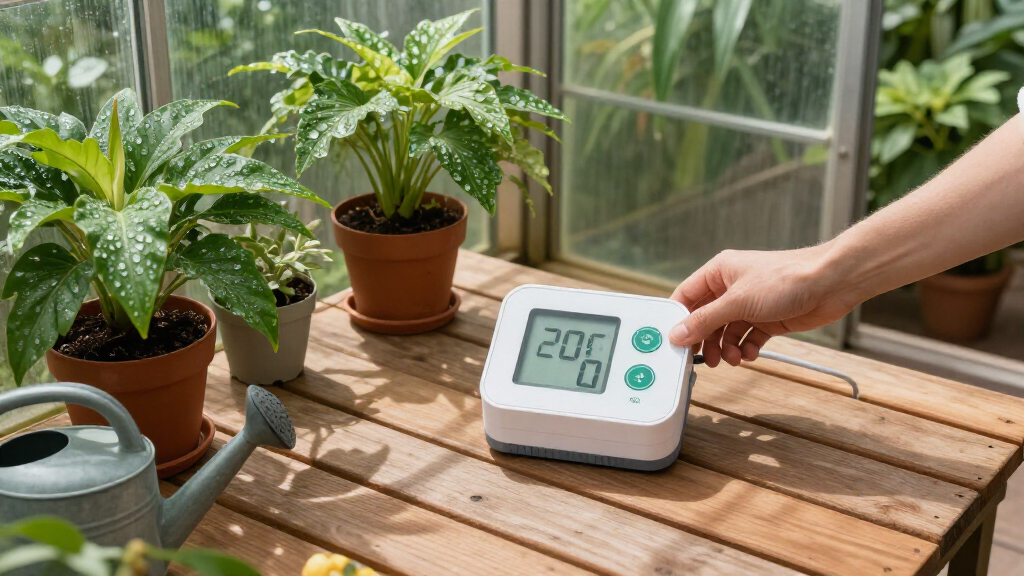
The products in this roundup were evaluated based on their accuracy, ease of installation, user interface, build quality, and value for greenhouses of various sizes. We prioritized systems that offer reliable sensor readings and straightforward setup to minimize user errors. Automation features, connectivity options, and expandability were also key factors, especially for growers seeking remote management or integration with other environmental controls. The ranking reflects a balance between performance, usability, and affordability, ensuring that both hobbyists and professional growers find suitable options.Factors to Consider When Choosing Best Humidity Control Systems For Greenhouses
Choosing the right humidity control system for your greenhouse involves several considerations that go beyond basic features. It’s essential to match the system’s capabilities with your specific crop needs, greenhouse size, and automation preferences. Proper selection can prevent issues like mold, plant stress, or equipment failure. Here are key factors to keep in mind:Sensor Accuracy and Reliability
Accurate sensors are vital for maintaining consistent humidity levels. Low-quality sensors can lead to fluctuations, causing stress for sensitive plants. Look for systems with high-precision sensors and proven reliability over time. Investing in a model with dual sensors for temperature and humidity provides more comprehensive environmental control, which is especially useful in larger greenhouses.
Ease of Installation and Use
Many systems vary greatly in complexity. Plug-in controllers are typically easier to set up and less intimidating for beginners, while integrated systems with multiple sensors and app connectivity may require more initial configuration. Consider your technical comfort level and whether you prefer manual adjustments or automated controls. Clear displays and intuitive interfaces can significantly reduce setup time and ongoing management efforts.
Automation and Connectivity
Automated systems that connect to WiFi or apps enable remote monitoring and adjustments, saving time and providing peace of mind. However, these features usually come at a higher cost and require a stable internet connection. Determine whether remote access aligns with your operational style, and beware of overly complex setups that could increase potential points of failure.
Size and Scope of Your Greenhouse
The size and ventilation of your greenhouse influence the choice of system. Larger or more complex environments may need dual-stage controllers with high-capacity outputs, while small setups can often rely on simpler plug-in models. Proper capacity ensures the system can handle the volume of air needing regulation without constant manual intervention.
Budget and Long-Term Value
While budget models offer initial savings, they might lack durability or advanced features, leading to higher costs over time. Conversely, investing in a higher-end system can provide more precise control, better durability, and easier maintenance, ultimately saving money and effort. Consider how much automation and accuracy matter to your operation when balancing cost against potential benefits.
Frequently Asked Questions
Can I use a humidity controller for both humidity and temperature regulation?
Many controllers are designed to manage both humidity and temperature, often featuring dual sensors and control outputs. This integrated approach simplifies environmental management, especially in sensitive crops or advanced setups. However, ensure that the controller’s capacity matches your greenhouse size and that it supports the specific sensors and devices you plan to use. For smaller or less complex greenhouses, separate devices might suffice, but integrated systems tend to offer more streamlined operation.
How important is sensor placement in maintaining accurate humidity levels?
Sensor placement significantly impacts the accuracy of humidity readings. Placing sensors too close to vents, windows, or heat sources can skew data, leading to improper adjustments. Ideally, sensors should be positioned where airflow is representative of the overall environment, avoiding direct sunlight or drafts. Correct placement ensures the control system responds appropriately, maintaining stable humidity levels essential for plant health.
Are WiFi-enabled controllers worth the extra investment?
WiFi-enabled controllers offer the convenience of remote monitoring and adjustments, which can be a significant advantage for larger or automated greenhouses. They help detect issues early and allow you to fine-tune settings without physically accessing the system. However, they rely on a stable internet connection and may introduce additional points of failure. If you value remote access and automation, investing in these systems can justify the higher cost, especially for commercial operations.
What features should I prioritize if I am a beginner?
Beginners should look for systems with simple plug-and-play installation, clear displays, and straightforward controls. Automatic features like humidity and temperature presets can reduce manual adjustments, making management easier. Avoid overly complex systems with many sensors or connectivity options unless you are comfortable with technology. Prioritizing reliability and ease of use helps prevent mistakes that could harm your plants or require troubleshooting.
How often should I calibrate or replace sensors in a humidity control system?
Regular calibration of sensors—typically once a year or as recommended by the manufacturer—ensures ongoing accuracy. Over time, sensors can drift, leading to less precise readings. Many systems do not require frequent replacement unless they fail or show signs of malfunction. Proper calibration and maintenance help keep your humidity levels stable, supporting healthy plant growth and reducing system wear.
Conclusion
For hobbyists or small greenhouses, a basic plug-in controller like the DIGITEN DHTC-1011 offers reliable, straightforward operation without breaking the bank. Growers seeking enhanced automation and remote management should consider the VIVOSUN E42A+ or WiFi-enabled humidifiers like the VIVOSUN AeroStream H05. For maximum precision and professional-grade control, the VIVOSUN Humidity Controller with dual sensors provides excellent performance, making it the best overall choice. New growers or those with simple needs will benefit from user-friendly models, while larger operations should prioritize systems with higher capacity and automation features. Ultimately, selecting the right system depends on your specific environment, budget, and desired level of control.
Fall Picks
fall essentials
As an affiliate, we earn on qualifying purchases.