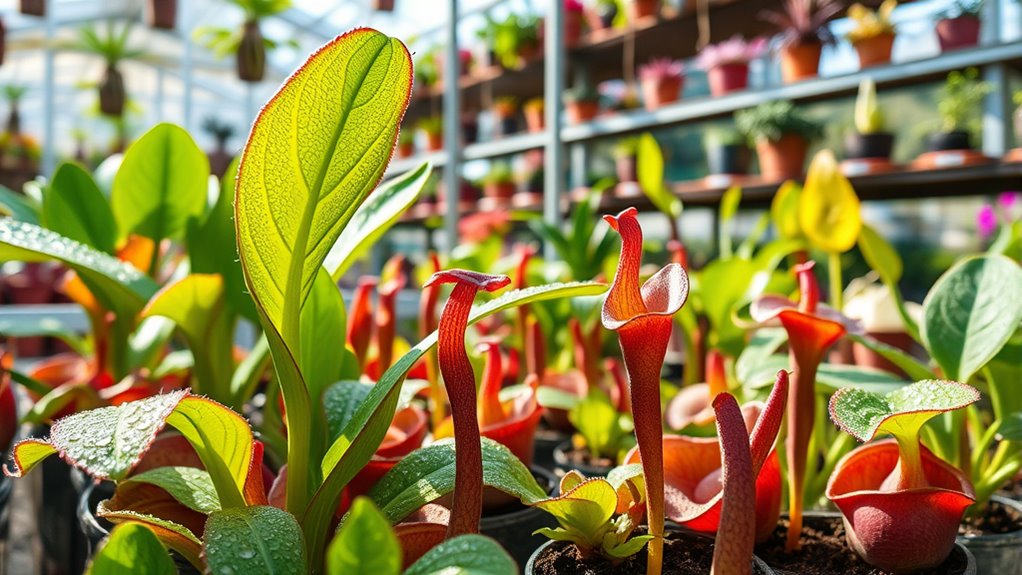
Growing carnivorous plants requires specialized supplies that cater to their unique needs. The best overall pick, Perfect Plants Carnivorous Plant Soil, offers a balanced mix for healthy growth, but it comes with a higher price point. For budget-conscious growers, Yilotuce 2 Qt Carnivorous Plant Soil Mix provides good value, while Beyond the Trap excels in guiding confident cultivation. The main tradeoffs include balancing soil quality, ease of use, and cost. Keep reading for a detailed breakdown of the top options that will suit different skill levels and goals.

Get garden gear delivered free with Prime
- Fast, free delivery on millions of items
- Prime Video, Amazon Music and more included
- Member-only deals all year
Complete the kit


Key Takeaways
- Top soil mixes like Perfect Plants and Yilotuce stand out for their balanced nutrient profiles and moisture retention, essential for healthy plant growth.
- Guides such as Beyond the Trap and The Savage Garden provide valuable cultivation insights, ideal for growers seeking expert advice alongside supplies.
- Price varies significantly; premium soil mixes and comprehensive guides tend to cost more but often yield better results for serious growers.
- Product versatility is key—some mixes work well across different species like Venus flytraps, sundews, and pitcher plants, reducing the need for multiple purchases.
- Ease of use and maintenance are consistent themes; pre-mixed soils save time, while DIY options offer customization but require more effort.
| Killer Plants: Growing and Caring for Flytraps, Pitcher Plants, and Other Deadly Flora |  | Best for Enthusiasts Seeking In-Depth Care Guidance | VIEW ON AMAZON | See Our Full Breakdown | |||
| Beyond the Trap: Growing Carnivorous Plants with Confidence |  | Best for Beginners Wanting Practical Cultivation Tips | VIEW ON AMAZON | See Our Full Breakdown | |||
| Perfect Plants Carnivorous Plant Soil, 4 qt, Venus Fly Trap Potting Mix |  | Best for Serious Growers Needing Reliable Soil Mixes | Size: 4 quarts | Suitable for: Venus Fly Traps, Pitcher Plants, Sundews, Bladderworts | Made in: USA | VIEW ON AMAZON | See Our Full Breakdown |
| Carnivorous Plant Soil Mix 2 Qts with Perlite and Sphagnum Moss Debris |  | Best for Natural, Additive-Free Potting and Seedling Growth | Material: Crushed peat moss and perlite | Size: 5.9″ x 5.9″ x 0.7″ | Weight: Approximately 3.5 ounces | VIEW ON AMAZON | See Our Full Breakdown |
| Yilotuce 2 Qt Carnivorous Plant Soil Mix – Suitable for Venus Fly Traps, Pitcher Plants, Sundews, and Butterworts |  | Best for Hand-Packed, Natural Soil for Small-Scale Cultivation | Material: Sphagnum moss, perlite | Size: 5.9 x 5.9 x 0.67 inches | Weight: Approximately 3.5 ounces | VIEW ON AMAZON | See Our Full Breakdown |
| The Savage Garden, Revised: Cultivating Carnivorous Plants |  | Best for Enthusiasts Seeking In-Depth Knowledge | Edition: Revised | Content Focus: Cultivation Techniques and Species | Audience: Beginners to Advanced | VIEW ON AMAZON | See Our Full Breakdown |
| Josh’s Frogs Carnivorous Plant Soil, 1 Quart |  | Best for Precise Soil Conditions and Beginners | Volume: 1 Quart | Type: Pre-mixed soil | Ingredients: Peat, Perlite | VIEW ON AMAZON | See Our Full Breakdown |
| The Curious World of Carnivorous Plants: A Comprehensive Guide to Their Biology and Cultivation |  | Best for Enthusiasts Wanting Biological Insights | Content Focus: Biology and Cultivation | Audience: Beginners to Advanced Enthusiasts | VIEW ON AMAZON | See Our Full Breakdown | |
| Carnivorous Plants: Care and Propagation |  | Best for Growers Wanting Propagation Tips | Content Focus: Care and Propagation Techniques | Number of Plants Covered: 25 | VIEW ON AMAZON | See Our Full Breakdown | |
| Cultivating Carnivorous Plants |  | Best for Beginners and General Enthusiasts | Content Focus: Growing Techniques and Identification | Audience: Beginners and Hobbyists | VIEW ON AMAZON | See Our Full Breakdown | |
| Carnivorous Plants Care and Cultivation |  | Best Reference for Enthusiasts Seeking In-Depth Knowledge | Format: Paperback | Pages: 240 | Author: Not specified | VIEW ON AMAZON | See Our Full Breakdown |
More Details on Our Top Picks
Killer Plants: Growing and Caring for Flytraps, Pitcher Plants, and Other Deadly Flora
This book stands out for its detailed care instructions for a variety of deadly plants, making it ideal for hobbyists who want a comprehensive resource. Unlike the soil-focused options, it provides the necessary knowledge to troubleshoot and maintain healthy plants, though it lacks specific product features or technical specs. Its strength lies in offering in-depth cultivation tips, which makes it a valuable companion for serious enthusiasts. However, the absence of visual aids or step-by-step guides could be a drawback for absolute beginners. This pick makes the most sense for dedicated hobbyists or collectors seeking thorough knowledge rather than casual growers.
Pros:- In-depth care instructions for various deadly plants
- Ideal for hobbyists aiming to improve their cultivation skills
- Suitable for those interested in plant health and maintenance
Cons:- Lacks specific product features or technical data
- Limited information on plant propagation techniques
Best for: Serious carnivorous plant hobbyists who want an extensive care manual
Not ideal for: Complete beginners looking for quick-start guides or visual tutorials
Our verdict“This book is best suited for dedicated enthusiasts seeking detailed cultivation guidance.”
Beyond the Trap: Growing Carnivorous Plants with Confidence
Compared with soil mixes, this book provides a comprehensive overview of growing carnivorous plants, making it especially useful for newcomers. It offers practical tips, species diversity, and troubleshooting advice, helping novices gain confidence. While it excels in clarity and beginner-friendly guidance, it does not include physical product details or specific technical specs, which limits its usefulness for those seeking hands-on equipment recommendations. This resource is ideal for new growers eager to learn the basics and avoid common pitfalls.
Pros:- Highly detailed and accessible for beginners
- Covers a wide range of species and cultivation tips
- Provides troubleshooting advice to prevent common issues
Cons:- No physical product features or technical specifications
- Limited to educational content without actual cultivation supplies
Best for: Beginners interested in understanding the fundamentals of carnivorous plant cultivation
Not ideal for: Experienced growers looking for advanced techniques or detailed plant care data
Our verdict“This book suits novice growers needing straightforward, confidence-building guidance.”
Perfect Plants Carnivorous Plant Soil, 4 qt, Venus Fly Trap Potting Mix
This soil mix stands out for its organic, acidified composition tailored specifically for Venus Flytraps and other carnivorous plants, promoting healthy growth through optimal water retention and pH balance. Compared to the smaller 2-quart mixes, this 4-quart bag offers more volume for larger setups or multiple plants, making it a better value for dedicated growers. However, its size may require multiple purchases for extensive collections, and it’s limited to a single soil type. This product makes the most sense for serious hobbyists or small commercial growers needing reliable, long-lasting soil.
Pros:- Ideal acidity and organic blend for carnivorous plants
- Excellent water management and moisture retention
- Made in the USA with professional quality
Cons:- Limited to 4 quarts, may require multiple purchases
- Not suitable for very large or commercial-scale cultivation
Best for: Enthusiasts with multiple plants or larger setups seeking high-quality soil
Not ideal for: Casual growers or those with only a single plant needing minimal soil
- Size:4 quarts
- Suitable for:Venus Fly Traps, Pitcher Plants, Sundews, Bladderworts
- Made in:USA
- Bag Type:Resealable
Our verdict“This soil mix is perfect for serious growers needing consistent, high-quality medium for multiple plants.”
Carnivorous Plant Soil Mix 2 Qts with Perlite and Sphagnum Moss Debris
Compared with the soil mixes by Perfect Plants, this 2-quart blend offers a natural, additive-free option with crushed peat moss and perlite. Its excellent drainage and moisture retention make it suitable for seedlings or potting established plants, especially for growers who prefer natural ingredients. However, its small size means you’ll likely need to buy multiple packs for larger projects, and the natural moss debris might contain some sticks, which could bother meticulous growers. It’s well-suited for seedling propagation and natural setups where purity is a priority.
Pros:- Natural, additive-free ingredients
- Excellent water retention and drainage
- Handpicked quality with minimal contaminants
Cons:- Small package size limits quantity
- Natural moss debris may contain sticks
Best for: Seedling growers or hobbyists preferring natural, additive-free soil mixes
Not ideal for: Large-scale growers or those needing bulk soil for extensive collections
- Material:Crushed peat moss and perlite
- Size:5.9″ x 5.9″ x 0.7″
- Weight:Approximately 3.5 ounces
- Package Includes:Sphagnum moss debris and perlite
Our verdict“This mix is ideal for naturalistic setups or seedling propagation where purity and natural ingredients matter.”
Yilotuce 2 Qt Carnivorous Plant Soil Mix – Suitable for Venus Fly Traps, Pitcher Plants, Sundews, and Butterworts
Similar to the previous natural mix, Yilotuce’s soil offers a balanced blend of sphagnum moss and perlite, well-suited for moisture-loving plants. Its hand-packed process ensures quality control, but the small 2-quart size means frequent repurchasing for larger collections. Unlike the larger Perfect Plants mix, this option may contain fewer debris or sticks, appealing to growers seeking a cleaner, natural medium. It’s a suitable choice for hobbyists focusing on small setups or rooting cuttings. It appeals to those who prioritize natural ingredients and careful packing for small-scale cultivation.
Pros:- All-natural ingredients with no additives
- Excellent water retention and drainage
- Hand-selected and carefully packed
Cons:- Small package size may require frequent repurchasing
- Perlite may produce dust during transportation
Best for: Hobbyists with limited space or small collections needing natural, hand-packed soil
Not ideal for: Growers with extensive setups or commercial-scale needs requiring larger volumes
- Material:Sphagnum moss, perlite
- Size:5.9 x 5.9 x 0.67 inches
- Weight:Approximately 3.5 ounces
- Package Quantity:2 quarts
Our verdict“This soil mix is best suited for small-scale, natural cultivation and propagation projects.”
The Savage Garden, Revised: Cultivating Carnivorous Plants
This book stands out for its detailed cultivation techniques that cater to both beginners and seasoned growers. Unlike the more general Cultivating Carnivorous Plants, it provides comprehensive guidance on species-specific care and advanced tips. Its thorough approach makes it an essential resource for those who want to deepen their understanding beyond basic plant care. However, its lack of specific product features or ratings might leave readers wanting more practical, hands-on guidance or community feedback. This pick is ideal for dedicated hobbyists aiming to master the art of carnivorous plant cultivation, but it may feel too broad for absolute beginners or those seeking quick reference materials.
Pros:- Extensive coverage of cultivation techniques
- Suitable for both beginners and experienced growers
- Covers a wide range of species and tips
Cons:- Lacks specific product features or ratings
- No practical, step-by-step instructions for beginners
Best for: Serious carnivorous plant enthusiasts and advanced growers who seek detailed cultivation knowledge
Not ideal for: Absolute beginners or casual hobbyists looking for quick, straightforward instructions
- Edition:Revised
- Content Focus:Cultivation Techniques and Species
- Audience:Beginners to Advanced
Our verdict“This book is best for dedicated enthusiasts wanting in-depth, comprehensive guidance on carnivorous plant care.”
Josh’s Frogs Carnivorous Plant Soil, 1 Quart
This pre-mixed soil makes it straightforward to replicate natural bog environments, a key factor for healthy carnivorous plants, especially for those new to cultivation. Compared to the more comprehensive Perfect Plants Carnivorous Plant Soil, which offers a larger quantity, this 1-quart container is ideal for small-scale growers or hobbyists testing their setup. Its organic, acidic, and fertilizer-free formulation ensures plants receive the proper nutrients without risk of overfeeding, but the small size limits use for larger collections or ongoing propagation projects. It’s perfect for beginners who want reliable, ready-to-use soil but may frustrate those needing bulk options.
Pros:- Organic and natural mix suitable for carnivorous plants
- Replicates natural bog environment effectively
- Fertilizer-free and acidic for optimal health
Cons:- Limited to 1 quart size, not suitable for large projects
- Specific to carnivorous plants, not versatile for other plants
Best for: Beginners or hobbyists with small collections who want reliable, ready-to-use soil
Not ideal for: Large-scale growers or those needing bulk soil for extensive propagation
- Volume:1 Quart
- Type:Pre-mixed soil
- Ingredients:Peat, Perlite
- Suitable for:Venus Fly Traps, Pitchers, Sundews
Our verdict“This soil is best suited for beginners or small collections seeking an easy, reliable medium for carnivorous plants.”
The Curious World of Carnivorous Plants: A Comprehensive Guide to Their Biology and Cultivation
This book offers an in-depth exploration of carnivorous plant biology, making it a valuable resource for hobbyists interested in the science behind the plants they grow. Unlike the more practical Cultivating Carnivorous Plants, which focuses on techniques, this guide dives into the biology and fascinating adaptations of these plants. It appeals to those wanting to understand their plants on a deeper level, but its lack of detailed cultivation steps or specific product recommendations might limit utility for immediate hands-on care. It makes the most sense for enthusiasts who appreciate science-based knowledge and want a broader understanding of their plants’ biology.
Pros:- Deep coverage of plant biology and adaptation
- Suitable for both beginners and experienced enthusiasts
- Encourages a scientific appreciation of carnivorous plants
Cons:- No specific price or user ratings available
- Lacks detailed cultivation or propagation instructions
Best for: Enthusiasts interested in the biology and natural history of carnivorous plants
Not ideal for: Beginners seeking straightforward, step-by-step growing instructions
- Content Focus:Biology and Cultivation
- Audience:Beginners to Advanced Enthusiasts
Our verdict“This book is ideal for science-minded enthusiasts wanting a comprehensive biological perspective on carnivorous plants.”
Carnivorous Plants: Care and Propagation
This book offers detailed guidance on caring for and propagating 25 common carnivorous plants, making it a practical choice for those looking to expand or maintain their collection. Compared to the broader Cultivating Carnivorous Plants, which covers general care, this title emphasizes propagation techniques, making it more suitable for growers wanting to multiply their plants or troubleshoot propagation issues. Its limited information on specific plant identification or supplementary materials might leave some users wanting more comprehensive visuals or species-specific care. It’s a solid pick for hobbyists focused on propagation but less ideal for absolute beginners seeking initial setup advice.
Pros:- Detailed care and propagation tips for 25 species
- Suitable for both novice and experienced growers
- Focus on expanding collections through propagation
Cons:- No specific product features or physical details
- Limited visuals or species identification info
Best for: Hobbyists interested in propagating and maintaining multiple carnivorous plant species
Not ideal for: Total beginners or those looking for broad cultivation guidance without a focus on propagation
- Content Focus:Care and Propagation Techniques
- Number of Plants Covered:25
Our verdict“This book is best for growers wanting to learn propagation techniques for a variety of carnivorous plants.”
Cultivating Carnivorous Plants
This guide offers a balanced overview of growing and caring for various carnivorous plants, including cultivation techniques and plant identification. Compared with The Savage Garden, which provides in-depth knowledge, this book leans toward practical, step-by-step guidance that suits beginners and hobbyists seeking straightforward advice. Its inclusion of plant identification tips helps new growers avoid common mistakes, but the lack of detailed care instructions for individual species might limit advanced growers. It’s a practical choice for those starting out or maintaining small collections, though more experienced cultivators may find it lacks depth.
Pros:- Provides detailed cultivation techniques
- Suitable for both beginners and experienced growers
- Includes plant identification tips
Cons:- Lacks specific care instructions for individual species
- No price or customer ratings available
Best for: Beginners or hobbyists looking for a comprehensive, easy-to-follow cultivation guide
Not ideal for: Advanced growers seeking detailed species-specific care or scientific insights
- Content Focus:Growing Techniques and Identification
- Audience:Beginners and Hobbyists
Our verdict“This book makes the most sense for newcomers seeking clear, practical guidance on growing carnivorous plants.”
Carnivorous Plants Care and Cultivation
This book offers a thorough overview of caring for a variety of carnivorous plants, making it an excellent resource for both beginners and seasoned growers. Unlike the more specialized soil or propagation products, it provides detailed care instructions that help prevent common mistakes, especially for those new to the hobby. While it lacks specific product features or technical specs, its comprehensive tips and troubleshooting advice fill a crucial knowledge gap. This makes it stand out among other guides like The Savage Garden by offering clearer step-by-step guidance tailored to different plant types. However, it doesn’t include any physical materials or plant-specific recommendations, which might limit its usefulness for those looking for ready-to-use solutions. Still, for anyone wanting to understand the full scope of carnivorous plant cultivation, this book is a valuable starting point.
Pros:- Provides comprehensive, easy-to-understand care instructions
- Suitable for both beginners and experienced growers
- Includes troubleshooting tips to resolve common issues
Cons:- Lacks specific product features or technical specifications
- Does not include physical supplies or plant material
Best for: Beginners or hobbyists who want a solid, detailed reference to improve their cultivation skills
Not ideal for: Experienced growers seeking advanced techniques or specific product recommendations, as it focuses on general care rather than specific supplies
- Format:Paperback
- Pages:240
- Author:Not specified
- Publication Year:Latest edition
- Intended Audience:Beginners to advanced growers
- Coverage:Care techniques, troubleshooting, cultivation tips
Our verdict“This book is ideal for those looking for a detailed, practical guide to carnivorous plant care, especially beginners seeking confidence in their cultivation skills.”

How We Picked
In evaluating these products, I focused on their suitability for carnivorous plant production, emphasizing soil quality, ease of application, and overall value. I also considered the clarity of instructions and whether the product supports different species. The ranking reflects a combination of performance, user-friendliness, and cost-effectiveness, aiming to help both beginners and experienced growers find the best fit. Products with comprehensive information or versatile formulations received higher marks, while those with limited applicability or higher prices were ranked accordingly.Factors to Consider When Choosing Carnivorous Plant Production
Choosing the right supplies for carnivorous plant production involves several key factors. The soil mix, for example, must mimic their natural habitat, with proper drainage and acidity. Consider your skill level—beginners benefit from pre-mixed, easy-to-use options, while experienced growers might prefer customizable blends. Cost is also an important factor, but investing in quality supplies often pays off with healthier plants. Compatibility with different species ensures you can grow a variety of plants without needing multiple products. Lastly, pay attention to brand reputation and user reviews for insights into long-term durability and effectiveness.Soil Quality and Composition
The foundation of healthy carnivorous plants is the right soil, which should be low in nutrients, well-draining, and acidic. Many growers prefer mixes with sphagnum moss, perlite, or specialized formulations designed for these plants. High-quality soil reduces the risk of root rot and promotes better trapping mechanisms. DIY mixes can be customized but require knowledge of proper ingredients. Pre-mixed soils offer convenience but may be more costly, so weigh your priorities accordingly.Ease of Use and Application
Beginners should prioritize products that are ready to use, with minimal preparation needed. Some soil mixes come with instructions for proper layering and watering, which can prevent common mistakes like overwatering or improper drainage. Experienced growers might prefer more control over soil composition, adjusting it for specific species or growth stages. Consider whether the product includes clear guidance, which can save time and reduce frustration for newcomers.Cost and Value
While premium soil mixes and comprehensive guides often carry a higher price tag, they tend to deliver better results for serious enthusiasts. Conversely, budget options may suffice for casual growers or those experimenting with a few plants. Always compare the cost against the expected lifespan and performance of the product. Investing in quality supplies can lead to healthier plants and fewer replacements, ultimately offering better value over time.Compatibility with Different Species
Some soil mixes are designed specifically for certain types of carnivorous plants, while others are more versatile. For example, a mix suitable for Venus flytraps may not be ideal for sundews or pitcher plants. Choosing a flexible product can save money and space, especially if you plan to grow multiple species. Check product labels and reviews to confirm suitability for your intended plants.Brand Reputation and Reviews
Opt for brands with positive feedback and a proven track record in carnivorous plant cultivation. Good reviews often highlight consistent performance, ease of use, and durability. Avoid products with frequent complaints about mold, poor drainage, or ineffective formulations. Established brands tend to offer better customer support and detailed instructions, which can make a big difference in your success.Frequently Asked Questions
Can I use regular potting soil for my carnivorous plants?
No, regular potting soil is generally too nutrient-rich and can harm carnivorous plants. These plants thrive in low-nutrient, acidic environments that mimic their natural habitats. Using unsuitable soil can lead to root rot and poor trapping ability. Instead, choose soils specifically formulated for carnivorous plants or create a DIY mix with sphagnum moss and perlite for optimal results.
How often should I repot my carnivorous plants?
Typically, repotting is needed every 1-2 years, depending on the plant’s growth rate and soil condition. Signs that a plant needs repotting include root bound conditions, soil degradation, or poor growth. Using fresh, quality soil during repotting helps maintain healthy roots and prevents disease. Always handle plants gently and choose a suitable time, such as early spring, for repotting to minimize stress.
Are pre-mixed soils better than DIY blends?
Pre-mixed soils are convenient and ensure you get a consistent, balanced medium suitable for most carnivorous plants. They save time and reduce the risk of making mistakes during mixing. However, DIY blends allow for customization tailored to specific species or growth stages, which can be advantageous for experienced growers. The choice depends on your skill level, patience, and the specific needs of your plants.
What features should I look for in a soil mix for pitcher plants?
Look for mixes that offer excellent drainage, acidity, and moisture retention. Pitcher plants prefer a mix with sphagnum moss, perlite, and sometimes sand, to mimic their natural bog environment. Avoid soils with added fertilizers or nutrients that can harm these sensitive plants. Choosing a specialized blend or a reputable brand ensures you provide the right environment for healthy pitcher plants.
Is it worth investing in a detailed cultivation guide?
Yes, especially for beginners or those looking to improve their success rate. A comprehensive guide provides valuable insights into the specific needs of different carnivorous plants, common pitfalls, and best practices. It can save time and money by helping you avoid mistakes and optimize growth conditions. For experienced growers, advanced guides can offer new techniques and deeper understanding, enhancing overall cultivation success.
Conclusion
For most hobbyists starting out, the Perfect Plants Carnivorous Plant Soil offers a reliable, all-in-one solution that balances ease of use with quality. Budget-conscious growers will appreciate the value of Yilotuce 2 Qt Carnivorous Plant Soil Mix, while serious enthusiasts seeking top-tier performance might prefer premium options like specialized mixes paired with detailed guides. Beginners should prioritize ready-to-use products with clear instructions, whereas experienced growers might prefer customizable blends. Ultimately, your choice depends on your skill level, plant variety, and commitment to quality—match these factors with the right product for successful carnivorous plant production in 2026.
As an affiliate, we earn on qualifying purchases.Halloween Picks
halloween