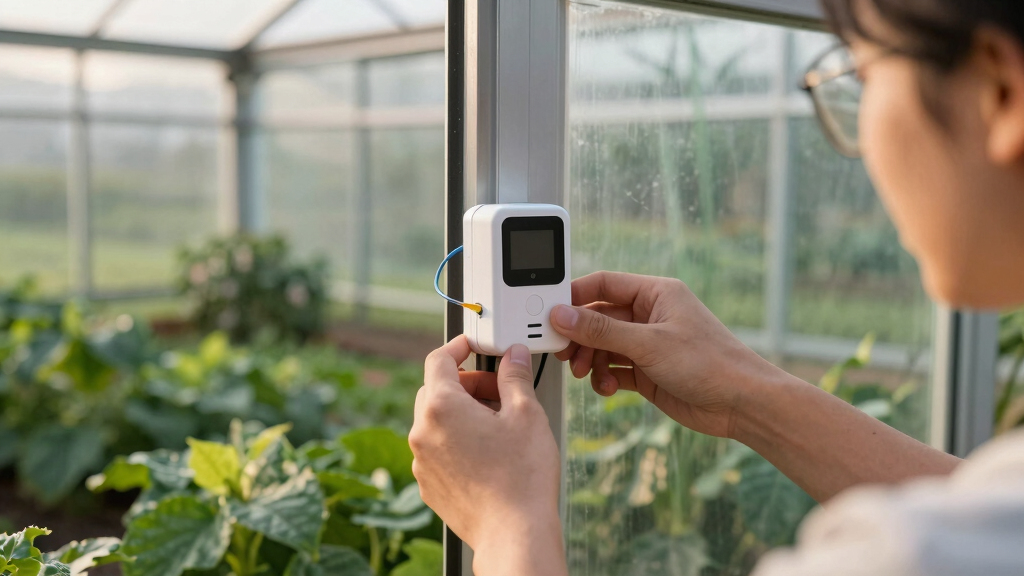
Finding the best smart sensors for greenhouse automation involves balancing accuracy, connectivity, and ease of use. The TempPro TempAir Bluetooth Hygrometer stands out for its straightforward setup and reliable Bluetooth connection, making it ideal for small to medium greenhouses. Meanwhile, the X-Sense Smart Wi-Fi Temperature and Humidity Monitor offers broader coverage and seamless Wi-Fi integration, perfect for larger setups. The main tradeoffs include choosing between simpler Bluetooth models with limited range and more advanced Wi-Fi sensors that may require more setup. Continue reading for a detailed comparison to find the best fit for your greenhouse needs.

Get garden gear delivered free with Prime
- Fast, free delivery on millions of items
- Prime Video, Amazon Music and more included
- Member-only deals all year
Complete the kit


Key Takeaways
- Connectivity type (Bluetooth vs Wi-Fi vs Zigbee) significantly impacts range and ease of integration.
- Top sensors balance accuracy with durability for long-term outdoor or semi-outdoor greenhouse environments.
- Multi-sensor packs often provide better value but can increase complexity in setup and management.
- Higher-priced models tend to offer more stable connectivity and additional features like alerts and data logs.
- Ease of installation and user interface are critical factors, especially for beginners or hobbyists.
| TempPro TempAir Bluetooth Hygrometer Thermometer for Greenhouse |  | Best Overall for Remote Bluetooth Monitoring | Range: Up to 260 ft | Temperature Accuracy: +/-0.9°F | Humidity Accuracy: +/-2% RH | VIEW LATEST PRICE | See Our Full Breakdown |
| TempPro TempAir Bluetooth Thermometer Hygrometer, 260 ft Temperature Sensor |  | Best Value for Long-Range Bluetooth Monitoring | Connectivity: Bluetooth | Remote Range: 260 feet | Sensor Accuracy (Temperature): +/-0.5°F | VIEW LATEST PRICE | See Our Full Breakdown |
| SONOFF Zigbee Indoor Temperature Humidity Sensor (SNZB-02D) – 2-Pack |  | Best for Zigbee Ecosystems and Real-Time Alerts | Accuracy (Temperature): ±0.2°C | Accuracy (Humidity): ±2% RH | Display: Large LCD | VIEW LATEST PRICE | See Our Full Breakdown |
| X-Sense Smart Wi-Fi Temperature and Humidity Monitor, 3 Sensors & Base Station |  | Best for Large-Scale Wi-Fi Monitoring | Coverage: Up to 1700 ft | Temperature Accuracy: ±0.2°C | Humidity Accuracy: ±2% | VIEW LATEST PRICE | See Our Full Breakdown |
| SONOFF SNZB-02M AirGuard Zigbee Temperature and Humidity Sensor |  | Best Multi-Metric Zigbee Sensor with Climate Control | Monitoring Metrics: Temperature, Humidity, Air Pressure, Dew Point, VPD | Temperature Accuracy: ±0.4°F | Humidity Accuracy: ±2% | VIEW LATEST PRICE | See Our Full Breakdown |
| THIRDREALITY Zigbee Temperature and Humidity Sensor Lite 3-Pack |  | Best Value for Multi-Sensor Indoor Monitoring | Sensor Accuracy (Temperature): ±0.3°C | Sensor Accuracy (Humidity): ±2% | Power: 2 AAA batteries (approx. 2 years) | VIEW LATEST PRICE | See Our Full Breakdown |
| Tapo Smart Temperature and Humidity Sensor, Requires Tapo Hub, T310 | 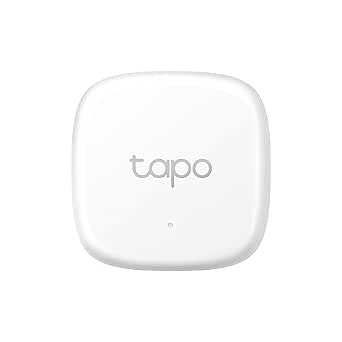 | Best for Real-Time Data and Automation Integration | Requires Tapo Hub: Yes | Sensor Type: Swiss-made temperature and humidity sensor | Accuracy: ±0.54°F, ±3% RH | VIEW LATEST PRICE | See Our Full Breakdown |
| smart sensors for greenhouse automation | Connectivity |
|---|---|
| TempPro TempAir Bluetooth Hygr | — |
| TempPro TempAir Bluetooth Ther | Bluetooth |
| SONOFF Zigbee Indoor Temperatu | Zigbee |
| X-Sense Smart Wi-Fi Temperatur | Wi-Fi |
| SONOFF SNZB-02M AirGuard Zigbe | Zigbee 3.0 |
| THIRDREALITY Zigbee Temperatur | — |
| Tapo Smart Temperature and Hum | — |
More Details on Our Top Picks
TempPro TempAir Bluetooth Hygrometer Thermometer for Greenhouse
This Bluetooth hygrometer and thermometer stands out for its extensive remote range of up to 260 feet, making it ideal for larger greenhouse setups where wired connections are impractical. Its high accuracy (+/-0.9°F and +/-2% RH) ensures precise climate control, comparable to the more advanced sensors like the SONOFF SNZB-02M, but with a simpler setup. The large backlit display enhances usability, especially in dim environments. However, reliance on Bluetooth can lead to connectivity issues, and privacy details for the app are unclear—tradeoffs that could matter in critical monitoring scenarios. This model works best for growers seeking reliable remote temperature and humidity tracking without complex network integrations, but less so for those needing constant online access or multi-sensor networks.
Pros:- Remote Bluetooth monitoring up to 260 feet
- High accuracy and fast refresh rate
- Large, easy-to-read backlit display
- Data storage with export options
Cons:- Bluetooth connection may be unstable in some environments
- Privacy details for app are not clear
- No Wi-Fi or cloud integration for remote access
Best for: Greenhouse operators prioritizing straightforward remote Bluetooth monitoring with high accuracy.
Not ideal for: Large-scale operations requiring mesh or Zigbee networks or constant online monitoring, due to potential connectivity issues.
- Range:Up to 260 ft
- Temperature Accuracy:+/-0.9°F
- Humidity Accuracy:+/-2% RH
- Data Storage:2 years
- Refresh Rate:10 seconds
Our verdict“This pick suits users seeking a reliable, easy-to-use Bluetooth sensor for precise greenhouse climate tracking without complex networking.”
TempPro TempAir Bluetooth Thermometer Hygrometer, 260 ft Temperature Sensor
Compared with the TempPro TempAir Bluetooth Hygrometer Thermometer, this product offers similar range and accuracy but emphasizes ease of setup with included batteries and a straightforward app interface. Its sensors boast a slightly better temperature accuracy (+/-0.5°F) and fast refresh, making it suitable for greenhouses, incubators, and recreational spaces. The 260-foot Bluetooth range remains a strong feature, but it shares the same limitation—dependence on Bluetooth connectivity that can falter in complex environments. Its long-term data logging capability is useful for trend analysis, yet the absence of Wi-Fi or cloud options means continuous online accessibility is limited. This sensor makes sense for hobbyists or small growers who want reliable data without added network complexity.
Pros:- Easy Bluetooth setup and control
- High-precision sensors (+/-0.5°F, +/-2% RH)
- Long remote range of 260 feet
- Long-term data logging up to 2 years
Cons:- Limited to Bluetooth range without Wi-Fi or mesh
- Battery life not specified, potential maintenance concern
- Full functionality depends on smartphone app
Best for: Small-scale growers or hobbyists needing a simple, long-range Bluetooth sensor with long-term data logging.
Not ideal for: Large commercial greenhouses requiring networked or cloud-based solutions for real-time oversight.
- Connectivity:Bluetooth
- Remote Range:260 feet
- Sensor Accuracy (Temperature):+/-0.5°F
- Sensor Accuracy (Humidity):+/-2% RH
- Data Logging Duration:2 years
- Power:Batteries included
Our verdict“This sensor appeals to users who want reliable, long-range Bluetooth monitoring without network infrastructure fuss.”
SONOFF Zigbee Indoor Temperature Humidity Sensor (SNZB-02D) – 2-Pack
This pair of SONOFF Zigbee sensors excels in high-accuracy indoor climate monitoring, providing readings within ±0.2°C/±0.4°F and ±2% RH, which rivals more complex systems. Their large LCD screens enable quick checks, and the Zigbee connectivity allows seamless integration into existing smart home or greenhouse systems, especially if a compatible hub is present. Compared to Bluetooth options like the TempPro TempAir, these sensors support instant app notifications and cloud storage, making them more suitable for environments where real-time alerts are critical. The main tradeoff is the need for a Zigbee hub, which adds initial setup complexity and cost. This set works best for growers with established Zigbee networks seeking accurate, remote, and automated climate responses.
Pros:- High-accuracy readings (+/-0.2°C/±0.4°F)
- Large LCD for easy local monitoring
- Supports remote notifications and cloud storage
- Wireless Zigbee connectivity with broad coverage
Cons:- Requires Zigbee hub or compatible ecosystem
- Battery life not specified
- Limited to Zigbee network environments
Best for: Greenhouse users with Zigbee hubs who want real-time alerts and accurate data in a multi-sensor setup.
Not ideal for: Users without Zigbee infrastructure or those preferring direct Wi-Fi solutions, due to hub dependency.
- Accuracy (Temperature):±0.2°C
- Accuracy (Humidity):±2% RH
- Display:Large LCD
- Connectivity:Zigbee
- Refresh Rate:Every 5 seconds
- Coverage Range:120m/400ft
Our verdict“This set is ideal for those integrating climate sensors into a Zigbee smart system needing real-time alerts and precise data.”
X-Sense Smart Wi-Fi Temperature and Humidity Monitor, 3 Sensors & Base Station
The X-Sense Wi-Fi monitor offers impressive coverage with up to 1700 feet (500 meters) of range, supporting multiple sensors and comprehensive data analysis. Its high-precision measurements (±0.2°C) and real-time app alerts make it suitable for large greenhouses or multiple-room environments. Compared to Bluetooth or Zigbee options, this device relies on Wi-Fi, providing constant online access without the need for hubs or gateways. The inclusion of three sensors and a base station simplifies setup, but the need for steady Wi-Fi connectivity could be a drawback in less connected locations. Long battery life—up to five years—reduces maintenance, making it a good fit for commercial operations seeking centralized control.
Pros:- High-precision measurements (+/-0.2°C)
- Supports up to 50 devices over large areas
- Long battery life up to 5 years
- Real-time app alerts and historical data
Cons:- Requires stable Wi-Fi connection
- Limited to 3 sensors included, additional purchase needed
- Wi-Fi dependence could hinder performance in poor connectivity areas
Best for: Large-scale greenhouse operators or multi-zone growers requiring extensive coverage and remote data access over Wi-Fi.
Not ideal for: Locations with unreliable Wi-Fi or users seeking simple, single-sensor solutions, due to higher setup complexity and cost.
- Coverage:Up to 1700 ft
- Temperature Accuracy:±0.2°C
- Humidity Accuracy:±2%
- Lifespan:Up to 5 years
- Number of Sensors:3 included
- Connectivity:Wi-Fi
Our verdict“This Wi-Fi-based system is ideal for extensive greenhouse setups needing centralized, remote climate management with minimal maintenance.”
SONOFF SNZB-02M AirGuard Zigbee Temperature and Humidity Sensor
The SONOFF SNZB-02M AirGuard elevates environmental monitoring by measuring not just temperature and humidity, but also air pressure, dew point, and VPD, offering a comprehensive view of climate conditions. Its high accuracy (+/-0.4°F for temperature, ±2% RH, and ±0.1 hPa for air pressure) suits advanced greenhouse management, especially when paired with a Zigbee hub like the SONOFF SNZB-02D. Its long-lasting battery (over 2 years) and customizable alerts support proactive climate adjustments. Compared to simpler sensors, this model provides a broader range of metrics for fine-tuned control but requires a Zigbee hub, adding initial setup complexity. Best suited for growers integrating multi-metric environmental data into their smart systems.
Pros:- Measures temperature, humidity, air pressure, dew point, VPD
- High accuracy across all metrics
- Long battery life over 2 years
- Supports Zigbee integration with smart home systems
Cons:- Requires Zigbee hub or gateway
- Limited to Zigbee ecosystem
- Initial setup more complex than Bluetooth or Wi-Fi sensors
Best for: Greenhouse operators seeking multi-metric environmental monitoring within Zigbee ecosystems for automated climate control.
Not ideal for: Those without Zigbee hubs or preferring single-metric sensors, given the need for additional infrastructure.
- Monitoring Metrics:Temperature, Humidity, Air Pressure, Dew Point, VPD
- Temperature Accuracy:±0.4°F
- Humidity Accuracy:±2%
- Air Pressure Accuracy:±0.1 hPa
- Battery Life:Over 2 years
- Connectivity:Zigbee 3.0
Our verdict“This sensor is best for tech-savvy growers wanting detailed climate data integrated into Zigbee-enabled smart systems for precise automation.”
THIRDREALITY Zigbee Temperature and Humidity Sensor Lite 3-Pack
This set of three THIRDREALITY Zigbee Sensors stands out for its affordability and ease of deployment, especially for those who want to monitor multiple zones within a greenhouse or indoor environment. Compared with the Tapo T310, it offers a similar level of accuracy but without requiring a proprietary hub, making it more flexible for existing Zigbee ecosystems. However, the need for a separate Zigbee hub can be a barrier for newcomers. Its accuracy of ±0.3°C and ±2% humidity, combined with a long battery life of about two years, ensures reliable data collection without frequent maintenance. The adhesive backing simplifies installation, and multi-platform compatibility broadens its utility. Still, it’s limited to indoor environments, and humidity data display is restricted to Alexa app, which might be a drawback for detailed analysis.
Pros:- Affordable pack of three sensors for comprehensive indoor coverage
- Highly accurate temperature (±0.3°C) and humidity (±2%) readings
- Long-lasting batteries with approximately 2 years of operation
- Easy installation with adhesive backing
Cons:- Requires a separate Zigbee hub, increasing setup complexity
- Limited humidity display functionality outside Alexa app
- Indoor use only, unsuitable for outdoor greenhouse environments
Best for: Greenhouse operators seeking a budget-friendly, multi-sensor solution compatible with existing Zigbee hubs.
Not ideal for: Users who need outdoor or highly mobile sensors, as this model is designed solely for indoor use and requires a dedicated Zigbee hub.
- Sensor Accuracy (Temperature):±0.3°C
- Sensor Accuracy (Humidity):±2%
- Power:2 AAA batteries (approx. 2 years)
- Compatibility:Zigbee hubs, Echo with Zigbee, SmartThings, Home Assistant, Hubitat, Homey
- Use:Indoor only
- Monitoring Range:From -15°C to 50°C / 5°F to 122°F
Our verdict“This pick is ideal for those who want a cost-effective, multi-sensor indoor solution compatible with Zigbee ecosystems.”
Tapo Smart Temperature and Humidity Sensor, Requires Tapo Hub, T310
The Tapo T310 sensor excels in providing real-time monitoring with frequent updates every 2 seconds, making it better suited for dynamic greenhouse conditions compared to the THIRDREALITY Lite. Its high accuracy of ±0.54°F and ±3% RH, combined with a Swiss-made sensor, ensures precise environmental data crucial for fine-tuned climate control. Unlike the THIRDREALITY, it requires a dedicated Tapo Hub, which could be a hurdle for those without existing Tapo devices. Its support for home automation and data summaries adds value for users wanting integrated control. The device’s 1+ year battery life and ability to export two years of data make it suitable for ongoing monitoring. However, dependency on a Tapo Hub and limited Wi-Fi compatibility may restrict flexibility in some setups.
Pros:- Real-time updates every 2 seconds for dynamic environment tracking
- High sensor accuracy with Swiss-made components
- Supports automation with other Tapo smart devices
- Two years of data export and summaries for analysis
Cons:- Requires a Tapo Hub, adding to initial setup cost
- Limited to 2.4 GHz Wi-Fi network, which may be restrictive
- Battery life varies with usage, potentially shorter in high-demand environments
Best for: Greenhouse growers who prioritize real-time data updates and integrated automation with Tapo ecosystem devices.
Not ideal for: Those without a Tapo Hub or not invested in the Tapo smart home system, as it cannot operate standalone or with other ecosystems easily.
- Requires Tapo Hub:Yes
- Sensor Type:Swiss-made temperature and humidity sensor
- Accuracy:±0.54°F, ±3% RH
- Battery:CR2450 (included)
- Battery Life:Over 1 year
- Monitoring Frequency:Every 2 seconds
Our verdict“This sensor is best suited for users needing precise, real-time climate data with seamless Tapo device integration.”
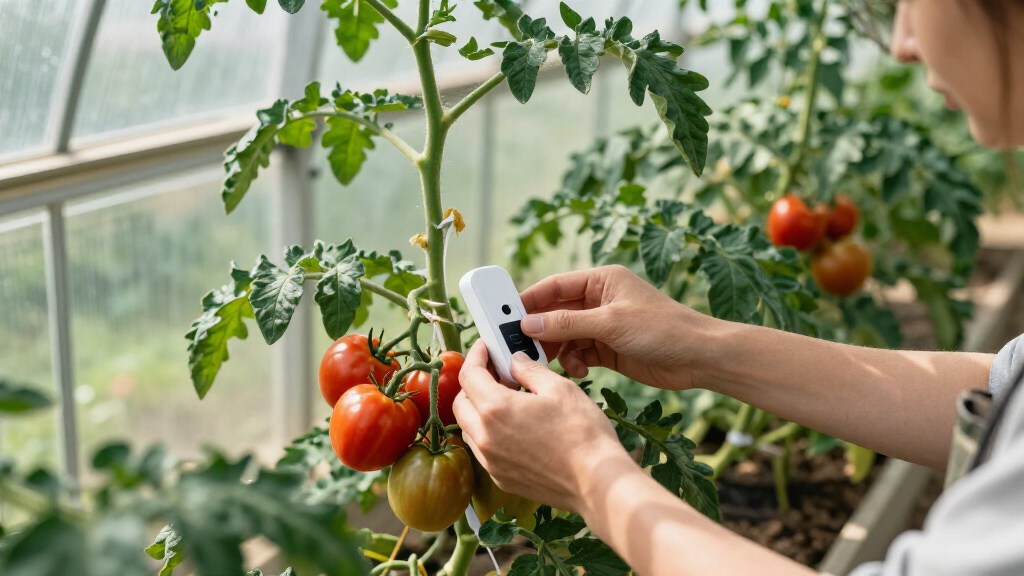
How We Picked
To determine the best smart sensors for greenhouse automation, I focused on key factors such as measurement accuracy, connectivity options, ease of installation, and overall build quality. I prioritized sensors that offer reliable data transfer with minimal setup fuss, ensuring users can depend on consistent readings. Cost-effectiveness was also considered, with an eye toward balancing features and value. The ranking reflects a combination of user-friendliness, versatility across greenhouse sizes, and long-term durability, helping readers choose sensors that best match their specific needs and technical skills.| smart sensors for greenhouse automation | Connectivity |
|---|---|
| TempPro TempAir Bluetooth Hygr | — |
| TempPro TempAir Bluetooth Ther | Bluetooth |
| SONOFF Zigbee Indoor Temperatu | Zigbee |
| X-Sense Smart Wi-Fi Temperatur | Wi-Fi |
| SONOFF SNZB-02M AirGuard Zigbe | Zigbee 3.0 |
| THIRDREALITY Zigbee Temperatur | — |
| Tapo Smart Temperature and Hum | — |
Factors to Consider When Choosing Best Smart Sensors For Greenhouse Automation
Selecting the right smart sensor for greenhouse automation involves understanding several critical factors. These devices influence climate control, plant health, and energy efficiency, so making an informed choice can lead to better crop yields and easier management. Here are the key considerations to help you choose wisely:Connectivity and Integration
Choosing between Bluetooth, Wi-Fi, or Zigbee sensors depends on your greenhouse size and existing smart home setup. Bluetooth sensors are simple to set up but have limited range, suitable for small spaces. Wi-Fi sensors offer broader coverage and easier remote access but may require a stable internet connection. Zigbee sensors excel in mesh networks, providing reliable performance in larger greenhouses, especially if you already use Zigbee hubs. Consider what ecosystem or smart hub you have to ensure compatibility and simplify integration.
Accuracy and Reliability
Accurate readings are vital for effective climate control. Sensors with higher precision help prevent over- or under-watering, overheating, or chilling. Look for devices with good sensor quality and positive user reviews for consistent performance. While some budget models can suffice for hobbyists, commercial growers often need higher-grade sensors that deliver stable, repeatable data over time, even in humid or outdoor conditions.
Ease of Use and Setup
Ease of installation matters, especially for those new to smart sensors. Devices with clear instructions, straightforward app interfaces, and minimal wiring save time and reduce frustration. Consider whether the sensor’s app offers features like notifications, data logging, or integration with other automation systems. A complicated setup can deter consistent use or lead to errors that impact plant health.
Durability and Maintenance
Greenhouse environments can be humid, dusty, and variable, so durability is essential. Look for sensors with weather-resistant or sealed enclosures designed for outdoor or semi-outdoor use. Regular calibration and maintenance are also worth considering—models with self-calibrating features or easy access for cleaning tend to last longer and provide more reliable data.
Cost and Value
Pricing varies widely, often reflecting features like connectivity options, sensor accuracy, and included accessories. While budget models may suit hobbyists, commercial operators should consider investing in higher-quality sensors to prevent costly errors. It’s wise to think about long-term value, including durability, software updates, and customer support, rather than choosing solely based on initial price.
Scalability and Compatibility
If you plan to expand your greenhouse or integrate multiple sensors, choose models that support multi-unit setups and are compatible with your existing automation system. This foresight helps ensure seamless scaling without needing to replace sensors later, saving both time and money.
Frequently Asked Questions
Can I use Bluetooth sensors for large greenhouses?
Bluetooth sensors are generally best suited for small to medium-sized greenhouses due to their limited range, typically up to 100 feet. For larger setups, Wi-Fi or Zigbee sensors provide broader coverage and more reliable data transfer across greater distances. Using Bluetooth in a large greenhouse could lead to gaps in data if sensors are spread out or walls obstruct the signal, potentially compromising climate control.
Are smart sensors difficult to install and manage?
Most modern smart sensors are designed with user-friendliness in mind. Installation usually involves minimal wiring, with many models configured via smartphone apps. Management depends on the system’s interface; sensors with intuitive apps and automated alerts make ongoing operation straightforward. However, some advanced models may require a bit more setup, especially if integrating with existing automation platforms, so reading instructions carefully is advisable.
How often should I calibrate my smart sensors?
Calibration frequency depends on the sensor quality and environmental conditions. Generally, checking calibration every few months or if you notice inconsistent readings helps maintain accuracy. Sensors exposed to high humidity or temperature swings may need more frequent calibration or recalibration. Well-designed models with self-calibration features reduce the need for manual adjustments, making maintenance easier.
What connectivity should I prioritize for future expansion?
Choosing sensors that support Zigbee or Wi-Fi can offer more flexibility if you plan to expand your greenhouse automation system later. Zigbee is especially useful in large setups where mesh networking ensures stable connections over distances. Wi-Fi is more suitable if you want direct internet access and remote monitoring without additional hubs. Consider your current setup and future plans to pick the most compatible option.
Is it worth investing in multi-sensor packs?
Multi-sensor packs often provide better value by covering multiple zones simultaneously, ensuring comprehensive climate monitoring. They can simplify management and reduce costs compared to individual sensors. However, they might increase initial complexity in setup and calibration. If you have a large or segmented greenhouse, multi-sensor systems tend to be a smart investment for consistent, scalable monitoring.
Conclusion
For small hobbyist greenhouses, a Bluetooth sensor like the TempPro TempAir offers simplicity and affordability. Commercial growers or those managing larger spaces should consider Wi-Fi or Zigbee options like the X-Sense or SONOFF models for broader coverage and better integration. Budget-conscious buyers will find good value in multi-pack options, while premium users seeking maximum reliability may prefer higher-end, feature-rich sensors. Beginners benefit from easy-to-use systems with strong customer support, whereas experienced growers might prioritize scalability and advanced features for long-term growth.
Fall yard work Picks
leaf blowers
As an affiliate, we earn on qualifying purchases.