
Choosing the best CO2 controller for intensive greenhouse growing involves balancing precision, ease of use, and reliability. The Titan Controls Atlas 7 stands out as the overall top pick for its robust features and proven performance. For those seeking affordability without sacrificing core functionality, the Inkbird ICC-510 offers great value. Meanwhile, the Autopilot APC8200 excels with its remote sensor and advanced monitoring. The main tradeoffs include cost versus complexity and how well a controller integrates into existing systems. Continue reading for a detailed comparison of these options and more to find the perfect fit for your greenhouse.

Get garden gear delivered free with Prime
- Fast, free delivery on millions of items
- Prime Video, Amazon Music and more included
- Member-only deals all year
Complete the kit


Key Takeaways
- The best controllers combine precise sensor technology with user-friendly interfaces for consistent CO2 management.
- Higher-end models often include remote sensors and trend displays, but come at a premium price.
- Ease of installation and integration is a key factor for growers replacing or upgrading existing systems.
- Price varies widely; budget options may lack advanced features but still deliver reliable control for smaller setups.
- Durability and build quality are crucial for controllers operating in humid, high-temperature greenhouse environments.
| Titan Controls Atlas 7 – CO₂ Controller for Grow Rooms |  | Best Overall for Commercial Grow Rooms | Product Dimensions: 5.4 x 5.7 x 3.3 inches | Item Weight: 6.4 ounces | Max Amps: 5 Amps | VIEW LATEST PRICE | See Our Full Breakdown |
| Dual Outlets Carbon Dioxide Controller for Grow Room with NDIR Sensor and Display |  | Best for Precise Environmental Control | Sensor Type: Dual-beam NDIR | Control Outlets: 2 | Display: Large LCD | VIEW LATEST PRICE | See Our Full Breakdown |
| CO2 Controller with Human/Plant Mode, 0-5000PPM, 15ft NDIR Probe, LCD Trend Display, Audible Alarm, Day & Night Relay |  | Best for High-Range Precision and Flexibility | Measurement Range: 0-5000 ppm | Sensor Type: NDIR | Probe Length: 15 ft | VIEW LATEST PRICE | See Our Full Breakdown |
| Autopilot APC8200 CO2 Monitor & Controller with Remote Sensor |  | Best for Data-Driven Growers and Long-Term Monitoring | Manufacturer: Hydrofarm | Part Number: APC8200 | Item Weight: 2.3 pounds | VIEW LATEST PRICE | See Our Full Breakdown |
| AC Infinity Controller AI+ Environment Controller with CO2 for Grower Tents |  | Best for Smart, Automated Environment Management | Sensor: CO2 sensor | Device Compatibility: Up to 32 devices | Connectivity: Wi-Fi | VIEW LATEST PRICE | See Our Full Breakdown |
| TrolMaster GCS-1 Green-X Controller with 4-in-1 Sensor and Cable Set |  | Best Overall for Comprehensive Environmental Management | Sensor Suite: 4-in-1 (Temp, Humid, CO2, Light) | Expandable Modules: Yes | Includes: Cable set | VIEW LATEST PRICE | See Our Full Breakdown |
| Inkbird ICC-510 CO2 Controller with Dual Plug for Grow Tents and Greenhouses |  | Best for Light-Responsive CO2 Regulation | Dual Output: Yes | Light Sensor: Yes | Power Supply: 100-240V AC | VIEW LATEST PRICE | See Our Full Breakdown |
| Hydrofarm Autopilot Digital CO2 Controller with Integrated Sensor and Power Cord |  | Best for Precise CO2 Management in Greenhouses | CO2 Range: 0 to 5000 ppm | Sensor: Integrated | Power Cord Length: 5 feet | VIEW LATEST PRICE | See Our Full Breakdown |
| Inkbird ICC-500T CO2 Controller with S01 Sensor for Grow Rooms |  | Best for Programmable Control with Alarms | Double Outlets: Yes | Control Range: CO2 ppm | Display: Digital | VIEW LATEST PRICE | See Our Full Breakdown |
| Titan Controls Atlas 1 Remote CO₂ Monitor/Controller for Grow Rooms |  | Best for Flexible Placement and Daytime CO₂ Control | Product Dimensions: 12 x 8.7 x 3.8 inches | Item Weight: 2.85 pounds | Power: 15 Amps/120 Volt/60 Hz | VIEW LATEST PRICE | See Our Full Breakdown |
| briidea CO2 Monitor and Controller with Remote Sensor for Grow Rooms | 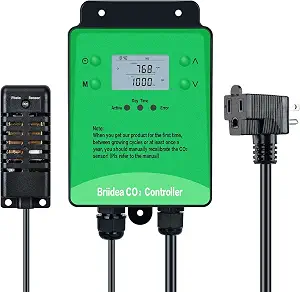 | Best for Flexible Placement and Humid Environments | Sensor Type: NDIR | Sensor Cable Length: 6.56 ft | Maximum Load: 15A, 1800W | VIEW LATEST PRICE | See Our Full Breakdown |
More Details on Our Top Picks
Titan Controls Atlas 7 – CO₂ Controller for Grow Rooms
The Titan Controls Atlas 7 stands out for its simplicity and durability, making it an excellent choice for large-scale or commercial operations. Its integrated photocell ensures the system activates only during the day, conserving energy and reducing unnecessary CO₂ release. Compared to more advanced options like the AC Infinity Controller AI+, it offers fewer customization features but excels in reliability and straightforward operation. The limited PPM settings (1000, 1250, 1500) make it less flexible for fine-tuning, yet its dust, rust, and moisture-resistant enclosure ensures longevity in challenging environments. This model is ideal for growers prioritizing robust, easy-to-maintain controllers over detailed data analytics.
Pros:- Easy single-button calibration and operation
- Enclosure resists dust, rust, and moisture for longevity
- Photocell activates system during daylight hours
Cons:- Limited to three fixed PPM levels, reducing fine control
- No display or advanced user interface
Best for: Large-scale commercial growers who need a durable, straightforward system without complex features
Not ideal for: Home growers or hobbyists seeking detailed environmental data or multi-parameter control
- Product Dimensions:5.4 x 5.7 x 3.3 inches
- Item Weight:6.4 ounces
- Max Amps:5 Amps
- Voltage:120 Volts
- Frequency:60 Hz
- PPM Settings:1000, 1250, 1500
Our verdict“Best suited for commercial growers valuing durability and simple controls over extensive customization.”
Dual Outlets Carbon Dioxide Controller for Grow Room with NDIR Sensor and Display
This controller excels at maintaining stable CO₂ levels thanks to its dual-beam NDIR sensor, making it more accurate than the Titan Controls Atlas 7. Its large LCD display shows real-time CO₂, temperature, and humidity data, offering a comprehensive view that supports fine-tuning the environment. The dual outlets automate both CO₂ injection and exhaust fan control, reducing manual adjustments. While it’s limited to indoor applications and requires calibration, its detailed data and automatic operation make it ideal for growers seeking precise, consistent control. Compared with simpler models, it demands more setup but pays off through accuracy and environmental stability.
Pros:- Accurate dual-beam NDIR sensor for reliable readings
- Large LCD display shows multiple environmental parameters
- Automatic control of CO₂ and exhaust fans
Cons:- Requires proper calibration for accuracy
- Limited to indoor grow room environments
Best for: Indoor growers who need automated, precise control over CO₂, temperature, and humidity
Not ideal for: Growers with minimal technical experience or those seeking a basic, no-frills controller
- Sensor Type:Dual-beam NDIR
- Control Outlets:2
- Display:Large LCD
- Measurement Range:CO2 ±50ppm
- Cable Length:15 feet
- Modes:Plant Mode, Human Mode
Our verdict“Ideal for growers aiming for precise, automated environmental regulation in indoor settings.”
CO2 Controller with Human/Plant Mode, 0-5000PPM, 15ft NDIR Probe, LCD Trend Display, Audible Alarm, Day & Night Relay
This model offers a versatile approach with dual modes tailored for plant or human needs, making it more adaptable than the Autopilot APC8200. Its high-precision NDIR sensor and 15-foot probe enable detailed monitoring over a wide range (0-5000 ppm), suitable for more advanced setups where CO₂ levels fluctuate significantly. The LCD trend display and audible alarm provide real-time insights and alerts, aiding in quick adjustments. However, its need for external power and limited range may restrict use in some setups. It’s a solid choice for growers who need high-range control and flexible operation, especially when paired with external data analysis tools.
Pros:- High-precision NDIR sensor with wide measurement range
- Dual-mode operation for plant and human needs
- External probe and trend display improve monitoring accuracy
Cons:- External power required; not battery operated
- Range limited to 0-5000 ppm, not suitable for extremely high CO₂ environments
Best for: Growers requiring high-accuracy, high-range CO₂ monitoring for advanced or experimental environments
Not ideal for: Beginners or small-scale setups that don’t need such high-level features or range
- Measurement Range:0-5000 ppm
- Sensor Type:NDIR
- Probe Length:15 ft
- Display:LCD Trend
- Alarm:Audible
- Relay:Day & Night
Our verdict“Best for advanced growers needing high-range, flexible CO₂ control with detailed data visualization.”
Autopilot APC8200 CO2 Monitor & Controller with Remote Sensor
The Autopilot APC8200 shines in environments where detailed CO₂ trend data over extended periods is essential. Its remote sensor and customizable setpoints make it more flexible than the Titan Controls Atlas 7 or basic controllers, offering a deeper understanding of environmental fluctuations. The trend recording over minutes to weeks is particularly valuable for diagnosing issues and fine-tuning conditions. However, its reliance on power and potential setup complexity make it less suitable for those new to environmental controls. This model is best for those who prioritize data analytics and long-term stability in their grow operations.
Pros:- Records CO₂ levels over various timeframes for analysis
- Remote sensor enables flexible placement
- Customizable setpoints and deadbands
Cons:- Requires external power; not battery operated
- Setup can be complex for beginners
Best for: Experienced growers who want detailed CO₂ monitoring and long-term environmental data analysis
Not ideal for: New growers or those seeking a plug-and-play, simple CO₂ controller
- Manufacturer:Hydrofarm
- Part Number:APC8200
- Item Weight:2.3 pounds
- Product Dimensions:7.4 x 9.6 x 3.4 inches
- Included Components:Remote sensor, data cable
- Power Source:Corded Electric
Our verdict“Ideal for growers who need in-depth, long-term CO₂ trend data to optimize environmental conditions.”
AC Infinity Controller AI+ Environment Controller with CO2 for Grower Tents
The AC Infinity Controller AI+ integrates AI learning to adapt CO₂ levels and other parameters automatically, setting it apart from traditional controllers like the Titan Controls Atlas 7. Its Wi-Fi connectivity and compatibility with up to 32 devices make it a powerful tool for tech-savvy growers seeking remote management and real-time insights. The AI-driven adjustments can optimize conditions more effectively than manual or preset controllers, but setup complexity and reliance on stable internet connectivity can be limiting for some users. This pick makes the most sense for growers already invested in smart systems or looking to automate complex environments with minimal manual intervention.
Pros:- AI learning algorithms optimize CO₂ and environmental conditions
- Remote control via Wi-Fi app with real-time alerts
- Compatible with many smart devices for integrated control
Cons:- Complex setup requiring technical knowledge
- Dependence on Wi-Fi connectivity for remote features
Best for: Growers who want a fully automated, smart environment control system with remote access
Not ideal for: Growers with limited technical skills or unstable Wi-Fi connections
- Sensor:CO2 sensor
- Device Compatibility:Up to 32 devices
- Connectivity:Wi-Fi
- Features:AI learning, real-time insights
Our verdict“Best suited for tech-oriented growers aiming for fully automated, remotely managed environmental control systems.”
TrolMaster GCS-1 Green-X Controller with 4-in-1 Sensor and Cable Set
The GCS-1 Green-X Controller stands out for its ability to manage multiple environmental factors simultaneously, including CO2, temperature, humidity, and light, making it ideal for large-scale, intensive greenhouses. Compared with specialized controllers like the Hydrofarm Autopilot, the GCS-1 offers a more integrated approach, though it demands more technical setup and familiarity with system integration. Its modular design allows expansion with weather stations and additional sensors, providing future-proof flexibility. However, this complexity can be daunting for casual users or smaller setups, where simpler controllers might suffice. The inclusion of a user-friendly phone app enhances remote management, making it suitable for professional growers who want detailed control and real-time data. Ultimately, this controller makes the most sense for large operations requiring precise, multi-parameter environmental regulation, despite the steeper learning curve.
Pros:- Integrates multiple environmental factors for holistic control
- Expandable with weather modules and additional sensors
- Includes a user-friendly app for remote monitoring
- Provides accurate real-time data for informed decision-making
Cons:- Requires technical knowledge for setup and configuration
- Can be overwhelming for casual or small-scale growers
Best for: Large-scale greenhouse operators needing comprehensive environmental control and remote management.
Not ideal for: Small hobbyists or growers seeking plug-and-play simplicity, due to the complex setup and configuration requirements.
- Sensor Suite:4-in-1 (Temp, Humid, CO2, Light)
- Expandable Modules:Yes
- Includes:Cable set
- Model:GCS-1
- Brand:TrolMaster
Our verdict“This system is best suited for large, professional greenhouses where detailed environmental management is a priority.”
Inkbird ICC-510 CO2 Controller with Dual Plug for Grow Tents and Greenhouses
The Inkbird ICC-510 excels in environments where adjusting CO2 based on light levels can enhance plant growth, making it a smart choice for growers with grow tents or smaller greenhouses. Its dual output allows simultaneous control of CO2 equipment and ventilation, which is ideal for maintaining stable conditions. Unlike the Hydrofarm Autopilot that offers dedicated sensor integration, the ICC-510’s built-in light sensor allows it to adapt CO2 output dynamically, saving energy and optimizing plant health. However, it’s primarily designed for cultivation environments—less suited for large, complex setups or outdoor systems. Installation is straightforward, but understanding the sensor’s placement and calibration is key to achieving best results. This pick is best for growers who want automatic, light-responsive CO2 adjustments without extensive system complexity.
Pros:- Automatically adjusts CO2 based on light conditions
- Dual outputs for CO2 and ventilation control
- Compatible with worldwide voltage standards
- Easy to set up for small to medium grow environments
Cons:- Limited to environments with basic control needs
- Requires connection to CO2 and ventilation systems
Best for: Growers with grow tents or small greenhouses who want automatic, light-based CO2 control.
Not ideal for: Large commercial growers or those needing integrated multi-parameter environmental control, due to its specialized focus on CO2 and light.
- Dual Output:Yes
- Light Sensor:Yes
- Power Supply:100-240V AC
- Application:Grow Tent, Greenhouse, Grow Room
Our verdict“This controller is ideal for growers wanting automatic, light-responsive CO2 regulation in small to medium setups.”
Hydrofarm Autopilot Digital CO2 Controller with Integrated Sensor and Power Cord
The Hydrofarm Autopilot provides highly accurate CO2 control from 0 to 5000 ppm, with an integrated sensor that offers day/night detection, making it suitable for serious growers aiming for precise environment tuning. Its customizable setpoints and alarms allow detailed adjustments, comparable to the more comprehensive TrolMaster GCS-1, but without the same multi-parameter integration. While it excels in maintaining stable CO2 levels, it lacks environmental sensors for temperature or humidity, so it’s best paired with other systems if those factors matter. Setup is straightforward, but calibration and sensor placement influence performance. This device is best for growers focused solely on CO2 precision, especially in greenhouses with controlled lighting periods.
Pros:- Highly accurate CO2 ppm control
- Customizable setpoints and alarms
- Integrated sensor with day/night detection
- Reliable and certified safety standards
Cons:- Limited to CO2 management only
- Requires proper calibration for optimal use
Best for: Greenhouse growers requiring accurate CO2 regulation and alarms, without needing environmental controls.
Not ideal for: Growers seeking an all-in-one environmental system or managing large, complex setups, since it focuses solely on CO2.
- CO2 Range:0 to 5000 ppm
- Sensor:Integrated
- Power Cord Length:5 feet
- Application:Greenhouse and indoor gardening
Our verdict“This controller is best for growers who prioritize precise CO2 regulation and monitoring in controlled environments.”
Inkbird ICC-500T CO2 Controller with S01 Sensor for Grow Rooms
The Inkbird ICC-500T offers reliable CO2 management with a digital display and programmable features, including calibration and alarms, making it suitable for home growers who want precise control without extensive system complexity. Its dual outlets enable control over CO2 generators and exhaust fans, helping maintain stable conditions. Compared with more advanced controllers like the TrolMaster GCS-1, the ICC-500T emphasizes user-friendly digital controls over multi-sensor integration, fitting well within smaller or less complex facilities. However, it’s limited to home or small-scale grow rooms, and proper outlet setup is necessary for effective operation. This model is ideal for users seeking a straightforward, programmable CO2 controller with alarms for safety and precision.
Pros:- Programmable with calibration and alarms
- Digital CO2 level display
- Dual outlets for generator and fan control
- Reliable and certified safety features
Cons:- Limited to small or home grow environments
- Requires proper outlet configuration for best performance
Best for: Home growers or small-scale growers needing programmable CO2 control with alarm features.
Not ideal for: Large commercial operations requiring environmental integration or remote management, due to its basic setup.
- Double Outlets:Yes
- Control Range:CO2 ppm
- Display:Digital
- Certifications:CE & FCC
Our verdict“This device suits growers seeking straightforward, programmable CO2 management with alarms in small to medium setups.”
Titan Controls Atlas 1 Remote CO₂ Monitor/Controller for Grow Rooms
The Atlas 1 offers the advantage of a remote sensor that extends up to 25 feet, allowing flexible placement for accurate CO2 readings in larger or awkwardly situated grow rooms. Its self-calibration feature simplifies setup, and the photocell ensures it operates only during daylight hours, aligning with plant needs. Compared to the Hydrofarm Autopilot, the Atlas 1 prioritizes placement flexibility and ease of use, though it lacks environmental sensors like humidity or light integration. Its daytime-only operation might limit use for 24-hour environments, but for growers focusing on daytime regulation, it provides reliable, targeted CO2 control. It’s a practical choice for those who need to optimize sensor placement without sacrificing accuracy.
Pros:- Remote sensor allows flexible placement
- Self calibration for ease of use
- Adjustable set points for precision
- Operates only during daylight hours, conserving energy
Cons:- Limited to daytime operation due to photocell
- Replacement sensor needs to be purchased separately
Best for: Growers needing flexible sensor placement and daytime CO2 regulation in grow rooms.
Not ideal for: Growers requiring full 24-hour control or integrated environmental monitoring, as it operates mainly during the day.
- Product Dimensions:12 x 8.7 x 3.8 inches
- Item Weight:2.85 pounds
- Power:15 Amps/120 Volt/60 Hz
- Remote Sensor Length:25 feet
- Calibration:Factory calibrated
- Built-in Features:Self calibration, photocell
Our verdict“This controller is a strong choice for growers who want flexible sensor placement and daytime-only CO2 regulation in grow rooms.”
briidea CO2 Monitor and Controller with Remote Sensor for Grow Rooms
This CO2 monitor and controller stands out for its combination of light-sensing and programmable modes, making it highly adaptable for precise CO2 management. Unlike some models like the Autopilot APC8200, which focus more on automation, the briidea offers manual control options that can be fine-tuned for indoor setups. Its waterproof housing and corrosion-resistant sensor ensure reliable operation in humid environments, a common challenge in greenhouses. However, understanding and configuring its multiple modes requires some effort, and the remote sensor’s compatibility isn’t clearly detailed, which could be a hurdle for users seeking plug-and-play simplicity. This model excels when flexibility and environmental resilience are priorities but demands a bit of technical familiarity to maximize its features.
Pros:- Smart light-sensing and programmable control modes enable precise CO2 regulation
- Reliable operation in humid environments thanks to waterproof housing and corrosion-resistant sensor
- Supports high loads up to 15A, suitable for larger ventilation systems
- Includes safety features like automatic memory during power outages
Cons:- Setup can be complex due to multiple modes and features needing understanding
- Limited information on remote sensor compatibility might cause integration issues
Best for: Growers who need adaptable control options in humid, high-load environments and value flexible sensor placement
Not ideal for: Beginners or those seeking a straightforward plug-and-play controller with minimal setup
- Sensor Type:NDIR
- Sensor Cable Length:6.56 ft
- Maximum Load:15A, 1800W
- Housing:Waterproof
- Modes:Greenhouse, Ventilation
- Power:Supports high loads with UL-certified components
Our verdict“This controller is ideal for growers who want customizable, resilient CO2 management in demanding greenhouse settings but are prepared for a learning curve.”
How We Picked
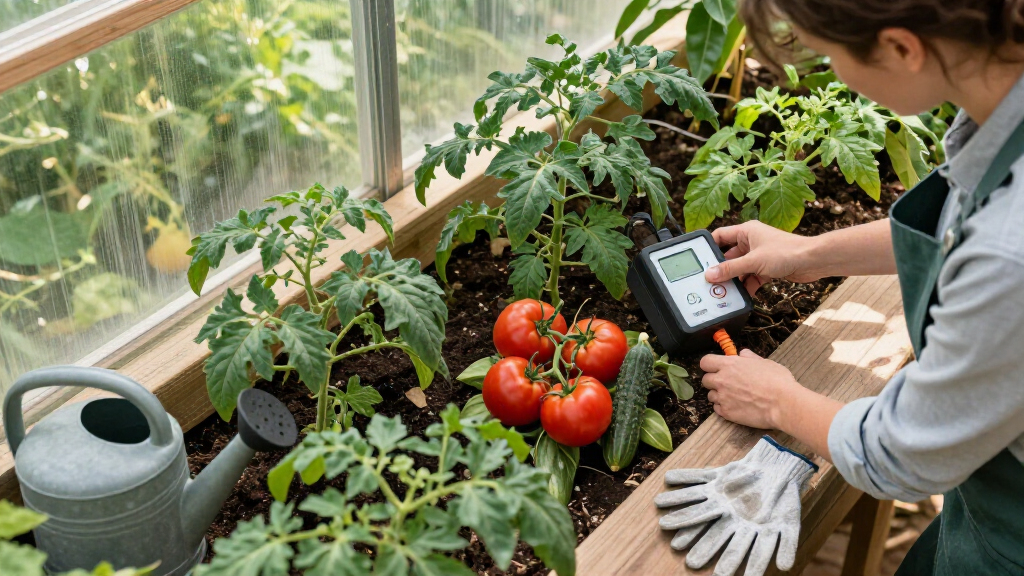
These products were evaluated based on their performance accuracy, ease of setup, build quality, and feature set. We prioritized models with reliable sensors, clear displays, and user-friendly controls, as these directly impact daily operation. Cost-benefit ratio was also considered, ensuring that each pick offers value for different budget levels. The ranking reflects a balance between affordability, advanced functionality, and compatibility with intensive greenhouse systems, aiming to guide growers of varying experience and scale.Factors to Consider When Choosing Best Co2 Controllers For Intensive Greenhouse Growing
Selecting the right CO2 controller requires understanding several key factors that influence performance and value. Growers should consider sensor accuracy, ease of integration, and system compatibility. Additional features like remote monitoring or trend displays can enhance control but may add to the cost. Recognizing common pitfalls, such as underestimating maintenance needs or overpaying for unnecessary features, can help clarify your choice. This guide explores the main considerations to match your specific greenhouse setup and budget.Sensor Accuracy and Reliability
Accurate sensors are the backbone of effective CO2 control. NDIR (Non-Dispersive Infrared) sensors are preferred for their precision and longevity, especially in high-demand environments. Cheaper sensors may drift over time, leading to inconsistent CO2 levels that impact plant growth. Investing in a model with a proven sensor technology ensures your system maintains the optimal CO2 concentration without frequent recalibration.
Ease of Use and Interface
A user-friendly interface reduces setup time and minimizes errors. Look for controllers with clear digital displays, straightforward controls, and intuitive programming options. Features like trend graphs or audible alarms help monitor changes and alert you to potential issues. Overly complex systems can become frustrating, especially if you’re managing multiple environmental factors simultaneously.
Integration and Compatibility
Ensure the controller easily links with your existing ventilation and environmental systems. Compatibility with multiple outlets, remote sensors, and automation modules allows for seamless operation. Growers with larger or more complex setups benefit from controllers that support expansion and integration, preventing the need for costly replacements down the line.
Durability and Maintenance
Greenhouse environments are humid and variable, so choosing a controller with a durable build and resistant to corrosion is vital. Regular calibration and sensor replacement are part of maintenance; models that provide easy access and clear calibration instructions save time and reduce downtime. Avoid overly fragile units that may fail prematurely in demanding conditions.
Cost and Value
Prices vary significantly based on features and build quality. Budget models may suffice for small-scale growers but lack advanced monitoring and automation options needed for intensive production. Premium controllers offer enhanced features like remote monitoring, trend analysis, and multiple outlet control. Consider your current needs and future expansion plans to avoid overspending or under-investing in your system.
Frequently Asked Questions
Can I use a CO2 controller for both small and large greenhouses?
Yes, but the scale and features of the controller should match your greenhouse size. Smaller setups may operate effectively with basic, budget-friendly models that provide reliable CO2 regulation. Larger, more complex environments benefit from controllers with multiple sensors, remote access, and integration capabilities. Assess your space and growth plans to select a model that offers scalability and precision.
How often should I calibrate my CO2 sensor?
Most sensors require calibration every 6 to 12 months, depending on usage and environmental conditions. Regular calibration ensures consistent accuracy, which is vital for maintaining optimal CO2 levels. Some controllers include automatic calibration features or offer easy manual calibration procedures—these can simplify maintenance and improve long-term reliability.
Are more expensive controllers worth the extra cost?
Higher-priced controllers often include advanced features like remote monitoring, trend analysis, and multiple outlets, which can be valuable in large or high-value operations. If your greenhouse demands precise control and automation, investing in a premium model can improve efficiency and crop yield. However, for smaller or less intensive setups, a basic but reliable controller may provide sufficient performance at a lower cost.
What should I consider when replacing an existing CO2 controller?
Compatibility with your current system, ease of installation, and sensor accuracy are key considerations. Ensure the new controller supports your existing outlets and sensors or plan for necessary upgrades. Also, check whether the new model offers features like remote access or trend displays to enhance your control. Proper calibration and setup are essential to avoid disruptions in CO2 levels during the transition.
How do I choose between a controller with remote sensors versus integrated sensors?
Remote sensors offer flexibility and better placement for accurate readings, especially in large or uneven environments. Integrated sensors are more straightforward and easier to install but may be less precise if not optimally positioned. Your choice depends on your greenhouse size, layout, and the level of control you require. For intensive growing, remote sensors often provide a performance edge.
Conclusion
For those running small or beginner setups, the Inkbird ICC-510 offers reliable control at an affordable price, making it ideal for newcomers. Growers managing larger, more complex environments should consider models like the Autopilot APC8200 or TrolMaster GCS-1, which provide advanced features and remote monitoring. Budget-conscious professionals will find value in the Titan Controls Atlas 7, while premium operations benefit from high-end controllers with extensive automation and data tracking. Ultimately, your choice depends on your scale, budget, and desire for automation—select the option that aligns best with your greenhouse’s demands.
Fall yard work Picks
leaf blowers
As an affiliate, we earn on qualifying purchases.