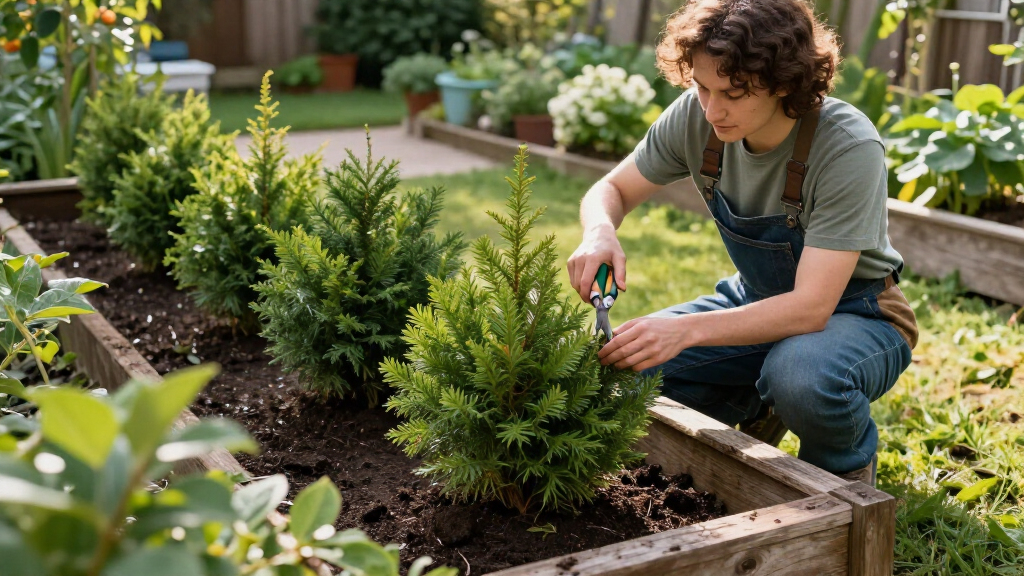

The best evergreen shrubs depend on your climate, available space, and the kind of year-round structure you want. I rank Proven Winners Sprinter Boxwood as the best overall for its formal shape and usefulness in hedges or containers, while Tater Tot Arborvitae stands out for a naturally compact form and Purple Daydream Loropetalum brings more foliage color. The main tradeoffs are mature size, pruning needs, sun exposure, and whether you want evergreen foliage alone or seasonal color too. A shrub that stays compact in one garden may outgrow a small space in another, so check local growing conditions before choosing. Read on for the full comparison and guidance on matching each pick to your planting site.

Get garden gear delivered free with Prime
- Fast, free delivery on millions of items
- Prime Video, Amazon Music and more included
- Member-only deals all year
Complete the kit


Key Takeaways
- Sprinter Boxwood leads for versatility: Its 3-gallon size and clipped, formal look make it the broadest fit for borders, foundation plantings, and containers, though it needs shaping to keep a crisp outline.
- North Star Boxwood suits tighter plans: It offers a compact boxwood option, but arrives in a smaller 1-gallon container than Sprinter, so buyers should expect a longer establishment period.
- Tater Tot Arborvitae is the low-pruning choice: Its naturally rounded habit makes it a better fit than boxwoods for gardeners who want a tidy shape without frequent shearing.
- Purple Daydream Loropetalum adds color, not just cover: Its purple foliage gives it a different role from the green conifers and boxwoods, but its site and climate needs deserve close checking.
- Podocarpus Maki and Dwarf Alberta Spruce reward careful placement: Both bring distinctive vertical or conical structure, yet neither should be chosen without checking mature dimensions and local growing conditions.
| Proven Winners Sprinter Boxwood Live Evergreen Shrub, 3 Gallon |  | Best Overall for Versatile Hedges | Botanical name: Buxus microphylla | Container size: 3 gallon | Mature size: 2–4 feet tall and wide | VIEW LATEST PRICE | See Our Full Breakdown |
| Proven Winners North Star Boxwood Shrub (1 Gallon) |  | Best for Low-Maintenance Formal Shapes | Botanical name: Buxus sempervirens ‘Katerberg’ | Container size: 1 gallon | Mature size: 24–32 inches wide by 24–32 inches high | VIEW LATEST PRICE | See Our Full Breakdown |
| Purple Daydream Loropetalum, 1-Gallon Compact Evergreen Shrub |  | Best for Colorful Small-Space Planting | Plant type: Evergreen shrub | Brand: Southern Living | Container size: 1 gallon | VIEW LATEST PRICE | See Our Full Breakdown |
| Picea glauca ‘Conica’ (Dwarf Alberta Spruce) Evergreen Shrub – #2 Container |  | Best for Cold-Climate Vertical Form | Botanical name: Picea glauca ‘Conica’ | Container size: #2 container | Mature height: 6–8 feet | VIEW LATEST PRICE | See Our Full Breakdown |
| Perfect Plants Podocarpus Maki Live Plant, 1 Gallon |  | Best for Warm-Climate Privacy Screens | Scientific name: Podocarpus macrophyllus | Common names: Podocarpus Maki, Japanese Yew, Buddhist Pine | Container size: 1 gallon | VIEW LATEST PRICE | See Our Full Breakdown |
| Proven Winners Tater Tot Arborvitae Shrub, 2-Gallon |  | Best for Compact, Rounded Form | Plant type: Arborvitae shrub | Container size: 2 gallons | Mature size: 3–4 ft wide × 2–3 ft high | VIEW LATEST PRICE | See Our Full Breakdown |
| Southern Living Obsession Nandina Shrub, 2 Gallon |  | Best for Seasonal Foliage Color | Container size: 2 gallons | USDA hardiness zones: 6–10 | Light requirements: Full sun to part shade | VIEW LATEST PRICE | See Our Full Breakdown |
| evergreen shrub | Container size | USDA hardiness zones | Sun exposure |
|---|---|---|---|
| Proven Winners Sprinter Boxwoo | 3 gallon | 5–9 | Full sun to partial shade |
| Proven Winners North Star Boxw | 1 gallon | 5–9 | Full sun to partial shade |
| Purple Daydream Loropetalum | 1 gallon | 7–10 | Full sun to partial shade |
| Picea glauca ‘Conica’ | #2 container | 3–8 | Full sun to partial shade |
| Perfect Plants Podocarpus Maki | 1 gallon | 7–11 | Full sun to partial shade |
| Proven Winners Tater Tot Arbor | 2 gallons | 3a–8b | — |
| Southern Living Obsession Nand | 2 gallons | 6–10 | — |
More Details on Our Top Picks
Proven Winners Sprinter Boxwood Live Evergreen Shrub, 3 Gallon
The Sprinter Boxwood is my most versatile pick for gardeners who want year-round structure without committing to a tall screen. Its glossy, dense foliage and mature size of 2–4 feet tall and wide suit borders, low hedges, and foundation plantings. Compared with the smaller, one-gallon North Star Boxwood, this arrives in a larger container and has a wider size range, making it a better fit when you want a more substantial landscape presence. The tradeoff is that Sprinter calls for moist, well-drained soil, so it is less forgiving in dry planting spots. Its USDA Zones 5–9 range is also narrower than the Dwarf Alberta Spruce’s Zones 3–8 overlap in colder regions. Check shipping availability before choosing: many western states are excluded.
Pros:- Glossy foliage keeps color and structure through the year
- Dense branching suits borders and hedge planting
- Mature size works in a range of landscape layouts
- Ships nursery-grown in a 3-gallon container
Cons:- Shipping is unavailable to numerous states
- Needs moist, well-drained soil rather than persistently dry conditions
- Its 2–4-foot spread may outgrow very tight planting spaces
Best for: Gardeners in eligible shipping states who want a medium-sized evergreen for a low hedge, border, or foundation planting.
Not ideal for: Buyers in excluded shipping states or gardeners with dry, fast-draining sites who cannot provide moderate watering.
- Botanical name:Buxus microphylla
- Container size:3 gallon
- Mature size:2–4 feet tall and wide
- USDA hardiness zones:5–9
- Sun exposure:Full sun to partial shade
- Soil:Moist, well-drained
- Watering:Moderate
- Use:Outdoor
- Shipping restrictions:Cannot ship to AK, AZ, CA, CO, HI, ID, MT, NM, NV, OR, UT, WA, or WY
Our verdict“Choose Sprinter if you want a substantial, adaptable boxwood for a low hedge or border and can meet its soil and shipping requirements.”
Proven Winners North Star Boxwood Shrub (1 Gallon)
North Star earns its place for gardeners who want a compact, naturally rounded boxwood rather than a shrub that needs frequent shaping. Its 24–32-inch globe habit makes it easy to use along a path, in a border, or in a container, while dark green leaves are described as holding their color through winter. Compared with the larger, 3-gallon Sprinter Boxwood, North Star is a better match for tighter layouts and buyers willing to wait for a smaller plant to fill in. Its slow growth helps limit pruning, but also means it is a poor shortcut to a full hedge. It needs regular watering while establishing, so “low maintenance” does not mean plant-and-forget. Choose it for restrained scale and shape, not quick coverage.
Pros:- Naturally dense globe shape needs minimal pruning
- Compact mature dimensions fit containers and small borders
- Dark green foliage is described as retaining winter color
- Cold hardy within USDA Zones 5–9
Cons:- Slow growth delays hedge coverage and landscape impact
- Requires regular watering while establishing
- One-gallon container starts smaller than the Sprinter Boxwood
Best for: Gardeners seeking a small, rounded evergreen for containers, neat border edges, or a slowly filling low hedge.
Not ideal for: Buyers who need immediate screening or rapid hedge coverage, since this one-gallon shrub grows slowly.
- Botanical name:Buxus sempervirens ‘Katerberg’
- Container size:1 gallon
- Mature size:24–32 inches wide by 24–32 inches high
- USDA hardiness zones:5–9
- Sun exposure:Full sun to partial shade
- Maintenance level:Low
- Growth habit:Low, thick globe
- Item weight:8.8 pounds
Our verdict“Pick North Star for a tidy, compact boxwood that needs little shaping, provided you are comfortable waiting for it to grow.”
Purple Daydream Loropetalum, 1-Gallon Compact Evergreen Shrub
Where the boxwoods in this lineup emphasize green structure, Purple Daydream Loropetalum adds dark purple foliage and dark pink spring flowers in a compact, roughly two-foot form. That color contrast makes it a stronger choice for a small border or container where a green evergreen would feel plain. Compared with North Star Boxwood, it offers more seasonal color but asks for a narrower growing setup: USDA Zones 7–10 and well-draining acidic soil. It is described as drought-tolerant and deer-resistant once established, yet moderate watering is still listed, and harsh winter winds may call for protection. This is a distinctive accent shrub, not the pick for a tall screen or gardeners in colder climates.
Pros:- Dark purple foliage adds year-round contrast
- Dark pink spring flowers provide seasonal interest
- Compact height suits borders and containers
- Described as deer-resistant and drought-tolerant once established
Cons:- Hardiness range is limited to USDA Zones 7–10
- Well-draining acidic soil and moderate watering are specified
- May need protection from harsh winter winds
Best for: Gardeners in Zones 7–10 who want a compact container or border shrub with purple foliage and spring blooms.
Not ideal for: Gardeners in colder zones, exposed windy sites, or anyone seeking a tall evergreen privacy screen.
- Plant type:Evergreen shrub
- Brand:Southern Living
- Container size:1 gallon
- Expected height:2 feet
- USDA hardiness zones:7–10
- Sun exposure:Full sun to partial shade
- Soil type:Well-draining, acidic soil
- Moisture needs:Moderate watering
- Planting period:Fall to early spring
Our verdict“Choose Purple Daydream for a compact, colorful accent in a suitable warm-zone garden, not for cold-weather structure or screening.”
Picea glauca ‘Conica’ (Dwarf Alberta Spruce) Evergreen Shrub – #2 Container
The Dwarf Alberta Spruce is the lineup’s choice for a narrow, pyramidal evergreen that brings height without the broad footprint of a boxwood. At maturity it reaches 6–8 feet tall and 3–4 feet wide, so it can anchor an entry or add vertical structure where Sprinter Boxwood would stay much lower and wider. Its USDA Zones 3–8 range also reaches colder areas than the boxwoods’ Zones 5–9. The tradeoff is patience: slow growth limits pruning but also delays the finished look, and its mature height needs room that compact border shrubs do not. It is described as low maintenance and arrives fully rooted, but it is not a substitute for a quick, dense privacy hedge.
Pros:- Pyramidal form adds vertical structure in a relatively narrow footprint
- Hardiness range includes colder zones than the boxwoods
- Slow growth reduces the need for frequent pruning
- Fully rooted and supplied with planting and care instructions
Cons:- Slow growth can postpone the desired landscape effect
- Mature height of 6–8 feet is too tall for small-scale edging
- Hardiness range ends at Zone 8, excluding warmer Zone 9–11 sites
Best for: Gardeners in Zones 3–8 who want a slow-growing, upright evergreen accent for an entry, foundation, or narrow landscape area.
Not ideal for: Buyers who need a fast-filling hedge, a low border plant, or a shrub under six feet at maturity.
- Botanical name:Picea glauca ‘Conica’
- Container size:#2 container
- Mature height:6–8 feet
- Mature spread:3–4 feet
- USDA hardiness zones:3–8
- Sun exposure:Full sun to partial shade
- Plant type:Evergreen shrub
- Item weight:5 pounds
Our verdict“Choose Dwarf Alberta Spruce for a patient, cold-hardy gardener who wants an upright evergreen accent rather than quick screening.”
Perfect Plants Podocarpus Maki Live Plant, 1 Gallon
Podocarpus Maki is the strongest screening option among these five for warm-climate gardeners who need a tall, narrow evergreen. Its listed mature dimensions—8–10 feet high and 3–4 feet wide—offer more potential privacy than the compact North Star Boxwood or Purple Daydream Loropetalum. Glossy foliage and drought tolerance once established add year-round coverage without demanding constant watering later. The catch is that those dimensions take time to achieve from a one-gallon plant, and its USDA Zones 7–11 range rules it out for colder gardens. It also needs well-draining soil and cannot ship to California or Arizona. Compared with the Dwarf Alberta Spruce, it suits warmer zones and taller screening, but not gardeners seeking a cold-hardy upright accent.
Pros:- Tall, narrow mature form suits screening in limited-width spaces
- Glossy foliage provides year-round green coverage
- Drought-tolerant and low maintenance once established
- Listed as resistant to deer, rabbits, and pests
Cons:- One-gallon starting plant will take time to reach screening height
- Cannot ship to California or Arizona
- Requires well-draining soil and does not suit colder zones below 7
Best for: Gardeners in Zones 7–11 who want a narrow, tall evergreen for a privacy screen, hedge, or foundation planting.
Not ideal for: Buyers in colder climates, California or Arizona, or sites with poorly drained soil.
- Scientific name:Podocarpus macrophyllus
- Common names:Podocarpus Maki, Japanese Yew, Buddhist Pine
- Container size:1 gallon
- Mature height:8–10 feet
- Mature width:3–4 feet
- USDA hardiness zones:7–11
- Sun exposure:Full sun to partial shade
- Soil type:Loam; well-draining soil
- Shipping restriction:Does not ship to California or Arizona
Our verdict“Pick Podocarpus Maki for a tall, narrow screen in a warm-zone garden if shipping is available and you can wait for it to mature.”
Proven Winners Tater Tot Arborvitae Shrub, 2-Gallon
I’d choose Tater Tot when a planting spot calls for a small, naturally rounded evergreen rather than a shrub that needs regular shaping. Its mature size of 2–3 feet high and 3–4 feet wide suits low borders and compact foundation spaces, while the fragrant, fan-like green foliage keeps the plant present through winter. It tolerates full sun to partial shade, giving it more flexibility than a strictly sunny-site choice. Compared with the larger-scale screening role of Sprinter Boxwood, Tater Tot is better suited to a defined, low-growing accent than a privacy hedge. The tradeoff is its limited height and need for regular watering; it is not the pick for buyers seeking a taller screen or a shrub that can be left dry for long stretches.
Pros:- Naturally rounded, compact shape can reduce the need for routine pruning.
- Evergreen green foliage provides year-round structure.
- Tolerates full sun to partial shade.
- Mature dimensions suit smaller planting areas.
Cons:- Mature height of 2–3 feet is too short for substantial screening.
- Requires regular watering.
- A 10–14-inch average shipping height means it needs time to reach its mature form.
Best for: Gardeners who want a tidy, low-growing evergreen for a small border, foundation bed, or partially shaded spot.
Not ideal for: Buyers who need a tall privacy screen or a drought-tolerant planting that can go without regular watering.
- Plant type:Arborvitae shrub
- Container size:2 gallons
- Mature size:3–4 ft wide × 2–3 ft high
- Average shipping height:10–14 in
- USDA hardiness zones:3a–8b
- Sunlight exposure:Full sun to partial shade
- Soil type:Sandy soil
- Moisture needs:Regular watering
Our verdict“Choose Tater Tot for a compact, rounded evergreen accent, but skip it if you need height or a low-water shrub.”
Southern Living Obsession Nandina Shrub, 2 Gallon
Obsession Nandina is the stronger fit for buyers who want an evergreen planting with color that changes through the seasons, rather than the consistently green, rounded look of Tater Tot Arborvitae. It is listed for USDA zones 6–10 and grows in full sun to part shade, making it a potential choice for warmer-climate beds where foliage interest matters as much as year-round structure. Its low-maintenance description is appealing once the shrub is established, but the care instructions call for watering twice weekly at first and once weekly afterward. That makes it less hands-off than a buyer might expect from a low-maintenance label. Unlike Sprinter Boxwood, which is a more conventional choice for clipped, uniform greenery, Obsession’s main draw is its seasonal color; the available details do not specify mature dimensions, so I would not choose it for a precisely sized space.
Pros:- Colorful foliage adds seasonal variation to the garden.
- Suitable for USDA hardiness zones 6–10.
- Grows in full sun to part shade.
- Described as low maintenance.
Cons:- Needs watering twice weekly until established and weekly afterward.
- Not listed for climates colder than USDA zone 6.
- Mature size is not provided, making placement in tightly measured spaces harder to plan.
Best for: Gardeners in USDA zones 6–10 who want seasonal foliage color and can keep up with regular watering.
Not ideal for: Buyers in colder zones, those seeking a consistently green formal hedge, or gardeners who need confirmed mature dimensions before planting.
- Container size:2 gallons
- USDA hardiness zones:6–10
- Light requirements:Full sun to part shade
- Watering until established:Twice per week
- Watering after establishment:Once per week
- Maintenance:Low
- Foliage:Colorful throughout the seasons
Our verdict“Pick Obsession Nandina for seasonal foliage color in a suitable warm-zone garden, not for a strictly uniform or precisely sized evergreen planting.”

How We Picked
I ranked these shrubs by how clearly each meets a practical evergreen need: dependable structure, manageable growth, usefulness across common garden settings, and distinct visual character. I also weighed the supplied container sizes as a buyer-facing factor: a larger starting plant can create a more immediate effect, while smaller plants may take longer to fill a space. Since the list spans broadleaf shrubs, conifers, and foliage-color options, I treated climate suitability and mature size as essential fit checks rather than assuming one plant works everywhere.
Sprinter Boxwood ranks first for its flexible formal use and larger listed container. Tater Tot Arborvitae follows for its naturally compact shape, while North Star Boxwood is a smaller-starting alternative for gardeners who prefer boxwood form. The remaining picks rank by the distinct needs they serve—color, upright structure, or a conical accent—balanced against the greater need to verify site conditions and eventual size. I did not treat any plant as universally suitable; local climate, soil, drainage, and exposure can change which choice makes the most sense.
Factors to Consider When Choosing Best Evergreen Shrubs
I’d choose an evergreen shrub by starting with the planting site, not the plant label. These broader checks can prevent common mismatches that a product comparison alone cannot resolve.
Match Mature Width to the Space
Measure the planting area and check the shrub’s expected mature width as well as its height. Buyers often focus on the size of the plant in its container, then discover that a hedge or foundation bed becomes crowded as the shrubs grow. Leave room for airflow and routine access around walls, paths, and windows. If a narrow space must stay clear, choose a naturally compact form rather than relying on repeated pruning to hold a larger shrub back. Plant labels and regional nursery guidance can differ, so confirm mature dimensions for your climate.
Check Climate and Winter Conditions
“Evergreen” describes foliage retention, not universal hardiness. Cold, wind, winter sun, and sudden temperature shifts can damage plants that are otherwise suited to a region, while heat and humidity can challenge some varieties in warmer areas. Look up the plant’s hardiness range and ask a local extension service or nursery how it performs in your specific area. Also check whether the proposed site is exposed to drying winter winds or reflected heat from paving. A locally proven shrub is usually a safer choice than a more unusual option planted outside its comfort zone.
Read Sun Exposure Alongside Soil and Drainage
Sun requirements affect both growth and appearance, especially for shrubs chosen for colorful foliage. Note how many hours of direct light the site receives through the seasons, not just on planting day. Soil drainage matters too: persistent wetness can harm roots even when the shrub appears suited to the climate. Before buying, check whether the bed drains after heavy rain and whether the soil needs amendment based on a local soil test. Avoid assuming that a plant described as adaptable will thrive in every combination of shade, clay, and poor drainage.
Choose a Shape That Matches Your Maintenance Style
Formal hedges and clipped borders need more regular shaping than shrubs with a naturally rounded or upright habit. Decide whether you want a controlled outline, a soft mass of foliage, or a specimen that keeps its own shape. Pruning at the wrong time can remove seasonal growth or expose bare interior branches, so check the recommended timing before making a routine. If you have limited time or no interest in shearing, favor a plant whose natural form already fits the space. Paying for a larger shrub does not remove the future work of keeping it appropriately sized.
Treat Container Size as a Timing Choice
A larger container can offer a more established starting point, but it does not guarantee faster long-term growth or a better match for the site. Smaller plants may take longer to create screening or fill a border, yet they can be easier to handle and may establish well when planted and watered correctly. Compare container size with the role you need the shrub to play: an immediate focal point has different needs from a gradual hedge. Check that the root ball is healthy and that the plant can be watered consistently after planting. Do not buy a larger specimen simply to compensate for choosing a shrub that will outgrow its location.
Decide Whether You Want Evergreen Color or Evergreen Structure
Some shrubs are chosen mainly for year-round screening and shape; others add contrasting foliage or a distinctive silhouette. Colorful leaves can make a bed more dynamic, but their appearance may vary with season, light, and growing conditions. Conical or upright forms provide visual structure, while rounded plants can soften paths and foundation lines. Consider what the garden already contains so the shrub contributes contrast rather than repeating the same shape and color. If screening is the main goal, prioritize foliage density and mature dimensions over a dramatic accent feature.
Frequently Asked Questions
Which of these shrubs is the best choice for a small garden?
I would start by comparing Tater Tot Arborvitae and North Star Boxwood, then check their mature dimensions against the actual planting space. A compact description does not mean a shrub needs no room, and nearby walls or paths can limit airflow and maintenance access. Tater Tot’s naturally rounded habit may suit a gardener who wants less shaping, while North Star offers a boxwood look in a smaller listed container. Container size is not the same as eventual size, so confirm regional growth expectations before ordering. If the site is very tight, ask a local nursery to verify that the mature width is workable.
Which option makes the most sense for a low-maintenance planting?
Tater Tot Arborvitae is the clearest starting point if you want a naturally compact outline rather than a formal clipped shape. Boxwoods can be shaped to suit a hedge or border, but that control usually comes with periodic pruning. Low maintenance still depends on choosing the right climate, drainage, and light conditions; a poorly sited shrub can need extra attention regardless of its growth habit. Consider watering needs during establishment and how easy it is to reach the plant for occasional care. I would not choose a shrub solely because its name or description suggests a small form.
Should I buy the larger container if I want a hedge sooner?
A larger starting plant can provide more immediate visual presence, which makes the 3-gallon Sprinter Boxwood more appealing than the 1-gallon North Star Boxwood for a quicker-looking planting. The container size alone cannot predict how soon a continuous hedge will form; spacing, root health, climate, and care after planting all matter. Avoid setting shrubs too close together to create instant coverage, since crowding can lead to poor airflow and extra pruning later. Check recommended spacing for the variety and plan for its mature width. If timing matters, ask the seller or a local nursery about the plant’s actual dimensions at dispatch.
Can I use these shrubs in a container rather than planting in the ground?
Some compact shrubs can work in containers, but suitability depends on mature size, root growth, climate, and how much watering the pot will need. Containers expose roots to more temperature swings than garden soil, so winter protection may be necessary in cold regions. A small pot can also dry quickly, particularly in sun or wind, while a larger pot is heavier and harder to move. Confirm the plant’s container-growing guidance before purchase and choose a pot with drainage holes. For a long-term container planting, favor a shrub whose mature form can be maintained without constant root restriction or hard pruning.
Which shrub should I choose if I want foliage color rather than a plain green screen?
Purple Daydream Loropetalum is the standout in this lineup for foliage color, while the boxwoods and conifers emphasize green structure and shape. Its color makes it better suited to a focal point or mixed border than to a simple uniform screen. Leaf color and growth can vary with climate and light, so check local guidance for the intended planting site before choosing it. If you need privacy, confirm mature dimensions and density rather than assuming an accent shrub will perform like a hedge plant. Pairing a colorful shrub with green evergreens can add contrast without asking one plant to meet both goals.
Conclusion
For the broadest range of formal garden uses, I’d choose Proven Winners Sprinter Boxwood as best overall, with the caveat that a clipped look calls for periodic shaping. Tater Tot Arborvitae is my best value in practical upkeep for gardeners who want a tidy natural form, while Sprinter is the best premium-style pick for buyers who value a larger listed starting plant and a more immediate presence. For a beginner, I’d favor Tater Tot if its local climate and mature size fit, since its rounded habit asks less of the pruners than a formal boxwood plan. Choose Purple Daydream Loropetalum for foliage color, Podocarpus Maki for a distinctive upright accent, Dwarf Alberta Spruce for a conical form, or North Star Boxwood when a smaller-starting boxwood suits your plan. Before ordering, verify mature dimensions and regional growing guidance; the best pick is the one that fits your site without constant correction.
Fall yard work Picks

EGO Power+ SNT2420 24-Inch Two-Stage Self-Propelled Snow Blower (Battery and Charger Not Included)
As an affiliate, we earn on qualifying purchases.