
TL;DR
October coneflower care can stay simple: leave healthy seedheads standing for goldfinches and other birds, remove foliage badly affected by disease, and check drainage around the roots. The Gardening Know How report recommends delaying the main cutback until spring and using mulch lightly, without covering the plant crowns.
Gardening Know How recommends three simple October steps for coneflowers: leave healthy seedheads standing for birds, remove foliage heavily affected by disease and protect the root zone without cutting the whole plant down. The advice matters to gardeners preparing perennial beds for winter because it balances plant care with food and cover for wildlife.

Get garden gear delivered free with Prime
- Fast, free delivery on millions of items
- Prime Video, Amazon Music and more included
- Member-only deals all year
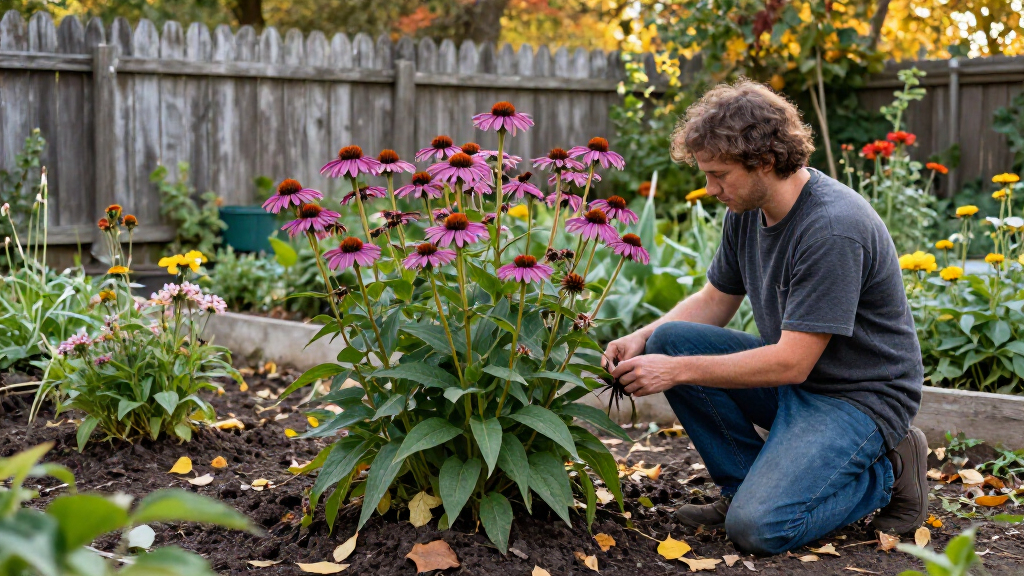
The report says that healthy coneflower seedheads can remain on the stems after the petals fade. Their seeds may provide food through fall and winter for goldfinches and other seed-eating birds. Standing stems can also add structure to the garden, including when frost settles on them. The report advises against deadheading every faded flower simply to make beds look tidy.
Gardeners should distinguish healthy stems from foliage affected by disease. The article identifies powdery mildew as a problem that may become more apparent late in the growing season, particularly after humid conditions or where air circulation is poor. It recommends cutting out badly affected material with clean pruning tools and disposing of it appropriately rather than putting it in a home compost pile. It does not advise removing all foliage just because some leaves look tired.
For winter preparation, check that water drains away rather than pooling around the crowns, and consider watering if the soil is dry before it freezes. A light layer of mulch can help moderate soil temperatures, but should not be piled over the crown. The report recommends leaving the main cutback until spring, when new growth begins and old stems can be removed without taking away seedheads too early.
Seedheads Feed Winter Birds
The guidance offers a practical way to support birds while maintaining a perennial garden. Leaving some healthy seedheads means coneflowers can continue to serve a purpose after their summer flowers have faded. American goldfinches are described in the report as particularly fond of the seeds; other seed-eating birds may visit depending on the garden’s location and plant varieties.
The advice also avoids treating a neat, fully cut-back bed as the only sign of good care. Retaining healthy stems can provide winter texture and potential food, while selective removal of diseased foliage addresses a separate concern. Gardeners can make that distinction plant by plant rather than cutting every coneflower down in October.
These are seasonal recommendations, not a guarantee of more blooms next year. The report frames them as ways to help established plants get through winter and keep the garden useful to wildlife. Bloom performance can also depend on local growing conditions and the plant variety, details the article does not quantify.
Products Worth Considering

Husqvarna Automower 550 Robotic Lawn Mower

Weber Lumin Portable Electric Grill, Black

Orbit B-hyve XR 8-Zone Indoor/Outdoor Smart Sprinkler Controller
As an affiliate, we earn on qualifying purchases.
Why Spring Cleanup Can Wait
Coneflowers, or Echinacea species, are perennial plants that bloom in summer. By October, their petals may have faded and their central cones dried, but the report says those cones can still contain seeds. That changes the usual fall cleanup calculation: removing every spent flower may also remove a potential food source for birds.
The report notes that not all cultivars produce the same amount of viable seed. Some highly bred double-flowered varieties may provide less for birds than simpler, single-flowered forms. It names native purple coneflower, Echinacea purpurea, as one option for gardeners prioritizing wildlife, while not making a specific comparison of seed yields among varieties.
Established coneflowers are described as hardy perennials that generally do not need extensive winter protection. The article’s approach is to retain healthy above-ground growth, remove seriously diseased material and avoid unnecessary disturbance. Cutting stems back in spring, once new growth appears, keeps the autumn and winter seedheads available for longer.
“leave the healthy seedheads standing”
— Gardening Know How report
Local Conditions Shape Results
The recommendations do not specify a single date for cleanup, watering or mulching; those decisions depend on local weather, soil drainage and plant condition. The report also does not quantify how much bird food a particular planting will provide or how much these steps may affect next year’s bloom count.
Bird visits are not guaranteed. The article says goldfinches favor coneflower seeds, while other birds may appear depending on region and the species in the garden. It also cautions that cultivars vary in seed production, so gardeners cannot assume every coneflower offers the same wildlife benefit.
The report provides general guidance rather than a diagnosis for individual plants. If foliage symptoms are unclear or widespread, it does not identify the disease or prescribe a treatment beyond removing badly affected material and disposing of it appropriately.
Recheck Plants as Growth Returns
Through winter, gardeners can leave healthy stems and seedheads in place while watching that water does not collect around plant crowns. If conditions remain unusually dry before the ground freezes, the report suggests watering the plants. Any mulch should be kept light and clear of the crowns.
In spring, when new growth emerges, cut back the old stems before they obstruct new growth or garden work. At that point, gardeners can also assess how the plants came through winter and remove remaining dead material. The report gives no fixed spring date, reflecting differences in climate and seasonal conditions.
Key Questions
Should I cut coneflowers down in October?
Not all the way. The report recommends leaving healthy stems and seedheads standing through winter, then doing the main cutback in spring as new growth appears.
Which coneflower parts should I remove?
Remove foliage that is badly affected by disease, such as heavy powdery mildew, using clean pruning tools. The report says to dispose of it appropriately rather than adding it to a home compost pile; healthy stems can stay.
Do coneflower seedheads help birds?
The report says dried cones contain seeds that birds can forage on, and that American goldfinches are particularly fond of them. Visits and food availability vary by location and cultivar.
Should I mulch coneflowers before winter?
A light layer of mulch may help moderate soil temperatures, but do not pile it directly over the crown. Check that the soil drains well and does not stay waterlogged.
Will these October steps guarantee better blooms next year?
No guarantee is given. The report presents the steps as practical winter care for established plants, but does not quantify their effect on next year’s bloom count.
Source: rss