

Looking for the best tomato seeds means balancing variety, growing conditions, and how you plan to use the harvest. The Sereniseed Certified Organic Tomato Seeds pack stands out as the best overall pick because it includes 10 different organic varieties, covering everything from slicers to cherries. For budget-conscious gardeners, the Tomato Seeds Variety Pack delivers 10 heirloom types at a very low cost per seed. And if you’re limited on space, the Tiny Tim Dwarf Cherry Tomato Seeds are a top choice for containers and small patios. The main tradeoff you’ll face is between seed diversity and specific purpose—whether you want a jack-of-all-trades collection or a dedicated sauce or beefsteak variety. Read on for the full breakdown and how each option compares.

Get garden gear delivered free with Prime
- Fast, free delivery on millions of items
- Prime Video, Amazon Music and more included
- Member-only deals all year
Complete the kit


Key Takeaways
- Variety packs dominate the category, but the best ones balance seed count with distinct tomato types—Sereniseed and Organo Republic lead because they cover multiple uses without overwhelming beginners.
- Seed count is a double-edged sword: packs with 300+ seeds are great for large gardens but wasteful for small spaces, where 45–75 seeds from Bush Early Girl or Tiny Tim make more sense.
- Organic certification adds value for many growers, but it doesn’t guarantee better flavor—Ponderosa Red and Sereniseed show that organic can coexist with heirloom quality, while non-organic packs like the Giant Beefsteak focus purely on size.
- Paste tomatoes are a separate category worth buying specifically for canning and sauces—the Roma and San Marzano pack outperforms general variety packs for this purpose.
- Early-maturing varieties like Bush Early Girl II are the only sensible choice for short-season climates, proving that days-to-harvest is as important as flavor when selecting seeds.
| Large Red Cherry Tomato Seeds, 500+ Seeds |  | Best for a High-Volume Cherry Crop | Seed count: 500+ | Species: Solanum lycopersicum | Seed type: Open-pollinated heirloom | VIEW LATEST PRICE | See Our Full Breakdown |
| Organic Roma Tomato Seeds, Approximately 75 Seeds |  | Best for Organic Canning | Seed count: Approximately 75 | Tomato type: Roma | Growth habit: Determinate | VIEW LATEST PRICE | See Our Full Breakdown |
| Sereniseed Certified Organic Tomato Seeds, 10 Varieties |  | Best for Variety and Trial Planting | Pack size: 10 varieties | Named varieties: Cherokee Purple, San Marzano, Yellow Pear, Chocolate Cherry, Green Zebra, Black Krim, Brandywine Pink, Virginia Sweets, Rosso Sicilian, Amana Orange | Certification: USDA Certified Organic by Oregon Tilth | VIEW LATEST PRICE | See Our Full Breakdown |
| Bush Early Girl II Tomato Seeds, 45 Seeds |  | Best for an Earlier Compact Slicer Crop | Seed count: 45 | Plant type: Determinate tomato | Days to maturity: 54 | VIEW LATEST PRICE | See Our Full Breakdown |
| Tiny Tim Dwarf Cherry Tomato Seeds, 1 Pack |  | Best for Windowsills and Tiny Spaces | Pack count: 1 | Plant type: Determinate dwarf cherry tomato | Species and cultivar: Solanum lycopersicum ‘Tiny Tim’ | VIEW LATEST PRICE | See Our Full Breakdown |
| Organo Republic 14-Variety Tomato and Tomatillo Heirloom Seed Kit |  | Best for Maximum Variety | Varieties: 14 tomato and tomatillo varieties | Seed quantity: 1,025+ | Seed type: Non-GMO, heirloom, non-hybrid | VIEW LATEST PRICE | See Our Full Breakdown |
| 325 Giant Beefsteak Tomatoes Heirloom Vegetable Seeds, Solanum Lycopersicum |  | Best for Large Slicing Tomatoes | Seed quantity: 325 seeds | Plant type: Giant beefsteak tomato | Seed traits: Heirloom, non-GMO | VIEW LATEST PRICE | See Our Full Breakdown |
| Ponderosa Red Beefsteak Organic Tomato Seeds, Approx. 75 Seeds |  | Best Organic Beefsteak Pick | Variety: Ponderosa Red Beefsteak | Seed count: Approximately 75 | Weight: 4.54 g | VIEW LATEST PRICE | See Our Full Breakdown |
| Sow Right Seeds Cherry Tomato Seed Collection, 6 Varieties |  | Best for Colorful Cherry Tomatoes | Varieties: Black Cherry, Large Red Cherry, White Cherry, Yellow Pear, Orange Cherry, and Bi-Color Cherry | Packet count: 6 | Seeds per packet: About 45 | VIEW LATEST PRICE | See Our Full Breakdown |
| Sow Right Seeds Classic Tomato Seed Collection | 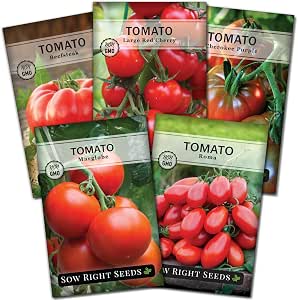 | Best Balanced Starter Collection | Varieties: Cherokee Purple, Beefsteak, Large Red Cherry, Marglobe, and Roma | Packet count: 5 | Seed type: Non-GMO heirloom | VIEW LATEST PRICE | See Our Full Breakdown |
| Heirloom Rainbow Mix Tomato Seeds, 1 Pack |  | Best for Colorful Harvests | Plant type: Tomato seeds (Solanum lycopersicum) | Seed type: Open-pollinated heirloom, non-GMO | Seed treatment: Untreated | VIEW LATEST PRICE | See Our Full Breakdown |
| Tomato Seeds Variety Pack, 10 Heirloom Non-GMO Varieties |  | Best All-Around Variety Pack | Varieties: Ace 55, Aunt Ruby’s Green, Beefsteak, Black Krim, Hillbilly, Mortgage Lifter, Red Brandywine, Red Cherry, Roma, Yellow Pear | Seed count: 10 varieties | Seed treatment: Untreated | VIEW LATEST PRICE | See Our Full Breakdown |
| Roma and San Marzano Paste Tomato Seed Variety Pack |  | Best Focused Paste Duo | Varieties: Roma and San Marzano | Pack count: 2 | Plant type: Tomato seeds | VIEW LATEST PRICE | See Our Full Breakdown |
| RDR Seeds Heirloom Roma VF Tomato Seeds, 300+ Count |  | Best for Disease Resistance and Volume | Seed count: 300+ | Plant type: Determinate Roma VF tomato | Seed type: Heirloom, open-pollinated, non-GMO | VIEW LATEST PRICE | See Our Full Breakdown |
| Sow Right Seeds Paste Tomato Seed Collection |  | Best Four-Variety Paste Collection | Seed varieties: Roma, Amish Paste, Striped Paste, San Marzano | Plant species: Solanum lycopersicum | Growth types: Determinate and indeterminate | VIEW LATEST PRICE | See Our Full Breakdown |
| tomato seed | Seed type | Sunlight | Expected plant height |
|---|---|---|---|
| Large Red Cherry Tomato Seeds | Open-pollinated heirloom | Full sun | 18 inches |
| Organic Roma Tomato Seeds | Organic, non-GMO, open-pollinated heirloom | Full sun | — |
| Sereniseed Certified Organic T | Non-GMO, open-pollinated | Full sun | 48 inches |
| Bush Early Girl II Tomato Seed | — | Full sun | — |
| Tiny Tim Dwarf Cherry Tomato S | — | Full sun | 12–18 inches |
| Organo Republic 14-Variety Tom | Non-GMO, heirloom, non-hybrid | — | — |
| 325 Giant Beefsteak Tomatoes H | — | Full sun | 80 inches |
| Ponderosa Red Beefsteak Organi | — | — | — |
| Sow Right Seeds Cherry Tomato | Non-GMO, heirloom | Full sun | — |
| Sow Right Seeds Classic Tomato | Non-GMO heirloom | Full sun | — |
| Heirloom Rainbow Mix Tomato Se | Open-pollinated heirloom, non-GMO | Full sun | 48 inches |
| Tomato Seeds Variety Pack | Heirloom, non-GMO, open-pollinated | Full sun | 48 inches |
| Roma and San Marzano Paste Tom | Heirloom, open-pollinated, non-GMO, untreated | — | 7 feet |
| RDR Seeds Heirloom Roma VF Tom | Heirloom, open-pollinated, non-GMO | — | 72 inches |
| Sow Right Seeds Paste Tomato S | Non-GMO heirloom | — | — |
More Details on Our Top Picks
Large Red Cherry Tomato Seeds, 500+ Seeds
For gardeners who want plenty of small tomatoes to pick, 500+ open-pollinated seeds make this the high-volume cherry option in this group. The glossy red fruit is described as suitable for fresh dishes, grilling, and drying, so the harvest has several possible uses. Compared with Tiny Tim Dwarf Cherry Tomato Seeds, this packet offers far more seeds and broader stated growing settings, while Tiny Tim is the clearer pick for a genuinely compact plant and small containers.
The tradeoff is that the listing gives less detail about maturity and plant habit than Bush Early Girl II, whose height and days to maturity are specified. This seed’s 18-inch expected height and full-sun requirement still offer useful planning cues, but buyers should not assume the listed count guarantees a particular harvest. An online growing guide is included.
Pros:- 500+ seeds provide capacity for a larger planting than Tiny Tim’s one-pack listing.
- Open-pollinated, heirloom, untreated, and non-GMO seed.
- Glossy red cherry tomatoes are described for fresh use, grilling, and drying.
- Listed for gardens, greenhouses, patios, and containers, with an online growing guide.
Cons:- Requires full sun, which limits suitability for shaded patios and indoor spots.
- Loam is the specified soil type, with no alternative soil guidance supplied.
- Maturity timing and expected yield are not provided.
Best for: Gardeners who want to sow many red cherry tomato plants across a sunny garden, greenhouse, patio, or containers.
Not ideal for: Growers who need a named dwarf variety or detailed maturity and yield information before planting.
- Seed count:500+
- Species:Solanum lycopersicum
- Seed type:Open-pollinated heirloom
- Treatment and GMO status:Untreated; non-GMO
- Growing locations:Indoor and outdoor
- Sunlight:Full sun
- Expected plant height:18 inches
- USDA hardiness zones:3–11
- Soil type:Loam
Our verdict“Choose this packet for a large, versatile cherry-tomato sowing; choose Tiny Tim instead when compact plant size matters more than seed quantity.”
Organic Roma Tomato Seeds, Approximately 75 Seeds
These seeds are the most focused choice here for cooks who want Roma tomatoes for paste, sauces, and canning. The USDA-certified organic, open-pollinated heirloom seed grows determinate plants, and the listed 2–3-week ripening window points to a more concentrated harvest than an unspecified, extended picking season. That timing can help when a batch of tomatoes is more useful than a few fruits at a time.
Compared with the Large Red Cherry Tomato Seeds, this is a cooking-oriented option rather than a snack-and-grill cherry crop; it also supplies about 75 seeds instead of 500+. The tradeoff is practical: these outdoor vines need support, full sun, and warm soil for transplanting. Buyers hoping for a low-support container plant should look instead at Tiny Tim, while gardeners ready to stake and process a crop get a clearer purpose-built choice here.
Pros:- USDA-certified organic, non-GMO, open-pollinated heirloom seeds.
- Determinate growth and a stated 2–3-week ripening period suit a concentrated harvest.
- Roma fruit is suited to cooking, canning, salads, and paste.
- Approximately 75 seeds give a defined packet size.
Cons:- Vines require a trellis, fence, or other support.
- Outdoor planting depends on full sun and warm soil after starting indoors.
- The smaller seed count is less suited to large-scale sowing than the 500+ cherry seed packet.
Best for: Organic-minded gardeners planning a sunny outdoor Roma crop for sauce, paste, or canning.
Not ideal for: Container growers seeking a compact, self-supporting plant or gardeners who want cherry tomatoes for frequent fresh picking.
- Seed count:Approximately 75
- Tomato type:Roma
- Growth habit:Determinate
- Seed type:Organic, non-GMO, open-pollinated heirloom
- Sunlight:Full sun
- Growing location:Outdoor
- Ripening period:2–3 weeks
- Fruit color:Red
- Item weight:4.54 g
Our verdict“Pick these organic Roma seeds if a supported outdoor crop for cooking and preserving is your priority.”
Sereniseed Certified Organic Tomato Seeds, 10 Varieties
Gardeners who want to compare tomato types in one season get the broadest named selection here: 10 organic, open-pollinated varieties, including Cherokee Purple, San Marzano, Yellow Pear, Green Zebra, and Brandywine Pink. That range spans different colors and culinary uses, unlike the single-purpose Organic Roma Tomato Seeds, which focus on a concentrated plum-tomato harvest. The included guide and packet-level tips also give this collection more variety-specific direction than a basic single-variety packet.
The tradeoff is that ten varieties ask for more labeling, bed planning, and attention than a single crop. The listed plants can reach 48 inches, and they need full sun and regular watering, so this is not the simplest fit for a small balcony or a gardener seeking one predictable harvest. Choose it for exploration and diversity; choose Roma seeds when canning volume is the main goal.
Pros:- Ten named varieties offer a wider selection than any single-variety packet in this batch.
- USDA Certified Organic by Oregon Tilth, non-GMO, open-pollinated, and untreated.
- Includes a growing guide plus tips printed on each packet.
- Selection includes cherry, paste, striped, and larger heirloom types.
Cons:- Growing and labeling ten varieties takes more space and organization than a single-variety planting.
- Full sun and regular watering are required.
- Listed plant height of 48 inches may not suit compact container setups.
Best for: Gardeners with room to label and grow several tomato types who want organic seed and a mix of colors and uses.
Not ideal for: Small-space growers or buyers who want one straightforward variety with a specific harvest purpose, such as paste tomatoes.
- Pack size:10 varieties
- Named varieties:Cherokee Purple, San Marzano, Yellow Pear, Chocolate Cherry, Green Zebra, Black Krim, Brandywine Pink, Virginia Sweets, Rosso Sicilian, Amana Orange
- Certification:USDA Certified Organic by Oregon Tilth
- Seed type:Non-GMO, open-pollinated
- Seed treatment:Untreated
- Sunlight:Full sun
- Expected plant height:48 inches
- Soil and watering:Loam; regular watering
- Growing location:Indoor and outdoor
Our verdict“Choose this collection to explore diverse organic heirloom tomatoes, but pick Organic Roma seeds for a simpler, canning-focused crop.”
Bush Early Girl II Tomato Seeds, 45 Seeds
Bush Early Girl II is the most timing-specific choice in this group: it lists maturity at about 54 days and describes firm, meaty red tomatoes on compact, self-supporting plants. At 24–36 inches, it is larger than Tiny Tim, but it offers 6–7 oz fruit rather than Tiny Tim’s small cherry clusters. That makes it a better fit for gardeners who want a more substantial tomato from a manageable bush, including for salsa, salads, and cooking.
The listing also names resistance to VFFN and TMV, a useful point of differentiation from the other options here, though it does not remove the need for attentive care. Full sun and regular watering remain necessary, and the spring planting schedule may limit outdoor timing. Its 45-seed packet is more modest than the 500+ cherry seeds, but the defined plant size and maturity make planning easier.
Pros:- Listed maturity of about 54 days helps with crop planning.
- Compact, self-supporting plants are suited to containers, patios, and small gardens.
- Produces firm 6–7 oz tomatoes for salsa, salads, and cooking.
- Lists resistance to VFFN and TMV.
Cons:- Requires full sun and regular watering.
- Spring planting may constrain outdoor sowing schedules.
- A 45-seed packet offers fewer seeds than the 500+ cherry option.
Best for: Gardeners with a sunny patio or small plot who want a compact, self-supporting plant and medium-sized red tomatoes on a stated schedule.
Not ideal for: Growers seeking dwarf cherry tomatoes, a large seed quantity, or a variety with organic certification.
- Seed count:45
- Plant type:Determinate tomato
- Days to maturity:54
- Fruit size:6–7 oz
- Plant height:24–36 inches
- Disease resistance:VFFN, TMV
- Sunlight:Full sun
- Germination rate:85%
- Watering:Regular
Our verdict“Choose Bush Early Girl II for a compact, relatively early crop of larger tomatoes; choose Tiny Tim when the smallest plant and cherry fruit matter more.”
Tiny Tim Dwarf Cherry Tomato Seeds, 1 Pack
Tiny Tim is the most space-conscious pick in this batch, with a dwarf determinate habit and a listed height of just 12–18 inches. It suits containers, patios, sunny windowsills, and hydroponic gardens, where the larger 24–36-inch Bush Early Girl II may take up more room. Its clusters of bright red cherry tomatoes also make it a better match for small fresh servings than that variety’s 6–7 oz fruit.
The tradeoff is limited scale: the listing is for one pack and does not state a seed count, maturity date, or yield. Tiny Tim still needs full sun and regular watering, and the supplied guidance calls for starting indoors 10–12 weeks before transplanting. That planning requirement can be a nuisance for gardeners who want direct, simple outdoor sowing. For a small sunny growing spot, though, its compact size is the clear advantage over the other picks.
Pros:- Dwarf 12–18-inch height fits small containers and sunny windowsills.
- Produces clusters of bright red cherry tomatoes.
- Suitable for indoor or outdoor planting, including hydroponic gardens.
- Heirloom, non-GMO, open-pollinated, and untreated.
Cons:- Listed as one pack, with no specific seed count supplied.
- Requires full sun and regular watering, which can be difficult to provide indoors.
- Starting indoors 10–12 weeks before transplanting calls for advance planning.
Best for: Balcony, windowsill, and hydroponic growers who have strong sunlight and want a dwarf cherry tomato plant.
Not ideal for: Gardeners who need a large harvest, a stated seed quantity, or larger tomatoes for canning and cooking.
- Pack count:1
- Plant type:Determinate dwarf cherry tomato
- Species and cultivar:Solanum lycopersicum ‘Tiny Tim’
- Expected plant height:12–18 inches
- Growing location:Indoor or outdoor
- Sunlight:Full sun
- Seed features:Heirloom, non-GMO, open-pollinated
- Seed treatment:Untreated
- USDA hardiness zones:4–11
Our verdict“Choose Tiny Tim when growing space is scarce and cherry tomatoes are the goal; select Bush Early Girl II for larger fruit and a stated maturity schedule.”
Organo Republic 14-Variety Tomato and Tomatillo Heirloom Seed Kit
For gardeners who want to grow several kinds of tomatoes rather than commit to one, this kit offers the broadest mix in this group: 14 tomato and tomatillo varieties and more than 1,025 seeds. The range spans beefsteak, cherry, pear, and paste types, with two tomatillos for gardeners who want something beyond tomatoes. Compared with the Sow Right Seeds Classic Tomato Seed Collection, it supplies more varieties, a larger stated seed count, and five basic tools, but the classic collection keeps its focus on familiar tomato picks without adding tomatillos. Individual packets in a resealable waterproof bag help keep the assortment organized. The tradeoff is that managing so many varieties takes labeling, space, and attention to each plant’s needs; the stated germination rate is not a guarantee for every seed.
Pros:- Includes 14 tomato and tomatillo varieties with 1,025+ seeds.
- Individual packets are stored in a resealable waterproof bag.
- Five included tools cover basic seedling and garden tasks.
- QR codes link to growing guides and culinary books.
Cons:- A large assortment requires careful labeling and more garden space than a single-variety packet.
- The stated storage life of up to two years depends on cool, dry storage.
- Tomatillos make the kit less focused for buyers seeking only tomato seeds.
Best for: Gardeners planning a varied plot who want multiple tomato types, tomatillos, and starter tools in one kit.
Not ideal for: Growers with limited space or a preference for one dependable tomato variety; the assortment may be more seed and variety management than they need.
- Varieties:14 tomato and tomatillo varieties
- Seed quantity:1,025+
- Seed type:Non-GMO, heirloom, non-hybrid
- Packaging:14 individual craft packets in a waterproof resealable bag
- Included tools:Leaf clipper, tweezers, seed dibber, weeding fork, and widger
- Growing environment:Indoor and outdoor
- Germination rate:90%+ stated
- Storage life:Up to 2 years
Our verdict“Choose this kit if variety and included tools matter more than a simple, tomato-only seed selection.”
325 Giant Beefsteak Tomatoes Heirloom Vegetable Seeds, Solanum Lycopersicum
This packet is aimed at gardeners who want a single, classic payoff: large red beefsteak tomatoes for sandwiches, burgers, and thick slices. The listing gives a count of 325 seeds and describes germination in 7–10 days under its stated planting conditions, while the 80-inch expected height signals a plant that needs room and support. Compared with Ponderosa Red Beefsteak Organic Tomato Seeds, this option offers a much larger stated seed count, but Ponderosa adds USDA Organic certification and a named variety. This listing does not identify a specific beefsteak cultivar, so it is less suited to gardeners choosing by varietal traits. Indeterminate vines, constant watering needs, and staking or caging also make it a bigger commitment than compact or cherry options.
Pros:- Stated 325-seed count supports a larger planting than small-count packets.
- Beefsteak type is suited to substantial slices for sandwiches and burgers.
- Growing guide is included on the seed packet.
- Full-sun planting guidance and a stated 7–10-day germination window offer a clear starting point.
Cons:- Indeterminate plants can reach a stated 80 inches and need staking or cages.
- Constant watering and full sun make it less forgiving in dry or shaded gardens.
- The listing does not name a specific beefsteak cultivar or provide a detailed seed specification set.
Best for: Gardeners with sunny beds, cages or stakes, and enough room to grow a larger crop of classic slicing tomatoes.
Not ideal for: Container growers or anyone seeking a compact plant, a named cultivar, or organic certification.
- Seed quantity:325 seeds
- Plant type:Giant beefsteak tomato
- Seed traits:Heirloom, non-GMO
- Expected plant height:80 inches
- Sunlight:Full sun
- Soil:Sandy soil
- Watering:Constant watering
- Germination:7–10 days, as described
- Hardiness zones:2–11
Our verdict“Pick this for a high-count beefsteak planting if you have the space and support structures for tall, thirsty vines.”
Ponderosa Red Beefsteak Organic Tomato Seeds, Approx. 75 Seeds
USDA Organic certification is the clearest reason to choose this packet over the other beefsteak option here. It contains about 75 open-pollinated, non-GMO seeds of a named variety, Ponderosa Red, described as producing large, sweet, juicy fruit for slicing and cooking. Compared with the 325 Giant Beefsteak Tomatoes packet, this gives you a smaller quantity but a more specific variety and organic certification; it is the more deliberate pick for gardeners who value those traits over planting volume. The seed count may be limiting for a large plot, and the plants need full sun, regular watering, and support for their vines. Start indoors six to eight weeks before the last frost, so this is less convenient for buyers who want a low-planning direct-sowing option.
Pros:- USDA Organic-certified, non-GMO, open-pollinated heirloom seeds.
- Named Ponderosa Red variety is described as producing large fruit for slicing and cooking.
- Packet includes growing instructions and plant facts.
- Suitable for indoor and outdoor growing.
Cons:- About 75 seeds provide less planting volume than the 325-seed beefsteak option.
- Vining plants need a cage, stake, or other support.
- Requires full sun, regular watering, and indoor starting before the last frost for the suggested schedule.
Best for: Gardeners seeking certified-organic, open-pollinated beefsteak seeds for a modest planting of slicing tomatoes.
Not ideal for: Large-scale growers who need a high seed count, or gardeners unable to provide sunny conditions and vine support.
- Variety:Ponderosa Red Beefsteak
- Seed count:Approximately 75
- Weight:4.54 g
- Seed traits:USDA Organic, non-GMO, heirloom, open-pollinated
- Growing conditions:Full sun and regular watering
- Planting schedule:Start indoors 6–8 weeks before the last frost
- Growing season:Summer to fall
- Hardiness zones:2–11
- Origin:USA
Our verdict“Choose Ponderosa Red if organic certification and a named beefsteak variety matter more than getting the largest seed count.”
Sow Right Seeds Cherry Tomato Seed Collection, 6 Varieties
For a garden built around small tomatoes and color, this collection offers six cherry varieties, including black, white, yellow pear, orange, red, and bi-color types. Each packet contains about 45 seeds, so the assortment gives gardeners room to compare several colors without committing to the larger collection found in the Organo Republic 14-Variety Tomato and Tomatillo Heirloom Seed Kit. Organo Republic brings more overall variety and tools; Sow Right keeps the selection centered on cherry tomatoes, which makes it easier to plan for snack-sized harvests. The tradeoff is limited depth per variety: about 45 seeds in each packet may not suit a large planting. These seeds also call for full sun and regular watering, and the listing does not specify certification beyond non-GMO and heirloom.
Pros:- Six distinct cherry types provide a range of colors and shapes.
- About 45 seeds per packet allow separate plantings of each variety.
- Non-GMO heirloom seed selection.
- Growing instructions are included with each packet.
Cons:- About 45 seeds per variety may be too few for extensive planting.
- The collection focuses on cherry tomatoes rather than slicing or paste types.
- Full sun and regular watering are required by the stated growing guidance.
Best for: Gardeners who want a small, colorful selection of cherry tomatoes for fresh eating and side-by-side variety growing.
Not ideal for: Growers focused on beefsteak or paste tomatoes, or those who need a large number of seeds of one cherry variety.
- Varieties:Black Cherry, Large Red Cherry, White Cherry, Yellow Pear, Orange Cherry, and Bi-Color Cherry
- Packet count:6
- Seeds per packet:About 45
- Minimum packet weight:100 mg
- Seed type:Non-GMO, heirloom
- Growing environment:Indoor and outdoor
- Sunlight:Full sun
- Planting period:Spring to summer
Our verdict“Choose this collection for colorful cherry-tomato variety, not for large seed quantities or full-size slicing tomatoes.”
Sow Right Seeds Classic Tomato Seed Collection
This five-packet set balances several familiar tomato uses: Cherokee Purple and Beefsteak for larger fruit, Large Red Cherry for smaller harvests, and Marglobe and Roma for other garden and kitchen needs. That breadth makes it a more mixed-purpose choice than the Sow Right Seeds Cherry Tomato Seed Collection, which stays focused on six cherry types. It is also simpler than the Organo Republic 14-Variety Tomato and Tomatillo Heirloom Seed Kit, with fewer varieties to track and no extra tools to sort through. The tradeoff is that the listing does not provide a seed count per packet, making it harder to plan planting volume. All varieties are guided toward spring-to-summer planting, full sun, and regular watering, so this is not a low-light or low-maintenance choice.
Pros:- Five varieties span cherry, beefsteak, Roma, and other classic tomato types.
- Non-GMO heirloom seeds.
- Growing instructions are included on each packet.
- Suitable for indoor and outdoor growing.
Cons:- Seed quantity per packet is not specified, limiting planting estimates.
- Full sun and regular watering are part of the stated care needs.
- Spring-to-summer planting guidance offers less flexibility for off-season planting.
Best for: New or intermediate gardeners who want a manageable mix of classic tomato types for different garden and cooking uses.
Not ideal for: Buyers who need a stated high seed count, organic certification, or a collection focused solely on cherry or paste tomatoes.
- Varieties:Cherokee Purple, Beefsteak, Large Red Cherry, Marglobe, and Roma
- Packet count:5
- Seed type:Non-GMO heirloom
- Growing environment:Indoor and outdoor
- Sunlight:Full sun
- Planting period:Spring to summer
- Watering:Regular watering
- Item weight:17.87 g
Our verdict“Pick this collection for a manageable mix of classic tomato types when a precise seed count is not a priority.”
Heirloom Rainbow Mix Tomato Seeds, 1 Pack
If your goal is a visually striking garden that produces tomatoes in red, yellow, orange, pink, and green, this single pack delivers a true rainbow without forcing you to buy five separate packets. Compared with the Tomato Seeds Variety Pack, which names each of its 10 heirlooms, this mix keeps things simpler but sacrifices variety-specific labeling — you won’t know exactly which cultivar you’re growing until fruit appears. That’s a fair trade for gardeners who prioritize visual appeal over precise variety selection. The open-pollinated, untreated seeds can be saved year after year, and the included planting and seed-saving instructions make it approachable for first-timers. Just be ready for the standard tomato commitment: full sun, regular watering, indoor starting 10–12 weeks before transplant, and staking once plants reach 48 inches.Pros:- Produces tomatoes in a range of colors, shapes, and sizes
- Open-pollinated seeds can be saved for future planting
- Suitable for gardens, greenhouses, and patio containers
- Includes planting and seed-saving instructions
Cons:- Requires full sun and regular watering
- Seedlings need indoor starting 10–12 weeks before transplanting and support as they grow
- No variety-specific identification for each plant
Best for: Gardeners who want a diverse, colorful tomato harvest from a single packet and enjoy the surprise of unnamed heirloom varieties.
Not ideal for: Canning or sauce makers who need specific, named varieties with predictable ripening times and consistent fruit size.
- Plant type:Tomato seeds (Solanum lycopersicum)
- Seed type:Open-pollinated heirloom, non-GMO
- Seed treatment:Untreated
- Color:Multicolor
- Expected plant height:48 inches
- Sunlight:Full sun
- USDA hardiness zone:3–11
- Soil type:Loam
- Watering:Regular
Our verdict“This is the pick for gardeners who crave a colorful, varied harvest from one simple packet and don’t mind skipping variety labels.”
Tomato Seeds Variety Pack, 10 Heirloom Non-GMO Varieties
This 10-variety collection is the broadest single purchase in this roundup, covering cherry, pear, slicer, and paste tomatoes in red, yellow, purple, and green. Where the Heirloom Rainbow Mix gives you a color medley without named cultivars, this pack names every variety — from Ace 55 to Yellow Pear — so you can plan your garden with precision. The tradeoff is space: ten different plants need more room and more staking than a single mix, and some varieties (like Beefsteak) are more demanding than others. The untreated, open-pollinated seeds come with variety-specific growing and seed-saving guidance, which makes this a strong educational choice for gardeners who want to learn the differences between heirloom types. It’s also suitable for indoor or outdoor starting, though full sun and regular watering are non-negotiable.Pros:- Includes 10 distinct heirloom varieties for fresh eating, slicing, canning, and sauces
- Untreated, non-GMO, open-pollinated seeds
- Packets include variety-specific planting and seed-saving guidance
- Suitable for indoor or outdoor growing
Cons:- Plants benefit from staking or cages
- Requires full sun and regular watering
- Ten varieties may overwhelm beginners or small gardens
Best for: Gardeners with ample space who want to sample a wide range of heirloom tomato types — from cherries to paste — in one season.
Not ideal for: Those with limited garden space or who need a uniform crop for canning, since ripening times vary across the 10 varieties.
- Varieties:Ace 55, Aunt Ruby’s Green, Beefsteak, Black Krim, Hillbilly, Mortgage Lifter, Red Brandywine, Red Cherry, Roma, Yellow Pear
- Seed count:10 varieties
- Seed treatment:Untreated
- Seed type:Heirloom, non-GMO, open-pollinated
- Indoor/outdoor use:Indoor and outdoor
- Sunlight:Full sun
- Expected plant height:48 inches
- USDA hardiness zones:3–11
- Watering:Regular
Our verdict“This is the best choice for gardeners who want to explore a broad spectrum of heirloom tomatoes and have the space to grow them all.”
Roma and San Marzano Paste Tomato Seed Variety Pack
When your garden’s mission is sauce, paste, and canning, this two-variety pack cuts through the noise. Roma and San Marzano are the classic paste tomatoes — thick, meaty, and low in moisture — and this pack delivers both in one purchase. Compared with the RDR Seeds Heirloom Roma VF, which offers only Roma and adds disease resistance, this duo gives you a second variety for slightly different flavor profiles, but without the wilt protection. The tradeoff is that you’ll need to manage two vigorous vines that can reach 7 feet, so sturdy cages or stakes are essential. The seeds are heirloom, open-pollinated, non-GMO, and untreated, and the variety-specific instructions help you get both plants started correctly. For a dedicated saucier, this is a focused, practical choice that doesn’t waste space on tomatoes you won’t use.Pros:- Thick, meaty tomatoes are suited to sauce, paste, salsa, and canning
- Productive plants are described as producing abundant fruit
- Seed packets include variety-specific planting and care instructions
- Heirloom, open-pollinated, non-GMO, and untreated seeds
Cons:- Vigorous vines need cages or stakes for support
- Plants need full sun and regular watering
- Only two varieties — no disease resistance offered
Best for: Home canners and sauce makers who want a dedicated pair of classic paste tomatoes without extra varieties.
Not ideal for: Gardeners who need disease resistance (like Verticillium or Fusarium wilt) or who also want cherry or slicing tomatoes.
- Varieties:Roma and San Marzano
- Pack count:2
- Plant type:Tomato seeds
- Seed type:Heirloom, open-pollinated, non-GMO, untreated
- Growing environment:Outdoor
- Sun exposure:Full sun
- Expected plant height:7 feet
- USDA hardiness zone:3–11
- Watering:Regular
Our verdict“This is the pick for canners who want a reliable Roma–San Marzano pairing and don’t need wilt resistance or extra variety.”
RDR Seeds Heirloom Roma VF Tomato Seeds, 300+ Count
This is the workhorse pick for gardeners who’ve battled wilt in the past or who need a large number of plants for big canning batches. With 300+ seeds, it dwarfs the Roma and San Marzano Paste Tomato Seed Variety Pack in quantity, but you’re getting only Roma — no San Marzano. What sets this apart is the bred-in resistance to Verticillium wilt and Fusarium wilt race 1, a feature neither the Heirloom Rainbow Mix nor the Sow Right Seeds Paste Tomato Collection offers. The tradeoff is that this resistance is not immunity, and the seeds demand careful indoor starting — 5–6 weeks before transplant, with germination at 75–85°F and consistent moisture. The compact determinate plants still reach 72 inches and need staking when loaded with fruit. For a high-volume, disease-conscious grower, this is the most practical single-variety option here.Pros:- Meaty red plum tomatoes with few seeds suit sauces, paste, salsa, canning, roasting, and fresh cooking
- Bred for resistance to Verticillium wilt and Fusarium wilt race 1
- Includes 300+ heirloom, non-GMO seeds and planting guidance
Cons:- Seeds require indoor starting and careful temperature, moisture, and light management
- Plants need full sun and support with a cage or stake when heavily loaded
- Disease resistance is not immunity
Best for: Gardeners with a history of soil-borne wilt diseases or who need many Roma plants for large-scale sauce and canning operations.
Not ideal for: Those who want multiple paste varieties or who lack the time to manage indoor seed starting and temperature control.
- Seed count:300+
- Plant type:Determinate Roma VF tomato
- Seed type:Heirloom, open-pollinated, non-GMO
- Disease resistance:Verticillium wilt and Fusarium wilt race 1
- Expected plant height:72 inches
- Indoor start:5–6 weeks before transplanting
- Germination temperature:75–85°F
- Spacing:24–48 inches
- Watering:Moderate; keep soil evenly moist
Our verdict“This is the best choice for gardeners who need high seed volume and built-in wilt resistance in a single reliable Roma variety.”
Sow Right Seeds Paste Tomato Seed Collection
For cooks who want a range of paste tomatoes in one order, this collection from Sow Right Seeds delivers four distinct heirlooms: Roma, Amish Paste, Striped Paste, and San Marzano. That’s a wider net than the Roma and San Marzano Paste Tomato Seed Variety Pack, which stops at two, and it includes both determinate (Roma, San Marzano) and indeterminate (Amish Paste, Striped Paste) growth habits, so you can stagger harvests. The tradeoff is that there’s no disease resistance information, unlike the RDR Seeds Heirloom Roma VF, and the indeterminate types will need more vertical space and consistent pruning. Each packet carries its own growing instructions, and the company’s solar-powered operation is a nice sustainability note. This is a solid middle ground for gardeners who want paste tomato diversity without buying ten separate packets.Pros:- Includes four paste tomato varieties
- Mix of determinate and indeterminate plants
- Suitable for fresh eating, sauces, and canning
- Growing instructions included on each packet
Cons:- Requires growing space and care to cultivate
- No disease resistance information provided
- Indeterminate varieties need extra staking and pruning
Best for: Home cooks and canners who want a curated assortment of four paste tomato varieties, mixing determinate and indeterminate growth habits.
Not ideal for: Gardeners who need wilt-resistant plants or who have very limited vertical space for indeterminate vines.
- Seed varieties:Roma, Amish Paste, Striped Paste, San Marzano
- Plant species:Solanum lycopersicum
- Growth types:Determinate and indeterminate
- Seed type:Non-GMO heirloom
- Color:Red
- Unit count:1
- Growing instructions:Included on each packet
Our verdict“This is the best pick for paste tomato enthusiasts who want variety across four heirloom types and can manage both growth habits.”

How We Picked
To rank these tomato seeds, I evaluated them on five criteria: variety diversity (does the pack offer different uses, colors, or growth habits), seed count relative to garden size, organic and heirloom status, intended purpose (sauce, fresh eating, container growing), and reliability based on known seed company reputation and germination expectations. I also considered how each product addresses common buyer pain points—like getting too many seeds for a small garden or buying a single variety when you want a mix.
The ranking logic prioritizes versatility first: a pack that serves multiple needs earns a higher spot than a single-purpose product, unless that single purpose is exceptionally well executed. That’s why Sereniseed’s 10-variety organic pack takes the top spot—it’s the most balanced for most gardeners. From there, I separated the field into distinct roles: best value, best premium, best for beginners, and so on, so you can quickly find the right match for your specific situation.
Factors to Consider When Choosing Best Tomato Seeds
Beyond the specific products, there are several broader decisions that will shape your tomato seed purchase. These factors apply whether you’re buying your first pack or your twentieth.
Heirloom vs. Hybrid Seeds
The biggest fork in the road is choosing between heirloom and hybrid seeds. Heirlooms, like those in the Organo Republic kit, are open-pollinated and offer unique flavors and colors, but they can be less disease-resistant and more variable in growth. Hybrids, like Bush Early Girl II, are bred for consistency, early harvest, and disease resistance—perfect for beginners or challenging climates. If you plan to save seeds for next year, heirlooms are the only option; hybrids won’t come true from saved seed. For most home gardeners, a mix of both is ideal: heirlooms for flavor, hybrids for reliability.
Seed Count vs. Your Garden Size
It’s tempting to buy the pack with 500 seeds because the cost per seed is low, but that’s a mistake if you only have space for six plants. Large packs like the Large Red Cherry (500+ seeds) or RDR Seeds Roma (300+) are only practical for market growers or gardeners with generous plots. For a typical backyard or container setup, 45–75 seeds is plenty—you’ll likely only start 10–20 plants. Oversized packs lead to wasted seed and clutter. Match the count to your actual growing space, not the perceived value.
Determinate vs. Indeterminate Growth
This distinction determines how your tomatoes ripen and how much support they need. Determinate (bush) varieties like Roma and Early Girl II grow to a fixed size and ripen all at once—ideal for canning or making sauce in a single batch. Indeterminate (vining) types like beefsteaks and most cherries keep growing and producing throughout the season, giving you a steady supply for fresh eating. If you want both, look for a variety pack that includes both types, like the Sereniseed or Sow Right collections. Ignoring this can leave you with a glut of fruit or a sparse harvest.
Organic vs. Conventional Seeds
Organic seeds are grown without synthetic pesticides and are often preferred by gardeners who want to keep their whole garden chemical-free. They also tend to be more expensive per seed, but packs like Sereniseed and Ponderosa Red show that organic doesn’t mean sacrificing variety or quality. Conventional seeds are perfectly fine if you’re not concerned about certification—they’re often cheaper and just as viable. The real question is whether you value the organic label for your own growing practices, not whether the seeds themselves taste different.
Variety Packs vs. Single Varieties
Variety packs give you a taste of many types, which is great for experimentation and for gardeners who want a little of everything. The Sow Right Cherry Collection, for example, lets you sample six cherry types. But if you already know you love a specific tomato, buying a single variety pack—like the 325 Giant Beefsteak—gives you more of what you want and avoids seeds you’ll never use. Variety packs also risk including types that aren’t suited to your climate. Consider how much space you have and whether you’d rather have a rainbow of tomatoes or a reliable workhorse.
Climate and Days to Maturity
Your growing season length is a hard constraint. If you have a short summer, you need early-maturing varieties—Bush Early Girl II ripens in about 50 days, making it a safe bet. Long-season varieties like giant beefsteaks can take 80–90 days and may never ripen in cool or short climates. Check the days-to-maturity on each pack and compare it to your average last frost date. Many variety packs don’t list this clearly, so you may need to research individual types before buying. When in doubt, choose a mix of early and mid-season varieties to hedge your bets.
Frequently Asked Questions
How many tomato seeds do I actually need for a home garden?
For a typical home garden with 4–8 plants, a pack of 40–75 seeds is more than enough. You’ll likely start two seeds per cell to account for germination failures, then thin to the strongest seedling. Even a 45-seed pack like Bush Early Girl II gives you a comfortable buffer. If you’re growing in containers, you might only need 2–3 plants, so a large pack is wasteful. Only buy packs with 300+ seeds if you’re planning to grow dozens of plants or share with friends.
Should I choose heirloom or hybrid tomato seeds?
That depends on your priorities. Heirloom seeds (like those in the Organo Republic kit) offer superior flavor, unique colors, and the ability to save seeds for next year, but they’re often less resistant to disease and can be slower to mature. Hybrid seeds (like Bush Early Girl II) are bred for reliability, early harvest, and uniform fruit, making them a safer choice for beginners or gardeners in challenging climates. Many experienced gardeners grow both—heirlooms for fresh eating, hybrids for canning and backup. If you only have room for one, consider your local disease pressure and how long your season is.
What’s the difference between determinate and indeterminate tomatoes, and why does it matter?
Determinate (bush) tomatoes grow to a fixed height and set fruit all at once, which is perfect for making sauce or canning because you get a big harvest in a short window. Indeterminate (vining) tomatoes keep growing and producing until frost, giving you a steady supply of fresh fruit over months. Determinate varieties like Roma need less staking and are easier to manage in small spaces. Indeterminate types like beefsteaks need tall cages or trellises. Your choice affects how you support the plants and when you’ll be harvesting, so match the type to your intended use.
Can I grow tomato seeds in containers, and which varieties work best?
Yes, many tomato varieties thrive in containers, but you need to choose compact or dwarf types. The Tiny Tim Dwarf Cherry is a classic choice for pots because it stays under a foot tall and produces sweet cherry tomatoes without needing much support. Bush Early Girl II also works well in larger containers (5 gallons or more) since it’s determinate and manageable. Avoid sprawling indeterminate varieties unless you have a very large pot and a sturdy trellis. When growing in containers, look for varieties labeled as ‘dwarf’ or ‘bush’ and always use a pot with drainage holes.
How long do tomato seeds stay viable, and how should I store them?
Tomato seeds typically remain viable for 4–6 years if stored properly. Keep them in a cool, dry place—an airtight container in the refrigerator works well. Many seed packs, like the Sow Right collections, come in resealable pouches that help maintain freshness. Avoid exposing seeds to heat or humidity, which reduces germination rates. If you’re saving seeds from your own plants, make sure they’re fully dry before storing. When in doubt, do a germination test: place a few seeds on a damp paper towel for a week and count how many sprout.
Conclusion
After comparing these 15 tomato seed options, the best choice depends on your garden’s size, your climate, and how you plan to use the harvest. For most gardeners, the Sereniseed Certified Organic Tomato Seeds is the best overall pick—it offers 10 organic varieties that cover a wide range of uses, from slicing to cherry to paste. If you’re on a budget, the Tomato Seeds Variety Pack gives you 10 heirloom types for pennies per seed, making it the best value. For those willing to spend more for a premium experience, the Organo Republic 14-Variety Kit adds tomatillos and a broader heirloom selection. Beginners should start with Bush Early Girl II for its reliability and early harvest, while container gardeners will love the Tiny Tim Dwarf Cherry. And if you’re specifically canning or making sauce, the Roma and San Marzano Paste Pack is the way to go. Match the pick to your needs, and you’ll be enjoying homegrown tomatoes in no time.