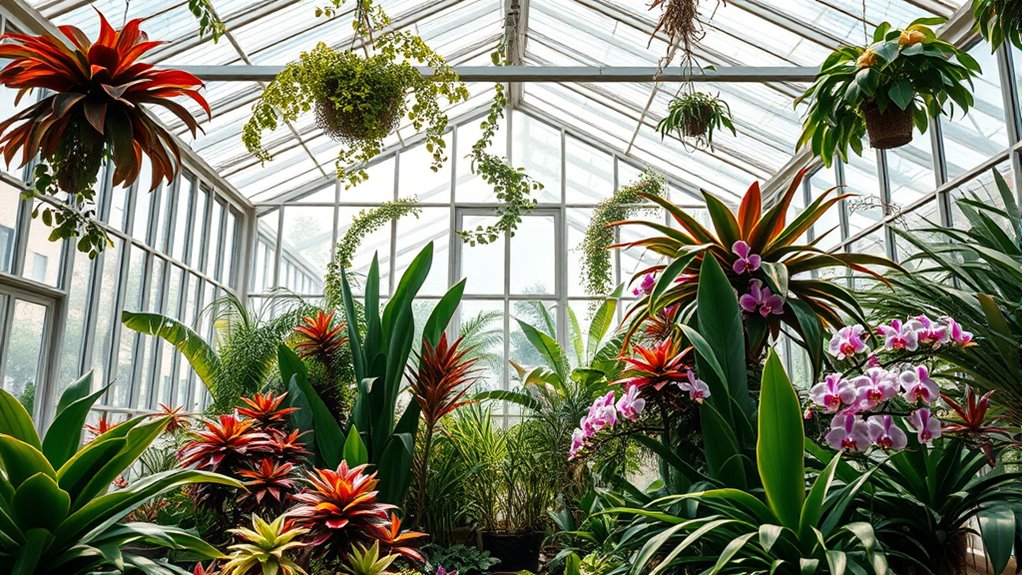

Understanding microclimates within a greenhouse helps you optimize plant growth by managing local humidity, temperature, and airflow. You’ll notice that plant density, watering, and ventilation create distinct zones with different conditions. Proper airflow prevents excess humidity and hot spots, while sensors can monitor fluctuations in real time. By adjusting vents and fans accordingly, you ensure a balanced environment for all plants. Keep exploring to discover how controlling microclimates enhances your greenhouse’s productivity and health.
Key Takeaways
- Microclimates in greenhouses are shaped by plant density, watering, airflow, and natural enclosure walls.
- Humidity levels vary across zones, affecting plant health and development.
- Proper airflow management with fans and vents prevents excess humidity and temperature fluctuations.
- Monitoring sensors help identify microclimates, enabling targeted adjustments for optimal conditions.
- Balancing humidity and airflow ensures uniform growth and minimizes risks like mold or plant stress.
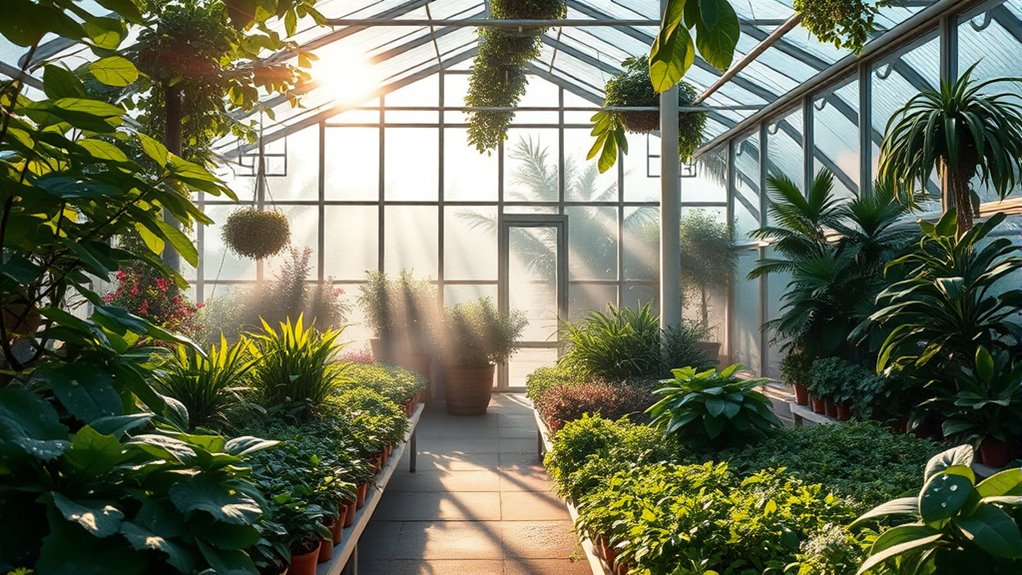
Greenhouses are designed to create ideal growing conditions, but within their walls, microclimates naturally form, each with distinct temperature, humidity, and light levels. These microclimates can profoundly influence how your plants grow, making it essential to understand their dynamics to maximize your greenhouse’s environment. One of the primary factors shaping microclimates is plant humidity. Different areas within your greenhouse may have varying humidity levels due to plant density, watering practices, and airflow patterns. For example, densely packed plants or those with high transpiration rates can increase local humidity, creating a more humid microclimate that promotes fungal diseases or mold if not properly managed. Conversely, drier zones may stress moisture-loving plants, so balancing humidity across different sections ensures all your plants thrive.
Microclimates in greenhouses are shaped by plant density, watering, and airflow, affecting humidity and plant health.
Airflow management plays a vital role in controlling these microclimates. Proper airflow prevents the buildup of excess humidity, distributes heat evenly, and reduces the risk of pests and diseases. When you manage airflow effectively, you create a more uniform environment that minimizes hot or humid spots. Using fans, vents, and even strategic placement of openings helps you direct air where it’s needed most. For instance, installing exhaust fans near densely planted areas can draw out excess moisture, lowering humidity levels and preventing fungal issues. Similarly, oscillating fans promote gentle air circulation, ensuring that all parts of your greenhouse receive fresh air, which helps regulate temperature and humidity.
Keep in mind that airflow isn’t just about moving air; it’s about controlling how air moves through different microclimates. If airflow is restricted in some areas, humidity might spike, and temperature could fluctuate unpredictably. By adjusting vents or installing fans, you can create consistent airflow patterns that prevent these problematic zones. Regularly monitoring humidity and temperature with sensors helps you identify microclimates that need intervention. You might find that certain plants require more airflow or humidity adjustments, so tailoring your airflow management to specific zones makes your entire greenhouse healthier.
In essence, understanding these microclimates involves paying attention to plant humidity levels and managing airflow thoughtfully. When you control humidity and airflow, you shape microclimates that support healthy plant growth and maximize yields. This proactive approach helps prevent issues before they develop, ensuring your greenhouse remains a productive, balanced environment. By staying vigilant and adjusting your systems as needed, you turn microclimates from potential problems into opportunities for ideal plant health.
Frequently Asked Questions
How Can I Identify Microclimates in My Greenhouse?
You can identify microclimates in your greenhouse by monitoring temperature and humidity with strategically placed sensors. Position sensors in different areas, especially near vents, windows, or shaded spots, to detect variations. Manage airflow effectively to prevent hot or cold spots, helping you see where microclimates form. Regularly observe plant health and environmental readings, adjusting sensor placement and airflow management to better understand and control microclimates for ideal growth.
Do Microclimates Affect Plant Disease Development?
A stitch in time saves nine, and this holds true for plant health. Microclimates affect disease development by creating areas with humidity fluctuations and airflow patterns that favor mold, mildew, and other pathogens. When certain zones trap moisture or lack proper airflow, diseases thrive. By monitoring these microclimates, you can adjust ventilation and humidity levels, preventing outbreaks before they spread and protecting your plants’ health effectively.
Can Microclimates Change Over Time?
Yes, microclimates can change over time due to climate variability and environmental fluctuations. You might notice shifts caused by weather patterns, seasonal changes, or even alterations in your greenhouse’s structure or ventilation. These factors influence temperature, humidity, and airflow, which in turn modify microclimates. Staying attentive to these changes helps you adapt your plant care strategies, ensuring ideal growing conditions despite environmental fluctuations.
What Tools Are Best for Measuring Microclimates?
You should use digital sensors with proper sensor placement to accurately measure microclimates. Place temperature, humidity, and light sensors strategically around your greenhouse to capture variations. Data logging tools automatically record readings over time, giving you detailed insights into microclimate changes. Combining well-placed sensors with data loggers helps you monitor fluctuations and make informed adjustments for ideal plant growth.
How Do Microclimates Influence Plant Growth Rates?
Ever wonder how microclimates affect your plants? They considerably influence plant growth rates by creating distinct microclimate zones with varying temperature, humidity, and light levels. These zones can accelerate or slow growth based on ideal conditions, directly impacting plant growth dynamics. By managing these microclimates, you can maximize growth, prevent stress, and improve yields. So, understanding and controlling microclimate zones is essential for healthy, thriving plants.
Conclusion
Just as Shakespeare’s tempest reveals the power of unseen forces, understanding your greenhouse’s microclimates uncover hidden potential. By paying close attention to these tiny worlds, you harness nature’s delicate balance, ensuring thriving plants and bountiful harvests. Remember, mastering microclimates isn’t just about control—it’s about respecting the intricate dance of life within your glass sanctuary. Embrace this knowledge, and watch your greenhouse flourish like a well-tuned orchestra, vibrant and full of life.