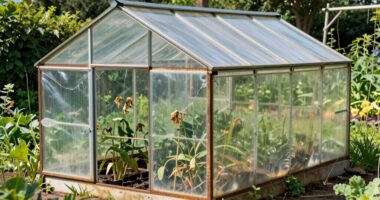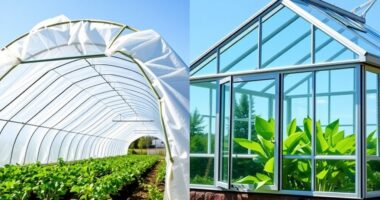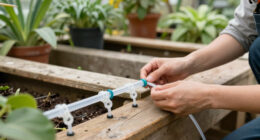

To choose the best foundation for your greenhouse, consider your soil type, climate, and greenhouse size. A durable concrete slab suits large structures in cold areas, while gravel beds work well for easy drainage and DIY setups. Guarantee the soil is stable and well-prepared to prevent shifting over time. By selecting the right foundation and stabilizing your soil, you’ll create a solid base that keeps your greenhouse secure and long-lasting as you explore more options.

Get garden gear delivered free with Prime
- Fast, free delivery on millions of items
- Prime Video, Amazon Music and more included
- Member-only deals all year
Key Takeaways
- Assess soil drainage, stability, and composition to determine the most compatible foundation material.
- Consider greenhouse size, climate, and budget when selecting between concrete, wood, or gravel bases.
- Ensure proper soil preparation by removing debris and improving drainage for a durable foundation.
- Choose insulation or frost protection options in colder climates to prevent shifting or settling.
- Prioritize long-term stability and environmental regulation to support plant health and greenhouse longevity.
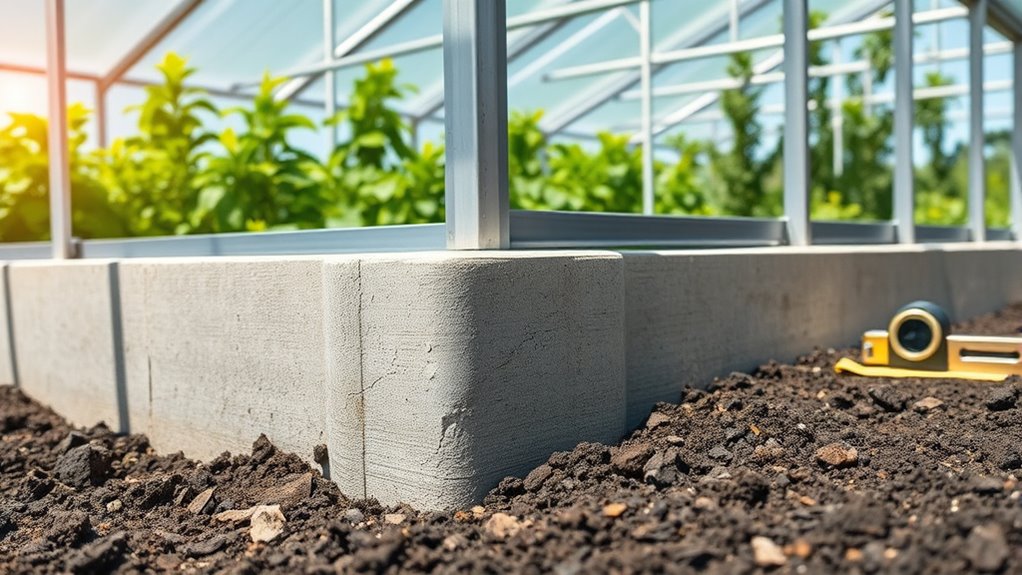
Selecting the right foundation is a critical step in building a stable and long-lasting greenhouse. The foundation ensures your structure remains secure, even in adverse weather conditions, and provides a solid base for all your gardening activities. To achieve this, you need to pay close attention to soil preparation and the foundation materials you choose. Proper soil preparation involves evaluating the soil’s drainage, stability, and nutrient content. You want a site with well-draining soil that doesn’t retain excess water, as soggy ground can cause shifting or settling over time. If your soil isn’t ideal, you might need to improve it by adding gravel, sand, or organic matter to enhance drainage and stability. Removing weeds, roots, and debris from the site is equally important to prevent future upheaval or uneven settling.
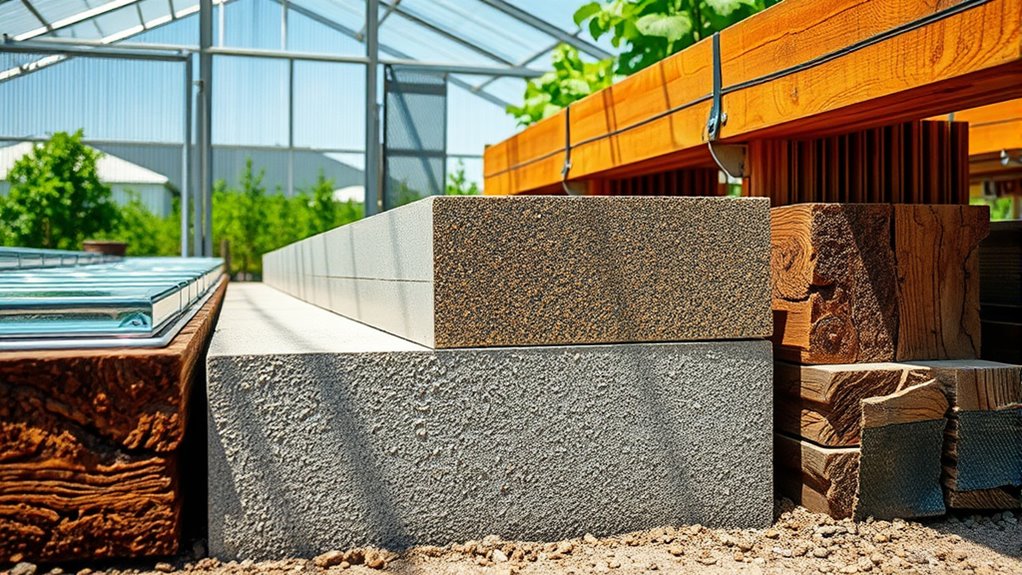
Once your soil is properly prepared, you can focus on selecting foundation materials. Your choice depends on factors like your climate, budget, greenhouse size, and personal preferences. Common foundation materials include concrete, treated wood, and gravel beds. Concrete foundations are durable and provide excellent stability, especially for larger greenhouses. You can opt for a poured concrete slab or concrete blocks, both offering a sturdy base that minimizes shifting. Treated wood is a more cost-effective option, suitable for smaller structures or temporary greenhouses. It’s essential to use pressure-treated wood that resists rot and pests, ensuring longevity. Gravel beds are another popular choice, especially for DIY projects, because they are easy to install and provide good drainage. However, they may require additional support to prevent shifting or settling, which can compromise your greenhouse’s stability.
When selecting foundation materials, think about how each option interacts with your soil conditions. For instance, if your soil has poor drainage, a concrete slab might be the better choice to prevent water accumulation around the base. If you’re working in a colder climate, you may also want to consider insulating your foundation to avoid frost heave, which can damage the structure. It’s essential to ensure your foundation materials are compatible with your soil preparation efforts. A well-prepared site combined with appropriate foundation materials will give your greenhouse a solid, level, and durable base. Proper soil stabilization plays a crucial role in preventing future shifting or settling of the foundation. This foundation not only supports the structure itself but also helps regulate the internal environment, keeping your plants healthy and thriving for years to come. Ultimately, investing time and effort into soil preparation and choosing the right foundation materials will pay off by providing a stable platform for your greenhouse that stands the test of time.
greenhouse foundation concrete slab
As an affiliate, we earn on qualifying purchases.
As an affiliate, we earn on qualifying purchases.
Frequently Asked Questions
How Does Soil Type Affect Foundation Choice?
Soil type directly impacts your foundation choice because it affects soil stability and drainage requirements. If your soil is clay, it’s less stable and retains water, so you’ll need a sturdy, deep foundation with proper drainage. On the other hand, sandy soil drains well but can shift easily, requiring a more flexible foundation. Understanding your soil type helps you select a foundation that guarantees your greenhouse stays secure and well-drained.
What Are the Cost Differences Between Foundation Options?
Imagine laying a sturdy base for your greenhouse—cost comparison shows that concrete slabs typically cost more than gravel or pier foundations, but they offer durability. Foundation pricing varies widely, with simple gravel beds being budget-friendly, while reinforced concrete increases expenses. You’ll find that your choice influences long-term costs and maintenance. Weigh these options carefully, balancing initial investment against durability, to guarantee your greenhouse stands strong for years to come.
How Long Does a Typical Greenhouse Foundation Last?
A typical greenhouse foundation lasts between 20 to 50 years, depending on the materials used and foundation durability. You should consider lifespan considerations like soil type, climate, and maintenance when selecting your foundation. Proper installation and regular inspections help extend its life. For example, concrete foundations tend to be more durable and longer-lasting, while wooden bases may need replacement sooner due to rot or pests.
Can I Install a Foundation Myself or Need Professionals?
You can definitely handle a DIY installation if you’re comfortable with basic construction skills, like in the case of a homeowner who built her own concrete slab foundation. However, for more complex foundations or if you lack experience, professional assistance guarantees safety and precision. Consider your skills, the foundation type, and local building codes, and don’t hesitate to hire experts if needed to guarantee a sturdy, long-lasting base for your greenhouse.
What Environmental Factors Influence Foundation Selection?
You should consider climate considerations and groundwater impact when selecting your foundation. If your area experiences extreme temperatures or heavy rainfall, choose a foundation that offers stability and insulation. Additionally, evaluate groundwater levels; high water tables may require raised or waterproof foundations to prevent moisture damage. By accounting for these environmental factors, you guarantee your greenhouse stays durable and protected against weather and water-related issues.
Conclusion
Now that you know how to pick the best foundation, you’re all set to build a sturdy, long-lasting greenhouse. Remember, a strong foundation is the bedrock of a successful greenhouse—so don’t cut corners. With the right base beneath you, your plants will thrive, and your efforts won’t go to waste. Think of it as planting the first seed; if you start on solid ground, everything else will fall into place and grow beautifully.
Columbus Day / Indigenous Peoples' Day Picks
long weekend sales
As an affiliate, we earn on qualifying purchases.