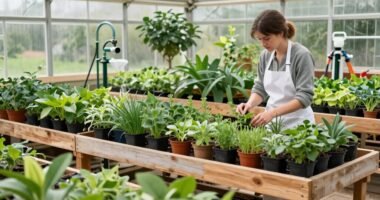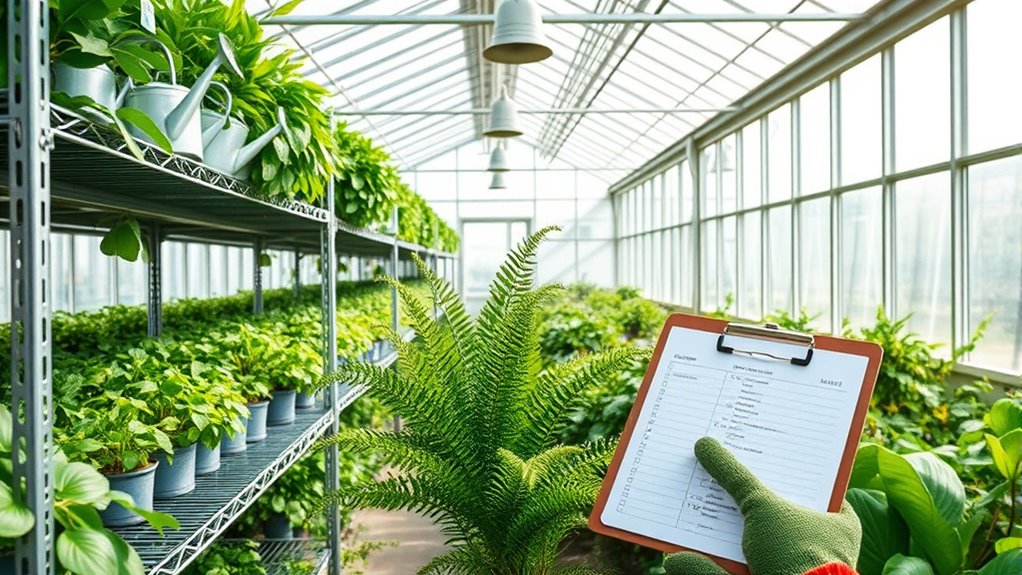

To prep your greenhouse for spring, start by testing soil health and adding needed amendments. Inspect for pests, remove affected plants, and use organic controls or beneficial insects. Repair and clean the structure, including panels, vents, fans, and filters, to guarantee proper airflow. Keep surfaces tidy and monitor plant health closely. Adjust humidity and ventilation to prevent disease. Continuing with these steps will help you create an ideal environment for your plants to thrive.

Get garden gear delivered free — and shop member deals
- Fast, free delivery on millions of items
- Access to Prime Big Deal Days deals on October 6–7
- Prime Video, Amazon Music and more included
Key Takeaways
- Conduct soil testing and amend soil for optimal nutrient levels and pH balance.
- Inspect and repair greenhouse structures, vents, and fans for proper airflow and integrity.
- Implement pest control by inspecting plants, removing affected parts, and introducing beneficial insects.
- Clean surfaces, shelves, and floors thoroughly to prevent disease and maintain a healthy environment.
- Ensure proper ventilation and humidity control to reduce mold, fungal growth, and promote healthy plant growth.
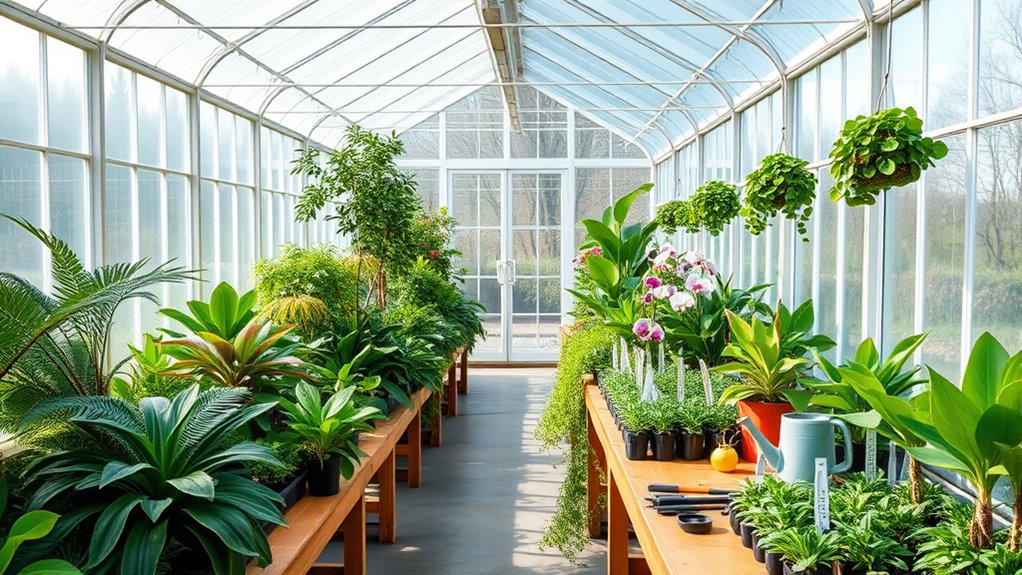
Is your greenhouse ready to thrive this spring? Before you immerse yourself in planting, it’s vital to evaluate the health of your growing environment. Start with soil testing—this step is essential for understanding your soil’s nutrient levels, pH balance, and potential deficiencies. A simple soil test kit can help you determine exactly what amendments your soil needs, guaranteeing your plants get the best nutrients from the start. Proper soil preparation reduces the risk of poor growth and disease, setting your greenhouse up for a successful season. Additionally, soil testing can reveal issues like soil-borne pests or pathogens, allowing you to address these problems early. If your soil has a high moisture level or is compacted, consider aerating it or adding organic matter to improve drainage and aeration. Regularly inspecting your shower setup can also prevent unexpected issues during your gardening routine, ensuring a smooth experience.
Pest control should be a top priority in your spring maintenance routine. As temperatures warm up, pests like aphids, whiteflies, and spider mites become more active and can quickly infest your plants if left unchecked. Begin by inspecting all your plants thoroughly for signs of pests or damage. Remove any affected leaves or plants to prevent the spread. Implement integrated pest management strategies, such as introducing beneficial insects like ladybugs or predatory mites, which naturally keep pest populations in check. You can also use organic sprays or insecticidal soaps—these are effective yet gentle options that won’t harm your plants or beneficial insects. Keep your greenhouse clean by removing fallen leaves, plant debris, and weeds, as these can harbor pests and diseases. Regular monitoring is key; check your plants daily during the early weeks of spring to catch infestations before they get out of control.
Beyond soil testing and pest control, guarantee your greenhouse is structurally sound and well-ventilated. Repair any broken panels or vents, and clean your fans and filters to maintain proper airflow. Proper ventilation reduces humidity levels that can promote mold and fungal diseases, which often become problematic in spring’s moist conditions. Water your plants carefully, avoiding overwatering, which can weaken plant health and attract pests. Use clean tools and containers to prevent the spread of disease. Additionally, consider scheduling a thorough cleaning of your greenhouse’s surfaces, including shelves and floors, to eliminate dust and pathogens. This all-encompassing approach will help you establish a healthy, resilient environment where your plants can flourish throughout spring and beyond. Preparing now ensures you’ll enjoy a productive season filled with healthy growth and bountiful harvests.
As an affiliate, we earn on qualifying purchases.
Frequently Asked Questions
How Often Should Greenhouse Fans Be Serviced?
You should service your greenhouse fans at least once every six months to maintain ideal ventilation efficiency and extend their lifespan. Regular inspections help identify dust buildup, worn belts, or loose components that can hinder performance. Proper maintenance ensures your fans operate smoothly, providing consistent airflow for healthy plant growth. Don’t wait until problems arise—routine servicing keeps your greenhouse environment perfect and fans functioning reliably.
What Are Signs of Greenhouse Pest Infestations?
You’ll notice signs of pest infestations through damaged leaves, visible insects, sticky residue, or webbing. Regular pest identification helps catch issues early, preventing widespread problems. Keep an eye out for discolored or wilting plants, which can signal pests. To prevent infestations, maintain good sanitation, monitor plants frequently, and use natural predators or organic treatments when needed. Staying vigilant guarantees your greenhouse stays healthy and pest-free.
When Is the Best Time to Replace Greenhouse Glazing?
Did you know that over 60% of greenhouse issues stem from aging glazing materials? You should replace your greenhouse glazing during late winter or early spring, ideally before the growing season begins. This timing minimizes disruption and guarantees ideal light transmission. Follow a consistent replacement schedule, typically every 5-10 years, depending on material type. Regularly inspecting your glazing helps catch deterioration early, keeping your greenhouse efficient and productive year-round.
How Do I Calibrate Greenhouse Climate Control Systems?
To calibrate your greenhouse climate control systems, start by checking your climate sensor calibration. Use a reliable reference thermometer and hygrometer to compare sensor readings, then adjust them as needed. Focus on humidity control adjustment by fine-tuning your humidifiers or dehumidifiers to maintain ideal levels. Regularly verify sensor accuracy and make calibration tweaks to guarantee your system responds correctly, keeping your plants healthy and your environment stable.
What Safety Protocols Are Essential During Maintenance?
During maintenance, you should always wear safety gear like gloves, goggles, and masks to protect yourself from hazards. Follow emergency procedures carefully, such as shutting off power before inspecting electrical systems or using fire extinguishers if needed. Keep clear of moving parts and guarantee proper ventilation. Regularly review safety protocols with your team, and always prioritize safety to prevent accidents and injuries during maintenance tasks.
Conclusion
By following this spring greenhouse maintenance checklist, you’ll transform your space into the most vibrant, thriving oasis the world has ever seen! Your plants will practically sing with joy, pests will run for cover, and your greenhouse will shine brighter than the sun itself. Don’t just maintain—create a botanical masterpiece that could make even the most seasoned gardener jealous. Get started now, and watch your greenhouse become an unstoppable green paradise that leaves everyone in awe!
Fall yard work Picks
leaf blowers
As an affiliate, we earn on qualifying purchases.