By combining rainwater harvesting, composting, and a greenhouse, you create a self-sustaining garden system that maximizes resource use and boosts plant health. Rainwater provides clean, soft water, reducing reliance on municipal supplies, while compost enriches the soil naturally, promoting healthy growth. The greenhouse offers a controlled environment, extending your growing season and protecting plants. Together, these practices form an efficient cycle that conserves resources and enhances productivity—discover more ways to optimize this system as you continue exploring.

Get garden gear delivered free — and shop member deals
- Fast, free delivery on millions of items
- Access to Prime Big Deal Days deals on October 6–7
- Prime Video, Amazon Music and more included
Key Takeaways
- Combining rainwater with compost improves soil fertility and provides plants with nutrient-rich, soft water for optimal growth.
- A greenhouse creates a controlled environment that maximizes rainwater use and enhances compost effectiveness.
- Integrating rainwater harvesting, composting, and a greenhouse reduces external resource dependence and promotes sustainability.
- The synergy ensures year-round cultivation, resilient plants, and efficient resource utilization in small-scale gardening.
- This integrated approach minimizes waste, lowers water bills, and supports eco-friendly, productive gardening practices.
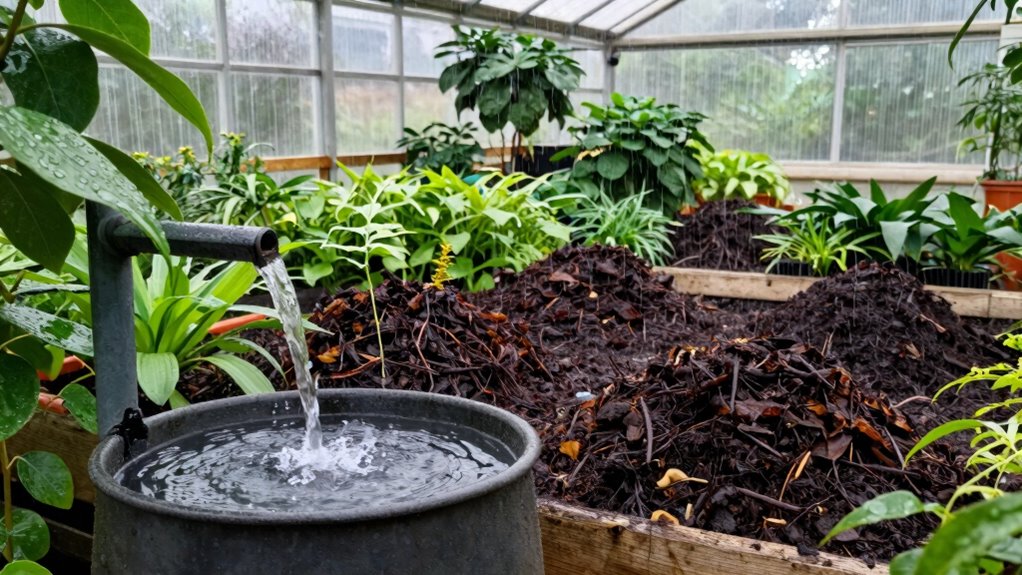
Integrating rainwater collection, composting, and greenhouse gardening creates a sustainable system that boosts your garden’s productivity while reducing environmental impact. If you’re into urban gardening, combining these practices can transform your small space into a thriving, eco-friendly oasis. By capturing rainwater, you lessen your reliance on municipal water, which often involves energy-intensive treatment and distribution. Instead, you harness natural rainfall, providing your plants with clean, soft water that’s free and abundant when needed. This not only cuts your water bills but also promotes sustainable practices, minimizing your ecological footprint.
Combine rainwater harvesting, composting, and greenhouse gardening to create an eco-friendly, productive urban oasis.
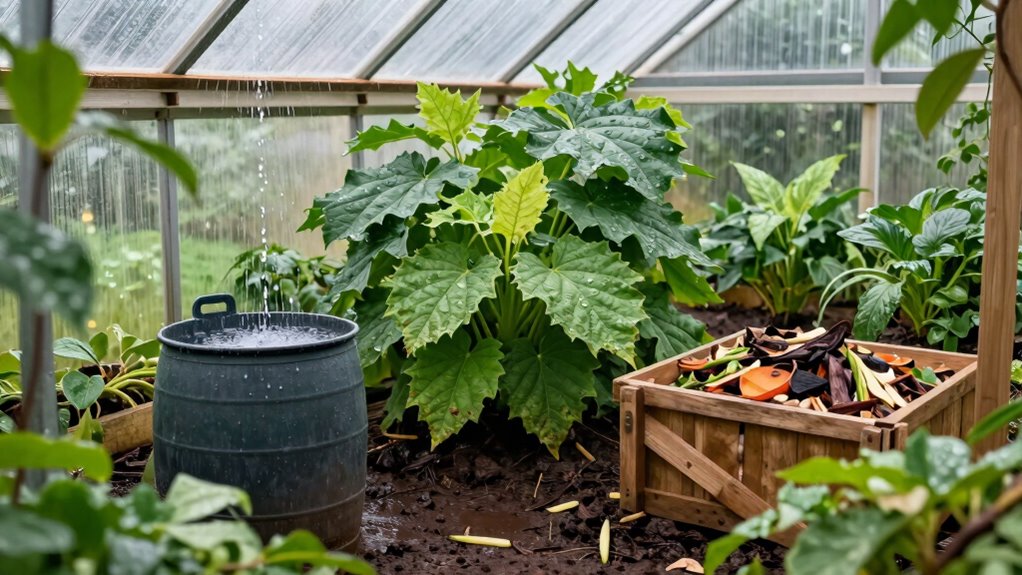
Using compost completes this eco-friendly cycle. You turn kitchen scraps and yard waste into rich organic matter that feeds your plants and improves soil health. Composting reduces waste sent to landfills, which is critical in urban environments where waste management can be a challenge. As your compost bin decomposes, it creates a natural fertilizer that enhances soil fertility and structure, allowing your plants to grow stronger and more resilient. Incorporating soil health into your gardening routine can significantly boost plant vitality and yield. When combined with rainwater, your plants receive a continuous supply of nutrient-rich water, promoting healthy growth without the need for chemical fertilizers. This synergy makes your gardening efforts more sustainable and efficient. Additionally, selecting appropriate plant varieties can further optimize your garden’s resilience and productivity in your specific environment.
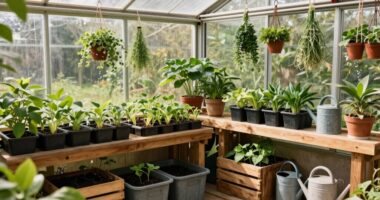
The greenhouse ties these elements together by creating an ideal environment for your plants to thrive year-round. In an urban setting, a greenhouse extends your growing season, protecting plants from harsh weather and pests. It also helps maintain consistent moisture levels, which is especially beneficial when you’re relying on rainwater, ensuring your plants aren’t stressed during dry spells. The greenhouse acts as a controlled environment where you can optimize conditions, reducing the need for external inputs. When you use rainwater and compost within your greenhouse, you’re creating a closed-loop system that minimizes waste and reliance on external resources. Additionally, understanding the importance of water conservation can further enhance your sustainability efforts. Incorporating rainwater harvesting techniques can maximize the efficiency of your water use, making your system even more environmentally friendly.
Together, rainwater harvesting, composting, and greenhouse gardening form a powerful trio that embodies sustainable practices. They work in harmony to maximize space, reduce resource consumption, and foster healthy plant growth. For urban gardeners, this integrated approach offers a practical way to grow fresh produce while caring for the environment. You get the satisfaction of reducing waste, conserving water, and creating a resilient, productive garden. By blending these methods, you not only learn sustainable gardening but also contribute positively to your community and the planet. It’s a smart, eco-conscious way to turn a small urban space into a productive, sustainable garden haven.
rainwater harvesting system for garden
As an affiliate, we earn on qualifying purchases.
As an affiliate, we earn on qualifying purchases.
Frequently Asked Questions
How Much Rainwater Is Needed to Sustain a Greenhouse Garden?
You’ll need about an inch of rain per week to sustain your greenhouse garden effectively. Rainwater harvesting helps you collect this natural resource, reducing reliance on municipal water and promoting water conservation. By capturing and storing rainwater, you guarantee your plants have consistent moisture, especially during dry spells. Regularly monitor your water needs and adjust your harvesting system accordingly, making your greenhouse more sustainable and eco-friendly.
Can Compost Tea Improve Greenhouse Plant Growth?
Ever wonder if compost tea can boost your greenhouse plants? Absolutely. Compost tea enriches soil nutrients and stimulates microbial activity, which are essential for healthy plant growth. By applying it regularly, you enhance nutrient availability and soil vitality, leading to stronger, more productive plants. Isn’t it worth giving your greenhouse the natural edge? Using compost tea is a simple, effective way to foster a thriving, resilient garden ecosystem.
What Are the Best Greenhouse Crops for Rainwater Irrigation?
You should consider growing crops like leafy greens, herbs, and strawberries in your greenhouse if you’re using rainwater harvesting for irrigation. These plants thrive with consistent moisture and benefit from the gentle, mineral-rich rainwater. During your greenhouse planning, guarantee your setup allows efficient rainwater collection and distribution, creating a sustainable system that boosts growth and reduces water costs. This combination makes for healthier plants and a more eco-friendly operation.
How Does Compost Help Regulate Greenhouse Humidity?
Compost helps regulate greenhouse humidity by maintaining consistent moisture levels through compost moisture retention. When you add compost to your greenhouse, it acts like a natural sponge, releasing moisture gradually and preventing rapid humidity fluctuations. This moisture regulation creates a stable environment, reducing stress on your plants. Additionally, compost’s organic matter improves soil structure, supporting healthy roots and promoting balanced humidity levels essential for ideal plant growth.
Are There Eco-Friendly Ways to Collect Rainwater for Greenhouses?
You can totally transform your greenhouse into an eco-friendly oasis by harnessing rainwater harvesting methods. Using simple, sustainable catchment systems like barrels and gutters, you collect enough rainwater to sustain your plants without draining nature’s resources. This eco-friendly irrigation technique reduces your water bill and minimizes environmental impact. Plus, it’s easy to set up and maintain, making your greenhouse truly a model of sustainable gardening.
Conclusion
When rainwater, compost, and a greenhouse team up, they create a thriving cycle, much like a well-orchestrated symphony. Each element plays its part, feeding the next and nurturing growth. By working together, they turn your garden into a resilient, self-sustaining ecosystem. Think of it as planting seeds of harmony that bloom into a lush, sustainable paradise—proving that nature’s best results come from working in tune with each other.
Halloween Picks
halloween
As an affiliate, we earn on qualifying purchases.