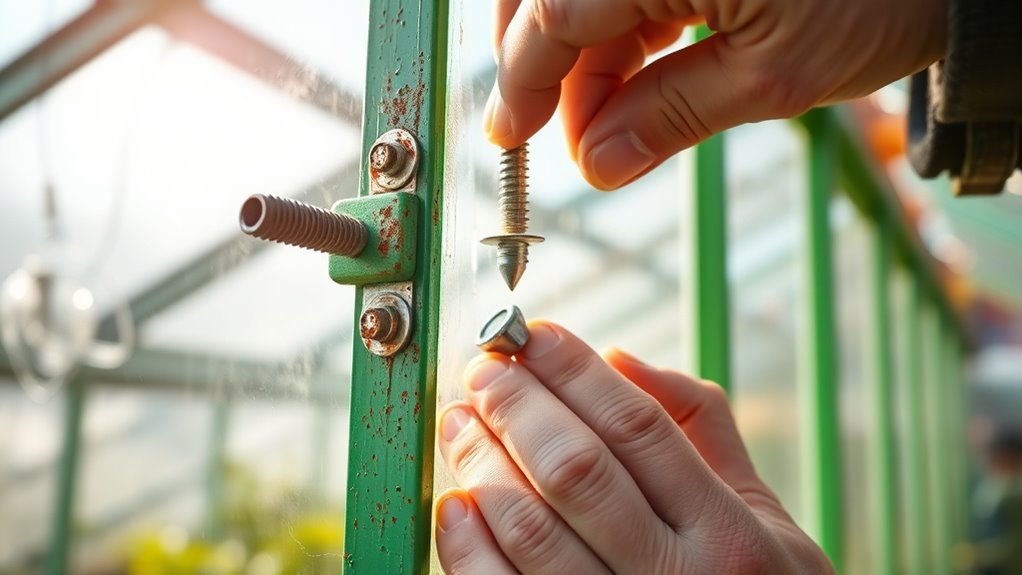

If you notice worn, corroded, or broken fasteners in your greenhouse, replace them promptly to maintain stability. Carefully inspect all fasteners for looseness or damage, and select similar, corrosion-resistant types for replacements. Use proper tools and avoid over-tightening to prevent further issues. Keep spare fasteners on hand for quick repairs. Regular checks will help prevent future problems. Keep going to discover detailed steps for a smooth replacement process.
Key Takeaways
- Conduct a thorough inspection of fasteners for corrosion, wear, or damage to identify replacements needed.
- Match new fasteners in type and size to the existing hardware, prioritizing corrosion-resistant materials.
- Use proper tools and techniques to securely tighten fasteners without over-tightening or stripping threads.
- Replace multiple fasteners systematically to maintain uniform structural stability and prevent future issues.
- Keep an inventory of common fastener sizes for quick repairs and schedule regular inspections to catch early wear.
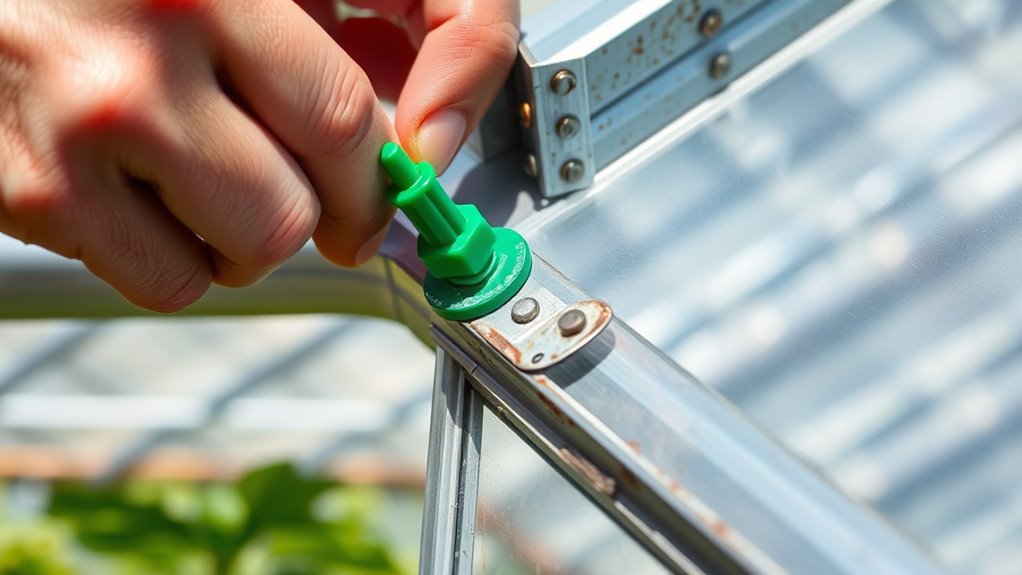
Over time, greenhouse fasteners can wear out or become damaged, compromising the structure’s stability. When you notice loose panels, wobbling frames, or gaps in your greenhouse, it’s a clear sign that some fasteners need replacing. Understanding the different fastener types and following proper installation tips can make the process smoother and guarantee your greenhouse remains secure. Fastener types vary widely, including bolts, screws, nuts, washers, and specialized clips. Each type serves a specific purpose, and choosing the right one is vital for maintaining structural integrity. For example, stainless steel bolts and screws are excellent choices because they resist rust and corrosion, especially in humid environments typical of greenhouses. Clamps and clips are often used for securing panels or ventilation components, so selecting the appropriate type ensures a tight, secure fit. Before replacing any fastener, inspect the existing hardware carefully. Determine whether a fastener is simply loose or completely broken. If it’s corroded or stripped, replace it with a similar type and size to maintain the original design and strength. When installing new fasteners, follow some essential tips to assure durability and safety. First, always use the correct tools—screwdrivers, wrenches, or pliers—to avoid damaging the fastener or the surrounding material. Apply steady, even pressure when tightening to prevent over-tightening, which can strip threads or crack panels. It’s also beneficial to use washers when appropriate, as they distribute pressure evenly and prevent fasteners from pulling through lightweight materials. If you’re working with metal panels, consider using corrosion-resistant fasteners to prolong their lifespan. When replacing multiple fasteners, do a systematic check to ensure all are tightened uniformly, which helps maintain a balanced structure. Avoid overtightening, as this could cause deformation or cracking of plastic or glass panels. When installing fasteners in hard-to-reach spots, consider using extension tools or specialized fastener drivers to reach without damaging the material. Keep a supply of replacement fasteners on hand, especially in common sizes used in your greenhouse, so you’re prepared for maintenance. Incorporating proper filtration and pump protection can also help prevent debris from damaging fasteners and other hardware. Remember, proper installation is key to preventing future issues. Regular inspections can help catch problems early, saving you time and money in the long run. By understanding the different fastener types and following these installation tips, you’ll keep your greenhouse sturdy, safe, and weather-resistant for years to come.
stainless steel greenhouse fasteners
As an affiliate, we earn on qualifying purchases.
As an affiliate, we earn on qualifying purchases.
Frequently Asked Questions
What Tools Are Best for Removing Old Fasteners?
For fastener removal, you need the right tools to make the job easier. A screwdriver or a wrench is best for loosening and extracting old fasteners, depending on their type. Use a socket set or pliers if the fasteners are stuck or rusted. Proper tool selection guarantees you won’t damage surrounding material and makes the removal process quicker. Always choose the right size and type for efficient fastener removal.
Can I Reuse Existing Fasteners After Repair?
You can’t reuse existing fasteners after repair, especially with fastener types like screws, bolts, or clips, because they often weaken or deform during removal. Think of them like brittle bones—you wouldn’t want to risk breakage or compromised stability. Always replace worn or broken fasteners with new ones to guarantee your greenhouse stays secure. Proper repair techniques involve inspecting for damage and choosing the right fastener type for a sturdy, long-lasting fix.
How Do I Identify the Correct Replacement Fasteners?
You identify the correct replacement fasteners by first checking the fastener types used in your greenhouse, such as screws, bolts, or clips. Measure the diameter, length, and thread type of the existing fasteners to verify compatibility. During replacement procedures, match the new fasteners precisely to the original ones for a secure fit. Always choose fasteners made from weather-resistant materials to withstand greenhouse conditions and ensure durability.
Are There Specific Fasteners Suitable for Humid Environments?
It just so happens that weatherproof fasteners made from corrosion-resistant materials are perfect for humid environments. You should look for fasteners specifically designed to withstand moisture, like stainless steel or coated options, since they resist rust and decay. Using these guarantees your greenhouse stays secure and durable, no matter how high the humidity climbs. Choosing the right fasteners now saves you maintenance headaches later, keeping your structure in top shape.
How Often Should Greenhouse Fasteners Be Inspected or Replaced?
You should inspect your greenhouse fasteners during seasonal inspections, ideally every three to six months. Keep an eye out for signs of fastener corrosion, rust, or damage. Replace any fasteners showing corrosion or wear promptly to prevent structural issues. Regular checks guarantee your greenhouse stays secure and functional, especially in humid environments where fasteners are more susceptible to deterioration. Staying proactive helps maintain a safe, durable structure year-round.
Conclusion
Replacing worn or broken greenhouse fasteners is a simple but vital task to keep your greenhouse secure and sturdy. Don’t delay damage—diligently detect, dismantle, and replace defunct fasteners to prevent potential problems. With a little effort, you’ll maintain a magnificent, maintenance-free greenhouse. Remember, swift, steady replacement safeguards your space, secures your supplies, and sustains your success. Stay vigilant, stay vibrant—your greenhouse’s growth depends on it!