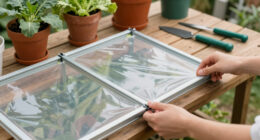
To prepare your greenhouse for a new growing season, start by thoroughly inspecting for pests and addressing them with targeted controls. Test and amend your soil for nutrients and pH balance, then sanitize surfaces and remove debris to prevent disease. Improve ventilation to reduce humidity and enhance airflow. Restock supplies and calibrate your irrigation system. Taking these steps creates a healthy environment, setting the stage for healthy plants. Keep going to discover more ways to guarantee a successful season.

Get garden gear delivered free — and shop member deals
- Fast, free delivery on millions of items
- Access to Prime Big Deal Days deals on October 6–7
- Prime Video, Amazon Music and more included
Key Takeaways
- Conduct thorough pest inspections and eliminate existing infestations before planting.
- Test and amend soil to ensure optimal nutrient levels and pH balance.
- Clean and sterilize surfaces, beds, and containers to prevent disease recurrence.
- Improve ventilation and control humidity to create a healthy growing environment.
- Restock supplies, calibrate irrigation, and implement preventive pest measures.

As the new growing season approaches, it is essential to give your greenhouse a thorough overhaul to guarantee ideal conditions for your plants. Starting with pest control is vital; pests can quickly take hold if you don’t address them before planting. Inspect every corner, nook, and cranny for signs of insects, eggs, or damage. Use targeted organic or chemical controls to eliminate existing pests and prevent future infestations. Keep in mind that a healthy, pest-free environment promotes vigorous plant growth and reduces the risk of disease transmission.
Begin your season with thorough pest inspections to ensure healthy, vigorous plant growth.
Next, focus on soil testing to confirm your growing medium is ideal. Testing the soil allows you to identify nutrient deficiencies, pH imbalances, or potential contaminants that could hinder plant development. Collect samples from different areas of your greenhouse and send them to a reliable lab or use a home testing kit for quick results. Based on the findings, amend the soil with appropriate fertilizers, compost, or pH adjusters to create a balanced environment. Healthy soil is the foundation of a successful season, so don’t skip this vital step.
Once pest control measures are in place and soil testing is complete, prepare your planting beds. Remove any old plant debris, weeds, and dead material that could harbor pests or diseases. Sterilize the soil if necessary, especially if you’re reusing containers or beds that previously hosted infected plants. Proper sanitation helps prevent the recurrence of pests and diseases, ensuring a clean start for your new crops.
Also, evaluate your greenhouse’s ventilation and humidity controls. Good airflow reduces humidity levels that pests love and discourages mold or mildew growth. Repair or upgrade vents, fans, or shading systems if needed. Clean all surfaces thoroughly, including benches, shelves, and glass panels, to eliminate dust, pests, or spores that might have accumulated during the off-season.
Finally, restock your supplies — seeds, pots, soil amendments, and pest control products — making sure everything is fresh and ready for planting. Check your irrigation system for leaks or clogs, and calibrate watering schedules to match your upcoming crops’ needs. Consider installing vegetable juices or other natural pest deterrents as an additional preventive measure. By completing these steps, you set a strong foundation for a healthy, productive growing season. With pest control measures in place and soil testing completed, you’ll create an environment that promotes robust plant growth and minimizes setbacks. Preparing your greenhouse thoroughly now saves time and effort later, helping you achieve a flourishing, bountiful harvest.
greenhouse pest control products
As an affiliate, we earn on qualifying purchases.
As an affiliate, we earn on qualifying purchases.
Frequently Asked Questions
How Do I Control Pests Before Planting?
To control pests before planting, start with pest identification to know what you’re dealing with. Remove any existing pests manually or use natural pest control methods like introducing beneficial insects or applying organic neem oil. Clean and sanitize your greenhouse thoroughly to eliminate eggs and larvae. Regularly inspect your plants, and act quickly to prevent pests from spreading. This proactive approach keeps your greenhouse healthy and pest-free from the start.
When Should I Start Fertilizing for the New Season?
It’s best to start fertilizing at the right time, so your plants get just what they need when they need it. Focus on fertilizer timing and nutrient preparation before planting, usually a few weeks ahead. This guarantees the soil is rich and balanced, giving your plants a strong start. By doing this, you set the stage for healthy growth throughout the season, avoiding premature or delayed feeding that can hinder development.
What Are Signs My Greenhouse Needs Repairs?
You’ll notice your greenhouse needs repairs if the insulation isn’t maintaining consistent temperatures or if there are drafts, which can harm your plants. Check your insulation regularly, especially around vents and windows. If your ventilation systems aren’t working properly, you may see excessive humidity or poor airflow. These issues signal you should repair or upgrade insulation and ventilation to guarantee ideal growing conditions.
How Can I Improve Air Circulation Effectively?
To improve air circulation effectively, focus on ventilation strategies like installing exhaust fans and adjustable vents. Keep airflow optimized by opening windows and vents during the day, and use oscillating fans to circulate air inside. Regularly check for obstructions that block airflow, and position fans to cover all areas evenly. These steps help prevent humidity buildup and promote healthy plant growth, making your greenhouse more productive.
What Are Best Practices for Seed Starting Indoors?
To start seeds indoors successfully, use clean seedling containers with proper drainage. Place your containers in a warm, well-lit area and make certain they receive ample indoor lighting, such as grow lights, to promote healthy growth. Keep the soil moist but not waterlogged, and maintain consistent temperatures. Regularly check your seedlings for pests or diseases, and gradually harden them off before transplanting outdoors.
Conclusion
As you close the greenhouse door, ready for the new season, you might think you’ve done enough. Ironically, all your careful preparations will be tested when the first frost sneaks in or a stubborn pest shows up. But that’s the beauty—your efforts set the stage for growth, even in the face of nature’s surprises. So, embrace the chaos, knowing your green haven is ready to flourish, no matter what the season throws at it.
Fall yard work Picks
leaf blowers
As an affiliate, we earn on qualifying purchases.