To manage spider mites with predatory insects, you should introduce natural predators like *Phytoseiulus persimilis* or *Amblyseius* species directly onto infested plants. Release them early to prevent pest populations from spreading, and guarantee your environment supports their survival by avoiding broad-spectrum pesticides. Keep your plants healthy and monitor populations regularly. For more tips on setting up an effective biological control, continue exploring ways to keep your garden pest-free naturally.
Key Takeaways
- Introduce predatory mites like *Phytoseiulus persimilis* early to control spider mite populations effectively.
- Release predators directly onto affected plants and monitor their impact regularly.
- Avoid using broad-spectrum chemical pesticides that can harm beneficial predatory insects.
- Maintain healthy, well-watered plants to reduce plant stress and enhance predator effectiveness.
- Combine biological control with proper cultural practices for sustainable, long-term spider mite management.
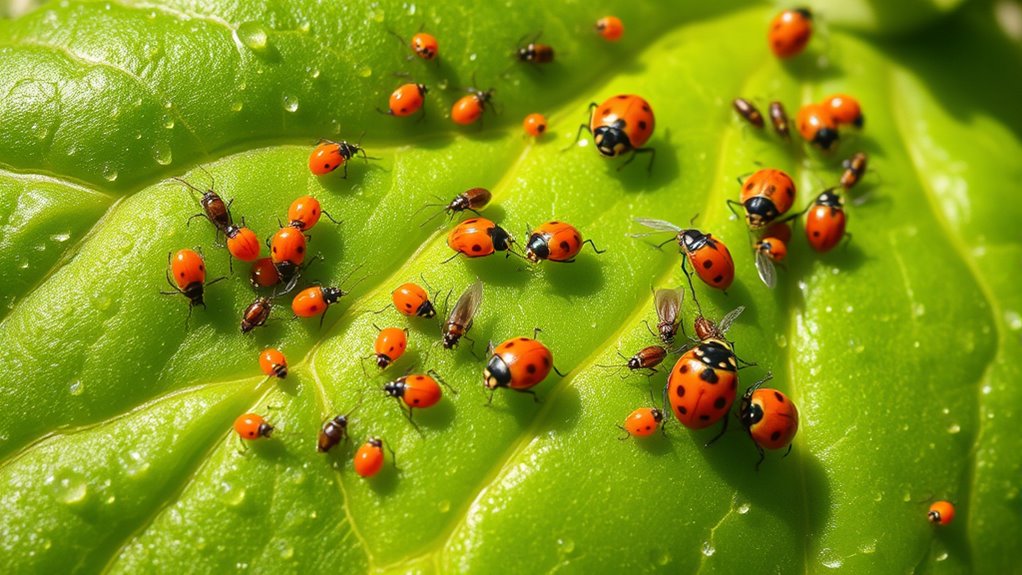
Are spider mites causing trouble in your garden or greenhouse? If so, you’re probably looking for effective ways to manage them without relying solely on chemical pesticides. One of the most sustainable and environmentally friendly options is biological control. This approach involves introducing natural predators—predatory insects that feed on spider mites—to keep their populations in check. Using biological control is a smart move because it minimizes the risks associated with chemical pesticide alternatives, such as harming beneficial insects or causing resistance over time. By encouraging the presence of these beneficial insects, you can create a balanced ecosystem that naturally suppresses spider mite outbreaks.
Biological control with natural predators offers an eco-friendly way to manage spider mites effectively.
When considering biological control, it’s important to choose the right predatory insects. Some of the most effective for managing spider mites include predatory mites like *Phytoseiulus persimilis* and *Amblyseius* species. These tiny predators are voracious consumers of spider mites and can considerably reduce their numbers when released in your garden or greenhouse. You can purchase them from reputable suppliers and release them directly onto your plants. It’s best to do this early in an infestation before mites become widespread, as these predators thrive when they have a steady food supply and can help prevent the problem from escalating.
Using predatory insects is not only effective but also aligns with integrated pest management (IPM) principles. It allows you to reduce or even eliminate the need for chemical pesticides, which can be harmful to your plants, pollinators, and the environment. With biological control, you’re promoting a natural balance, encouraging beneficial insects to coexist with your plants while keeping spider mites at bay. Plus, these predatory insects are self-perpetuating; they reproduce and can continue to control pests over time, reducing your ongoing maintenance efforts.
To maximize success, create a welcoming environment for these beneficial insects. Avoid broad-spectrum pesticides that could kill off your predatory mites and other helpful insects. Keep your plants healthy and well-watered, as stressed plants are more vulnerable to pest infestations. Regular monitoring is essential, so keep an eye out for both spider mites and their predators. If you see that the predatory insects are not effectively controlling the mites, you might need to release additional predators or combine biological control with other cultural practices for better results.
Additionally, incorporating scenic views and local shops can enhance your gardening experience by providing inspiration and resources to support sustainable pest management methods. Ultimately, managing spider mites with predatory insects is an effective, eco-friendly strategy. It offers a viable alternative to chemical pesticides, helping you maintain a healthy, balanced garden or greenhouse environment. When used correctly, biological control can be a powerful tool in your pest management arsenal, giving you peace of mind while protecting your plants and the broader ecosystem.

NaturesGoodGuys – Live Adult Phytoseiulus persimilis – Best for Two Spotted Spider Mites (4,000 Live Adult P. Persimilis)
- Effective Against Spider Mites: Ideal for two-spotted spider mites
- Live Adult Predators: Includes 4,000 live Phytoseiulus persimilis
- Indoor and Outdoor Use: Safe for indoor and outdoor application
As an affiliate, we earn on qualifying purchases.
As an affiliate, we earn on qualifying purchases.
Frequently Asked Questions
Are Predatory Insects Safe for Edible Plants?
Yes, predatory insects are safe for edible plants. They’re natural predators that target spider mites without the need for harmful chemicals. Unlike chemical alternatives, these beneficial insects won’t leave residues on your produce, making them a safer, eco-friendly option for pest control. You can confidently use predatory insects, knowing they help protect your plants while keeping your harvest safe and healthy.
How Long Does It Take to See Results?
You might see visible signs of mite control within a week, like fewer webbing and damaged leaves. Think of it as planting a seed—results take time to sprout. Timing expectations vary, but typically, you’ll notice a decline in spider mite activity in 5 to 7 days. Patience is key; consistent predator presence and proper care help accelerate the process and ensure effective mite management.
Can Predatory Insects Control Other Pests?
Yes, predatory insects can control other pests as part of biological control in pest management. They target specific pests like aphids, whiteflies, and thrips, effectively reducing infestations. By introducing these beneficial insects, you create a natural, eco-friendly pest control method that minimizes chemical use. Keep in mind that successful biological control depends on proper identification, timing, and maintaining suitable conditions for the predatory insects to thrive and do their job.
Do I Need to Release Insects Multiple Times?
Yes, you’ll likely need to release insects multiple times. The release frequency depends on the severity of your spider mite problem and how quickly populations grow. Reapplication is often necessary to maintain effective control, especially if pest numbers increase or conditions change. Keep an eye on your plants, and reintroduce predatory insects as needed to make sure of consistent pest suppression and prevent infestations from re-establishing.
Are There Any Environmental Impacts of Releasing Predatory Insects?
Releasing predatory insects can pose environmental risks if they disrupt the ecosystem balance. These insects might compete with native species or become invasive, affecting local biodiversity. To mitigate these impacts, you should release them carefully and in appropriate areas. Always consider consulting with pest management professionals or local environmental agencies to ensure your approach supports ecosystem health while controlling spider mites effectively.
Conclusion
So, next time you invite tiny invaders like spider mites to your garden party, remember there’s a natural bounty of predatory insects ready to do your dirty work. Who knew that tiny predators could be your garden’s best bodyguards? Instead of reaching for harsh chemicals, let these miniature heroes do their job. After all, isn’t it charming how nature’s own pest control squad can save your plants—and your sanity—without turning your garden into a chemical wasteland?