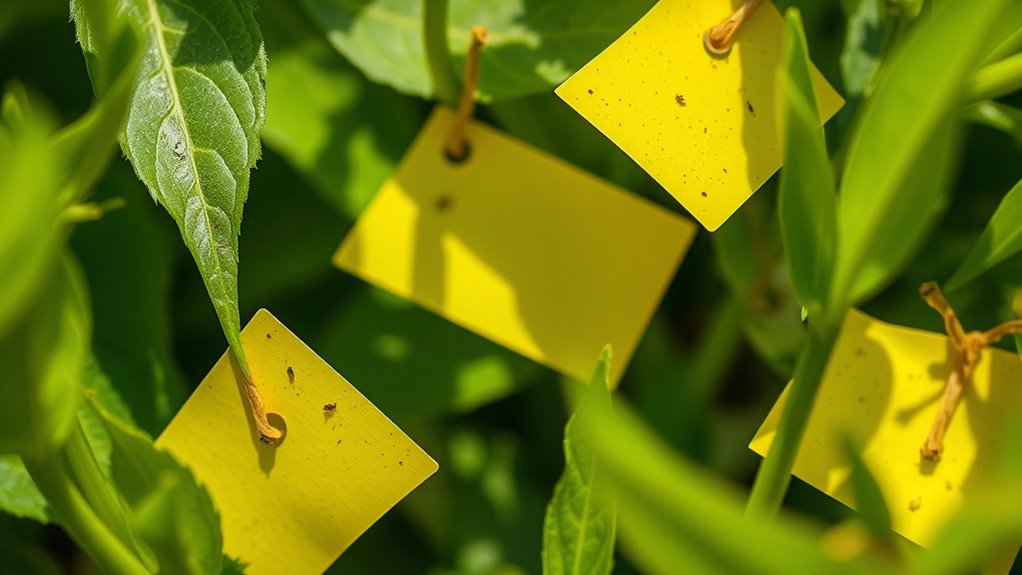

Using yellow sticky traps helps you monitor flying pests like aphids, whiteflies, and fungus gnats early on. Place the traps near pest hotspots or on plant stems, avoiding flowers to protect pollinators. Check them regularly to identify pest types and populations, and adjust placement as needed. This simple method supports integrated pest management and keeps beneficial insects in mind. Keep exploring to discover how to optimize trap placement and maximize your pest control efforts.
Key Takeaways
- Place traps near pest hotspots like leaf undersides and stems for effective monitoring.
- Position traps in sunny, bright areas at plant height or slightly above for maximum insect attraction.
- Regularly inspect traps to identify pest types and populations, adjusting placement as needed.
- Avoid placing traps near flowering plants to minimize catching pollinators like bees.
- Use trap data to inform integrated pest management strategies and reduce unnecessary pesticide use.
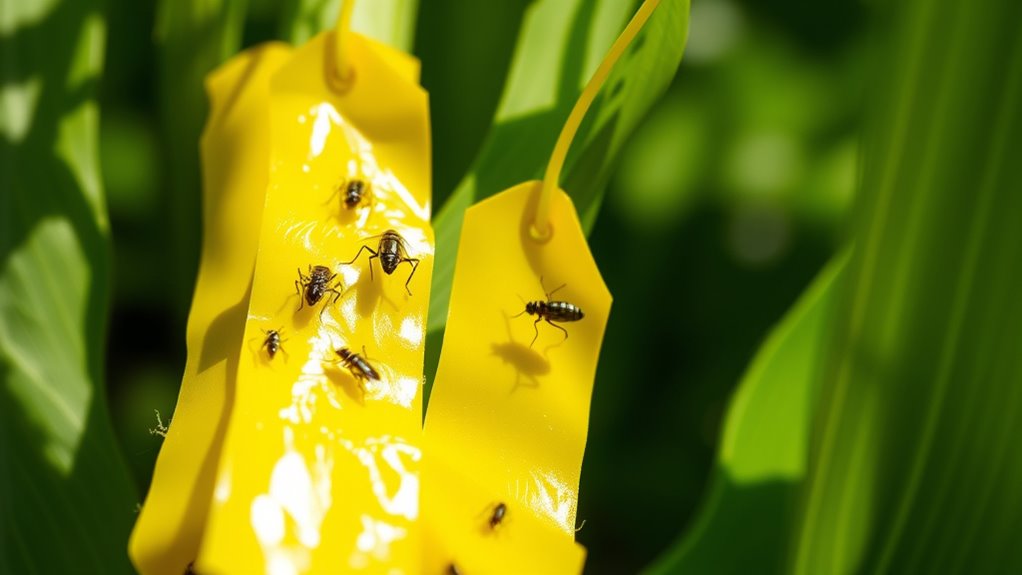
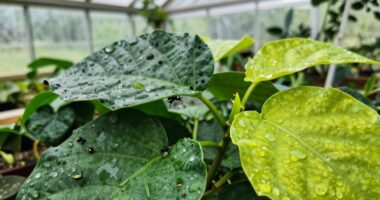
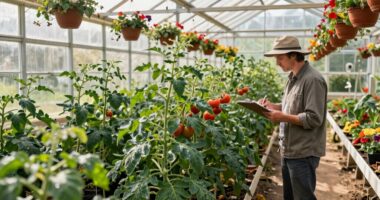
Yellow sticky traps are an effective tool for monitoring pest populations in gardens and farms. They attract a variety of flying insects, including pests like aphids, whiteflies, and fungus gnats, helping you identify infestations early. However, while using these traps, it’s essential to think about how they might also catch beneficial insects, such as pollinators and predatory insects that help keep pest numbers in check naturally. To maximize their effectiveness and minimize harm to helpful insects, you should focus on strategic trap placement. Position the traps in areas where pest activity is most likely to occur, such as near the undersides of leaves, along plant stems, or close to pest hotspots. This targeted placement ensures you’re catching the pests instead of beneficial insects, which tend to frequent different parts of the plants or are more active at different times.
When placing the traps, avoid locations that are too exposed or too shaded. Bright, sunny spots tend to attract more insects, including pests, making them ideal for trap placement. Keep the traps away from flowering plants if you want to reduce accidental capture of beneficial pollinators like bees. Instead, position them at a height level with the pest activity—generally around the tops of the plants or slightly above the canopy. This placement helps you get a more accurate picture of pest presence and density, enabling you to make informed decisions about when and how to intervene.
Additionally, understanding the importance of STEM toys and other educational tools in early childhood development reminds us that targeted strategies—whether in pest management or learning—are most effective when carefully planned and adapted to specific conditions. Furthermore, proper trap placement can help you distinguish between pest populations and beneficial insects. Regularly monitor the traps and note what kind of insects are caught. If you notice a high number of beneficial insects in the traps, consider relocating them to less sensitive areas or adjusting your monitoring strategy. This way, you prevent disrupting the natural pest control balance in your garden or farm. Remember that yellow sticky traps are just one part of an integrated pest management approach. Combining trap monitoring with other strategies, such as encouraging beneficial insects and practicing crop rotation, can lead to more sustainable pest control.

Shinic Space Heater,1500W Milkhouse Heater with Thermostat, Stay Cool Durable Metal Housing, Overheat protection, 3-Prong Plug, Tip-Over Auto Shut Off, Utility Heater for Garage, Bedroom, Greenhouse
- Durable Metal Housing: Heavy-duty, long-lasting construction
- Portable with Carry Handle: Easy to move during operation
- Fast Heating with Thermostat: Quick warm-up with adjustable settings
As an affiliate, we earn on qualifying purchases.
Frequently Asked Questions
How Often Should Yellow Sticky Traps Be Replaced?
You should replace yellow sticky traps every 4 to 6 weeks to guarantee effective trap placement and trap maintenance. Regularly check them for accumulated pests and debris, which can reduce their stickiness. If traps become heavily covered or lose their brightness, replace them sooner. Consistent maintenance keeps pest monitoring accurate, helping you catch infestations early and manage pests more effectively.
Can Yellow Sticky Traps Attract Beneficial Insects?
Like a knight in shining armor, yellow sticky traps can attract beneficial insects alongside pests. While they’re great for trap optimization, they may inadvertently lure helpful bugs, so monitor traps regularly. To minimize beneficial insect attraction, consider placement and timing. Properly managed, traps target pest species effectively without disrupting beneficial insect populations, ensuring your garden stays balanced and healthy.
Are Yellow Sticky Traps Effective Indoors and Outdoors?
Yellow sticky traps are effective both indoors and outdoors because their bright color attracts pests through color contrast, making them easy to spot. To maximize their effectiveness, you should place traps strategically in high pest activity areas, such as along walls or near plants. Regularly check and replace traps to guarantee continuous monitoring. Proper placement and understanding of pest behavior help you get the best results from yellow sticky traps.
What Pests Are Best Monitored With Yellow Sticky Traps?
You’ll find yellow sticky traps most effective for monitoring flying pests like whiteflies, aphids, fungus gnats, and leaf miners. Choose bright yellow, a color proven to attract these pests. To maximize results, follow trap placement strategies by positioning them near plant canopies or high-traffic pest areas, and keep them at consistent heights. Regularly check and replace traps to stay ahead of pest populations and prevent infestations.
How Do Weather Conditions Affect Trap Effectiveness?
Did you know humidity can reduce trap effectiveness by up to 50%? Weather conditions considerably impact how well yellow sticky traps work. High humidity can cause mold and debris to accumulate, making traps less visible and sticky. UV light interference from direct sunlight can also fade the traps’ color, reducing pest attraction. Cloudy or rainy days decrease pest activity, so monitoring might be less effective during these conditions.
Conclusion
Using yellow sticky traps is an effective way to monitor pests and protect your crops. Did you know that studies show these traps can catch up to 80% of pests in a field? This means you can quickly identify infestations and take action before they cause significant damage. Incorporating yellow sticky traps into your pest management plan makes monitoring easier and more efficient, helping you keep your garden healthy and pest-free with less effort.