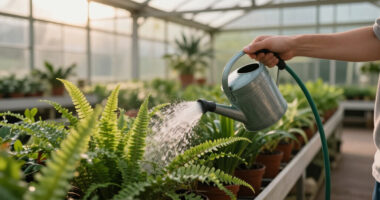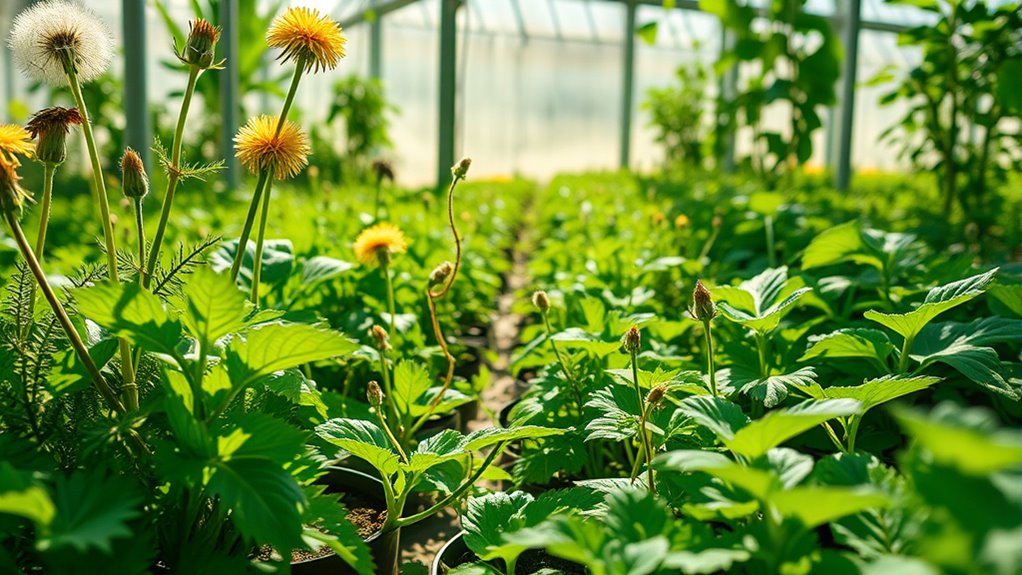

Common greenhouse weeds include both broadleaf and grassy types, such as chickweed, clover, and crabgrass, which can quickly take over your space. To control them organically, focus on regular hand weeding, mulching with straw or compost, but also try planting dense ground covers or companion plants like marigolds. These natural methods help suppress weeds, protect your crops, and maintain a healthy environment. Keep an eye out for more effective strategies as you continue exploring weed management tips.

Get garden gear delivered free with Prime
- Fast, free delivery on millions of items
- Prime Video, Amazon Music and more included
- Member-only deals all year
Key Takeaways
- Identify common greenhouse weeds like chickweed, bindweed, and spurge to target control efforts effectively.
- Use organic mulches such as straw or leaves to suppress weed germination and reduce seedling growth.
- Implement dense companion planting with herbs or flowering plants to shade soil and inhibit weed emergence.
- Practice regular hand weeding and remove invasive species promptly to prevent seed spread.
- Maintain healthy crops and soil conditions to outcompete weeds and minimize invasion opportunities.
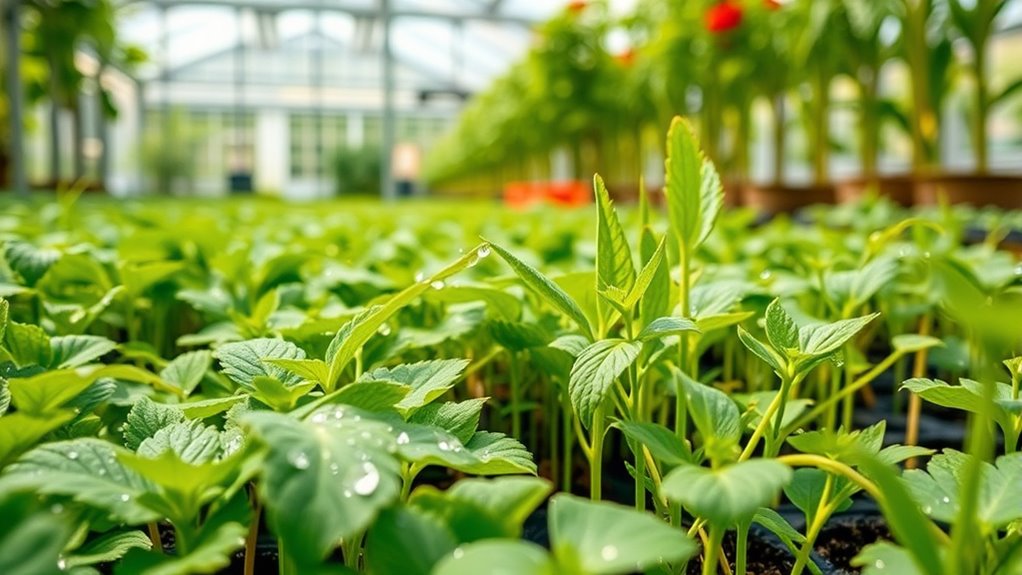
Have you ever wondered why weeds often take over your greenhouse? It can be frustrating to see unwanted plants sprouting among your carefully tended crops. The good news is that understanding how weeds invade and how to control them naturally can help you maintain a healthy, thriving environment. One effective strategy is using companion planting, which involves planting certain crops together to naturally suppress weeds. For example, densely planting herbs like basil or marigolds alongside vegetables can create a canopy that shades the soil, making it harder for weed seeds to germinate. These companion plants also attract beneficial insects, helping to keep pest populations in check. This method aligns with organic weed control principles, meaning you avoid harsh chemicals and instead rely on natural, sustainable tactics.
You’ll find that choosing the right plant combinations can profoundly reduce weed growth, making your greenhouse easier to manage. For instance, fast-growing ground covers like clover or creeping thyme can be integrated into your planting scheme. These plants outcompete weeds for space, nutrients, and light, leaving little room for unwanted invaders. Plus, they improve soil health and add visual appeal. Regularly mulching your greenhouse beds with organic materials such as straw, leaves, or compost also acts as a barrier, further preventing weed seeds from sprouting. Mulch not only suppresses weeds but also conserves moisture and enriches your soil over time. Additionally, implementing weed management techniques such as targeted removal or use of organic mulches can enhance your control efforts.
Maintaining a diligent schedule of weed removal is vital, especially in the early stages of growth. Hand weeding is often the most effective organic weed control method, allowing you to target weeds before they establish deep roots or produce seeds. Doing this consistently prevents the spread of weeds and reduces their seed bank in the soil. When you encounter invasive weed species, consider removing and disposing of them properly—never compost them, as this can spread seeds. Combining this approach with companion planting enhances your overall control efforts and promotes a balanced ecosystem within your greenhouse.
organic greenhouse weed control products
As an affiliate, we earn on qualifying purchases.
As an affiliate, we earn on qualifying purchases.
Frequently Asked Questions
Which Greenhouse Weeds Are Most Toxic to Plants?
The most toxic greenhouse weeds are those with high weed toxicity, like certain types of nightshade and poison ivy. These harmful plants can cause serious damage to your cultivated plants and even pose health risks if touched or ingested. You need to identify and eliminate these weeds quickly to prevent their weed toxicity from spreading. Regular monitoring and proper weed control strategies are essential to keep your greenhouse safe and healthy.
How Often Should I Inspect for Weeds in My Greenhouse?
You should inspect your greenhouse at least twice a week, as weeds can sprout and grow rapidly—sometimes in just a few days. Regular inspection helps with weed identification early, preventing them from competing with your plants for nutrients and water. Establishing a consistent inspection schedule keeps you proactive, reducing weed spread and ensuring a healthier, more productive greenhouse environment. Don’t wait—frequent checks make a significant difference.
Are There Natural Methods to Prevent Weed Growth?
Yes, you can prevent weed growth naturally by using mulching strategies to block sunlight and suppress weeds. Avoid composting weed seeds, especially if they’re invasive, because they might sprout later. Instead, use organic mulches like straw or wood chips around your plants, which helps keep weeds at bay while maintaining soil health. Regularly inspecting and adjusting your mulching routine will give you the best results.
Can Weeds Spread Diseases to Greenhouse Crops?
Imagine weeds as silent invaders, spreading unseen like whispers of trouble. Yes, weeds can transmit diseases to your greenhouse crops through weed seed dispersal, acting as carriers of harmful pathogens. This makes invasive species management essential, preventing the spread of diseases and protecting your plants’ health. Staying vigilant and controlling weeds early keeps your greenhouse safe, ensuring healthy, vibrant crops without the threat of disease transmission.
What’s the Best Way to Prevent Weed Seed Spread During Planting?
To prevent weed seed spread during planting, you should use mulch barriers around your crops to block seed dispersal. Additionally, sterilize your seeds before planting by soaking or heating them to kill any hidden weed seeds. Always clean your tools and footwear thoroughly to avoid transferring seeds from other areas. These steps effectively minimize weed contamination, helping your greenhouse stay weed-free and healthy.
Conclusion
Now that you know the common greenhouse weeds and how to control them, are you ready to keep your plants healthy and weed-free? Regular monitoring, proper sanitation, and targeted removal will make a huge difference. Don’t let weeds take over your greenhouse and compete with your valuable plants. With consistent effort, you can maintain a thriving, pest-free environment. So, why not take action today and give your greenhouse the care it deserves?
Fall yard work Picks
leaf blowers
As an affiliate, we earn on qualifying purchases.