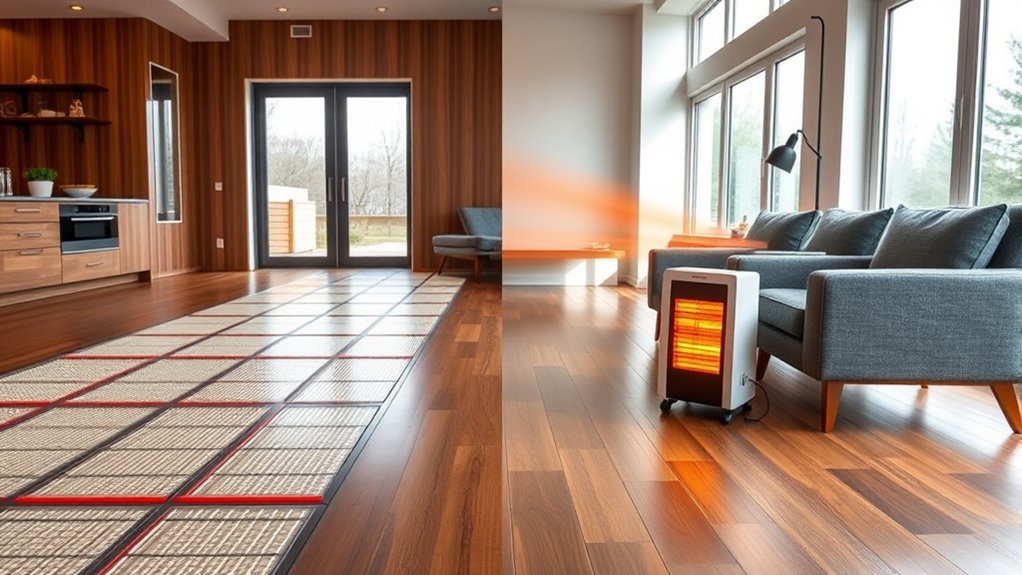

When choosing between floor heating and space heaters, consider your home’s needs and your lifestyle. Floor heat offers consistent, silent warmth and long-term energy savings but requires a bigger upfront investment and installation effort. Space heaters are portable, flexible, and great for quick comfort in specific rooms but can be costly if used extensively. To make the best choice, examine your space and budget—stay with us to learn more about each option’s pros and cons.
Key Takeaways
- Floor heating provides consistent, silent warmth from the ground up, ideal for long-term comfort and energy efficiency.
- Space heaters are portable, quick to install, and suitable for immediate, room-specific heating needs.
- Installing floor heat often requires significant upfront work like lifting floors but reduces ongoing energy costs.
- Space heaters are cost-effective for temporary or supplemental heating but less efficient for whole-home warmth.
- Proper system design, including duct sealing and thermostat placement, enhances the efficiency of both floor heat and space heaters.
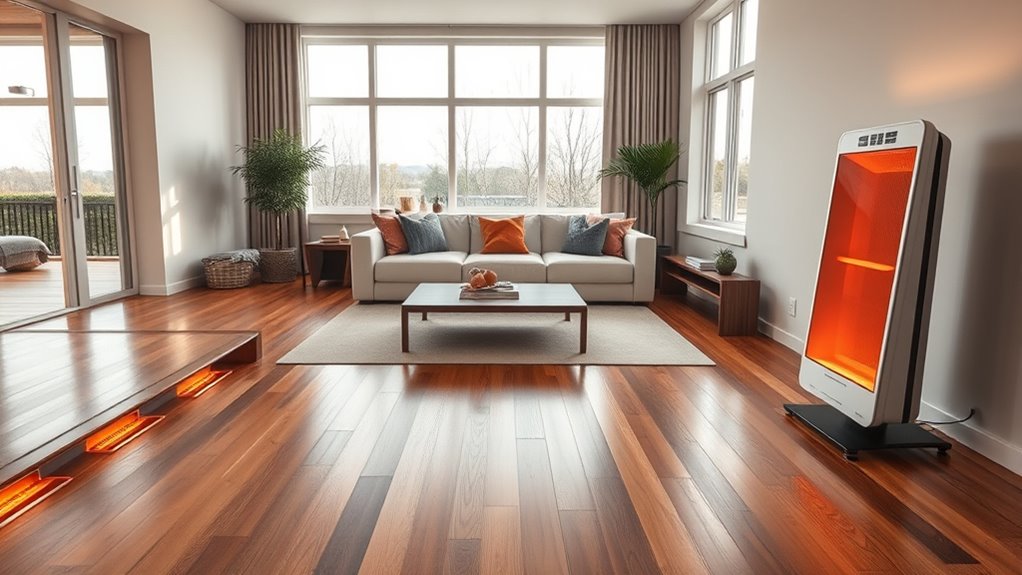
Are you ready to upgrade your home’s comfort? When considering a new heating system, the first step is understanding how to maximize its efficiency and effectiveness. Ductwork installation plays a key role here. Properly designed and sealed ducts ensure warm air flows smoothly throughout your home, reducing energy waste and keeping every room cozy. If your home already has ductwork, inspecting and sealing leaks can improve overall performance. For homes without existing ducts, consider whether ducted systems or alternative heating methods suit your needs better.
Optimizing ductwork and sealing leaks enhances your home’s heating efficiency and comfort.
Thermostat placement is another essential aspect of creating a comfortable environment. You want your thermostat positioned where it can accurately sense the temperature without being affected by drafts, sunlight, or heat from appliances. Typically, placing it on an interior wall at eye level, away from windows and vents, guarantees more precise readings. Proper thermostat placement ensures your heating system responds appropriately, avoiding unnecessary energy consumption or uneven heating. When installing a new system, think about upgrading to a smart thermostat, which allows you to schedule heating times and adjust temperatures remotely, further increasing efficiency.
Choosing between floor heat and space heaters depends on your lifestyle, home layout, and budget. Floor heating systems, such as in-floor electric or hydronic setups, provide consistent warmth from the ground up. They’re ideal for those who want a seamless, silent, and energy-efficient solution. Installing floor heat requires significant upfront work, including possibly lifting floors and installing mats or pipes beneath the surface. Once in place, they require minimal maintenance and create a luxurious feeling underfoot, especially in colder months. Incorporating floor heating systems can also enhance the overall comfort and aesthetic appeal of your home.
On the other hand, space heaters offer flexibility and quick heat. They’re portable, easy to install, and capable of heating individual rooms as needed. Electric space heaters are simple to operate, but they can become costly if used extensively. Gas-powered or kerosene heaters can warm larger spaces but require proper ventilation and safety precautions. Space heaters are best for supplemental heating or smaller areas, whereas floor heat provides whole-home comfort with less active management.
Ultimately, your choice hinges on your priorities. If you value consistent, hidden warmth and long-term savings, floor heating systems are a solid investment. But if you need immediate, flexible heat for specific rooms or temporary comfort, space heaters work well. Whichever route you choose, paying attention to ductwork installation and thermostat placement ensures your heating system performs at its best, keeps your energy bills in check, and makes your home a more comfortable place to be.

LuxHeat 20sqft Floor Heating Mat Kit – 120v in Floor Heating System – Complete Electric Radiant Heated Flooring System Includes Alarm, UDG Programmable Thermostat w/GFCI & Flooring Sensor
- Coverage Area: 20 sq ft heating mat
- Voltage: 120V system
- Complete Kit: Includes thermostat, alarm, sensor
As an affiliate, we earn on qualifying purchases.
As an affiliate, we earn on qualifying purchases.
Frequently Asked Questions
What Is the Typical Lifespan of Floor Heating Systems Versus Space Heaters?
You’ll find that floor heating systems typically last 25 to 35 years, thanks to their system durability, making them a long-term investment. Space heaters, however, usually need replacement every 5 to 10 years because of frequent use and potential wear. This means you’ll spend less on replacements with floor heat, but space heaters require more frequent upkeep, impacting their overall cost and convenience.
Are There Specific Building Codes for Installing Floor Heat or Space Heaters?
You’ll want to check if your local building permits and electrical codes have strict rules for installing floor heat or space heaters. Ignoring these can lead to disasters that are as big as a hurricane! Most places require permits and adherence to electrical codes to guarantee safety and efficiency. Always consult your local building department or a licensed professional to avoid costly penalties or hazards.
How Do Maintenance Costs Compare Between the Two Heating Options?
You’ll find that maintenance costs for floor heat tend to be lower over time due to its energy efficiency and fewer moving parts. However, it requires more initial installation complexity, which can increase upfront costs. Space heaters are simpler to maintain and install, but they often consume more energy and may need more frequent repairs, leading to higher ongoing costs. Overall, your choice impacts long-term expenses and ease of upkeep.
Can These Systems Be Used Effectively in Outdoor or Covered Areas?
You can use these systems effectively in outdoor or covered areas, but their outdoor compatibility varies. Floor heat typically isn’t suitable for exposed outdoor use due to moisture concerns, while space heaters are more versatile for covered areas like patios or porches. For ideal covered area heating, choose weather-resistant models specifically designed for outdoor conditions. Guarantee proper installation and safety measures to keep your space comfortably heated and safe.
What Are the Safety Concerns Associated With Each Heating Method?
You should be aware that both floor heat and space heaters pose safety concerns. Space heaters can be a fire hazard if left unattended or placed too close to flammable materials. For floor heat, guarantee electrical safety by properly installing systems to prevent shorts or shocks. Always follow manufacturer guidelines, keep heaters away from water, and regularly inspect wiring to reduce risks of fire and electrical accidents.
Conclusion
Choosing between floor heat and space heaters is like picking the right brush for your masterpiece. Floor heating offers even warmth that blankets your home like a cozy embrace, while space heaters provide quick, targeted heat when you need it most. Consider your space, budget, and comfort preferences. Whichever you pick, you’ll be creating a warm haven—your personal sanctuary amid the chill of winter. Stay warm and enjoy the cozy comfort you deserve.