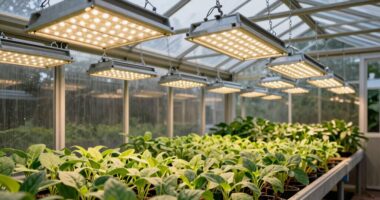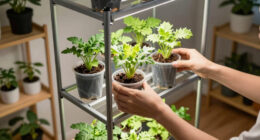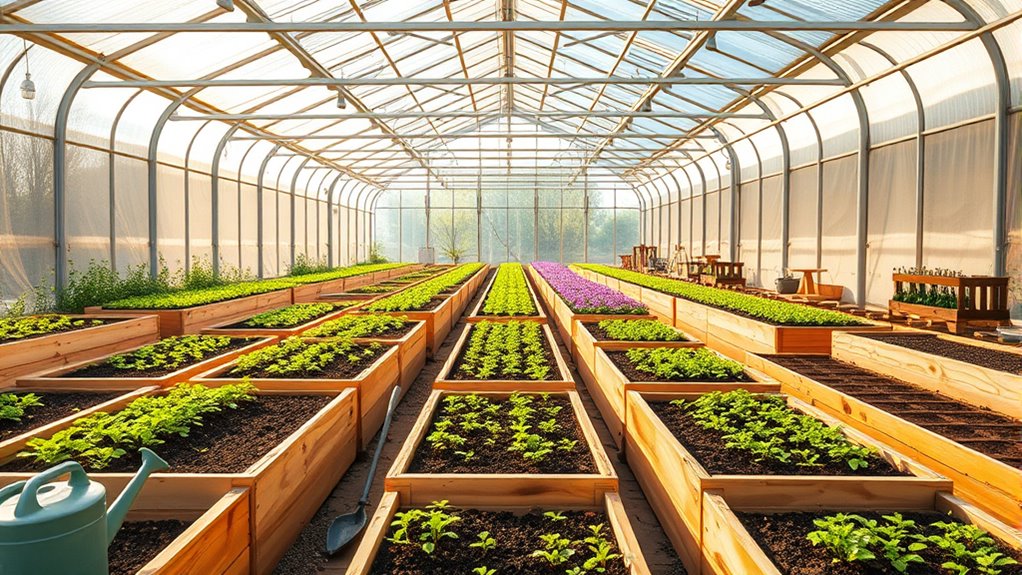

Building raised beds inside your greenhouse is a great way to improve soil quality and create an ideal growing environment. Start by removing weeds and debris, then loosen the soil and mix in compost or organic matter to boost fertility. Incorporate drainage amendments like peat moss or coconut coir and prevent soil compaction for healthy roots. Proper soil prep combined with pest control strategies helps make certain thriving plants, so keep exploring for more tips.
Key Takeaways
- Choose a suitable location inside the greenhouse with adequate sunlight and airflow.
- Build sturdy frames using materials like wood, metal, or composite suited for indoor environments.
- Prepare the soil with compost, organic matter, and amendments to ensure fertility and drainage.
- Incorporate pest control measures, such as physical barriers and crop rotation, for a healthy growing environment.
- Ensure proper drainage and easy access for maintenance and harvesting within the raised beds.
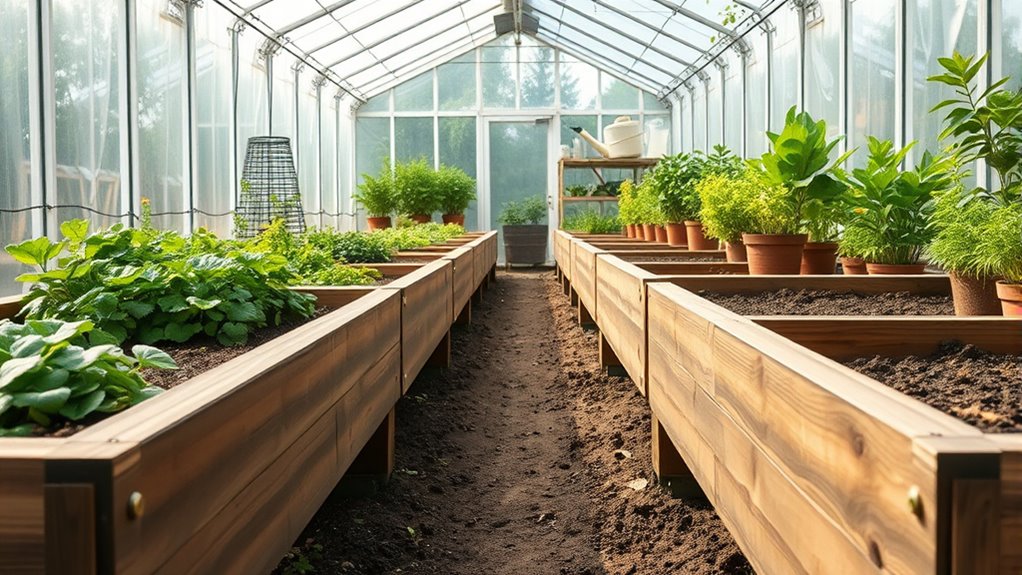
Creating raised beds inside your greenhouse is an excellent way to optimize space, improve soil conditions, and increase your growing efficiency. When setting up these beds, soil preparation becomes your first priority. You want to guarantee the soil is rich, well-draining, and balanced with the right nutrients. Start by removing any existing weeds or debris from the bed area. Loosen the soil with a garden fork or tiller to aerate it, which promotes healthy root growth. Mix in compost or organic matter to enhance fertility and moisture retention. Adding peat moss, coconut coir, or other organic amendments can improve drainage and structure. Proper soil prep not only boosts plant growth but also helps prevent common issues like soil compaction, which can hinder root development. Cultivating a healthy soil environment encourages the development of strong, resilient plants that can better resist pests and diseases.
Pest control is another critical aspect when building raised beds inside your greenhouse. Since the enclosed environment can create a perfect habitat for pests, you need to plan ahead. Use physical barriers like row covers or insect netting over your beds to keep pests out while still allowing light and air to circulate. Regular inspection is essential—look for signs of pests such as holes in leaves, sticky residue, or visible insects. If you detect pests early, use organic controls like neem oil, insecticidal soap, or introducing beneficial insects such as ladybugs or predatory mites. These methods are effective and safe for your plants and the overall greenhouse environment.
In addition to physical barriers and biological controls, maintaining cleanliness is crucial for pest prevention. Remove any dead plant material, weeds, or fallen leaves that could harbor pests or diseases. Rotating crops within your raised beds can also disrupt pest life cycles, reducing the likelihood of infestations. Monitoring humidity and temperature levels inside your greenhouse helps prevent conditions that pests thrive in, such as excessive humidity.
Building raised beds also simplifies pest management because you can control the soil environment more precisely. You can use soil amendments that deter pests or create a less hospitable environment for harmful insects. Regularly rotating your crops and keeping the soil healthy through proper preparation makes your raised beds less attractive to pests, reducing the need for chemical interventions. Additionally, integrating companion planting strategies can naturally repel certain pests and enhance plant health. Overall, combining thorough soil preparation with vigilant pest control measures creates a thriving, healthy environment for your plants, ensuring a successful growing season inside your greenhouse.

Quictent Raised Garden Bed with Cover Outdoor Galvanized Metal Planter Box Kit, w/ 2 Large Screen Windows Mini Greenhouse 20pcs T Tags 1 Pair of Gloves Included for Growing Vegetables 6x3x1ft (Clear)
【Garden Bed with Greenhouse Kit】3 in 1 Galvanized raised garden bed kit, 1 kit equals 3 products: garden…
As an affiliate, we earn on qualifying purchases.
As an affiliate, we earn on qualifying purchases.
Frequently Asked Questions
What Materials Are Best for Indoor Raised Beds?
For indoor raised beds, you should choose materials that are durable and safe for container gardening. Wooden boards like cedar or redwood are popular because they’re resistant to rot and eco-friendly. Guarantee good soil selection by using a high-quality, well-draining mix tailored for container gardening. Avoid treated woods with chemicals, and consider lining the beds to protect the material and maintain soil health inside your greenhouse.
How Do I Prevent Pests Inside the Greenhouse?
Did you know that proper pest control strategies can reduce infestations by up to 80%? To prevent pests inside your greenhouse, you should start with consistent greenhouse sanitation—remove debris and weeds regularly. Use sticky traps to catch flying insects and introduce natural predators like ladybugs. Keep plants healthy and well-watered, and inspect regularly. These steps create an environment less inviting to pests, helping you maintain a thriving greenhouse.
What’s the Ideal Soil Mix for Raised Beds?
You should use a soil mix with excellent drainage and plenty of organic amendments. Combine equal parts of compost, peat moss or coconut coir, and coarse sand or perlite to guarantee good aeration and moisture retention. This blend provides nutrients, improves soil structure, and prevents waterlogging. Regularly add organic matter like compost or aged manure to keep your raised beds fertile, promoting healthy plant growth inside your greenhouse.
How Often Should I Water Indoor Raised Beds?
You should water your indoor raised beds when the top inch of soil feels dry, typically every 1-3 days. Adjust your watering frequency based on indoor humidity; higher humidity means less frequent watering, while lower humidity requires more. Keep an eye on your plants’ moisture needs, and make certain proper drainage to prevent overwatering. Consistent watering helps maintain healthy roots and vibrant growth inside your greenhouse.
Can Raised Beds Be Moved Once Set Up?
Raised beds can be moved if you consider movability concerns and bed stability. You’ll want to make certain the bed is lightweight enough to relocate and that it maintains stability during the move. Using wheels or handles can ease the process, but be cautious about damaging roots or disrupting plants. Keep in mind, some beds are more permanent, so plan carefully before attempting to relocate them inside your greenhouse.

Miracle-Gro Organic Indoor Potting Mix – Protects Against Over and Under Watering, Planting Soil for Indoor Container Plants, Houseplants and Starter Plants, OMRI Listed, 16 qt.
HELPS REGULATE SOIL MOISTURE: Miracle-Gro Organic Indoor Potting Soil Mix is an organic potting soil that protects indoor…
As an affiliate, we earn on qualifying purchases.
As an affiliate, we earn on qualifying purchases.
Conclusion
Now that you’ve built raised beds inside your greenhouse, you’ll notice your plants thrive even more. It’s funny how simple adjustments can make such a difference, isn’t it? As you enjoy the fresh produce and lush growth, you might find yourself thinking back to those first steps—you, the greenhouse expert, turning a blank space into a vibrant garden. It’s amazing how a little planning and effort can turn coincidence into your own gardening success story.

Sunwinx 2 Pack Garden Netting for Raised Beds, 4x2FT Raised Bed Cover for Garden Protection, Ultra Fine Mesh Bird Netting Pest Barrier Screen with Drawstring for Protecting Vegetables Fruits Flowers
Perfect Fit for Raised Beds: This 2 pack garden netting pest barrier is sized at 4.6*2.3*1.5 ft to…
As an affiliate, we earn on qualifying purchases.
As an affiliate, we earn on qualifying purchases.

Miracle-Gro Organic Outdoor Potting Mix – Plant Soil for Outdoor Container Plants, Contains Quick-Release Natural Fertilizer, OMRI Listed, 16 qt.
OUTDOOR POTTING SOIL: Miracle-Gro Organic Outdoor Potting Mix contains a quick-release natural plant fertilizer and also feeds plants…
As an affiliate, we earn on qualifying purchases.
As an affiliate, we earn on qualifying purchases.