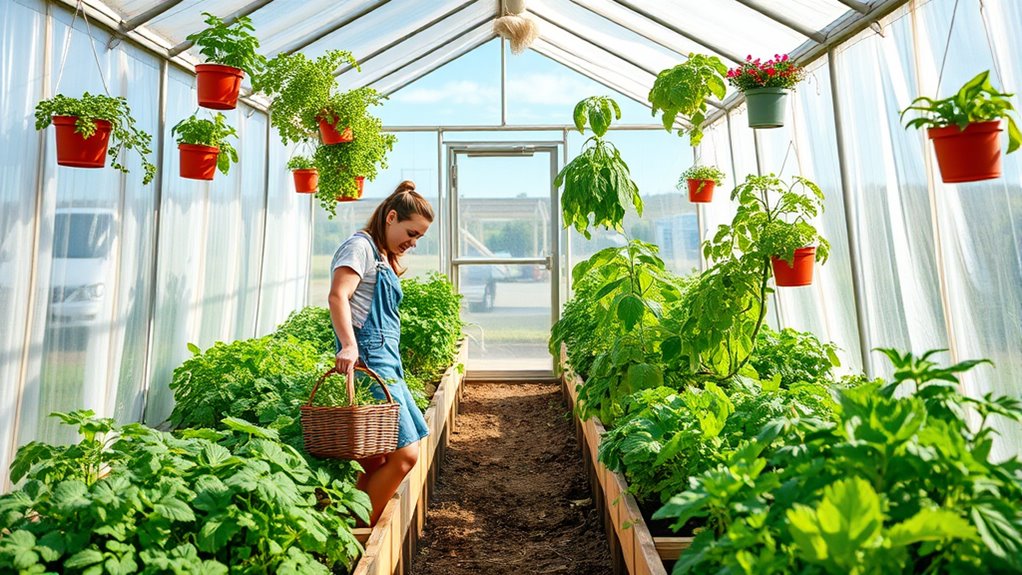
To balance work and food production in your DIY greenhouse, establish efficient routines such as consistent watering schedules and pest management practices that suit your plants’ needs. Use tools like moisture meters and pest inspections to minimize guesswork, and automate watering with timers to save time. Keep detailed records to spot patterns and optimize your efforts. By staying organized, you’ll maximize yields while reducing stress—continue exploring to discover even more ways to streamline your process.
Key Takeaways
- Establish consistent watering routines aligned with plant needs to reduce workload and prevent issues like overwatering or under-watering.
- Automate watering systems, such as drip lines or timers, to save time and ensure regular, optimal moisture levels.
- Regularly inspect plants for pests and maintain cleanliness to minimize pest management efforts and promote healthy growth.
- Keep detailed records of watering schedules and pest occurrences to identify patterns and proactively address issues.
- Adjust management practices based on plant growth stages and environmental conditions to optimize yields with minimal effort.
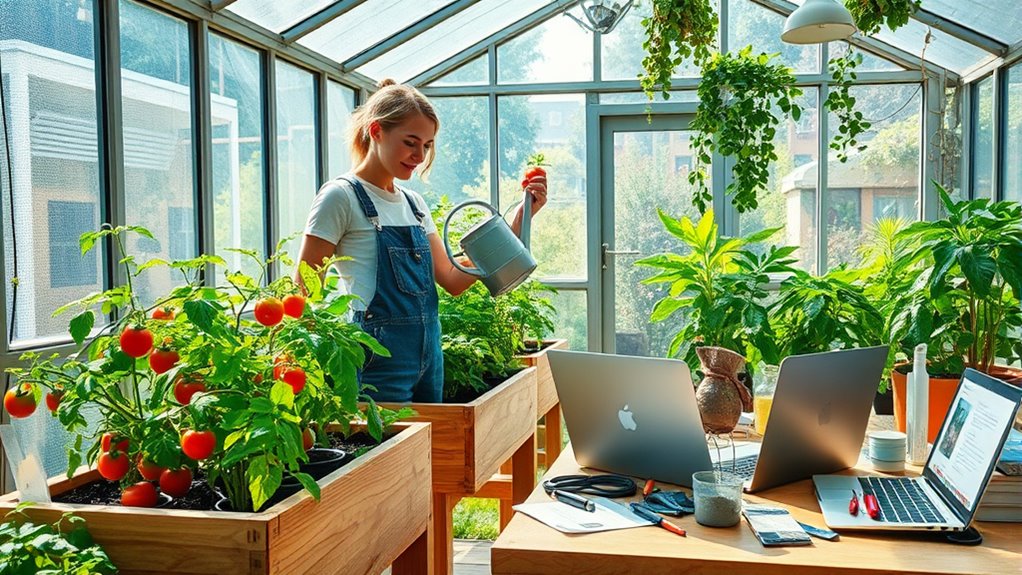
Creating a DIY greenhouse can be a rewarding way to grow your own food, but balancing the workload with maintaining healthy plants can be challenging. One of the most critical aspects is establishing effective watering schedules. Consistent watering keeps your plants healthy, but overwatering can lead to root rot, while under-watering stunts growth. To avoid these issues, develop a routine based on the specific needs of your plants. Use a moisture meter or check soil moisture regularly to determine when to water. Early mornings or late afternoons are ideal times to water, as it allows excess moisture to evaporate and reduces the risk of fungal diseases. Automating watering with drip systems or timers can save time and ensure plants receive consistent moisture, freeing you up to focus on other tasks. Regularly updating your watering schedule based on plant growth stages can also optimize health and yields.
Pest management is another vital consideration in balancing your greenhouse workload. Pests like aphids, whiteflies, and spider mites can quickly infest your plants, causing damage and reducing yields. To keep pests under control without overwhelming yourself, start with preventive measures. Regularly inspect plants, especially under leaves and in hidden corners, to catch infestations early. Introduce beneficial insects such as ladybugs or lacewings, which naturally control pest populations. Keep your greenhouse clean by removing dead plant material and debris that can harbor pests. Consider using organic pest control methods like neem oil or insecticidal soap, which are effective yet safe for your plants and your environment. Implementing integrated pest management (IPM) strategies helps you maintain a healthy balance between pest control and plant health, minimizing the need for chemical interventions.
Balancing watering schedules and pest management requires consistency and attention, but it’s manageable once you establish routines. Keep records of your watering times and pest occurrences to identify patterns and improve your approach over time. This way, you can anticipate the needs of your plants and address problems proactively. Remember, healthy plants are less susceptible to pests and disease, so maintaining proper watering and hygiene is fundamental. By staying organized and attentive, you reduce the workload in the long run and create a thriving environment for your plants. Ultimately, managing these tasks efficiently allows you to enjoy the fruits of your labor—fresh, home-grown produce—without feeling overwhelmed. Your dedication to daily care will pay off with lush, productive plants and a more enjoyable greenhouse experience. Incorporating topical authority strategies such as detailed record-keeping and ongoing learning can further enhance your success.
automatic drip irrigation system for greenhouse
As an affiliate, we earn on qualifying purchases.
As an affiliate, we earn on qualifying purchases.
Frequently Asked Questions
How Can I Automate Watering in My DIY Greenhouse?
You can automate watering in your DIY greenhouse by installing a drip irrigation system connected to a timer or a smart controller. Incorporate moisture sensors that detect soil moisture levels, triggering watering only when needed. This setup guarantees your plants get consistent hydration without overwatering. Regularly check sensors and adjust settings to match your plants’ needs, making watering effortless and efficient while saving you time and effort.
What Are the Best Plants for Small Greenhouse Spaces?
You should focus on compact, high-yield plants like herbs, lettuce, and cherry tomatoes for small greenhouse spaces. Incorporate companion planting to maximize space and improve plant health, pairing basil with tomatoes or marigolds with peppers. Container gardening works well too, allowing you to optimize limited space while keeping plants manageable. These strategies help you produce a diverse, healthy garden without overwhelming your small greenhouse environment.
How Do I Prevent Pests Naturally in My Greenhouse?
To prevent pests naturally in your greenhouse, you should practice companion planting, which attracts beneficial insects and repels pests. Use natural repellents like neem oil or garlic spray, and plant herbs like basil and marigolds near your vegetables. Keeping your greenhouse clean and well-ventilated also discourages pests. Regularly inspect plants for early signs of trouble, and act quickly to maintain a healthy, pest-free environment.
What Tools Are Essential for Greenhouse Maintenance?
You need essential tools like pruning shears and a hand trowel for greenhouse maintenance. A thermometer helps monitor temperature, while a moisture meter ensures proper watering. Don’t forget to manage compost effectively with a compost bin or pitchfork, and use grow lights or supplemental greenhouse lighting to optimize plant growth. These tools make it easier to keep your greenhouse healthy, productive, and well-maintained.
How Can I Extend My Growing Season Effectively?
Did you know that a well-implemented season extension can double your growing period? To do this, you should use row covers, thermal mass, and proper ventilation. Incorporate crop rotation to keep soil healthy and pests at bay. By carefully managing your greenhouse environment and rotating crops, you’ll extend your growing season effectively, allowing you to harvest fresh produce earlier and later in the year.
Conclusion
By finding harmony between your work and food production, you turn your DIY greenhouse into a lush sanctuary of growth. Imagine your efforts like gentle rain nourishing vibrant plants, each task a seed sprouting into abundance. With patience and balance, your greenhouse becomes a living demonstration to your dedication—where work and nature bloom side by side. Embrace this dance, and soon, you’ll reap the sweet harvest of both productivity and fulfillment.