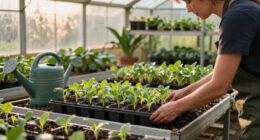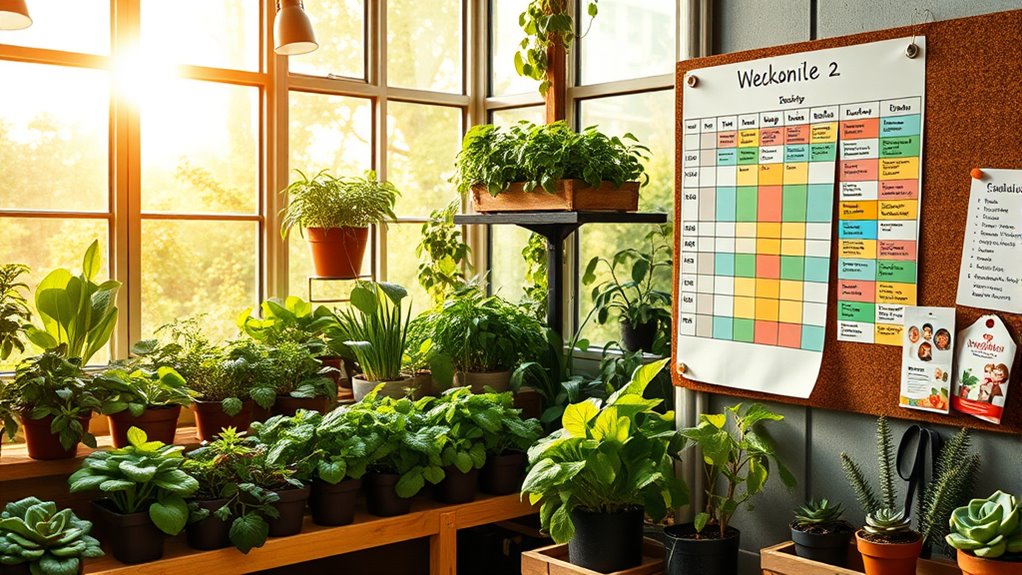

To create a greenhouse schedule for self-sufficient living, start by planning your plant propagation early, scheduling seed-starting and transplanting to guarantee a steady supply of healthy seedlings. Incorporate regular pest monitoring and organic control methods, aligning these activities with seasonal pest activity. Allocate days for soil preparation, fertilization, and watering based on plant growth stages. Developing a detailed timetable helps you stay organized, and the more you structure your routine, the more you optimize your greenhouse for year-round sustainability.
Key Takeaways
- Develop a detailed timetable integrating seed-starting, transplanting, and harvesting aligned with seasonal growth cycles.
- Schedule regular pest inspections and organic control methods to prevent infestations without disrupting plant health.
- Allocate specific days for soil preparation, fertilization, and watering routines tailored to plant developmental stages.
- Incorporate continuous propagation activities to ensure a steady supply of seedlings for year-round self-sufficiency.
- Adjust routines seasonally, optimizing pest management and resource use to maintain a healthy, productive greenhouse environment.
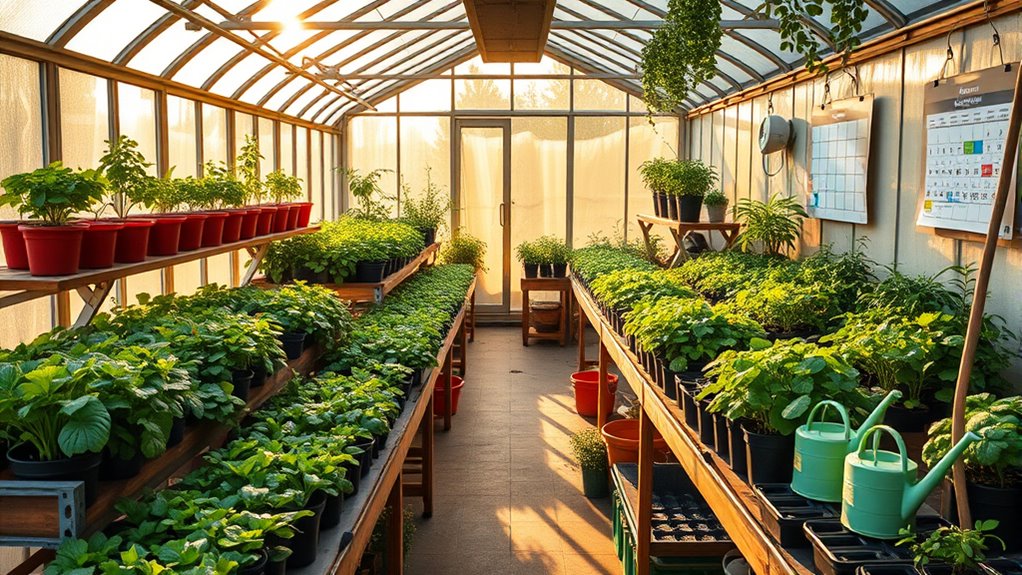
Creating a greenhouse schedule is vital for anyone aiming to achieve self-sufficient living. When you plan your activities carefully, you maximize your yields and maintain a healthy environment for your plants. One of the key aspects of this schedule is understanding plant propagation, which involves starting new plants from seeds, cuttings, or other methods. By timing your propagation activities correctly, you guarantee a steady supply of seedlings ready for transplanting into your greenhouse or garden. For example, beginning seed-starting early in the season allows your plants to mature indoors before the weather permits outdoor planting. This means you’ll have a continuous cycle of growth, reducing dependence on store-bought produce. Equally important is managing pests effectively, which requires integrating pest management strategies into your schedule. Regular monitoring helps you catch infestations early, preventing them from spreading and damaging your crops. You might schedule weekly inspections, especially during peak pest activity seasons, to identify issues like aphids, whiteflies, or fungal diseases. Using organic pest control methods, such as neem oil or insecticidal soaps, can be incorporated into your routine without harming beneficial insects or the environment. Timing these interventions correctly guarantees pests are kept in check without disrupting your plants’ growth cycle.
Additionally, understanding the specific needs of growing chia seeds can help you optimize your schedule for better yields and seed quality. Your schedule should also include specific days dedicated to soil preparation, fertilization, and watering, aligning these activities with plant growth stages for ideal results. For plant propagation, keep a timetable for starting seeds, taking cuttings, and transplanting seedlings, so you stay on track throughout the year. When it comes to pest management, set regular intervals for inspecting plants and applying treatments as needed. This proactive approach minimizes crop loss and maintains a healthy greenhouse environment. Additionally, plan for seasonal adjustments; some pests are more active in warmer months, requiring more frequent checks, while cooler periods might allow you to reduce interventions.
Consistency is vital; by sticking to your schedule, you develop a routine that ensures your greenhouse remains productive and pest-free. Remember, a well-organized plan also helps you anticipate needs, like adding compost or adjusting watering times, which supports plant health and growth. Ultimately, creating a detailed greenhouse schedule that incorporates plant propagation and pest management will help you stay organized, reduce waste, and increase your chances of self-sufficient living. When you approach your greenhouse with a clear plan, you’ll find it easier to maintain healthy plants, harvest more, and enjoy the satisfaction of growing your own food year-round.
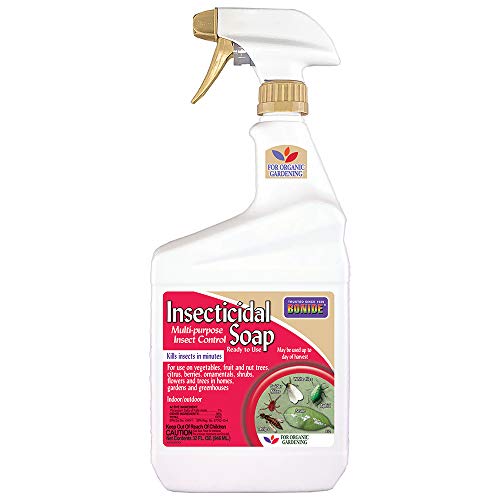
Bonide Insecticidal Soap, 32 oz Ready-to-Use Spray Multi-Purpose Insect Control for Organic Gardening Indoor and Outdoor
- Effective Against Multiple Pests: Controls adelgid, aphid, spider mite, and more
- Suitable for Outdoor Use: Ideal for gardens, lawns, greenhouses
- Kills on Contact and Ingestion: Effective through direct spray or leaf feeding
As an affiliate, we earn on qualifying purchases.
As an affiliate, we earn on qualifying purchases.
Frequently Asked Questions
How Can I Adapt My Schedule for Seasonal Weather Changes?
You can adapt your schedule for seasonal weather changes by making seasonal temperature adjustments and planning crop rotation accordingly. As temperatures shift, modify heating or cooling times to maintain ideal greenhouse conditions. Incorporate crop rotation planning to guarantee soil health and pest control, adjusting planting and harvest dates based on seasonal forecasts. Stay flexible and monitor weather patterns closely, so you can respond promptly to changing conditions and keep your self-sufficient greenhouse thriving year-round.
What Tools Are Best for Monitoring Greenhouse Conditions?
You should use reliable sensors with easy calibration to monitor greenhouse conditions effectively. Look for temperature, humidity, and soil moisture sensors that offer data logging features, so you can track trends over time. Regularly calibrate your sensors to guarantee accuracy, and review logged data to make informed adjustments. This approach helps maintain ideal growing conditions, ensuring your plants thrive regardless of seasonal changes.
How Do I Prioritize Crops for Year-Round Growth?
To prioritize crops for year-round growth, start by planning a crop rotation schedule that balances soil fertility and pest management. Choose hardy, fast-growing crops for winter, and rotate them with nutrient-demanding plants in warmer months. Regularly monitor soil health to maintain fertility, and adjust your planting schedule based on seasonality and crop success. This approach guarantees continuous harvests and sustainable greenhouse productivity throughout the year.
Can I Automate Parts of My Greenhouse Maintenance?
Imagine your greenhouse as a well-tuned orchestra, each instrument playing in harmony. Yes, you can automate parts of your maintenance, like setting a watering schedule and pest management system. By installing sensors and timers, you guarantee plants receive consistent watering and timely pest control. This automation keeps your greenhouse thriving without constant effort, so you can focus on nurturing your crops and enjoying the symphony of self-sufficient living.
What Are Signs My Plants Need More or Less Attention?
You’ll notice your plants need more attention if their leaves yellow, growth slows, or they show signs of pest damage. Conversely, if leaves turn brown or you see overgrowth, they might need less fertilization or pest management. Regularly monitor for pests and adjust your fertilization schedule accordingly. Automated systems can help, but always check plants visually to catch early signs of stress or pests.
Conclusion
With your greenhouse schedule in place, you’re planting the seeds of independence and resilience. Each task is a brushstroke on your canvas of self-sufficiency, turning your space into a lush sanctuary of abundance. As you nurture your plants, you’re also cultivating confidence and hope, watching your efforts blossom into a thriving life. Embrace this rhythm, and let your greenhouse become a living testament to your dedication—an oasis where dreams take root and flourish.