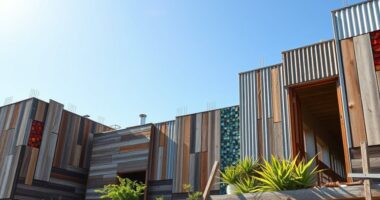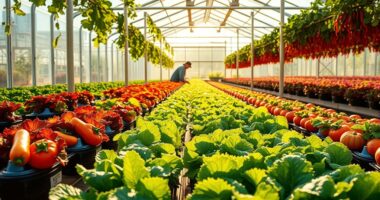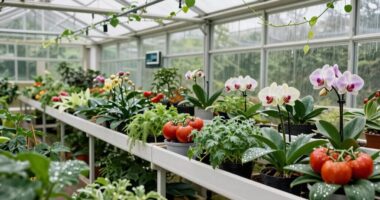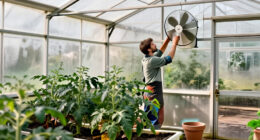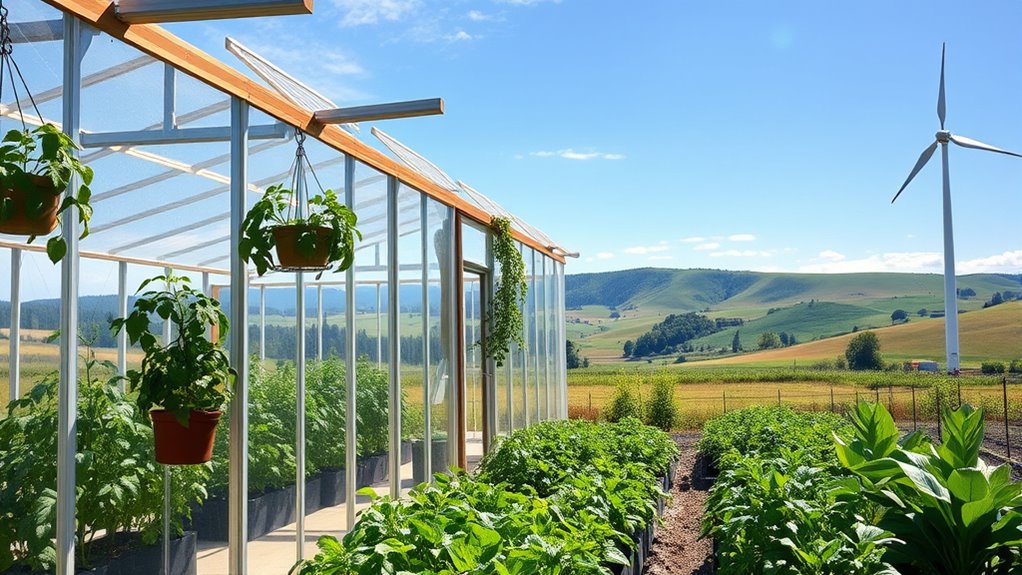
Living off-grid in a greenhouse powered by renewable energy can guarantee year-round food security while reducing your environmental impact. By installing solar panels, you can generate clean electricity for lighting, fans, and irrigation systems. Water conservation strategies like rainwater harvesting, drip irrigation, and mulching further support sustainable growth. Managing microclimates with passive solar design and ventilation keeps your crops healthy. Explore more ways to combine energy independence with reliable food production for a greener, self-sufficient lifestyle.

Get garden gear delivered free with Prime
- Fast, free delivery on millions of items
- Prime Video, Amazon Music and more included
- Member-only deals all year
Key Takeaways
- Integrate solar panels to power greenhouse systems, ensuring reliable energy for year-round crop cultivation.
- Collect and filter rainwater for irrigation, reducing dependence on external water sources.
- Use passive solar design and shading to maintain optimal temperatures without grid cooling or heating.
- Implement drip irrigation and mulch to conserve water and promote healthy plant growth.
- Create a self-sufficient system that combines renewable energy and water strategies to enhance food security.
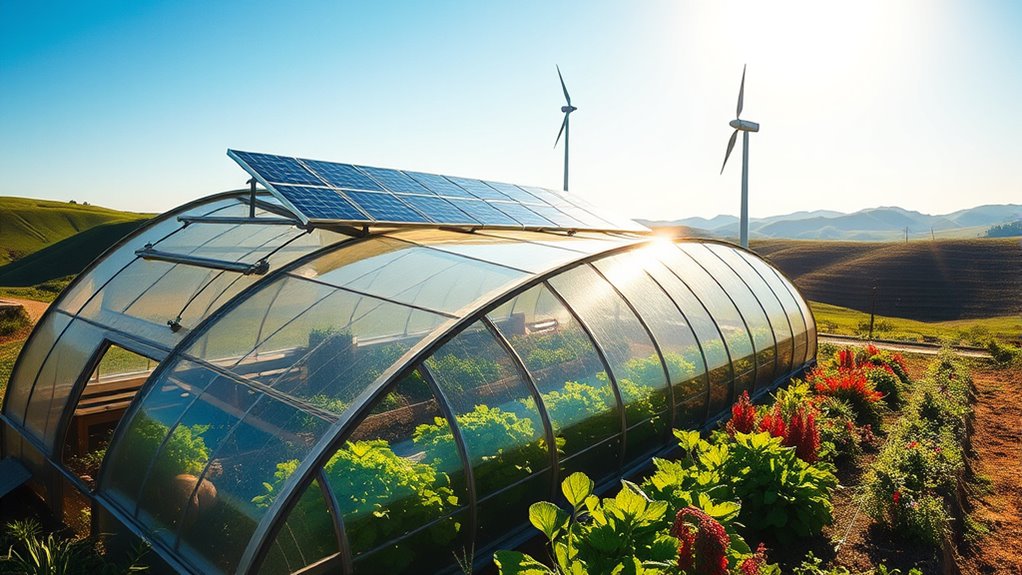
Living off-grid in a greenhouse offers a sustainable way to grow your own food while minimizing reliance on traditional power and water sources. When you choose to live off-grid, harnessing solar energy becomes essential. You can install solar panels to generate electricity, powering lighting, fans, and small appliances inside your greenhouse. Not only does this reduce your dependency on the grid, but it also provides a clean, renewable energy source that’s reliable and cost-effective over time. Properly positioned panels will maximize sunlight exposure, especially in areas with abundant sunshine, ensuring your greenhouse remains well-lit and climate-controlled year-round. Incorporating solar energy into your off-grid setup allows you to maintain a consistent environment for your plants and reduces your carbon footprint simultaneously. Additionally, selecting the right solar panel system can optimize energy collection and efficiency for your specific location. Water conservation is equally crucial when living off-grid. Since traditional water sources may be limited or unavailable, you’ll need to implement efficient water management strategies. Collect rainwater using gutters and storage tanks, then filter and reuse it for irrigation. Drip irrigation systems are excellent for water conservation because they deliver moisture directly to the roots, minimizing waste. Mulching your soil also helps retain moisture, reducing the frequency of watering. You might consider installing greywater systems to reuse water from sinks or washing machines for your plants, further conserving resources. These practices not only sustain your crops but also foster an eco-friendly lifestyle that aligns with renewable energy principles. Inside your greenhouse, creating a microclimate that optimizes both energy use and water efficiency is key. Use passive solar design techniques—such as thermal mass materials to retain heat during colder months—and strategic shading to prevent overheating. This reduces the need for additional heating or cooling, saving energy. Ventilation systems powered by your solar setup can help regulate humidity and temperature, promoting healthy plant growth while conserving power. By carefully managing your greenhouse environment, you ensure your crops thrive with minimal external inputs. Living off-grid in a greenhouse is about integrating renewable energy and water conservation into your daily routine. It’s a lifestyle that emphasizes independence, environmental responsibility, and food security. With solar energy, you generate your own power, reducing reliance on fossil fuels and grid infrastructure. By conserving water through smart collection, filtration, and efficient irrigation, you create a resilient system that sustains your crops and your way of life. This approach enables you to enjoy fresh produce year-round, all while maintaining a low-impact, sustainable footprint.
As an affiliate, we earn on qualifying purchases.
Frequently Asked Questions
What Are the Initial Costs of Setting up an Off-Grid Greenhouse?
When you consider the initial setup costs of an off-grid greenhouse, you should focus on accurate cost estimation and budget planning. Typically, you’ll need to account for durable materials, renewable energy systems like solar panels, and climate control equipment. Costs can range from a few thousand dollars for basic setups to considerably more for advanced features. Planning your budget carefully helps ensure you cover all essentials without surprises, making your off-grid greenhouse sustainable from the start.
How Do I Maintain Consistent Temperatures in an Off-Grid Greenhouse?
Like a seasoned alchemist, you harness passive solar to maintain steady temperatures. You’ll use proper insulation, ventilation, and shading to regulate heat, ensuring your greenhouse stays warm in winter and cool in summer. Regularly monitor temperature levels, and adjust shading or ventilation as needed. Incorporate thermal mass, like water barrels, to absorb and release heat, creating a stable environment. This approach keeps your plants thriving year-round, naturally and efficiently.
What Are the Most Effective Renewable Energy Sources for This Setup?
To power your off-grid greenhouse effectively, solar panels and wind turbines are your best options. Solar panels harness sunlight during the day, providing reliable energy for heating and lighting. Wind turbines can generate electricity even when it’s cloudy or calm, ensuring continuous power. Combining both maximizes energy availability, helping you maintain consistent temperatures and control climate conditions, ultimately supporting your food security goals efficiently and sustainably.
How Much Land Is Needed to Sustain a Family’S Food Needs?
Imagine a tiny patch of land feeding a family for a lifetime—that’s the power of smart planning! Typically, you’ll need about half an acre to grow a diverse range of crops, ensuring year-round food security. Land requirements depend on crop diversity, soil quality, and climate. Focusing on intensive, permaculture-style planting maximizes yield, making even small plots incredibly productive for sustainable off-grid living.
What Are Common Challenges Faced by Off-Grid Greenhouse Settlers?
You might face challenges like wildlife conflicts that threaten your crops and water quality issues that can affect your supply. Managing wildlife requires secure fencing and vigilant monitoring, while maintaining water quality involves filtering and testing your water sources regularly. These obstacles demand consistent effort and adaptation, but staying informed and prepared helps you safeguard your greenhouse and ensure a steady food supply off-grid.
Conclusion
Living off-grid in a greenhouse powered by renewable energy puts you in the driver’s seat of your food security. It’s a path where you reap what you sow, turning your home into a self-sustaining oasis. With the right mindset and tools, you can weather any storm and grow your own future. Remember, when you’re in control of your resources, you’re not just surviving — you’re thriving in a world of endless possibilities.
Fall Picks
fall essentials
As an affiliate, we earn on qualifying purchases.