To design a greenhouse with minimal environmental impact, focus on using sustainable materials like recycled steel, bamboo, or responsibly sourced wood. Maximize passive heating with strategic placement, high-performance glazing, and thermal mass to reduce energy needs. Incorporate natural ventilation through adjustable vents and cross-ventilation techniques. Combining these passive strategies with eco-friendly insulation helps lower energy consumption and supports plant health. Keep exploring to discover how these eco-conscious choices come together for a truly sustainable greenhouse design.
Key Takeaways
- Utilize recycled or responsibly sourced sustainable materials like bamboo or recycled steel to reduce environmental impact.
- Incorporate passive heating techniques such as strategic site placement, high-performance glazing, and thermal mass for natural temperature regulation.
- Design natural ventilation systems with adjustable vents and cross-flow airflow to minimize energy consumption.
- Optimize insulation with eco-friendly options to improve energy efficiency and reduce reliance on artificial heating.
- Integrate passive heating and ventilation strategies to lower greenhouse gas emissions and promote eco-friendly operation.
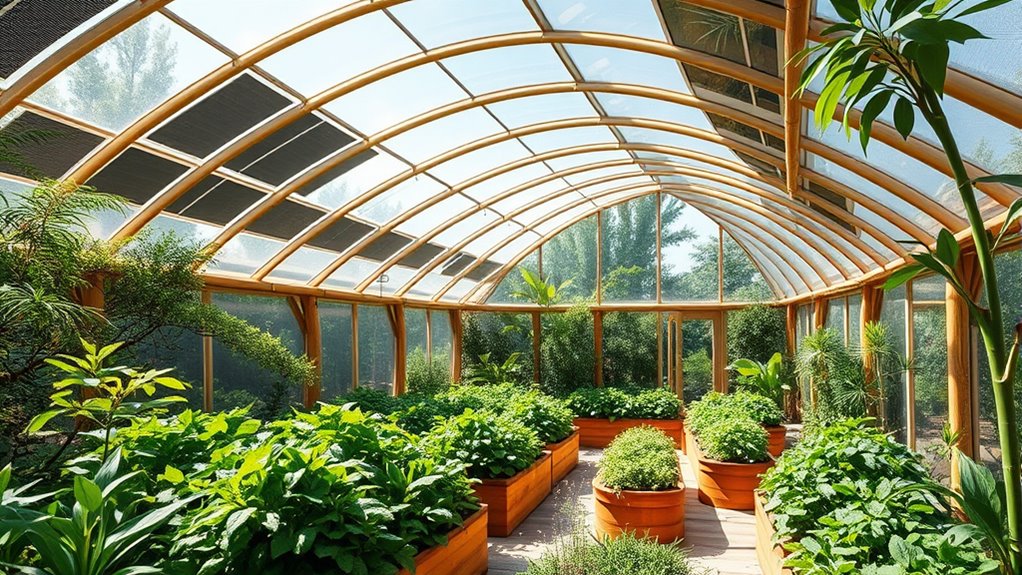
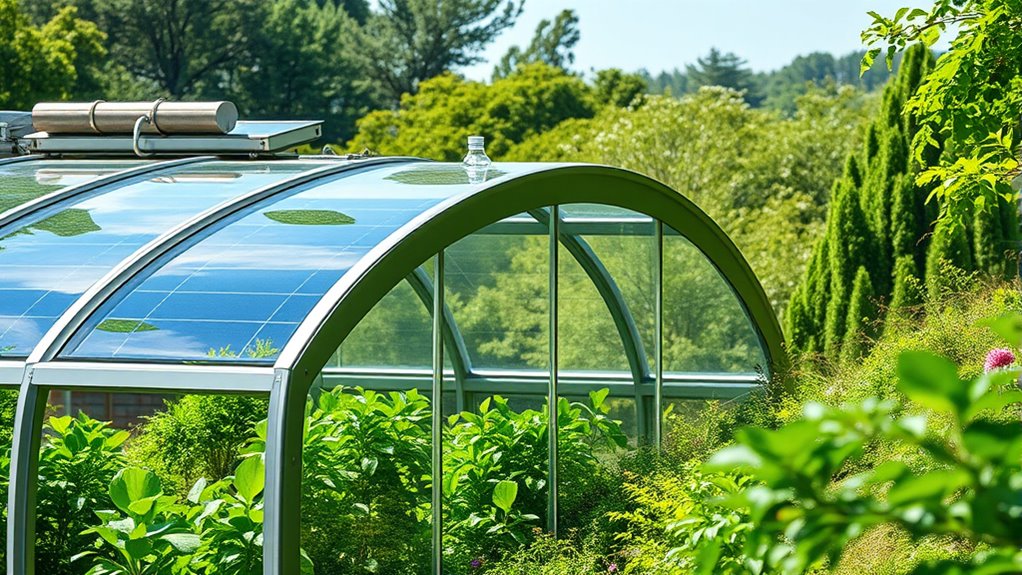
Designing a greenhouse involves more than just choosing a structure; it requires careful consideration of how sunlight, ventilation, and insulation work together to create an ideal environment for plants. One of your top priorities should be selecting sustainable materials that minimize environmental impact. Using eco-friendly options like recycled steel, bamboo, or responsibly sourced wood helps reduce your carbon footprint and promotes sustainability. These materials are durable and often require less energy to produce, making them an excellent choice for environmentally conscious greenhouse design. Incorporating sustainable materials into your greenhouse not only benefits the planet but also encourages a healthier growing environment for your plants. Additionally, choosing eco-friendly insulation options can further enhance energy efficiency and reduce heat loss, supporting your goal of minimal environmental impact. Passive heating is another indispensable element in creating an eco-friendly greenhouse. You want to maximize natural heat gain to reduce reliance on energy-intensive heating systems. To do this, place your greenhouse in a location that benefits from maximum sunlight exposure during the winter months. Use high-performance glazing that traps heat while allowing ample sunlight to enter. Strategically designing the structure to include south-facing windows or vents helps harness solar energy naturally. You can also add thermal mass elements like concrete or water barrels inside the greenhouse, which absorb heat during the day and release it slowly at night, maintaining a stable temperature without extra energy use. By combining sustainable materials with passive heating techniques, you considerably lower energy consumption and reduce greenhouse gas emissions. Ventilation plays a fundamental role in maintaining a healthy environment inside your greenhouse. Proper airflow helps regulate temperature and humidity, preventing issues like mold or pests. Incorporate adjustable vents and windows that can be opened or closed based on weather conditions. Automated vent systems that respond to temperature sensors are ideal, as they optimize airflow without requiring manual intervention. When designing for minimal environmental impact, focus on passive ventilation strategies as well, such as ridge vents or side openings that facilitate natural cross-ventilation. This approach minimizes the need for mechanical fans and reduces energy consumption.
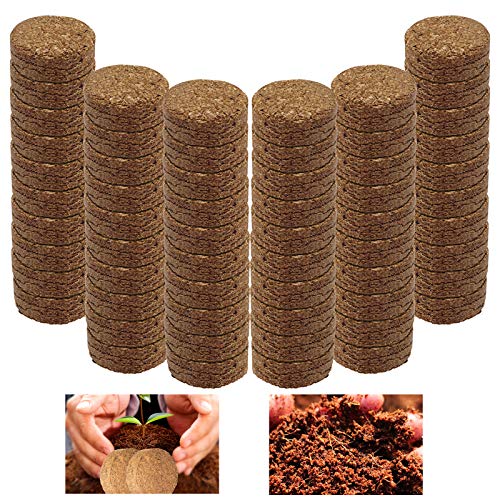
Iceyyyy 60pcs 40mm Compressed Coco Coir Fiber Potting Soil – Expanding Organic Coco Coir Pellet Fiber Soil, Peat Soil Pellets Seeds Starting Plugs for Planting (60, 1.57Inch)
- Sustainable Material: Eco-friendly coconut shell raw materials
- Package Includes: 60 compressed coco coir pellets
- Size of Pellets: 1.57 inches diameter, 0.5 inches height
As an affiliate, we earn on qualifying purchases.
As an affiliate, we earn on qualifying purchases.
Frequently Asked Questions
How Can Greenhouse Design Reduce Water Consumption Effectively?
You can reduce water consumption by incorporating water recycling systems and rainwater harvesting into your greenhouse design. These methods allow you to collect, store, and reuse water, minimizing waste. Using efficient irrigation techniques like drip systems also helps. By implementing these strategies, you guarantee your greenhouse uses water more sustainably, conserving resources and lowering your environmental impact while maintaining healthy plant growth.
What Sustainable Materials Are Best for Eco-Friendly Greenhouses?
You should choose sustainable construction materials like recycled steel, bamboo, or reclaimed wood for your greenhouse, as they reduce environmental impact. For eco-friendly insulation, consider options like sheep’s wool, cellulose, or cork, which provide excellent thermal regulation without harmful chemicals. These materials help create an energy-efficient greenhouse, lowering your carbon footprint while promoting eco-friendly practices. Incorporating sustainable materials guarantees your greenhouse remains environmentally responsible and durable over time.
How Does Greenhouse Orientation Impact Environmental Footprint?
You might think greenhouse orientation doesn’t matter, but it actually greatly impacts your environmental footprint. Properly aligning your greenhouse to maximize sun exposure reduces the need for artificial heating and cooling. Incorporate solar shading to control excess heat, and use thermal mass to store energy. These strategies work best when your greenhouse faces the sun’s path, helping you lower energy use and minimize environmental impact naturally.
Can Renewable Energy Sources Power Greenhouses Efficiently?
Yes, renewable energy sources can power greenhouses efficiently. By integrating solar panels for solar energy and harnessing wind through turbines, you can markedly reduce reliance on fossil fuels. Solar integration provides consistent power for heating and lighting, while wind harnessing offers additional energy during windy periods. Combining these sources ensures a steady, eco-friendly energy supply, making your greenhouse more sustainable and lowering its environmental footprint.
What Are the Cost Differences Between Eco-Friendly and Traditional Greenhouses?
You’ll find that eco-friendly greenhouses generally cost more upfront due to sustainable materials and energy-efficient systems, but they can save you money long-term through lower operating costs. The cost comparison shows higher initial investments, yet budget considerations often favor eco-friendly designs since they reduce energy bills and environmental impact. While traditional greenhouses are cheaper initially, investing in eco-friendly options pays off over time with energy savings and sustainability benefits.
Conclusion
So, you’ve designed your greenhouse to minimize environmental impact—yet, in the end, it’s easy to forget that every choice you make still leaves a footprint. Ironically, aiming for perfection often leads us to overlook the simple truths: no design is completely eco-friendly. But if you embrace small, mindful changes, you’ll find that even the tiniest efforts can make a big difference. After all, perfection isn’t the goal—progress is.