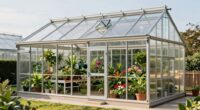
Before buying a greenhouse kit, understand the materials involved. Clear plastics like polycarbonate and polyethylene maximize light but vary in durability and cost, while glass offers aesthetic appeal and high light transmission but can be fragile. Frame choices, such as aluminum or steel, impact longevity and maintenance. Each material has pros and cons related to climate suitability, pest control, and long-term savings. If you keep exploring, you’ll discover key insights to make smart choices for your greenhouse needs.

Get garden gear delivered free with Prime
- Fast, free delivery on millions of items
- Prime Video, Amazon Music and more included
- Member-only deals all year
Key Takeaways
- Understand the differences between glass and plastic materials, considering durability, light transmission, and cost.
- Check UV stability and weather resistance to ensure long-term performance of the greenhouse covering.
- Consider the frame material’s impact on durability, maintenance, and overall climate control.
- Evaluate light diffusion properties to promote even plant growth and prevent hotspots.
- Factor in maintenance requirements and environmental impact when selecting materials for longevity and sustainability.
Products Worth Considering

Jocoevol 6 x 8 ft Walk-In Greenhouse with Polycarbonate Panels

Yardenaler 6 x 10 ft Wooden Walk-In Greenhouse with 6 mm Polycarbonate Panels

HOOYEAH 6 x 6 ft Walk-In Polycarbonate Greenhouse
As an affiliate, we earn on qualifying purchases.
What Are the Main Types of Greenhouse Materials?
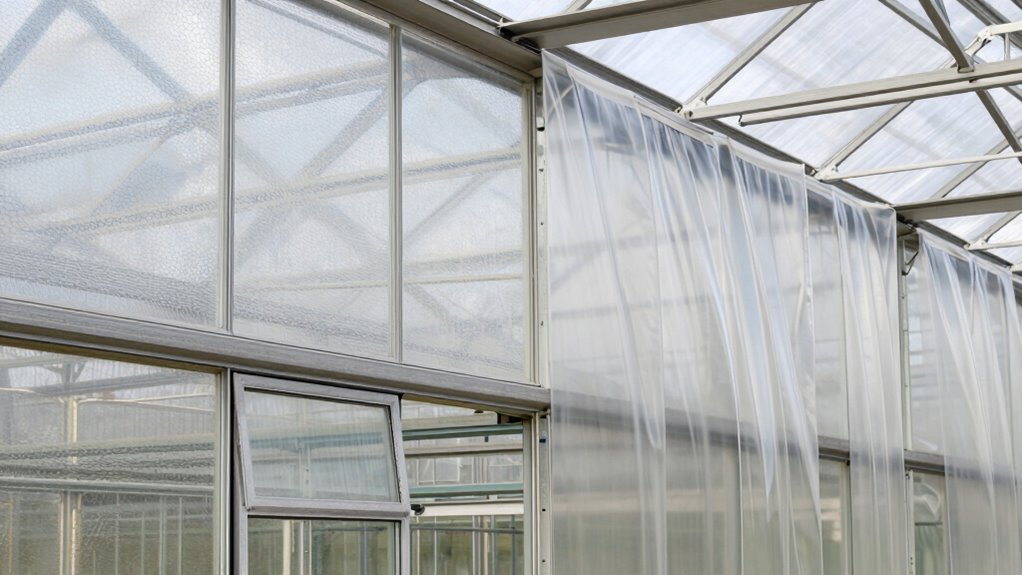
When choosing materials for your greenhouse, understanding the main types is essential because each offers different benefits and drawbacks. Clear plastics like polycarbonate and polyethylene are popular for promoting plant growth by allowing maximum light transmission. They also help with pest control, acting as barriers to insects and pests. Glass is another common option; it provides excellent light and durability, supporting healthy plant growth. However, glass can be more expensive and fragile. Polyethylene film is lightweight and cost-effective but may need frequent replacement. Each material impacts plant growth by influencing light levels and temperature, and pest control by the barrier it creates. Additionally, the contrast ratio of the materials can affect how well light is transmitted and reflected within the greenhouse, which can influence plant health. Understanding the light transmission properties of each material helps in selecting the most suitable option for specific plant needs. Properly evaluating these factors can also improve the energy efficiency of your greenhouse, reducing long-term costs. By understanding these options, you can select the best material to optimize plant health and minimize pest issues.
How to Choose the Right Greenhouse Material for Your Climate and Budget
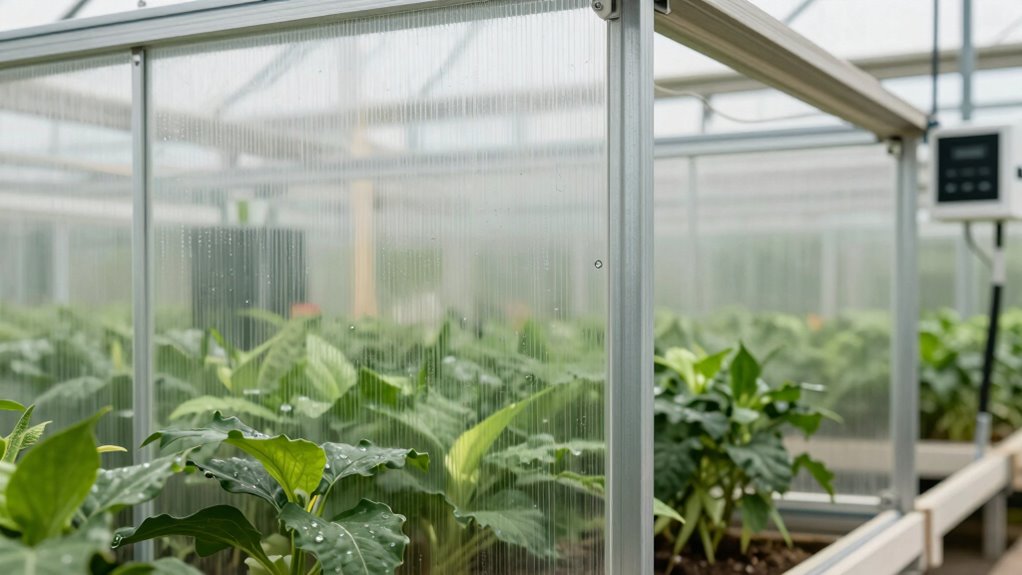
Choosing the right greenhouse material depends largely on your local climate and your budget constraints. Climate considerations influence how well a material handles temperature fluctuations, humidity, and light transmission. A flexible publishing site can help you explore different options and gather updated information tailored to your specific needs. Additionally, understanding material performance in different climates can help prevent costly mistakes and ensure your greenhouse functions optimally year-round. Recognizing how different materials respond to climate variability is essential for selecting the most suitable option. Selecting materials with suitable thermal properties can improve energy efficiency and plant health. Proper insulation techniques can further enhance the overall climate control within your greenhouse, making it more resilient to external weather changes. Budget planning helps you balance cost with durability and performance. To decide, consider these factors:
- Climate Suitability: For colder areas, insulate with double-layer options or sturdy materials. In warm climates, prioritize light transmission and ventilation.
- Cost Effectiveness: Budget-friendly options like polycarbonate or polyethylene may suit beginners, while more durable materials like glass cost more upfront but last longer.
- Maintenance & Longevity: Factor in how much upkeep each material requires and its lifespan. Investing in higher-quality materials may save money over time.
Matching your climate needs with your budget ensures a successful greenhouse setup.
What Are the Advantages of Polycarbonate Panels?
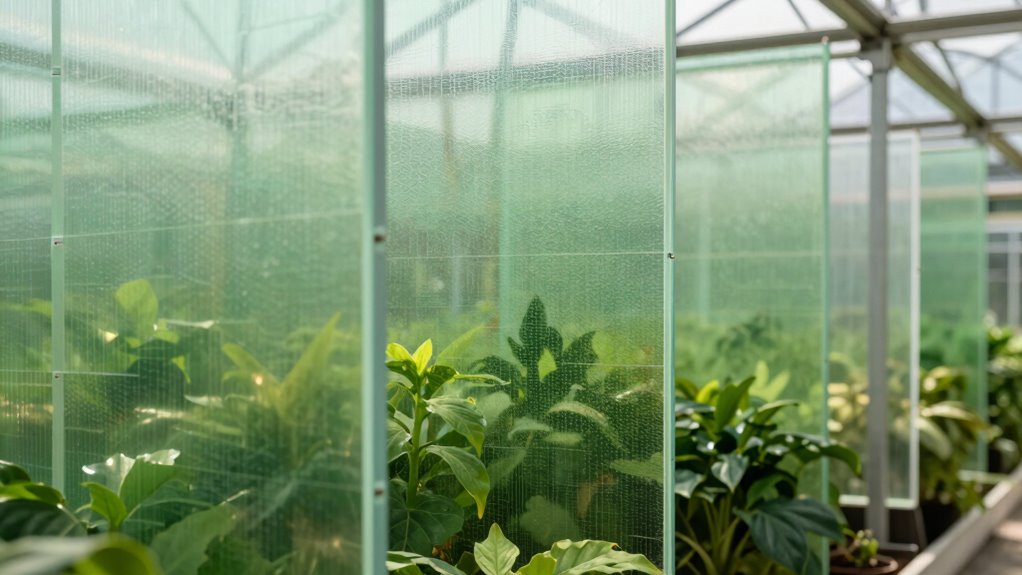
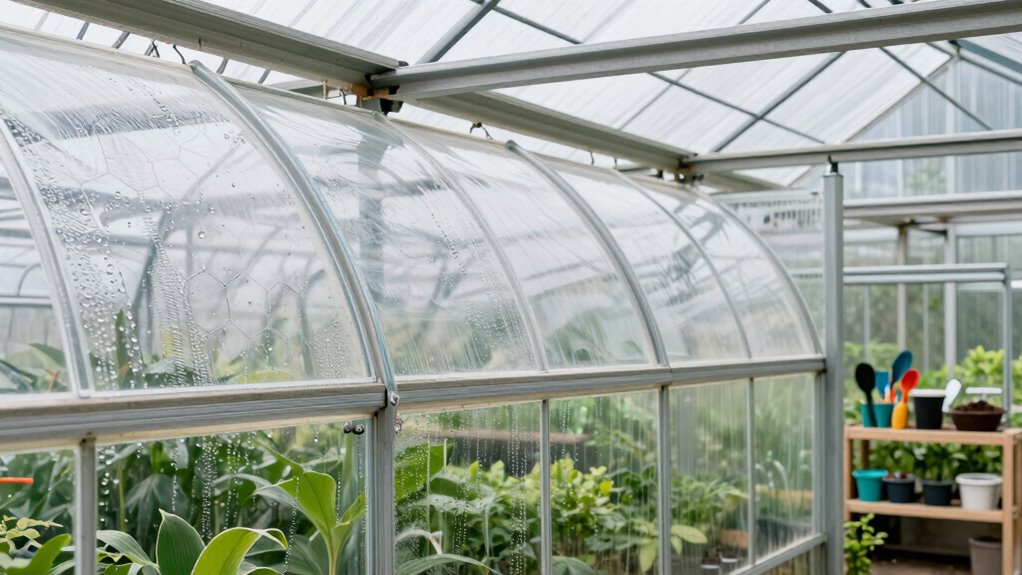
Polycarbonate panels have become a popular choice for greenhouse builders due to their impressive combination of durability and versatility. They offer excellent solar shading, helping you control heat and light levels inside your greenhouse, which is essential for healthy plant growth. Unlike glass, polycarbonate panels are impact-resistant, reducing the risk of breakage from hail or accidents. They also serve as pest barriers, preventing insects from entering and damaging your plants. Additionally, polycarbonate panels are lightweight and easy to install, saving you time and effort. Their UV protection extends the lifespan of the panels, ensuring long-term performance. Moreover, their sound healing properties can help create a more peaceful environment in your gardening space, promoting relaxation and focus. Considering the costs associated with different materials can help you choose the most economical option that meets your needs. Understanding the impact resistance of these panels can help you assess their suitability for your specific environment. To further enhance your greenhouse, exploring material options can provide insights into the best choices for your setup. Overall, these panels provide a durable, flexible, and cost-effective solution that enhances your greenhouse’s functionality and protection.
What Are the Pros and Cons of Glass Panels?
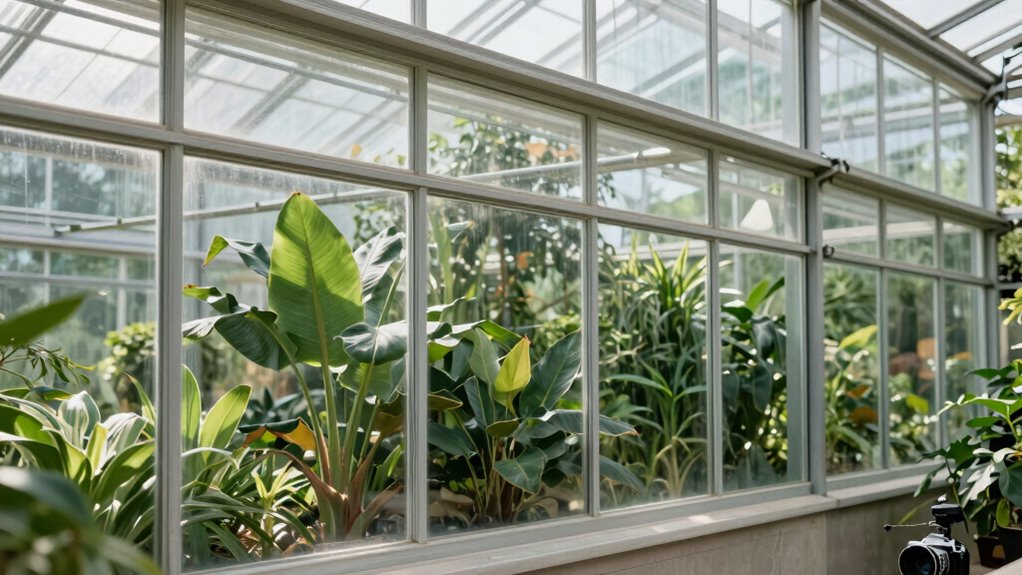
Glass panels let in abundant natural light, creating a bright environment for your plants. However, they can be fragile and prone to breakage, which may impact durability. Their sleek appearance adds aesthetic value, but you need to weigh that against potential risks and maintenance needs. Additionally, consider the high critical acclaim of certain materials that can enhance the overall quality and appeal of your greenhouse. Proper installation and quality materials can also improve longevity and reduce the risk of damage over time. Being aware of material performance can help you select the best options for your specific needs. Understanding light transmission properties is essential to optimize plant growth and energy efficiency in your greenhouse. Considering material durability is equally important to ensure your greenhouse remains functional and safe over the years.
Natural Light Transmission
Have you ever wondered how much natural light a greenhouse can let in? With glass panels, the light transmission is high, promoting healthy plant growth. However, the amount of light can vary based on the glass type and coating. Here’s what to consider:
- Optimal sunlight: Glass panels allow maximum sunlight, supporting vigorous plant growth and photosynthesis.
- Pest control: Increased light can deter pests that thrive in shady, damp environments.
- Temperature regulation: While good for light, glass can sometimes lead to heat loss or gain, affecting plant health.
- Natural pools: Incorporating natural pools with native plants can further enhance the eco-friendly environment of your greenhouse design.
Additionally, understanding the light transmission properties of different glass types can help you select the most energy-efficient and plant-friendly option. Keep in mind, high light levels improve growth but may require shading to prevent overheating. Properly transmitted natural light encourages plants to grow strong while helping you monitor pest activity more easily.
Durability and Fragility
While glass panels offer excellent clarity and light transmission, they tend to be more fragile than other materials, which can be a significant drawback. You’ll need to evaluate material maintenance carefully, as cracks or breaks require repairs or replacements. Glass is susceptible to shattering from impact, making it less durable in harsh weather or if accidents happen. However, glass panels are environmentally friendly since they are recyclable and have a lower environmental impact compared to plastics. Still, their fragility means you must balance their aesthetic and functional benefits with the potential costs of repairs over time. If durability is a priority, you might explore alternative materials, but if you value clarity and eco-friendliness, glass could still be a good choice despite its vulnerability.
Aesthetic Appeal
The sleek, transparent appearance of glass panels can considerably enhance the aesthetic appeal of your greenhouse, creating a bright and inviting environment. This material boosts both interior design and exterior aesthetics, making your greenhouse visually appealing. However, consider these pros and cons:
- *Natural Light:* Glass maximizes sunlight, promoting healthy plant growth and creating a luminous space.
- *Elegant Look:* Its clean, modern appearance elevates your greenhouse’s exterior aesthetics.
- *Maintenance:* Glass can be prone to smudges and dirt, requiring regular cleaning to keep its aesthetic charm.
While glass adds sophistication, it can also be fragile and costly. Weigh these factors to decide if its aesthetic benefits match your design goals.
Which Plastic Films Are Best for Greenhouses?
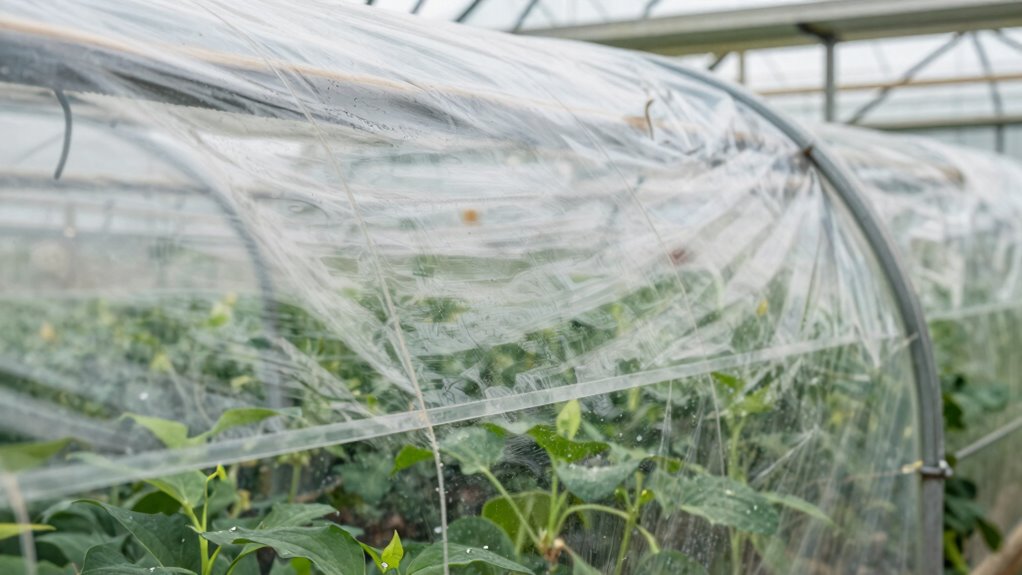
When choosing plastic films for your greenhouse, consider their UV stability and durability to guarantee they last through seasons. Light transmission and diffusion are also vital, as they affect how well your plants receive sunlight. Picking the right film depends on balancing these factors to create an ideal growing environment.
UV Stability and Durability
Selecting the right plastic film for your greenhouse means making sure it can withstand prolonged exposure to sunlight without degrading. UV resistance is key to maintaining material longevity, so your greenhouse stays effective over time. Look for films with high UV stability to prevent brittleness, discoloration, and cracking.
Additionally, choosing a film that offers family waterpark safety features can help ensure your greenhouse remains resilient against environmental stressors. Consider these factors:
- UV inhibitors added during manufacturing to block harmful rays
- The quality of the base material for long-term durability
- Manufacturer guarantees on UV resistance and lifespan
Understanding the neurobiological factors involved in emotional regulation can help in selecting films with better resilience, as environmental stressors may impact the durability of the material. Incorporating sustainable fabric technology into your selection process can further enhance environmental benefits and reduce pollution impact. Choosing a film with superior UV stability ensures your greenhouse remains clear and strong season after season. This durability saves you money and effort, keeping your plants protected without frequent replacements.
Light Transmission and Diffusion
Have you ever wondered how much light your greenhouse materials let in and how evenly it spreads? Light transmission is essential for healthy plant growth, so choosing the right plastic film matters. Clear films offer high light transmission, maximizing sunlight but sometimes causing hotspots or uneven growth. To improve light diffusion, consider films with built-in diffusing properties or add shade cloths, which help spread light more evenly and reduce harsh shadows. Shade cloths also control intensity, preventing heat buildup. Look for films designed specifically for light diffusion, as they soften sunlight and promote uniform plant development. Balancing high light transmission with effective diffusion creates an ideal environment, ensuring your plants get the light they need without the stress of uneven exposure. Understanding brewing science principles can also help you optimize your greenhouse setup for ideal plant growth conditions.
How Do Frame Materials Affect Greenhouse Durability and Cost?
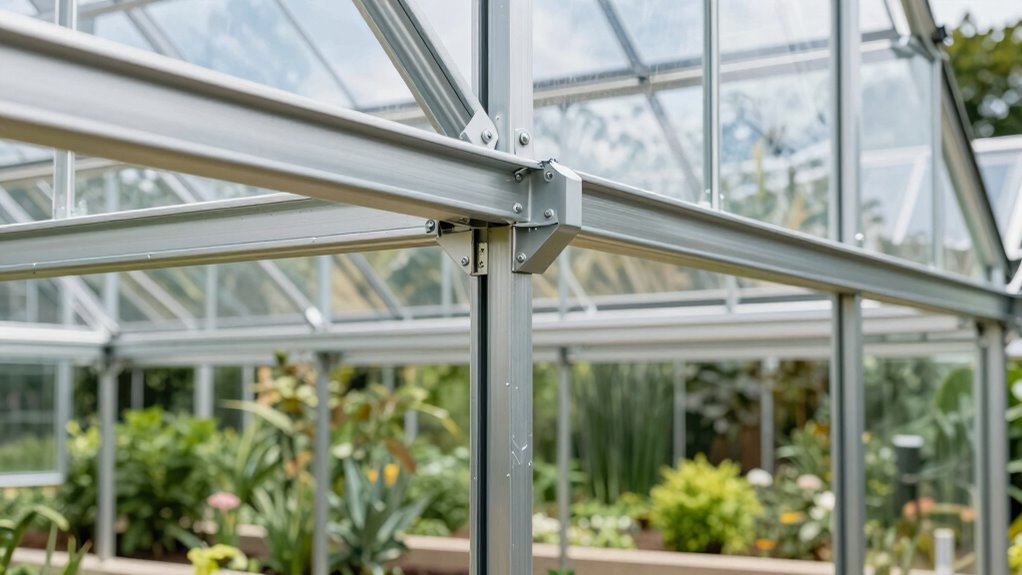
The choice of frame material plays a crucial role in determining both the durability and overall cost of a greenhouse. Different materials react uniquely to environmental factors, affecting frame corrosion and material maintenance. For instance, some materials may require specific eco-friendly disposal methods at the end of their lifespan to minimize environmental impact.
- Aluminum: Lightweight and resistant to corrosion, aluminum requires minimal maintenance but can be more expensive initially.
- Galvanized Steel: Strong and durable, steel resists rust better than plain steel, though it may need ongoing anti-corrosion treatments.
- PVC or Vinyl: Inexpensive and low-maintenance, these materials are less durable and may warp over time, impacting long-term costs.
Your choice influences how well the frame withstands weather and how often you’ll need repairs or replacements, directly affecting your total investment.
Frequently Asked Questions
How Long Do Different Greenhouse Materials Typically Last?
Material durability varies, but most greenhouse materials last between 5 to 20 years. Polycarbonate panels typically last around 10-15 years, offering good durability and impact resistance. Glass can last indefinitely if well-maintained but is more fragile. Plastic films are the least durable, often needing replacement every 1-4 years. When considering cost comparison, weigh longer-lasting materials like glass or polycarbonate against cheaper plastic films, which require frequent replacements but have lower upfront costs.
Are There Eco-Friendly or Sustainable Greenhouse Material Options?
Think of eco-friendly alternatives as the green heroes of greenhouse materials. You can choose sustainable options like recycled plastics, bamboo, or untreated wood, which reduce environmental impact. These materials are durable and renewable, helping you grow your plants while caring for the planet. By selecting sustainable options, you guarantee your greenhouse is both functional and environmentally responsible, making your gardening efforts a true act of eco-consciousness.
How Do Maintenance Needs Vary Between Different Greenhouse Materials?
Maintenance needs vary based on greenhouse material durability and cost implications. For example, glass requires regular cleaning and occasional repairs, making it higher maintenance but long-lasting. Polycarbonate panels are more durable and resist impact, reducing upkeep. Plastic films are budget-friendly but need frequent replacements due to wear and tear. Your choice affects ongoing maintenance; durable materials may cost more upfront but lower long-term upkeep, while less durable options demand frequent attention.
Can Certain Materials Improve Energy Efficiency in Greenhouses?
Like a trusty knight’s armor, certain materials boost your greenhouse’s energy efficiency. Insulation effectiveness varies, with polycarbonate and double-glazed glass providing superior thermal retention. These materials also score high on durability, resisting weather and wear. By choosing robust, well-insulating materials, you reduce heat loss and cut energy costs. This battle-ready approach keeps your plants warm and your energy bills low, making your greenhouse a fortress of efficient growth.
What Safety Considerations Exist for Specific Greenhouse Materials?
You should consider material toxicity and fire safety when selecting greenhouse materials. Confirm plastics, such as polycarbonate or polyethylene, are non-toxic and safe for plants and humans. Avoid materials with harmful chemicals that can leach into your environment. Also, check fire safety ratings; use fire-resistant materials where needed, and keep fire extinguishers nearby. Prioritizing these safety considerations helps protect both your plants and your safety.
Conclusion
Choosing the right greenhouse materials is like planting seeds for success—you want the best fit for your climate and budget. Think of your greenhouse as a delicate glass of water; selecting durable, clear panels guarantees your plants thrive without leaks or cracks. With the right choice, you’ll nurture a vibrant garden that withstands the elements, just like a sturdy tree anchoring itself against the storm. Make informed decisions, and your green thumb will flourish.