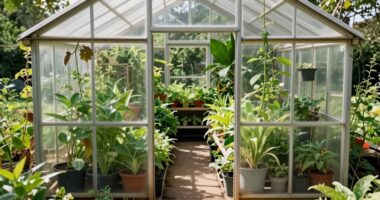
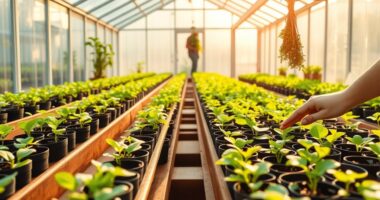
When choosing greenhouse flooring, consider options like gravel, which offers excellent drainage, airflow, and pest control, making it ideal for many growing environments. Concrete provides durability, easy cleaning, and a sturdy base for hydroponics, though it may need insulation. You might also explore advanced materials like rubber mats or slip-resistant tiles for added comfort and hygiene. Each option impacts maintenance and pest management—keep exploring to find the best fit for your greenhouse needs.

Get garden gear delivered free with Prime
- Fast, free delivery on millions of items
- Prime Video, Amazon Music and more included
- Member-only deals all year
Key Takeaways
- Gravel flooring offers excellent drainage, promotes airflow, and is easy to maintain, making it suitable for pest control and moisture management.
- Concrete provides a durable, smooth surface that simplifies cleaning, spill containment, and supports hydroponic equipment.
- Advanced options like rubber mats or interlocking tiles enhance durability, slip resistance, and pest prevention, especially in high-traffic areas.
- Flooring choice should align with growing needs, budget, pest management strategies, and compatibility with hydroponic systems.
- Selecting the right flooring improves greenhouse sanitation, efficiency, and overall plant health, creating a sustainable growing environment.
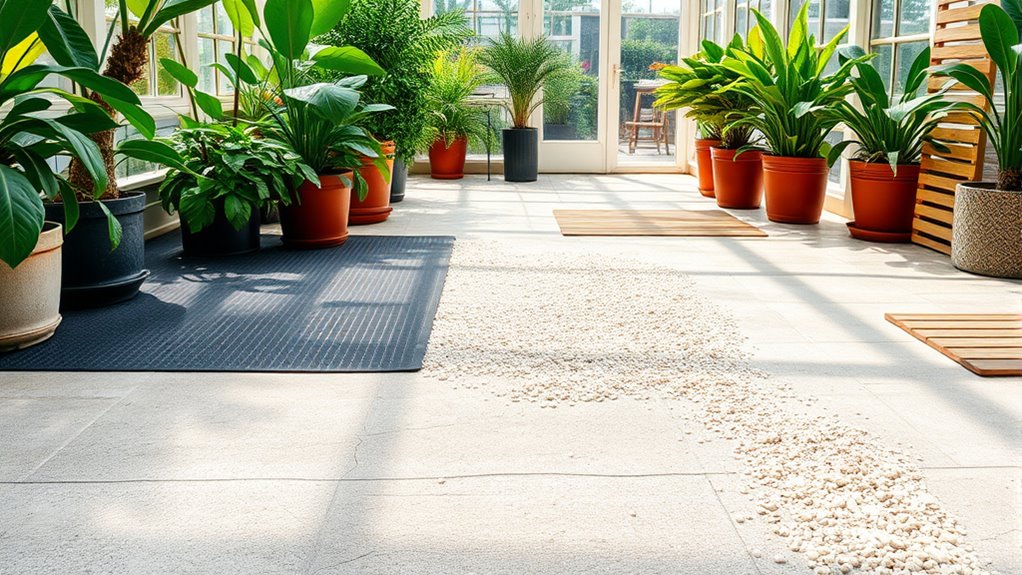
Choosing the right flooring for your greenhouse is essential for creating an efficient and comfortable growing environment. Your flooring impacts not only plant health and growth but also your ease of maintenance and pest control strategies. If you’re incorporating hydroponic systems, selecting a suitable surface ensures proper drainage and sanitation, which are vital for preventing disease and maintaining clean growing conditions. Different flooring options offer varying benefits, so it’s important to weigh factors like durability, cost, and how they influence pest management.
Choosing the right greenhouse flooring enhances plant health, pest control, and system sanitation for a more efficient growing environment.
Gravel is a popular choice because it provides excellent drainage, helping to prevent water pooling and root rot. It’s also relatively affordable and easy to install. When you use gravel, you create a surface that encourages airflow underneath, which can deter pests and reduce humidity levels that attract insects and fungi. Plus, gravel surfaces are easy to clean and replace, making them ideal for environments where pest control strategies need to be effective. If you’re running hydroponic systems, gravel can serve as a stable, sanitary base that prevents pathogens from lingering, as it’s easy to rinse and disinfect. Additionally, gravel’s high porosity helps maintain appropriate moisture levels around plant roots, contributing to healthier growth.
Concrete flooring is another common option, offering durability and a smooth surface that’s easy to clean and sanitize. Its solid nature helps contain spills and makes it straightforward to implement pest control measures, such as applying treatments without worrying about porous surfaces absorbing chemicals. For hydroponic growers, concrete provides a sturdy foundation that’s resistant to damage from equipment or heavy containers. You can also embed drains or install radiant heating beneath the concrete to regulate temperature, further supporting ideal plant growth and pest management. However, keep in mind that concrete can get cold or hot depending on the climate, so adding insulation or coverings might be necessary.
More advanced options include rubber mats or interlocking tiles, which combine durability with comfort and safety. Rubber surfaces are slip-resistant and easy to clean, making them suitable for high-traffic areas or spaces where you handle delicate equipment or plants. They also help in pest control by creating a less hospitable environment for insects that prefer dark, damp hiding spots. Additionally, some growers opt for specialized antimicrobial flooring options designed to inhibit bacterial growth, further supporting pest control strategies and maintaining a healthier environment for your plants.
Ultimately, your choice should align with your specific growing needs, budget, and pest control approach. Whether you opt for gravel, concrete, or another material, selecting the right flooring can profoundly influence your greenhouse’s overall health, productivity, and ease of maintenance. By considering how your flooring interacts with hydroponic systems and pest management, you’ll create a space that’s both efficient and sustainable.
As an affiliate, we earn on qualifying purchases.
Frequently Asked Questions
Which Flooring Type Is Most Eco-Friendly?
You’ll find that biodegradable options are the most eco-friendly flooring type for your greenhouse. These materials decompose naturally, reducing waste and environmental impact. Recyclable materials like recycled rubber or plastics also help lessen landfill contributions, but biodegradable options break down more completely without leaving harmful residues. By choosing sustainable, biodegradable flooring, you support eco-conscious gardening and create a healthier environment for your plants and the planet.
How Does Flooring Affect Greenhouse Temperature Regulation?
Your flooring choice impacts temperature regulation by influencing soil insulation and moisture control. For example, gravel absorbs and releases heat slowly, helping maintain consistent temperatures, while concrete can trap heat but may lead to overheating. Adequate moisture control through proper flooring helps prevent temperature fluctuations and mold. By selecting flooring that enhances soil insulation and moisture management, you create a stable environment, optimizing plant growth and reducing energy costs.
Can Flooring Be Easily Replaced or Upgraded Later?
You can replace or upgrade your greenhouse flooring later, but removal difficulty varies. Gravel is relatively easy to remove and upgrade, offering good flexibility. Concrete, however, is more challenging to remove and may require breaking or heavy lifting, making upgrades less straightforward. Consider your future plans and choose flooring that aligns with your upgrade flexibility needs to guarantee smooth transitions down the line.
Are There Any Safety Concerns With Specific Flooring Materials?
You might worry about safety hazards with certain flooring materials, but many are designed to minimize slip hazards and resist chemicals. For example, textured concrete can prevent slips, while rubber flooring offers excellent chemical resistance. Always choose flooring suited to your greenhouse activities and regularly inspect it for wear. Proper installation and maintenance help guarantee your workspace stays safe, reducing risks of accidents or damage from hazardous substances.
What Is the Cost Comparison Among Different Greenhouse Flooring Options?
You should consider the cost analysis when choosing your greenhouse flooring, as prices vary markedly. Gravel tends to be the most budget-friendly option, offering low installation costs. Concrete is more expensive initially but provides durability and low maintenance, saving money long-term. Paver options fall somewhere in between. Keep your budget considerations in mind to select the flooring that balances affordability with your greenhouse’s needs and longevity.
Conclusion
Choosing the right greenhouse flooring lets you create a space where your plants thrive and your dreams grow. Whether it’s gravel’s rustic charm, concrete’s durability, or other options, your choice shapes not just the floor but the entire environment. Imagine stepping inside on a cool morning, the scent of earth and growth surrounding you. With the perfect flooring beneath your feet, every day becomes a new opportunity for your garden to flourish and inspire.
Fall Picks
fall essentials
As an affiliate, we earn on qualifying purchases.